Black friday Up to 3 extra licenses FOR FREE + Special offer for TI LOOKUP Get it now
Webinar
February 26
Better SOC with Interactive Sandbox Practical Use Cases
Register now
139
Global rank
117 infographic chevron month
Month rank
111 infographic chevron week
Week rank

Adwind RAT, sometimes also called Unrecom, Sockrat, Frutas, jRat, and JSocket, is a Malware As A Service Remote Access Trojan that attackers can use to collect information from infected machines. It was one of the most popular RATs in the market in 2015.

Trojan
Type
Likely Mexico
Origin
1 January, 2012
First seen
30 September, 2026
Last seen
Also known as
Unrecom
Sockrat
Frutas
jRat
JSocket

How to analyze Adwind with ANY.RUN

Type
Likely Mexico
Origin
1 January, 2012
First seen
30 September, 2026
Last seen

IOCs

IP addresses
23.194.190.156
104.16.248.249
48.209.6.48
2.23.246.9
104.18.10.59
74.179.77.204
74.178.240.51
1.1.1.1
95.100.102.101
40.126.31.3
2.16.241.9
48.209.133.15
23.11.40.157
185.178.208.191
151.101.0.175
151.101.128.223
152.236.9.75
151.101.192.223
48.192.1.64
23.59.18.102
Hashes
ceebae7b8927a3227e5303cf5e0f1f7b34bb542ad7250ac03fbcde36ec2f1508
500aafce96e2d156d9a3751beac904799030fa8a08651fb35ff5a909bc720a85
808e10c8a6ab8deb149ff9b3fb19f447a808094606d712a9ca57fead3552599d
7424d67a2f1da64accb100dc8d093be004e5f47b08047d326edf3338f36a3187
cad1ef5bd340d73e074ba614d26f7deaca5c7940c3d8c34852e65c4909686c48
83cda9fecc9c008b22c0c8e58cbcbfa577a3ef8ee9b2f983ed4a8659596d5c11
bf90809237a8ce1dac86bed7e34e4e76692d87ffd21aed16541105cd63ea533a
ebc4c06b7d95e74e315419ee7e88e1d0f71e9e9477538c00a93a9ff8c66a6cfc
7a319ffaba23a017d7b1e18ba726ba6c54c53d6446db55f92af53c279894f8ad
81a618f21cb87db9076134e70388b6e9cb7c2106739011b6a51772d22cae06b7
c5dc9884a8f458371550e09bd396e5418bf375820a31b9899f6499bf391c7b2e
b3c652073b3c75f5ac81381b6f44b8deead065c635c63771a0806e48778bafaa
8469d1ea3649111314b2776e5473f80259edae481e85c1690f27e1238c6f8f89
9d357b65088deb1d5f15c58ab788c78f75ac2338efd385e326b09ba91a522019
a4120da0083d2e900596501e44ce6f1c780d71252d5a502dcbb6d8923327061a
01adbd3f51a22f71edd8b3fb3f45bb849c9d9a46e00a7cfd25c28ea780512e3c
c63e2f372bcc41ec2c4667a8c8036378d920f96e66ea6e74f1061ae18fc2c181
70d9b525599d85146924ef8dbdf0980c42a03f4fbb2d01a2cadbf7ed2d43cd93
038b088d41f46e28054bdaa8b87c02cf000373236262ddc9339ea04b00c792d2
3f71e4528bd24f3cc96bdea89bc1cac2fe69fc198c4db07bfd0a1c997827fae4
Domains
settings-win.data.microsoft.com
crl.microsoft.com
pypi.org
nexusrules.officeapps.live.com
files.pythonhosted.org
client.wns.windows.com
fe3cr.delivery.mp.microsoft.com
go.microsoft.com
ecs.office.com
activation-v2.sls.microsoft.com
google.com
www.microsoft.com
slscr.update.microsoft.com
ocsp.digicert.com
self.events.data.microsoft.com
cloudflare-dns.com
login.live.com
cxcs.microsoft.net
msedge.b.tlu.dl.delivery.mp.microsoft.com
edge.microsoft.com
URLs
http://crl.microsoft.com/pki/crl/products/microoceraut2011_2011_03_22.crl
http://www.microsoft.com/pkiops/crl/microsoft%20secure%20server%20ca%202026.crl
http://ocsp.digicert.com/mfewtzbnmeswstajbgurdgmcgguabbq50otx%2fh0ztl%2bz8sipi7wewvxdlqqutijuibiv5unu5g%2f6%2brks7qyxjzkceaz1vqyrvgl0erhqlcpm8gy%3d
https://go.microsoft.com/fwlink/?linkid=2257403&clcid=0x409
https://settings-win.data.microsoft.com/settings/v3.0/wsd/updatehealthtools?os=windows&osver=10.0.19041.1.amd64fre.vb_release.191206-&sku=48&deviceclass=windows.desktop&locale=en-us&deviceid=s:bad99146-31d3-4ec6-a1a4-be76f32ba5d4&sampleid=s:95271487&appver=10.0.19041.3626&flightring=retail&telemetrylevel=1&hidovergattreg=c%3a%5cwindows%5csystem32%5cdriverstore%5cfilerepository%5chidbthle.inf_amd64_9610b4821fdf82a5%5cmicrosoft.bluetooth.profiles.hidovergatt.dll&appver=&processoridentifier=amd64%20family%2023%20model%201%20stepping%202&oemmodel=dell&updateoffereddays=4294967295&processormanufacturer=authenticamd&installdate=1661339444&oemmodelbaseboard=&branchreadinesslevel=cb&oemsubmodel=j5cr&isclouddomainjoined=0&deferfeatureupdateperiodindays=30&isdeviceretaildemo=0&flightingbranchname=&osuilocale=en-us&devicefamily=windows.desktop&wuclientver=10.0.19041.3996&uninstallactive=1&isflightingenabled=0&osskuid=48&processorclockspeed=3094&totalphysicalram=6144&securebootcapable=0&app=sedimentpack&processorcores=6&currentbranch=vb_release&installlanguage=en-us&deferqualityupdateperiodindays=0&oemname_uncleaned=dell&tpmversion=0&primarydisktotalcapacity=262144&installationtype=client&attrdataver=186&processormodel=amd%20ryzen%205%203500%206-core%20processor&isedgewithchromiuminstalled=1&osversion=10.0.19045.4046&ismdmenrolled=0&activationchannel=retail&firmwareversion=a.40&trendinstalledkey=1&osarchitecture=amd64&defaultuserregion=244&updatemanagementgroup=2
http://www.microsoft.com/pkiops/crl/microsoft%20ecc%20product%20root%20certificate%20authority%202018.crl
https://slscr.update.microsoft.com/sls/%7b522d76a4-93e1-47f8-b8ce-07c937ad1a1e%7d/x64/10.0.19045.4046/0?ch=686&l=en-us&p=&pt=0x30&wua=10.0.19041.3996&mk=dell&md=dell
http://www.microsoft.com/pkiops/crl/microsoft%20ecc%20update%20secure%20server%20ca%202.1.crl
https://fe3cr.delivery.mp.microsoft.com/clientwebservice/ping
https://slscr.update.microsoft.com/sls/ping
https://slscr.update.microsoft.com/sls/%7be7a50285-d08d-499d-9ff8-180fdc2332bc%7d/x64/10.0.19045.4046/0?ch=686&l=en-us&p=&pt=0x30&wua=10.0.19041.3996&mk=dell&md=dell
http://www.microsoft.com/pkiops/crl/microsoft%20update%20signing%20ca%202.3.crl
http://www.microsoft.com/pkiops/crl/microsoft%20update%20signing%20ca%202.2.crl
http://crl.microsoft.com/pki/crl/products/microoceraut_2010-06-23.crl
http://www.microsoft.com/pkiops/crl/micsecserca2011_2011-10-18.crl
https://activation-v2.sls.microsoft.com/slactivateproduct/slactivateproduct.asmx?configextension=retail
https://login.live.com/ppsecure/deviceaddcredential.srf
http://edge.microsoft.com/browsernetworktime/time/1/current?cup2key=2:daz_awoq6ck1urxfpe328ffxopevkvnsnvvjzry9xf0&cup2hreq=e3b0c44298fc1c149afbf4c8996fb92427ae41e4649b934ca495991b7852b855
https://config.edge.skype.com/config/v1/edge/133.0.3065.92?clientid=4489578223053569932&agents=edge%2cedgeconfig%2cedgeservices%2cedgefirstrun%2cedgefirstrunconfig&osname=win&client=edge&channel=stable&scpfre=0&osarch=x86_64&osver=10.0.19045&wu=1&devicefamily=desktop&uma=0&sessionid=72&mngd=0&installdate=1661339457&edu=0&soobedate=1504771245&bphint=2&fg=1&lbfgdate=1766137499&lafgdate=0
https://edge.microsoft.com/serviceexperimentation/v3/?osname=win&channel=stable&osver=10.0.19045&devicefamily=desktop&installdate=1661339457&clientversion=133.0.3065.92&experimentationmode=2&scpguard=0&scpfull=0&scpver=0
Last Seen at

Recent blog posts

post image
5 Critical Pain Points of Modern US SOCs and...
watchers 1648
comments 0
post image
IronChain Ransomware Threatens Businesses wit...
watchers 3378
comments 0
post image
Threat Coverage Digest: New Malware Reports a...
watchers 10879
comments 0

What is Adwind RAT?

Adwind RAT, sometimes also called Unrecom, Sockrat, Frutas, jRat, and JSocket, is a remote access trojan available as MaaS ( Malware-As-A-Service ). Adwind can collect user and system data, control the webcam of the infected machine, capture screenshots, install and run other malicious programs, log keystrokes, steal web browser passwords, and more.

First identified in January 2012, Adwind can’t be called a new malware, but it managed to become as popular as ransomware despite the age. In fact, in 2015, over 1,800 people purchased Adwind on its “official” website, making the site one of the most popular malware distribution platforms globally. It should be noted that Adwind poses a danger to users of all major operating systems, including Windows, Mac OS X, Linux, and BSD.

General description of Adwind

Initially discovered for the first time in 2012, the malware was known as Frutas and presumably originated in Mexico. For the initial year of Adwind’s existence, the creator released multiple versions, all distributed on Spanish hacker forums for free.

The feature-set of the original version was somewhat limited as compared to the latest iteration of the virus. As such, in 2012, Adwind RAT could capture screenshots, steal passwords from selected online services, open specific web pages and take screenshots, as well as display pop-up messages.

In 2013, the creator of the malware released a new version, changing its name to Adwind. The new version added support for Android OS and started to gain traction outside of the Spanish hacker community, becoming a popular tool worldwide. Following the popularity of the malware, the author has set up a YouTube channel to post tutorials for other cybercriminals. During the same year, the first-ever case of Adwind malware used in a targeted attack was documented in Pacific Asia. In November 2013, the malware was rebranded as UNRECOM and sold to Unrecom Soft. The rebranded version of Adwind retained all functionality of the previous iteration.

In 2014, the source code of Adwind was leaked. As a result, it became available online free of charge, becoming a popular tool among cybercriminals who widely used the cracked versions in attacks during 2014 and 2015, further contributing to the overall popularity of Adwind. In response to the leak, the “official” version of Adwind Trojan was significantly upgraded and re-released as AlienSpy in October 2014. The Adwind RAT v3.0 learned to auto-detect sandboxes, gained cryptographically secured communication with the control server, and became capable of detecting and disabling antiviruses.

Finally, in 2015, the malware was renamed once again, becoming a JSocket RAT. As a malware-as-a-service, Adwind RAT is sold to users for a fixed fee charged monthly as a subscription and could be purchased at JSocket.org until the website became unavailable. The price depends on the package which the user chooses.

Based on the analysis, Adwind requires active actions from the potential victim to start the execution process. As such, being delivered in a malicious .JAR file, the malware won’t be able to execute itself until the victim double-clicks on the attachment.

Adwind RAT malware analysis

ANY.RUN interactive service enables researchers to perform the analysis of the execution process of Adwind Trojan in a secure environment in multiple formats, including video.
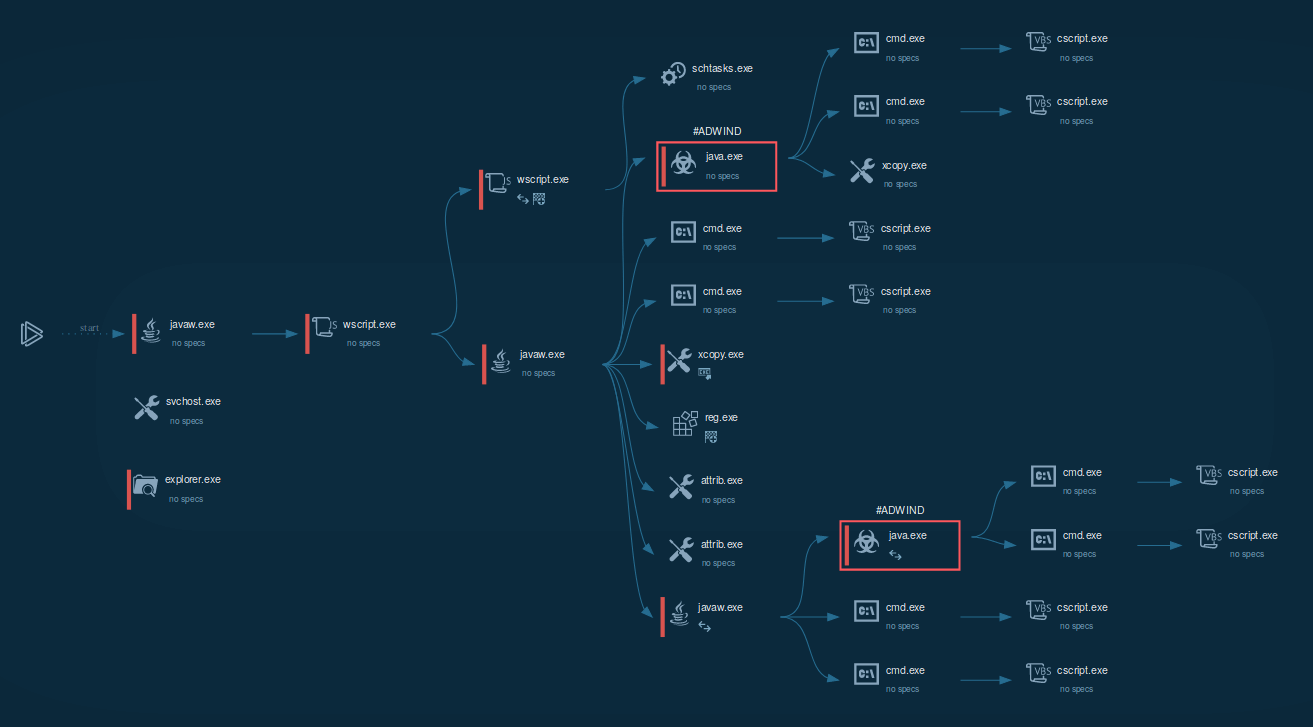
adwind execution process graph

Figure 1: Visual process graphs generated by ANY.RUN help to simplify and speed up research work
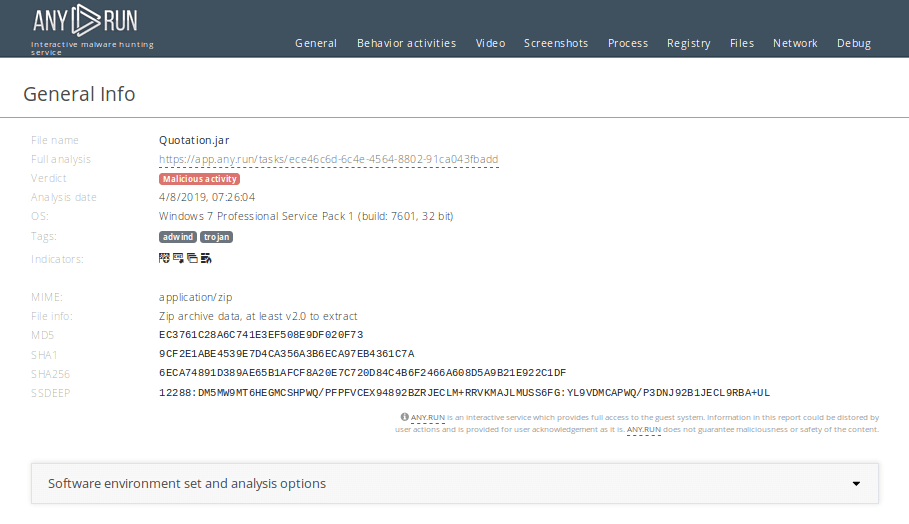
text report of the Adwind malware analysis Figure 2: ANY.RUN creates customizable text reports allowing researchers to share the results of the simulation easily

Adwind execution process

In the case of our simulation, after a user opened the malicious .jar file, the malware started execution through Java virtual machine. This initial process executed the js script, which ran one more js script and another .jar file.

JS script also used Task Scheduler to run itself later. Jar file started a series of malicious activities such as using attrib.exe to mark files or folders as hidden, running VBS script files, changing the autorun value in the registry, and more. It has been noted that sometimes Jar file runs a series of taskkill commands to shutdown processes by their names based on a list containing names of system processes, names of common Anti-virus programs, and analyzing programs wireshark.exe, procexp.exe, processhacker.exe, and so on. It should be noted that this malware doesn't work without installed Java.

How to avoid infection by Adwind?

Exhibiting caution when handling emails from unknown senders is a reliable way to prevent contamination since Adwind trojan requires a victim to interact with the malicious file to enter an active phase. Therefore, never downloading attachments in suspicious emails is a sure way to stay safe when you are dealing with any malicious objects such as ransomware, RAT, or others. In addition, preventing .JAR files from running in %AppData%[random folder name], and prohibiting the creation of .JAR in the same folder can be considered a good security measure.

Distribution of Adwind

Adwind RAT is distributed in mail spam campaigns the same as AZORult or Remcos and has two general attack vectors. It can be delivered to the victim's machine as an email attachment in the form of a malicious file such as a PDF or a Microsoft Office file.

The other attack vector is a malicious URL that redirects the victim to a website from where Adwind is downloaded.

How to export process graph from the analysis of Adwind malware using ANY.RUN?

Analysts can export the process graph from a task to SVG format if they want it to share. Just click on the "Export" button and choose "Export Process Graph (SVG)" in the drop-down menu.
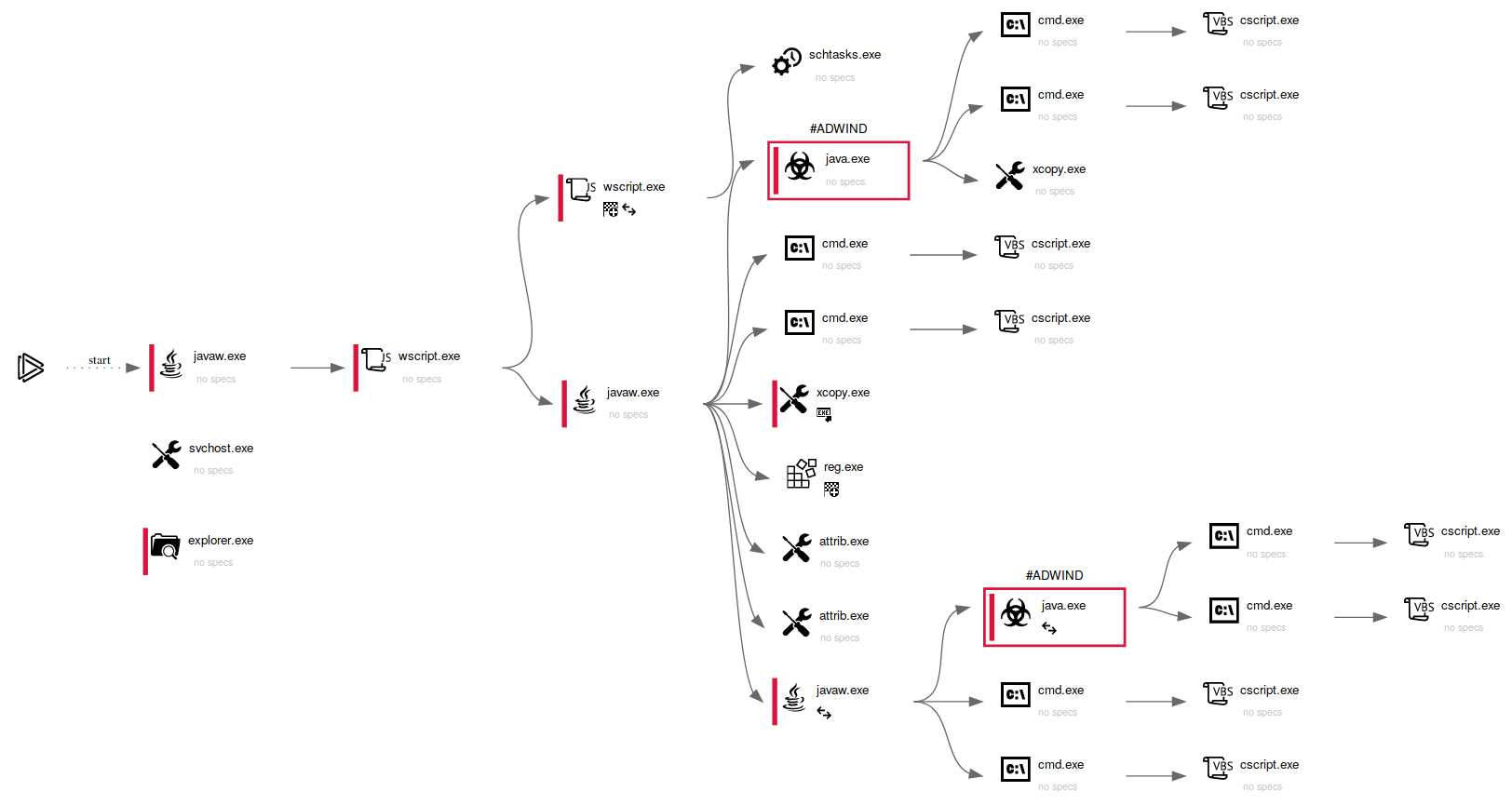
adwind process graph Figure 3: Adwind's process graph exported in SVG format

Conclusion

Distributed as a malware-as-a-service, the Adwind RAT v3.0 has become one of the most popular RATs and targets users of all major operating systems worldwide.

Not only is the “official” paid version of the malware is known to have created a massive following, but several slightly outdated but still very powerful cracked, free-to-use versions are readily available online on the underground hacking forums together with ransomware. As a result, today, Adwind remains a serious, active, and, perhaps, even growing threat.
HAVE A LOOK AT

Cephalus screenshot
Cephalus
cephalus
Cephalus is a targeted ransomware threat discovered in 2025. It’s known for infiltrating organizations that deal with sensitive data through compromised RDP access. It leverages DLL sideloading with a legitimate SentinelOne executable. Cephalus is able to exfiltrate data and destroy backup options. Its payload is also tailored to each victim, which makes identification and mitigation more complex.
Read More
DarkTortilla screenshot
DarkTortilla
darktortilla
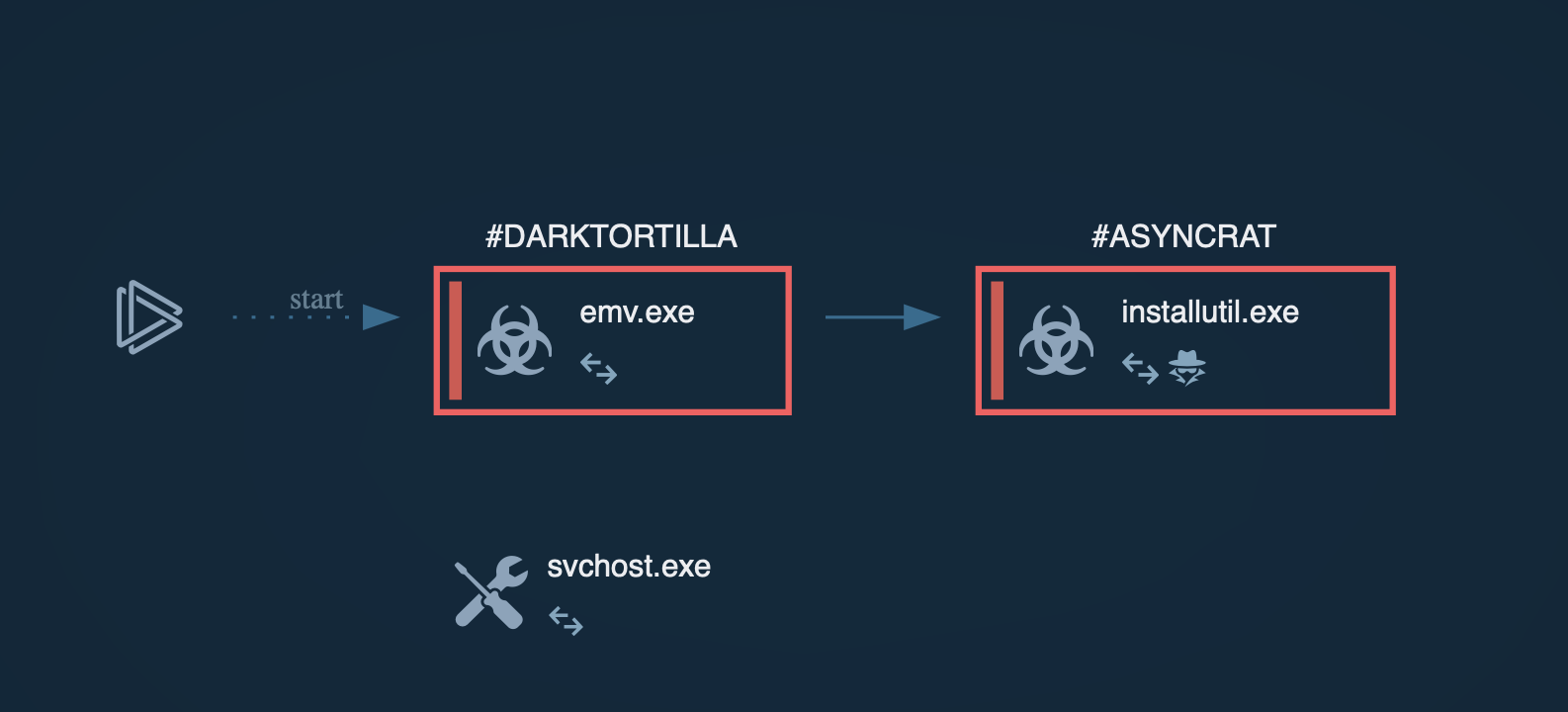
DarkTortilla is a crypter used by attackers to spread harmful software. It can modify system files to stay hidden and active. DarkTortilla is a multi-stage crypter that relies on several components to operate. It is often distributed through phishing sites that look like real services.
Read More
SmartLoader screenshot
SmartLoader
smartloader
SmartLoader is a Windows malware loader that uses multi-stage execution to deliver secondary payloads. It supports system discovery, screenshot capture, persistence through scheduled tasks, C2 communication, and anti-analysis techniques.
Read More
Zloader screenshot
Zloader
zloader trojan loader
Zloader is a banking trojan that uses webinjects and VNC clients to still banking credentials. This Trojan is based on leaked code from 2011, but despite its age, Zloader’s popularity has been only increasing through early 2020, when it relied on COVID-19 themed attacks.
Read More
DarkVision screenshot
DarkVision
darkvision
DarkVision RAT is a low-cost, modular Remote Access Trojan that gives attackers remote control of infected Windows hosts. Initially observed around 2020 and sold in underground marketplaces, DarkVision has become notable for its full feature set (keylogging, screen capture, file theft, remote command execution and plugin support) and for being distributed via multi-stage loaders in recent campaigns.
Read More
GravityRAT screenshot
GravityRAT
gravity
GravityRAT is a sophisticated spyware and remote access trojan that has been actively targeting organizations and government entities since 2016. It uses innovative anti-analysis techniques and made an evolution from a Windows-only threat to a cross-platform espionage tool capable of compromising Windows, Android, and macOS systems.
Read More