


SOCs face constant pressure to detect and respond to threats faster. Heavy workloads, limited threat visibility, and disconnected tools can delay action, increasing the risk of financial loss and operational disruption.
ANY.RUN helps more than 15,000 security teams reduce these delays with fresh threat intelligence, interactive analysis, contextual enrichment, and analyst-curated reporting.
Here’s how your SOC can handle incidents more efficiently and save up to 21 minutes per case.
Detect Emerging Threats Earlier with TI Feeds
When threat intelligence arrives too late, SOC teams may only identify malicious activity after it has already reached their environment. ANY.RUN’s Threat Intelligence Feeds continuously deliver machine-readable IOCs collected from recent, real-world attacks, helping organizations detect emerging threats within 24 hours of their appearance.
Each IP address, domain, URL, and file hash comes with context showing why it is malicious and how it was observed. Through ready-made connectors, APIs, and STIX/TAXII support, teams can send this intelligence directly to SIEMs, TIPs, SOAR platforms, firewalls, and other security systems.
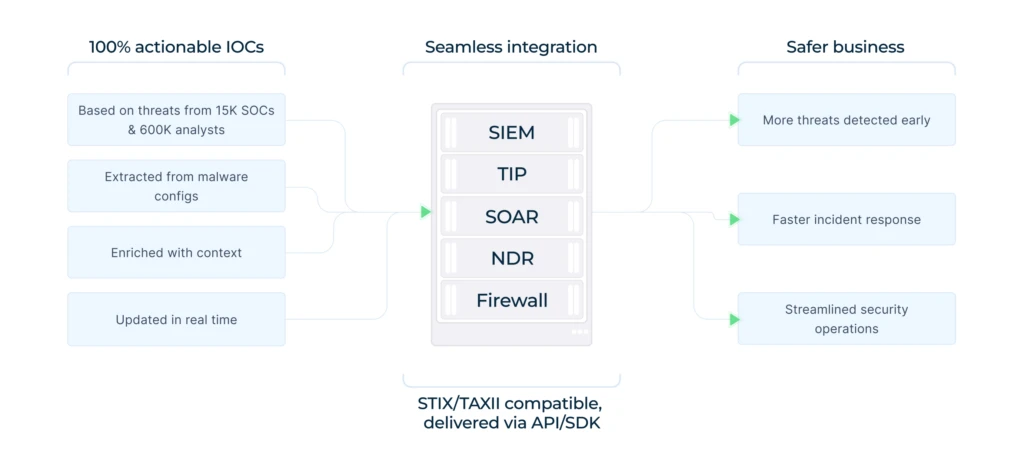
This allows detection rules and monitoring workflows to be updated continuously as new threats emerge, without requiring analysts to research and prepare every indicator manually.
As a result, SOC teams can:
- Detect emerging threats within 24 hours of their appearance
- Continuously strengthen detection coverage with fresh IOCs
- Reduce the time spent validating and enriching indicators
- Update security systems without adding more manual work
Speed Up File- and URL-Based Threat Triage
Suspicious files and URLs can slow triage when analysts must reproduce user actions, inspect several data sources, and manually piece together the attack chain. ANY.RUN’s Interactive Sandbox brings this work into one browser-based environment, helping teams quickly determine whether an alert is malicious and what response is required.
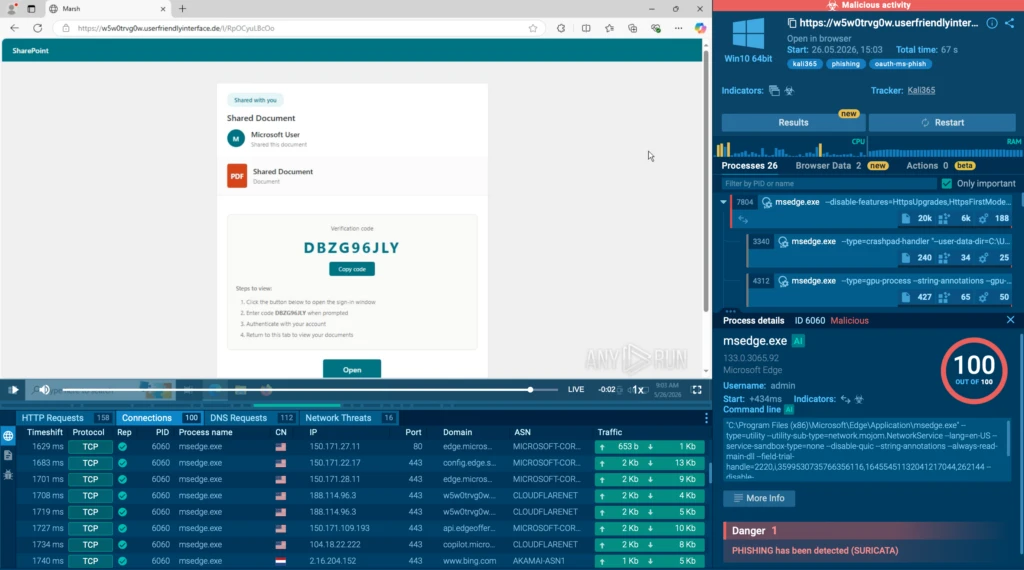
Analysts can interact directly with files, links, phishing pages, and applications to reveal hidden behavior. Automated Interactivity performs repetitive actions such as opening attachments, following links, and launching payloads, allowing threats to expose themselves without adding more manual work for the SOC.
Verdicts, process activity, network connections, IOCs, TTPs, screenshots, and behavioral evidence are available in one investigation view. Ready-made Tier 1 reports give analysts the context needed to validate alerts, prioritize incidents, and begin containment without escalating every case.
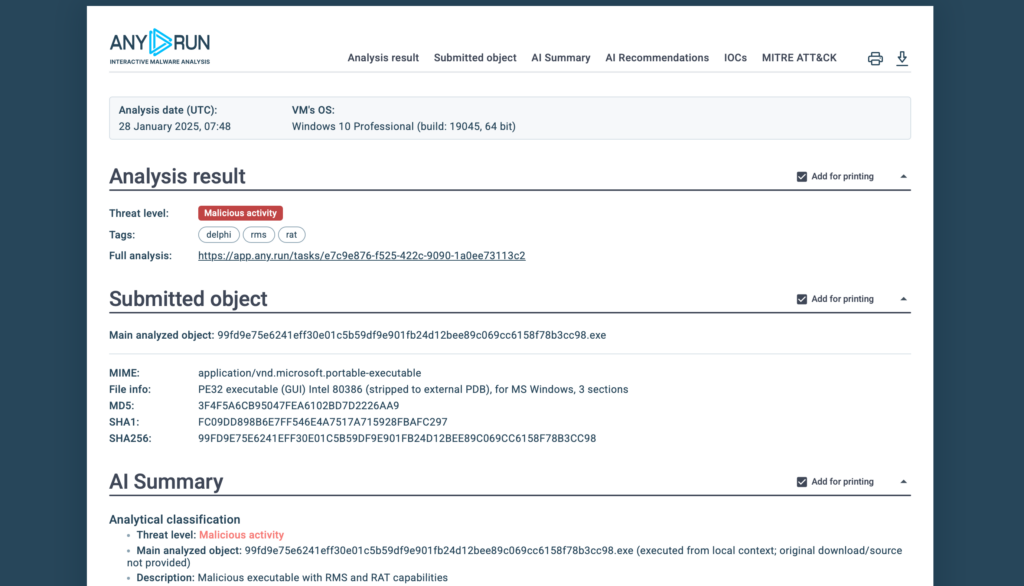
Sandbox session links and downloadable reports also make it easier to share evidence, request a second opinion, and avoid repeating the same analysis across the team.
As a result, SOC teams can:
- Accelerate alert triage, with 94% of users reporting faster results
- Reduce Tier 1 workload by up to 20%
- Reach containment decisions with greater confidence
- Reduce alert fatigue with immediate behavioral evidence
Expand Threat Context for Faster Investigations
Threat intelligence shortens investigations by showing what sits behind an isolated alert: the malware involved, related infrastructure, campaign behavior, targeted industries, geographic activity, and techniques observed in recent attacks.
This wider view allows organizations to determine whether the activity is relevant to their environment, estimate potential exposure, and focus SOC resources on the most urgent incidents.
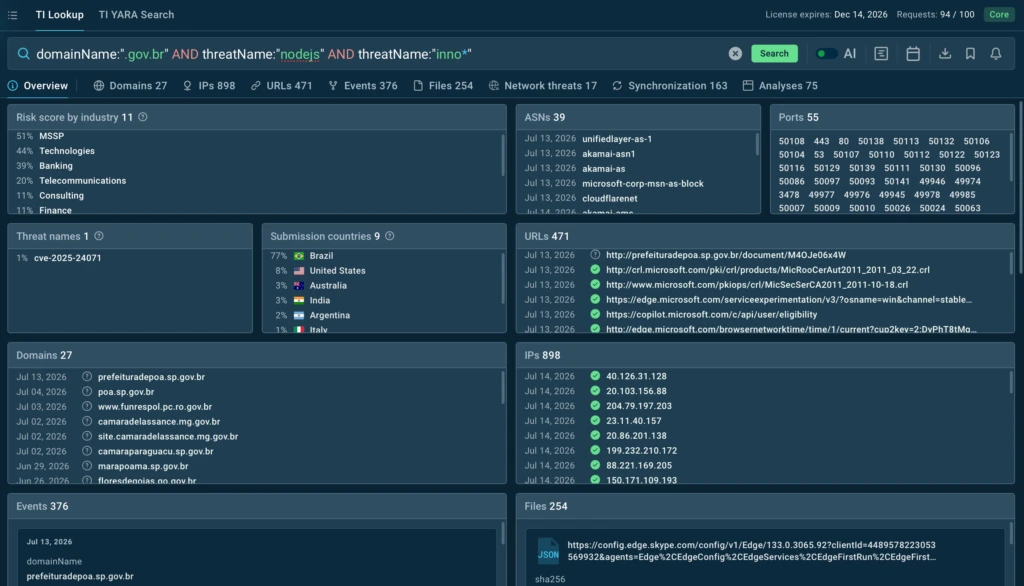
ANY.RUN’s Threat Intelligence Lookup enriches IP addresses, domains, URLs, and file hashes with evidence collected from real-world investigations. Analysts can explore connected infrastructure, related files, network activity, malware behavior, and other indicators without searching across several external sources.
This gives teams a clearer understanding of how the threat operates, how widely the activity may extend, and which assets or users may require further investigation.
For deeper analysis, TI YARA Search allows threat hunting and detection engineering teams to find samples that share specific code patterns or malware characteristics. These findings can reveal related activity and support new or improved detection rules against similar attacks.
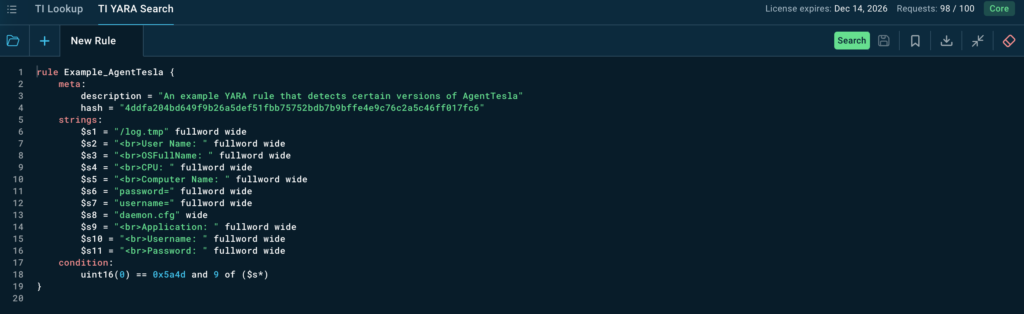
Together, TI Lookup and TI YARA Search reduce repetitive research, expand the available evidence, and help teams investigate threats more thoroughly without delaying action.
As a result, security leaders can:
- Focus SOC resources on threats relevant to their industry, region, and environment
- Reduce investigation time without increasing analyst workload
- Gain clearer visibility into potential exposure and connected attack activity
- Improve detection coverage against related and recurring threats
Turn Analyst-Curated Research into Action
Researching an active malware or phishing campaign can take hours. TI teams must collect indicators, connect them to related infrastructure, examine attacker behavior, and organize the findings before the intelligence can support detection and investigation.
ANY.RUN analysts manually compile TI Reports on malware and phishing attacks, with particular attention to APTs and cybercriminal groups. Each report brings together the key details teams need to understand the threat, including campaign behavior, malicious infrastructure, IOCs, TTPs, and other evidence collected from real-world investigations.
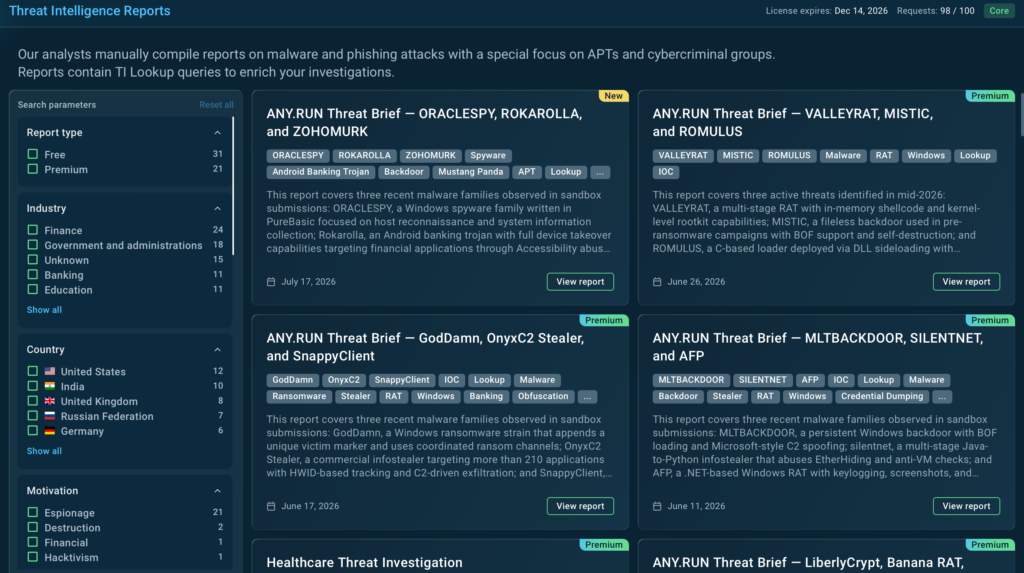
Reports also contain ready-made TI Lookup queries that teams can use to enrich investigations and explore related activity without building searches from scratch. Relevant IOCs can then be added to SIEMs, TIPs, EDRs, firewalls, and other detection systems to strengthen coverage against the threat.
This reduces the amount of manual research required from internal TI teams and shortens the path from learning about an attack to updating detection and investigation workflows.
As a result, organizations can:
- Reduce the time required to research complex campaigns
- Gain deeper visibility into APT and cybercriminal activity
- Give SOC and TI teams a clear starting point for investigations
- Free internal specialists to focus on organization-specific risks
- Turn expert threat research into stronger detections sooner
The Result: 21 Minutes Faster MTTR per Case
ANY.RUN helps security teams remove delays across detection, triage, investigation, and threat response. By bringing behavioral evidence, current threat intelligence, automation, and integrations into one connected workflow, organizations can reduce MTTR by up to 21 minutes per incident.
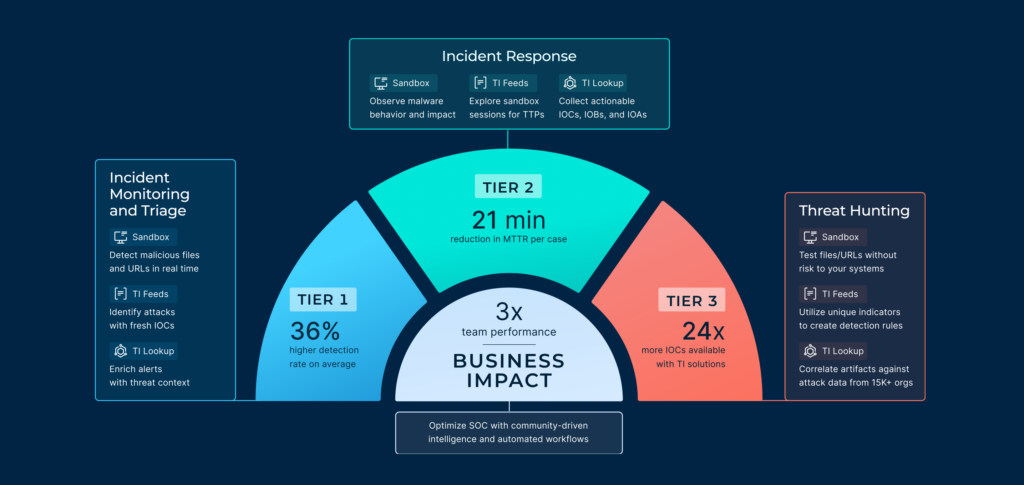
This translates to:
- More threats handled with existing SOC resources
- Faster alert validation and investigation
- Higher detection rates and wider threat coverage
- Fewer unnecessary escalations to senior analysts
- Shorter exposure windows and quicker containment decisions
Organizations across different industries are already seeing these results.
Expertware reduced malware investigation and IOC extraction turnaround time by more than 50%.
UMass Boston shortened investigations from minutes to seconds and increased alert-processing capacity without adding headcount.
A US automotive manufacturer doubled triage speed, reached a 20-second MTTD, and began analyzing hundreds of supplier files each week without expanding its team.
These examples show how ANY.RUN helps security teams shorten the path from alert to containment, make response decisions faster, and reduce the risk of incidents escalating into wider business disruption.
About ANY.RUN
ANY.RUN, a leading provider of interactive malware analysis and threat intelligence solutions, helps organizations investigate threats faster andmake response decisions based on clear behavioral evidence.
Its solutions include the Interactive Sandbox for enterprise-scale malware and phishing analysis, along with Threat Intelligence products built on investigationdata from more than 15,000 organizations. This intelligence helps security teams enrich alerts, uncover active threats earlier, and add relevant context to detection, investigation, and response workflows.
ANY.RUN is SOC 2 Type II attested, demonstrating its commitment to strong security controls and customer data protection. For SOCs, MSSPs, and enterprise security teams, the platform helps reduce investigation uncertainty, accelerate triage, and turn threat analysis into actionable findings.



0 comments