Black friday Up to 3 extra licenses FOR FREE + Special offer for TI LOOKUP Get it now
Webinar
February 26
Better SOC with Interactive Sandbox Practical Use Cases
Register now
20
Global rank
16 infographic chevron month
Month rank
21 infographic chevron week
Week rank

LokiBot was developed in 2015 to steal information from a variety of applications. Despite the age, this malware is still rather popular among cybercriminals.

Stealer
Type
ex-USSR territory
Origin
3 May, 2015
First seen
7 October, 2026
Last seen
Also known as
Loki
LokiPWS

How to analyze LokiBot with ANY.RUN

Type
ex-USSR territory
Origin
3 May, 2015
First seen
7 October, 2026
Last seen

IOCs

IP addresses
52.111.231.13
23.11.41.157
50.16.27.236
131.253.33.203
48.209.6.48
2.21.239.135
52.110.17.59
150.171.109.150
40.79.163.155
135.233.95.144
52.123.243.213
48.192.1.64
48.209.138.189
40.126.31.69
172.211.123.250
52.110.17.74
74.178.76.54
52.110.17.3
2.16.168.44
52.110.17.62
Hashes
239721c2965f409d245952f9dce02135bb9f8e7e9cfb245c1e1b8e8a9c8b751c
878f32f76b159494f5a39f9321616c6068cdb82e88df89bcc739bbc1ea78e1f9
ed340e5cb087125c72a498a4f603d57b6591d37d638f7a4abfbc86e98270c883
cf209f1477fa2db39423e1be03acadbcca31029b1c2a19ce2efadda8c099dc6c
eacd09517ce90d34ba562171d15ac40d302f0e691b439f91be1b6406e25f5913
d3eb7c98e83a690bf241551a39e5dd32324c7a1fb252693cfff34e51fac8d544
b875dc4dff70cd329ac5a2bc34de29b202325f73e4924ca00d2c1854ab5da177
5ce9d42a01a46f57b019368cfc4ca697df611f2b0fed0e84a059c276042fffd2
a87c843933f7b73b4b1e1cb9c180e55d3a35c39ca57ae42f28959ce0971d0a1c
091544e2e46e1548ea755bcbdef42585932b80f99f6130eac3b8622f9aa26372
885b50da7535c713d7752ea8d0b73a7e3ee8553c698aad3c69889b71feed826f
eafcaad2f9e03d8f44dd577d930cd7a60c6f795be12b89963225574fa28810e8
1f854d2804163160e85df1f373b5bbee92723bc6f48b782a7118ede3212e55fb
f0988088f5caedce50ff7263ba5ed85b4763522e717f572342f74867c0fa577b
af89081e3dfb49a266579bebaf129b0f353d07610579e8f7e9fcbeb8a92564a0
ea69e3c58a41c3efa62366a1b401e42f06d97e987b2c5ca7cdc5e04ff9f70e8a
3b071dbc0aeb1963a108bcda95f59f4f30405e4e3cdca7aad44a1da3f481f9ad
81cca8e68aec4c50ca15e960c4eb3b7dd36bb4e9cf569937b35835db3bd71a46
0e60b52689f3627486b9a77bb4f88bea0d8665a94f7f1ffc960a1fbc427626b7
913e8ced6a447fe791954d382aba52d490513c5d2f689b391866c7e561f89a03
Domains
nexusrules.officeapps.live.com
ecs.office.com
settings-win.data.microsoft.com
oneocsp.microsoft.com
ocsp.digicert.com
crl.microsoft.com
odc.officeapps.live.com
editor.svc.cloud.microsoft
slscr.update.microsoft.com
fe3cr.delivery.mp.microsoft.com
th.bing.com
www.bing.com
www.microsoft.com
client.wns.windows.com
activation-v2.sls.microsoft.com
messaging.lifecycle.office.com
dcqapz.shop
self.events.data.microsoft.com
officeclient.microsoft.com
google.com
URLs
http://crl.microsoft.com/pki/crl/products/microoceraut2011_2011_03_22.crl
http://ocsp.digicert.com/mfewtzbnmeswstajbgurdgmcgguabbtrjrydryt%2bapf3gspypfhbxr5xtqqus9tippmhxdiunkhmewnpyim8s8yceajtxtab8my1oj8mfwpz%2f7y%3d
http://oneocsp.microsoft.com/ocsp/mfqwujbqme4wtdajbgurdgmcgguabbq3l3%2f%2fa6adk8nray2gxzvayrhg4aqub6t%2b2v%2bxq3lso2d33ojhnyhhqoucezmaaaafuwohyjguzpcaaaaaaau%3d
http://ocsp.digicert.com/mfewtzbnmeswstajbgurdgmcgguabbq50otx%2fh0ztl%2bz8sipi7wewvxdlqqutijuibiv5unu5g%2f6%2brks7qyxjzkceaz1vqyrvgl0erhqlcpm8gy%3d
http://ocsp.digicert.com/mfewtzbnmeswstajbgurdgmcgguabbq50otx%2fh0ztl%2bz8sipi7wewvxdlqqutijuibiv5unu5g%2f6%2brks7qyxjzkceasmayxgarewr3pgr9svwmg%3d
http://oneocsp.microsoft.com/ocsp/mfqwujbqme4wtdajbgurdgmcgguabbr0tbevyklx7a9ylold9hqmcwdxfgqu3pggslehmvkx8utfb6ncihnaqhycezmaaaale%2bvmfuqbvyaaaaaaaas%3d
https://officeclient.microsoft.com/config16/?lcid=1033&syslcid=1033&uilcid=1033&build=16.0.16026&crev=3
https://ecs.office.com/config/v2/office/outlook/16.0.16026.20146/production/cc?&clientid=%7bd61ab268-c26a-439d-bb15-2a0dedfca6a3%7d&application=outlook&platform=win32&version=16.0.16026.20146&msoversion=16.0.16026.20002&sdx=fa000000002.2.0.1907.31003&sdx=fa000000005.1.0.1909.30011&sdx=fa000000006.1.0.1909.13002&sdx=fa000000008.1.0.1908.16006&sdx=fa000000009.1.0.1908.6002&sdx=fa000000016.1.0.1810.13001&sdx=fa000000029.1.0.1906.25001&sdx=fa000000033.1.0.1908.24001&sdx=wa104381125.1.0.1810.9001&processname=outlook.exe&audience=production&build=ship&architecture=x64&language=en-us&subscriptionlicense=false&perpetuallicense=2019&licensecategory=6&licensesku=professional2019retail&osversion=10.0&osbuild=19045&channel=cc&installtype=c2r&sessionid=%7be384850e-91ad-4be4-a986-14d1d8ca16ed%7d&labmachine=false
https://roaming.svc.cloud.microsoft/rs/roamingsoapservice.svc
https://settings-win.data.microsoft.com/settings/v3.0/wsd/waasassessment?os=windows&osver=10.0.19041.1.amd64fre.vb_release.191206-&ring=retail&sku=48&deviceclass=windows.desktop&locale=en-us&deviceid=bad99146-31d3-4ec6-a1a4-be76f32ba5d4&flightring=retail&telemetrylevel=1&hidovergattreg=c%3a%5cwindows%5csystem32%5cdriverstore%5cfilerepository%5chidbthle.inf_amd64_9610b4821fdf82a5%5cmicrosoft.bluetooth.profiles.hidovergatt.dll&appver=10.0&processoridentifier=amd64%20family%2023%20model%201%20stepping%202&oemmodel=dell&updateoffereddays=4294967295&processormanufacturer=authenticamd&installdate=1661339444&oemmodelbaseboard=&branchreadinesslevel=cb&oemsubmodel=j5cr&isclouddomainjoined=0&deferfeatureupdateperiodindays=30&isdeviceretaildemo=0&flightingbranchname=&osuilocale=en-us&devicefamily=windows.desktop&wuclientver=10.0.19041.3996&uninstallactive=1&isflightingenabled=0&osskuid=48&processorclockspeed=3094&totalphysicalram=6144&securebootcapable=0&app=waasassessment&processorcores=6&currentbranch=vb_release&installlanguage=en-us&deferqualityupdateperiodindays=0&servicingbranch=cb&oemname_uncleaned=dell&tpmversion=0&primarydisktotalcapacity=262144&installationtype=client&attrdataver=186&processormodel=amd%20ryzen%205%203500%206-core%20processor&isedgewithchromiuminstalled=1&osversion=10.0.19045.4046&ismdmenrolled=0&activationchannel=retail&honorwufbdeferrals=1&firmwareversion=a.40&trendinstalledkey=1&osarchitecture=amd64&defaultuserregion=244&updatemanagementgroup=2
https://settings-win.data.microsoft.com/settings/v3.0/flightsettings/fsservice?processorclockspeed=3094&isretailos=1&oemmanufacturername=dell&flightingpolicyvalue=3&enablepreviewbuilds=4294967295&osversionfull=10.0.19045.4046.amd64fre.vb_release.191206-1406&managepreviewbuilds=3&branchreadinesslevelsource=0&attrdataver=186&processorcores=6&branchreadinesslevelraw=16&totalphysicalram=6144&tpmversion=0&oemmodelnumber=dell&systemvolumetotalcapacity=260281&deviceid=s%3abad99146-31d3-4ec6-a1a4-be76f32ba5d4&app=fss&appver=10.0&smartactivehoursstate=1&activehoursstart=20&securebootcapable=0&activehoursend=13&devicefamily=windows.desktop
https://settings-win.data.microsoft.com/settings/v3.0/wsd/waasassessment?os=windows&osver=10.0.19041.1.amd64fre.vb_release.191206-&ring=retail&sku=48&deviceclass=windows.desktop&locale=en-us&deviceid=bad99146-31d3-4ec6-a1a4-be76f32ba5d4&flightring=retail&telemetrylevel=1&hidovergattreg=c%3a%5cwindows%5csystem32%5cdriverstore%5cfilerepository%5chidbthle.inf_amd64_9610b4821fdf82a5%5cmicrosoft.bluetooth.profiles.hidovergatt.dll&appver=10.0&processoridentifier=amd64%20family%2023%20model%201%20stepping%202&oemmodel=dell&updateoffereddays=4294967295&processormanufacturer=authenticamd&installdate=1661339444&oemmodelbaseboard=&branchreadinesslevel=cb&oemsubmodel=j5cr&isclouddomainjoined=0&deferfeatureupdateperiodindays=30&isdeviceretaildemo=0&flightingbranchname=&osuilocale=en-us&devicefamily=windows.desktop&wuclientver=10.0.19041.3996&uninstallactive=1&isflightingenabled=0&osskuid=48&processorclockspeed=3094&totalphysicalram=6144&securebootcapable=0&app=waasassessment&processorcores=6&currentbranch=vb_release&installlanguage=en-us&deferqualityupdateperiodindays=0&servicingbranch=cb&oemname_uncleaned=dell&tpmversion=0&primarydisktotalcapacity=262144&installationtype=client&attrdataver=186&processormodel=amd%20ryzen%205%203500%206-core%20processor&isedgewithchromiuminstalled=1&osversion=10.0.19045.4046&ismdmenrolled=0&activationchannel=retail&honorwufbdeferrals=0&firmwareversion=a.40&trendinstalledkey=1&osarchitecture=amd64&defaultuserregion=244&updatemanagementgroup=2
https://messaging.lifecycle.office.com/getcustommessage16?app=6&ui=en-us&src=bizbar&messagetype=bizbar&hwid=04111-083-043729&ver=16.0.16026&lc=en-us&platform=10%3a0%3a19045%3a2%3a0%3a0%3a256%3a1%3a&productid=%7b1717c1e0-47d3-4899-a6d3-1022db7415e0%7d%3a00411-10830-43729-aa720%3aoffice%2019%2c%20office19professional2019r_retail%20edition&clientsessionid=%7be384850e-91ad-4be4-a986-14d1d8ca16ed%7d&datapropertybag=%7b%22audience%22%3a%22production%22%2c%22audiencegroup%22%3a%22production%22%2c%22audiencechannel%22%3a%22cc%22%2c%22flight%22%3a%22ofsh6c2b1tla1a31%2cofcrui4yvdulbf31%2cofhpex3jznepoo31%22%7d
https://editor.svc.cloud.microsoft/nleditor/cloudsuggest/v1
http://oneocsp.microsoft.com/ocsp/mfqwujbqme4wtdajbgurdgmcgguabbr0tbevyklx7a9ylold9hqmcwdxfgqu3pggslehmvkx8utfb6ncihnaqhycezmaaaaoqpopjdxrqzsaaaaaaa4%3d
https://self.events.data.microsoft.com/onecollector/1.0/
http://www.microsoft.com/pkiops/crl/microsoft%20ecc%20update%20secure%20server%20ca%202.1.crl
https://slscr.update.microsoft.com/sls/%7b522d76a4-93e1-47f8-b8ce-07c937ad1a1e%7d/x64/10.0.19045.4046/0?ch=686&l=en-us&p=&pt=0x30&wua=10.0.19041.3996&mk=dell&md=dell
https://fe3cr.delivery.mp.microsoft.com/clientwebservice/ping
https://slscr.update.microsoft.com/sls/ping
Last Seen at

Recent blog posts

post image
5 Critical Pain Points of Modern US SOCs and...
watchers 1648
comments 0
post image
IronChain Ransomware Threatens Businesses wit...
watchers 3378
comments 0
post image
Threat Coverage Digest: New Malware Reports a...
watchers 10879
comments 0

What is LokiBot malware?

LokiBot, also known as Loki-bot or Loki bot, is an information stealer malware that collects credentials from the most widely used web browsers, FTP, email clients, and over a hundred software tools installed on the infected system. It was developed in one of the ex-USSR countries.

The trojan was discovered for the first time on May 3rd, 2015, from a sale announcement made by the creator, and the malware is still active to this day.

General description of LokiBot

Initially created and sold by a hacker known as "lokistov" or "Carter," the first versions of LokiBot spyware used to cost up to $400. However, almost identical malware appeared on hacker forums soon after, available for as little as $80 from several sellers. As it is thought, "lokistov" himself was hacked, and the virus's source code was leaked, allowing others to use its techniques and sell remarkably similar malware.

Curiously, a researcher subsequently found out that the first version of the virus got patched by someone without accessing the source code, which gave the hacker community the ability to set a series of individual domains used to receive the retrieved data.

Even though several versions of the virus exist today, after the analysis, it was found that all of them are actually modifications of the original malware. Interestingly, the server to which LokiBot stealer sends data is unique for every particular malware sample.

In the latest versions of LokiBot, a third stage is added to the process of compromising systems, besides more encryption, a technique to escape detection. Each layer of the trojan is encrypted to attempt to hide the eventual source of code.

The malware uses the known technique of blurring images in documents to force users to enable macros. This trick infects machines quite successfully.

LokiBot malware analysis

An analysis session displaying the simulation of the contamination process created by the ANY.RUN interactive malware hunting service provides the perfect opportunity for malware analysis to see how the contamination process unfolds on an infected machine. As shown in the simulation, LokiBot trojan needs email attachments, such as a Microsoft Office file or an archive file to be opened to enter an active phase.
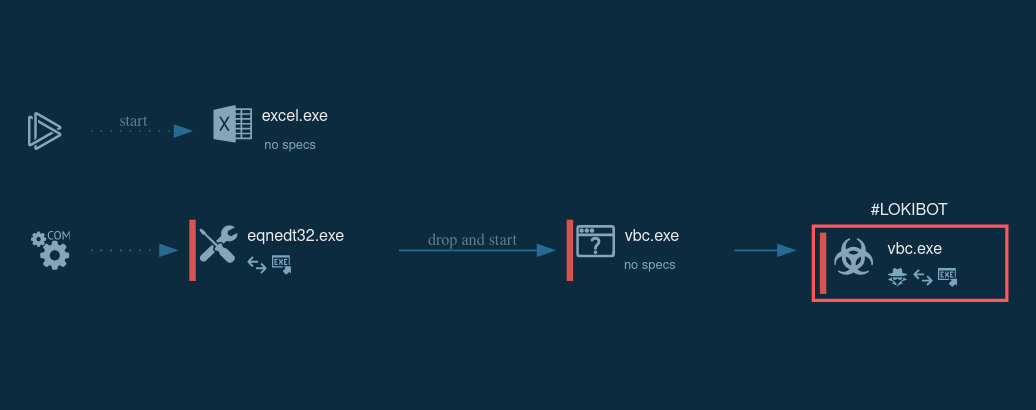
process graph of lokibot stealer execution Figure 1: Process graph generated by the ANY.RUN malware hunting service

During the analysis, we found out that the malware life cycle can be broken down into the following stages:

  • Contamination. The victim downloads a malicious archive or a Microsoft Office file which eventually downloads the malware;
  • Being packed initially, the keylogger unpacks itself and begins the execution of the main payload;
  • The virus creates unique loop-functions for each application that it is targeting and saves retrieved data into a buffer;
  • Then, a registry key is modified, and the trojan is explicitly copied into a folder with a specific name unique name under the %APPDATA% folder. This allows the virus to establish persistence. MachineGuid MD5 is used for the name generation, and the name can also be used as a Mutex as well as bot-id. As the last action of this step, the virus generates a registry key that points to the file it copied before to the specific folder inside the %APPDATA% folder;
  • Then, depending on if the current user is privileged or not, the virus sets persistence either under HKEY_LOCAL_MACHINE or KEY_CURRENT_USER;
  • Next, general system information is sent to the C&C server;
  • For persistence, the keylogger then applies the triple-DES encryption technique to the URL and the registry key;
  • After this, the virus starts waiting for commands from C&C, creating a new thread to detect the C&C response.

How to avoid infection by LokiBot virus?

Since LokiBot spyware requires macros to be activated to infect the system, attackers will do everything in their power to make the victim enable them. Thus keeping macros turned off is the best bet to stay protected from the trojan. Notably, extra caution should be exhibited when a document downloaded from a suspicious source or an unknown email address prompts to enable macros.

Also, having antivirus software from trusted developers and keeping it updated is an excellent way to decrease the probability of becoming the malware's victim and protecting credentials. Another good common practice is to be highly mindful when opening attachments or clicking links in emails from unidentified sources as it's a popular method of malware spreading, including FormBook and Dridex.

Distribution of LokiBot

LokiBot stealer is distributed mostly via mail-spam campaigns, prompting the user to download a malicious file that is attached. Remarkably, the three most commonly used types of files are Microsoft Office documents configured to begin the download and installation processes of the malware, archive files containing a Loki-Bot executable or ISO files, and a Loki-Bot executable.

LokiBot execution process

Interactive sandbox simulation conducted on the ANY.RUN malware hunting service allows us to take a closer look at how the execution process of LokiBot unfolds in a case when a contaminated Microsoft Office file is the infection source.
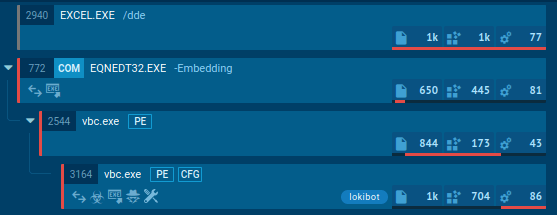
  • The simulation starts with opening a Microsoft Office file. Immediately, WINWORD.EXE is executed with enable macros.
  • Then, through the exploitation of the CVE-2017-11882 vulnerability, Microsoft Office Equation Editor proceeds to download a malicious executable file;
  • Finally, a malicious executable file runs itself and then proceeds to steal the personal data and connect to the C&C server.

process tree of a lokibot stealer execution Figure 2: Illustrates the execution processes of LokiBot as shown by ANY.RUN simulation
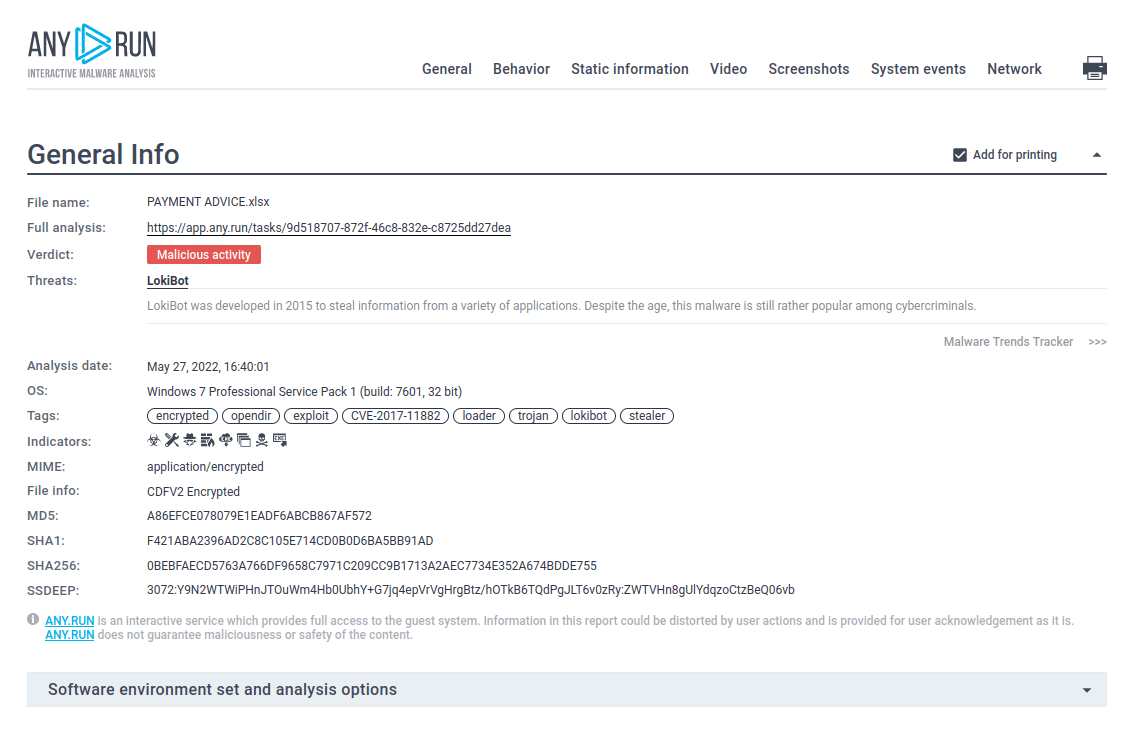
a text report of a lokibot analysis Figure 3: A text report created by ANY.RUN

The virus generates multiple artifacts during its execution process. Particularly, four types of files can be simultaneously stored in the secret %APPDATA% directory at any point in time. Those files can have ".exe," ".lck," ".hdb" or ".kdb." extensions, and each file type is used for a specific purpose:

  • .exe files contain an executable copy of the trojan that triggers when a user logs into an account,
  • .lck files are generated to prevent resource conflicts when either Windows Credentials or Keylogging are decrypted,
  • .hdb files are used to store the hashes of all data samples already transmitted to the C&C server
  • .kdb files are in turn used to hold information about the data that is yet to be sent to the server

Based on the analysis, the keylogger uses the following algorithm to name the files:
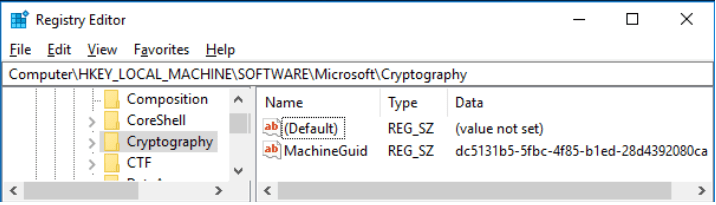
  1. First, LokiBot takes the value of MachineGuid from the registry branch HKEY_LOCAL_MACHINE \ SOFTWARE \ Microsoft \ Cryptography . In the case of our simulation, it was set to dc5131b5-5fbc-4f85-b1ed-28d4392080ca.

lokibot mutex creation GUID registry

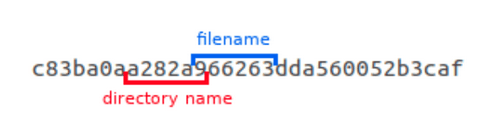
  1. Then, the virus uses the MD5 algorithm to calculate the hash sum of the MachineGuid, which in our case ended up being c83ba0aa282a966263dda560052b3caf.

lokibot mutex creation md5

  1. Finally, characters from the 8th to the 13th of the resulting hash amount are used as the subdirectory's name, and the characters from the 13th to the 18th are used as the name of the files.

lokibot mutex creation

LokiBot communication with C&C

To communicate with the C&C server, the patched version of the virus, which is also the most widely spread strain, sends a "ckav.ru" string. Interestingly, the sent data is also is a substring of "fuckav.ru."

How to detect LokiBot malware using ANY.RUN?

Among other things, you can detect whether it is LokiBot in front of you or not by looking inside sending packets - there's always text "ckav.ru" inside them. Just click on the sent packet in the "HTTP REQUESTS" tab and take a look inside a packet.
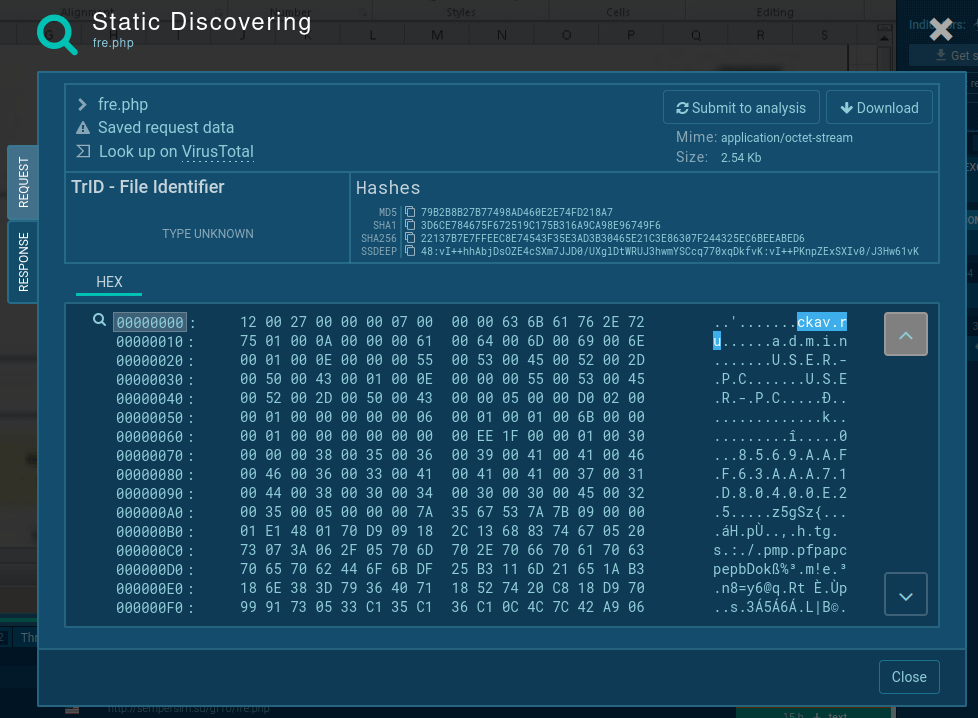
lokibot network stream Figure 4: Lokibot network stream

Conclusion

Lastly, since the first version of the malware was leaked and cloned, eventually becoming available for a significantly lower price than the original, LokiBot spyware became a widely spread malware that continues to appear in several mail-spam campaigns. In fact, the virus has become so popular that its set-up explanation videos on stealing credentials are publically available on YouTube.

Fortunately, modern malware hunting tools like ANY.RUN provides the ability to examine the malware behavior in detail and establish solid protection against the hazard.

Create your free ANY.RUN account today and enjoy unlimited malware analysis!
HAVE A LOOK AT

CryptoWall screenshot
CryptoWall
cryptowall
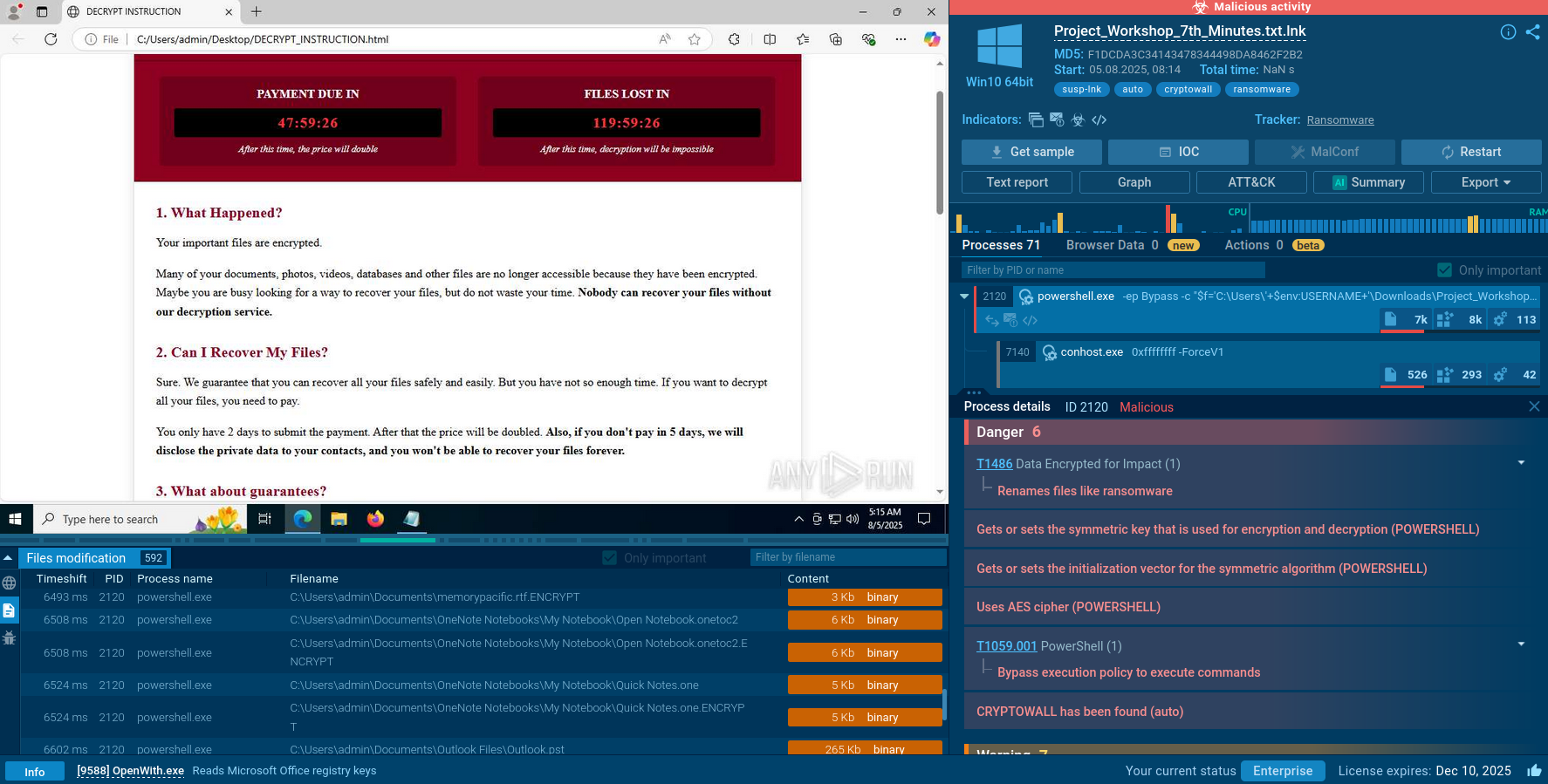
CryptoWall is a notorious ransomware family that emerged in early 2014 and rapidly became one of the most destructive cyber threats of its time. This malware encrypts victims' files using strong AES encryption, demands ransom payments in Bitcoin, and has generated hundreds of millions of dollars for cybercriminals.
Read More
ClickFix screenshot
ClickFix is a sophisticated social engineering technique that tricks users into manually executing malicious commands on their devices. It masquerades as a "quick fix" for fake technical issues, CAPTCHA verifications, or error messages, often hijacking the clipboard to paste harmful PowerShell or terminal commands. This user-assisted approach helps it bypass traditional security controls, leading to infostealers like Lumma Stealer, RATs, and other malware.
Read More
Crocodilus screenshot
Crocodilus
crocodilus
Crocodilus is a highly sophisticated Android banking Trojan that emerged in March 2025, designed for full device takeover. Disguised as legitimate apps, it steals banking credentials, cryptocurrency wallet data, and enables remote control, rapidly evolving into a global threat targeting financial users across Europe, South America, and Asia.
Read More
MassLogger screenshot
MassLogger
masslogger
MassLogger is a credential stealer and keylogger first identified in April 2020. It has been actively used in cyber campaigns to exfiltrate sensitive information from compromised systems. It is designed for easy use by less tech-savvy actors and is prominent for the capability of spreading via USB drives. It targets both individuals and organizations in various industries, mostly in Europe and the USA.
Read More
Cactus Ransomware screenshot
Cactus ransomware-as-a-service (RaaS) was first caught in March 2023 targeting corporate networks. It became known for its self-encrypting payload and double extortion tactics. Cactus primarily targets large enterprises across industries in finance, manufacturing, IT, and healthcare. It is known for using custom encryption techniques, remote access tools, and penetration testing frameworks to maximize damage.
Read More
DragonForce screenshot
DragonForce
dragonforce
DragonForce is a ransomware strain operating under the Ransomware-as-a-Service (RaaS) model. First reported in December 2023, it encrypts files with ChaCha8, renames them with random strings, and appends “.dragonforce_encrypted.” By disabling backups, wiping recovery, and spreading across SMB shares, DragonForce maximizes damage and pressures victims into multimillion-dollar ransom negotiations. It has targeted manufacturing, construction, IT, healthcare, and retail sectors worldwide, making it a severe threat to modern enterprises.
Read More