Webinar
February 26
Better SOC with Interactive Sandbox
Practical Use Cases


Kratos is a mature Phishing-as-a-Service (PhaaS) platform that evolved from the Sneaky2FA kit to specialize in stealing Microsoft 365 credentials through sophisticated Adversary-in-the-Middle (AiTM) techniques. The service provides low-skilled affiliates with a turnkey solution featuring an advanced administrative dashboard, integrated anti-bot defenses, and real-time data exfiltration via the Telegram Bot API. Although an international law enforcement action known as Operation Olympus Blade disrupted its central infrastructure in July 2026, the kit remains a primary example of the industrialization of modern cybercrime.
|
Phishingkit
Type
:
|
Unknown
Origin
:
|
|
1 September, 2025
First seen
:
|
16 October, 2026
Last seen
:
|
|
Type
:
|
Unknown
Origin
:
|
|
1 September, 2025
First seen
:
|
16 October, 2026
Last seen
:
|
 2314
2314
 0
0
 3862
0
3862
0
 9295
0
9295
0
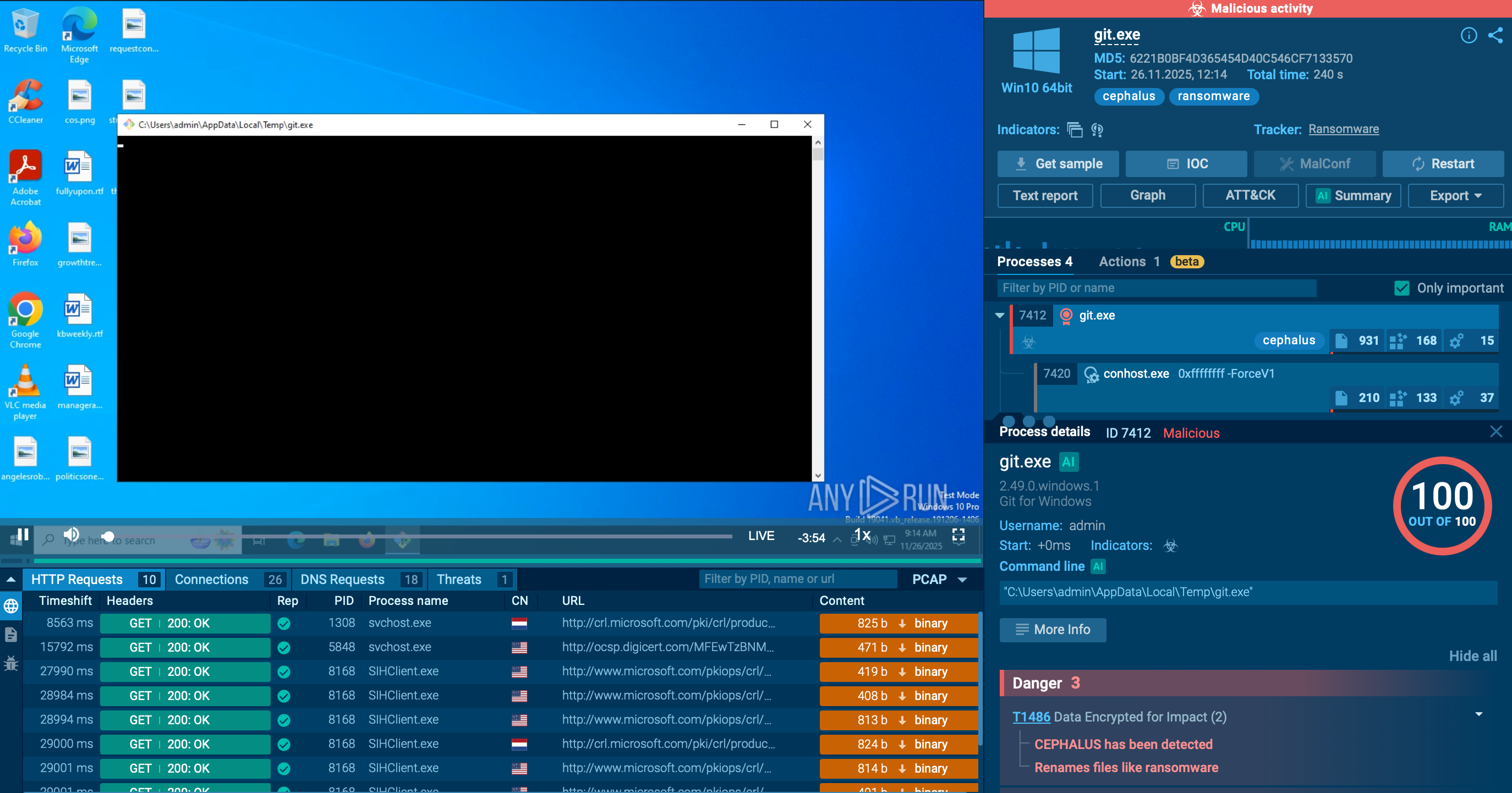
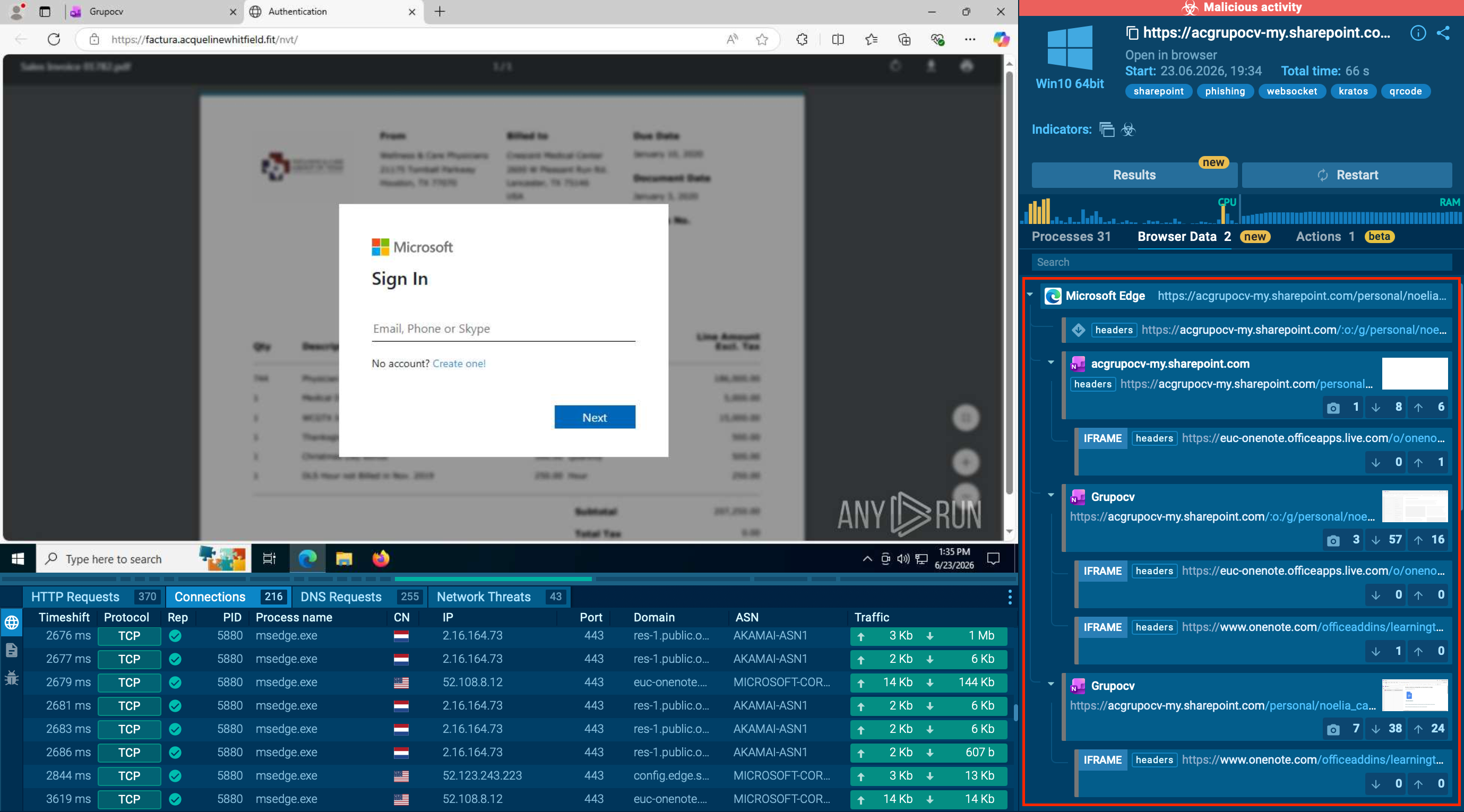 Kratos phishing attack exposed in ANY.RUN's Interactive Sandbox
Kratos is a subscription-based cybercrime service that provides a "turnkey" solution for threat actors looking to compromise Microsoft 365 environments at scale. As a Phishing-as-a-Service (PhaaS) model, it lowers the barrier to entry for low-skilled attackers by offering a centralized administrative dashboard that automates the deployment of phishing domains, VPS infrastructure, and anti-bot protections.
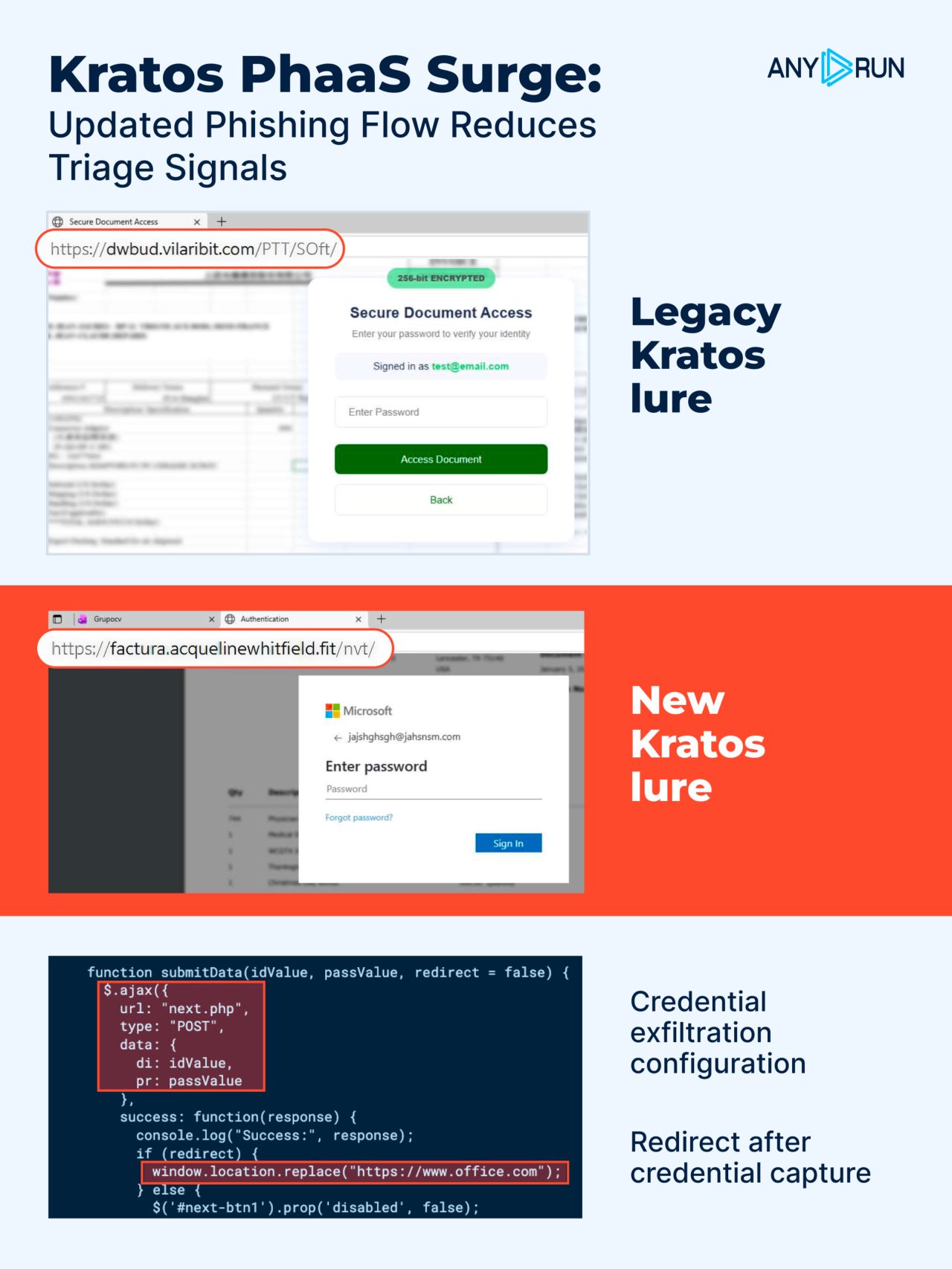 Evolution of Kratos phishing
The kit represents a significant technical evolution from its predecessor, Sneaky2FA. While earlier versions functioned as traditional info-stealers, the modern Kratos platform utilizes adversary-in-the-middle (AiTM) techniques to relay live authentication sessions between victims and legitimate Microsoft login servers. This allows the kit to capture not only passwords but also the session tokens required to bypass MFA challenges.
The "business" of Kratos is highly organized, operating through Telegram-based subscriptions where affiliates pay for access to ready-made phishing templates, such as those mimicking Adobe Creative Cloud or DocuSign. The platform's internal logic includes advanced features such as:
By utilizing an encrypted exfiltration chain via the Telegram Bot API, Kratos ensures that its criminal operators can receive stolen credentials instantly and securely, blending their malicious traffic with legitimate web service activity.
Kratos represents a significant escalation in the threat landscape because it moves beyond simple password harvesting toward total account takeover (ATO) and long-term persistence within corporate environments.
By industrializing the theft of Microsoft 365 credentials, the platform creates several critical risks for modern enterprises:
The Kratos platform is a global threat that has successfully targeted victims in over 30 countries. While its reach is international, analysis of ANY.RUN Interactive Sandbox data and industry reports reveals specific geographic and sectoral concentrations:
Ultimately, any organization that relies on Microsoft 365 for its daily operations is within the scope of Kratos. The kit does not exploit a software vulnerability but rather exploits the human element and the ubiquitous nature of Microsoft’s authentication workflows.
Detonating a Kratos sample in the ANY.RUN Interactive Sandbox provides a clear, step-by-step view of how the PhaaS platform operates. By moving beyond static analysis, defenders can observe the following stages of the attack in real-time:
The Kratos infection chain begins with a targeted phishing email that is frequently successful in bypassing corporate email filters and secure email gateways.
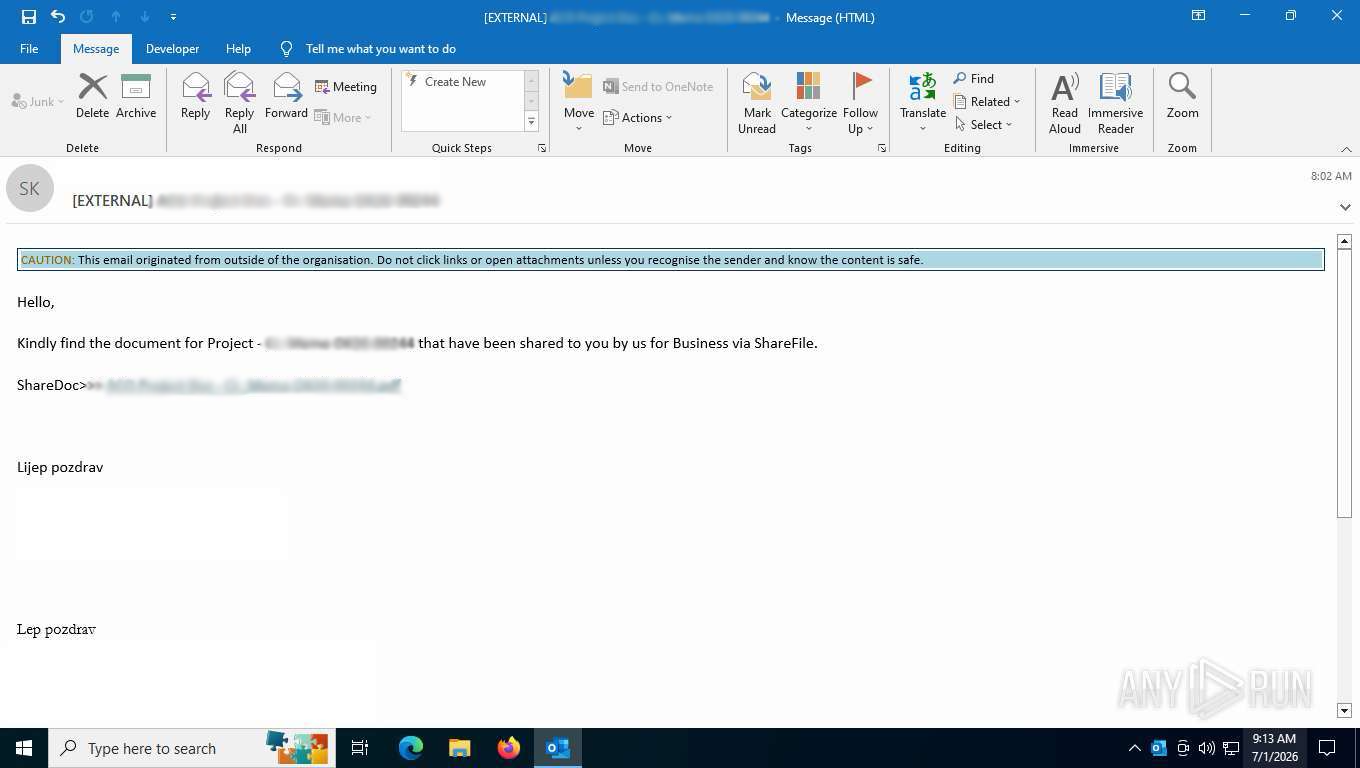 Kratos phishing email
To further evade detection by automated scanners, the attack does not link directly to the final phishing landing page. Instead, the email directs the victim to an intermediary "buffer" site hosted on a legitimate, trusted platform. In the ANY.RUN Sandbox, analysts frequently observe redirects through services such as Microsoft SharePoint, OneDrive, Canva, Tilda, or Microsoft Forms.
Before the phishing form is even loaded, Kratos initiates a verification gate to filter out automated security crawlers. The victim is presented with a Cloudflare Turnstile or CAPTCHA. In the network logs, this is often identified as "challengepoint". This step ensures that the sandbox is being operated by a human, making it harder for headless security scanners to reach the payload.
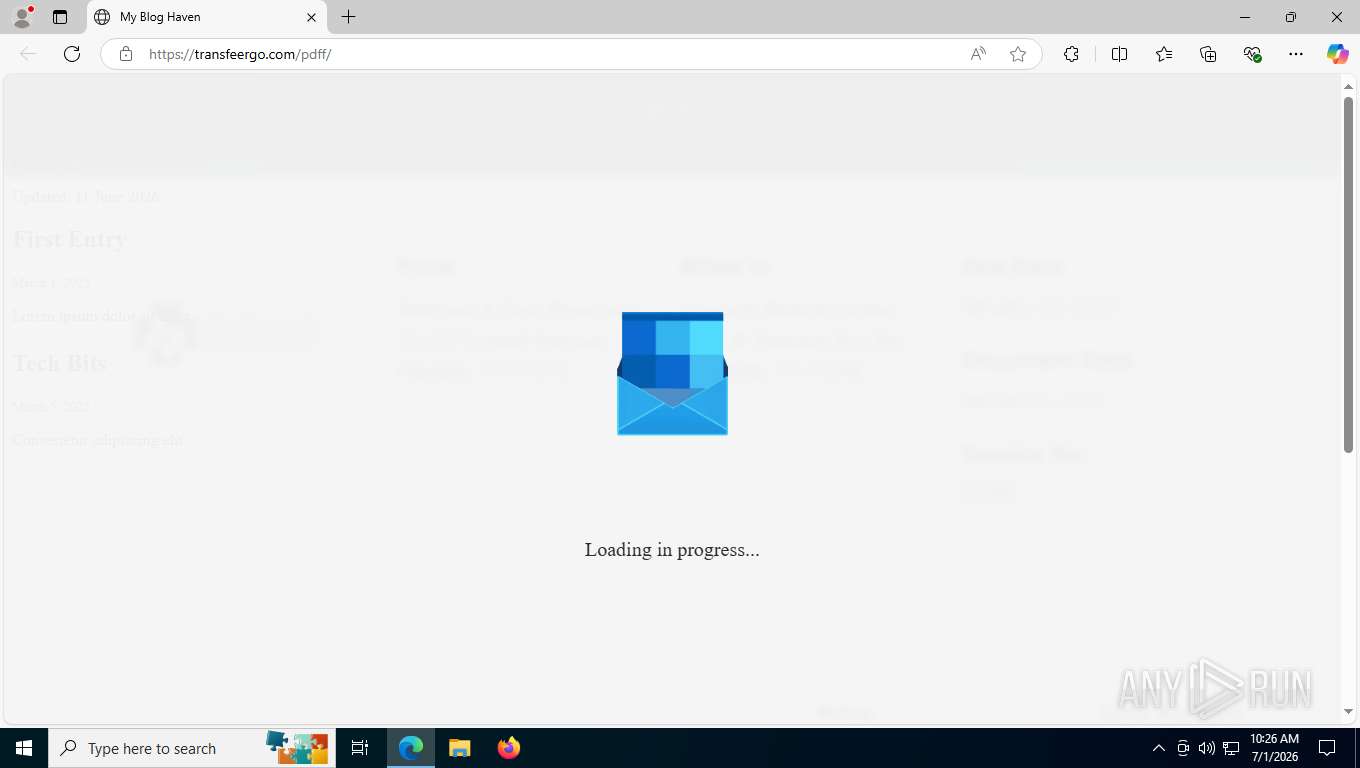 Loading page used in Kratos attacks
Once verified, the kit presents its unique visual identity. A distinctive feature of Kratos is the animated envelope screen. The victim sees an animation with the message “Loading in progress…” overlaid on a blurred image of an invoice or document. The browser tab title typically changes to “Authentication” during this phase. This high-fidelity branding is designed to build trust immediately before requesting credentials.
Kratos phishing attack exposed in ANY.RUN's Interactive Sandbox
The most critical part of the analysis occurs during the login attempt. Using ANY.RUN’s In-browser data inspection, analysts can deobfuscate the script behavior:
Kratos uses a decoupled architecture, meaning the exfiltration happens server-side, but its traces are visible in the sandbox's network traffic:
The Dropzone: The kit communicates with the Telegram Bot API to send stolen data to the attacker’s private channel.
Data Packaging: Credentials, IP addresses, geolocations, and device types are bundled into JSON logs, ensuring the attacker receives the data even if the phishing site is taken down immediately.
To avoid suspicion, the kit limits login attempts. In the sandbox, analysts can observe that after three failed attempts, the victim is automatically redirected to a legitimate URL. This final step is intended to make the victim believe they simply had a minor login error, delaying any potential report to their IT security team.
ANY.RUN’s Threat Intelligence serves as a powerful proactive defense solution, allowing SOC teams to move beyond a single indicator and view the entire Kratos ecosystem through a continuously updated threat database that is based on sandbox submissions by 15K organizations and 600K security analysts.
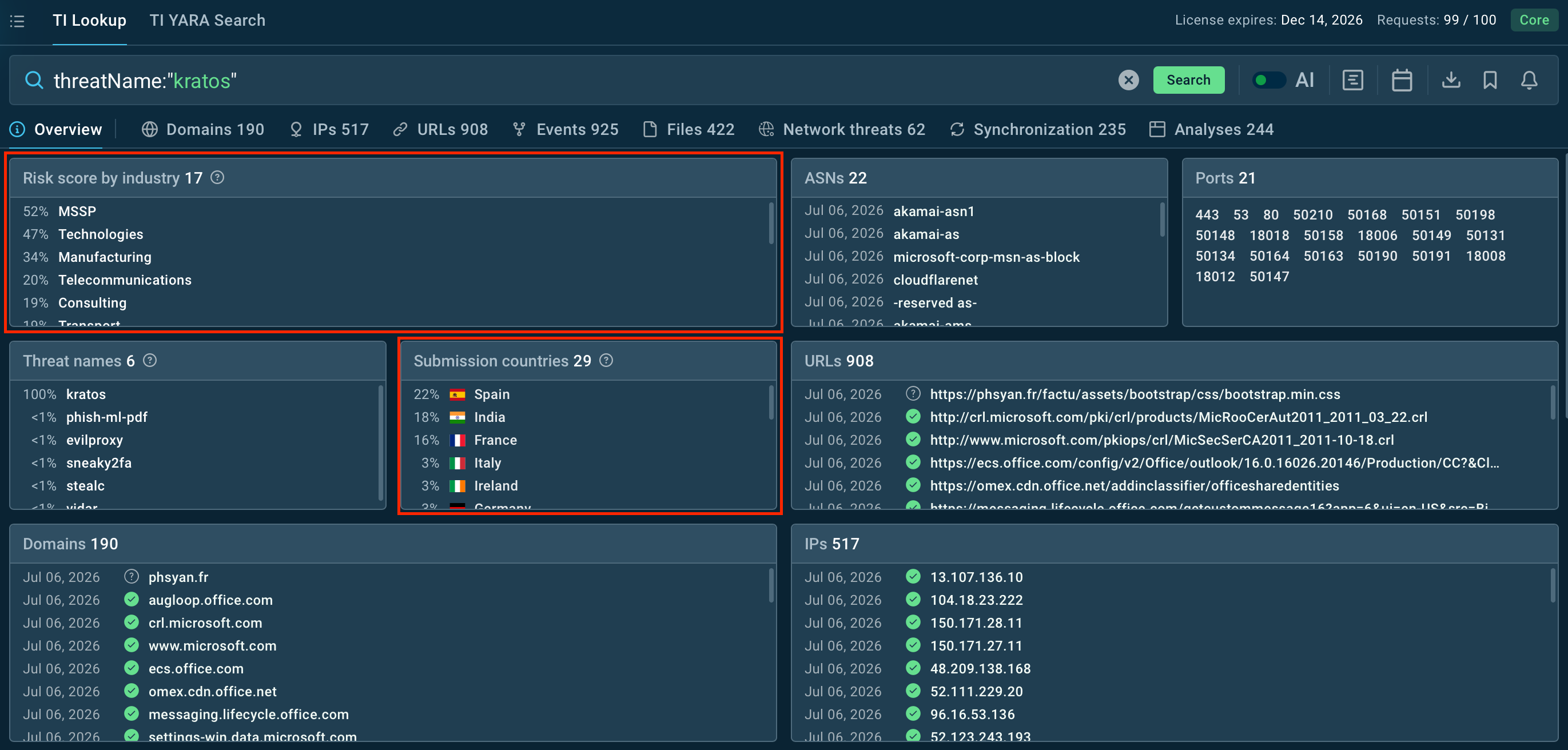 ANY.RUN's Lookup offers latest intel on Kratos and other phishing
Threat Intelligence Lookup allows for precise family-level identification. By using the query threatName:"kratos", analysts can instantly access a consolidated view of all data related to Kratos attacks globally. This helps teams understand the current scale of the threat and determine if their specific industry or region is currently being targeted by active clusters.
One of the most effective ways to use TI Lookup against Kratos is by searching for static asset hashes. Even when attackers change their domain names or rename files, the underlying content of the kit remains largely the same.
Cross-Campaign Linking: Analysts can query for the specific SHA256 hash of the styles.css file, which has been found to connect over 630 sandbox analyses across both the V1 and V2 generations of the kit.
Asset Fingerprinting: Searching for the unique hashes of files like lg.svg (V1) or dsa.svg (V2) allows teams to identify Kratos landing pages with near-100% accuracy, even on compromised legitimate websites where the file path might be hidden.
Check this TI Lookup query based on the lg.svg and styles.css hashes:
By integrating TI Lookup queries into their regular hunting workflows, SOC and MSSP teams can significantly reduce business exposure to Kratos and contain account compromise attempts before they escalate into full-scale data breaches.
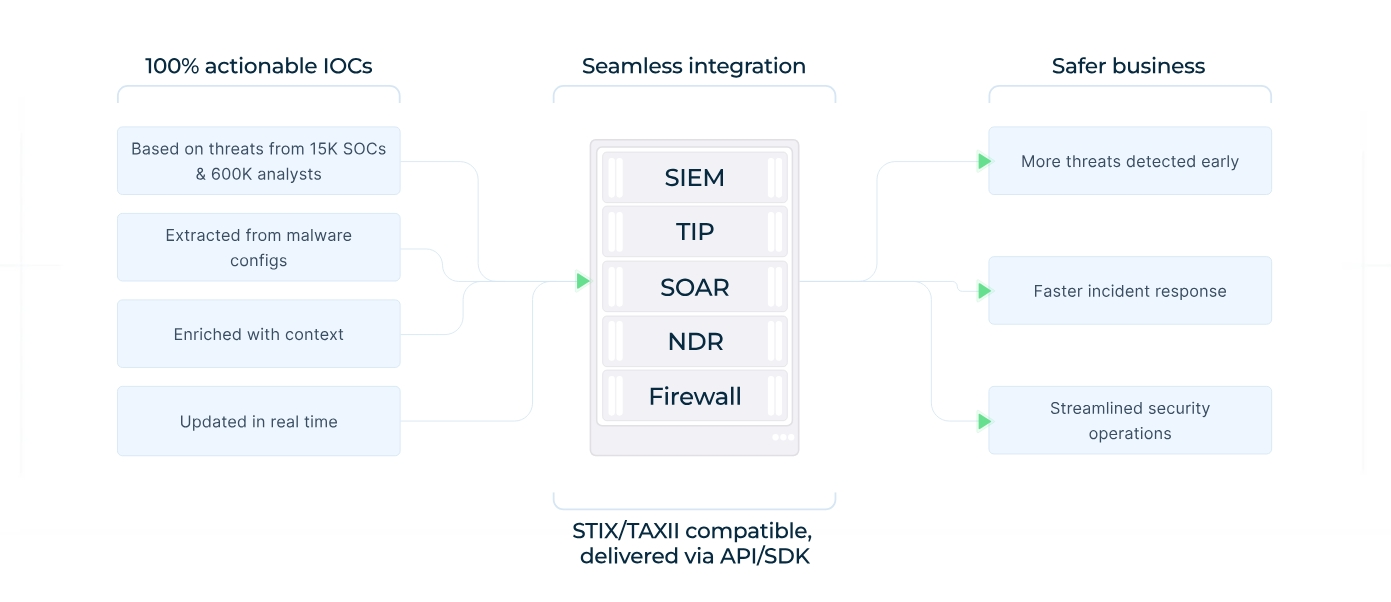 ANY.RUN's TI Feeds offer a real-time stream of phishing IOCs
For organizations looking to automate their defense, ANY.RUN’s Threat Intelligence Feeds provide a continuous stream of the most recent network indicators (IPs, domains, and URLs) associated with active phishing campaigns. The TI Feeds are updated in real time based on the latest threat submissions to ANY.RUN’s Sandbox from 15K organizations and 600K analysts.
By integrating these feeds into SIEMs and security controls, teams can automatically block emerging phishing infrastructure and detect malicious activity before attackers establish persistence or hijack session tokens.
While Operation Olympus Blade successfully dismantled the central Kratos infrastructure in July 2026, the broader Phishing-as-a-Service (PhaaS) ecosystem is only gaining momentum. Industry projections estimate that over 90% of all credential compromise attacks will be enabled by modular PhaaS kits by the end of 2026.
The rapid emergence of alternative platforms, such as Kali365, demonstrates that as one service is taken offline, others quickly fill the void to target Microsoft 365 environments. For organizations, the focus must shift from reacting to individual takedowns to maintaining proactive visibility through threat intelligence and adopting defense-in-depth strategies, such as revoking active session tokens rather than relying solely on password resets.
Kratos is a turnkey Phishing-as-a-Service platform used to steal Microsoft 365 credentials. It is a direct evolution of the Sneaky2FA kit.
It employs Adversary-in-the-Middle (AiTM) techniques to proxy live login sessions and capture session tokens, allowing attackers to bypass multi-factor authentication entirely.
Visually, victims see a “Loading in progress…” animation over a blurred document. Technically, the kit is identified by assets like barr.svg and lg.svg (V1) or dsa.svg and sid.gif (V2).
Stolen credentials and metadata are packaged as JSON and sent in real-time to Telegram bots, ensuring data remains accessible even if the phishing site is taken down.
Yes. In July 2026, Operation Olympus Blade dismantled the service, shutting down over 200 servers and resulting in the lead developer's arrest in Indonesia.
The platform has a global reach (30+ countries), focusing heavily on the United States (33%) and Southern Europe, particularly Spain.