




Cybersecurity budget planning for 2027 presents a growing challenge: security leaders must address emerging threats, expanding infrastructure, and increasing SOC workloads while keeping costs under control.
According to IANS and Artico Search, 55% of CISOs reported flat or declining security budgets in 2026. Meanwhile, PwC’s 2027 Global Digital Trust Insights found that 84% of surveyed security and finance leaders expect cybersecurity budgets to increase.
For decision-makers, the priority is to determine which investments can reduce operational costs, improve threat detection, and help existing security teams handle growing demands.
This guide explains how to assess your current SOC spending, identify opportunities to reduce operational costs, calculate potential savings, and make smarter investment decisions for your 2027 security budget.
1. Establish Your 2027 SOC Budget Baseline
Before allocating funds to new investments, determine how much it will cost to maintain your existing security operations in 2027.
Start by calculating projected 2026 spending:
- 2026 projected spending = Actual expenses YTD + Remaining committed expenses + Forecast uncommitted expenses
Avoid double-counting expenses already recorded. Separate recurring commitments, usage-based charges, and one-time costs that won’t carry into 2027.
Forecast Changes in SOC Spending
Review current contracts and expected operational demand to identify potential cost increases.
| SOC budget area | Key cost drivers |
|---|---|
| Personnel | Analyst salaries, staffing requirements, training |
| SIEM and monitoring | Log ingestion, retention, licensing |
| Investigation and response | Alert volume, analysis services, external support |
| Threat intelligence | Subscriptions, data feeds, API usage |
| Integrations and maintenance | Implementation, technical support, infrastructure |
For example, if your SIEM processes 900 GB of logs daily and ingestion is expected to grow by 25%, your 2027 requirement will reach 1,125 GB/day. If your contract covers only 1,000 GB/day, estimate the additional costs using your vendor’s pricing model.
Account for contract renewals, expected price increases, and planned infrastructure changes.
Your planning output: A 2027 SOC spending baseline separating existing commitments, projected cost increases, and new investment requirements.
2. Identify Where Your SOC Is Losing Time and Money
Manual investigations, repeated IOC research, and unnecessary escalations can consume hundreds of analyst hours each month. Understanding these costs helps identify where your 2027 budget could deliver greater value.
Measure Your SOC’s Operational Costs
Use SIEM, SOAR, and case-management data to identify the processes consuming the most resources.
| SOC process | What to measure | Potential cost driver |
|---|---|---|
| Alert triage | Average time to verdict | Manual validation and repetitive analysis |
| Malware investigation | Analyst handling time per case | Complex attack chains and evidence collection |
| Threat intelligence | IOC enrichment time | Repeated searches and infrastructure research |
| Escalations | Tier 2 handling hours | Incomplete findings and duplicated investigations |
| Detection engineering | Hours spent maintaining detection rules | Manual IOC collection and correlation |
To understand the financial impact, calculate the average cost of each investigation:
- Cost per investigation = (Tier 1 labor + Tier 2 labor + Allocated technology costs) ÷ Total investigations
Calculate labor expenses using analyst handling time and fully loaded hourly rates. Allocate relevant technology expenses consistently and avoid double-counting work performed across investigation stages.
Compare costs across different investigation types to identify where additional automation or threat intelligence could deliver the greatest savings.
Your planning output: A cost-per-investigation baseline showing which SOC processes consume the most resources and where operational improvements could reduce costs or recover analyst capacity in 2027.
3. Improve SOC Workflows to Get More from Your 2027 Budget
Before expanding SOC headcount or purchasing additional security solutions, consider how much capacity your existing team could recover by improving investigation workflows.
ANY.RUN combines AI-powered malware analysis, threat intelligence, and automation to reduce manual work across the SOC, from initial triage to detection improvement.
Reduce Triage and Escalation Costs With AI-Powered Malware Analysis
Complex phishing and malware attacks often require analysts to open suspicious files, follow redirects, solve CAPTCHAs, and reconstruct attack chains manually.
ANY.RUN’s Interactive Sandbox lets analysts safely interact with suspicious files and URLs while observing malicious behavior in real time. Automated Interactivity handles complex, multi-stage attack flows, from QR code extraction and redirects to CAPTCHA challenges, automatically revealing malicious behavior that would otherwise require manual investigation.
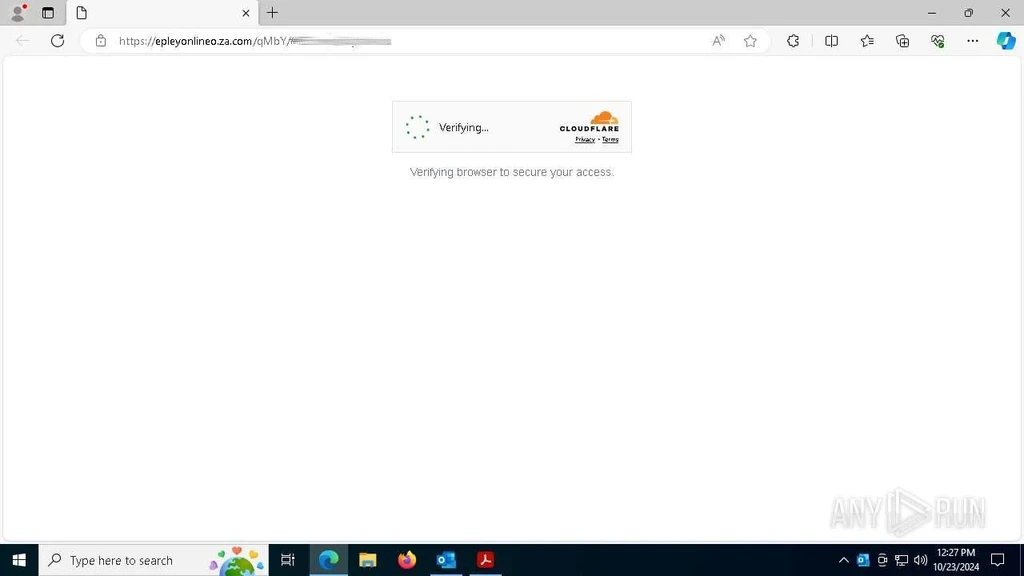
Once the threat is identified, the AI-powered Tier 1 Report consolidates the verdict and technical evidence with:
- AI Summary: Explains malicious behavior and key investigation findings.
- AI Recommendations: Provides suggested investigation and response actions.
This gives analysts actionable findings without manually assembling every report and helps Tier 2 teams avoid repeating initial investigations.
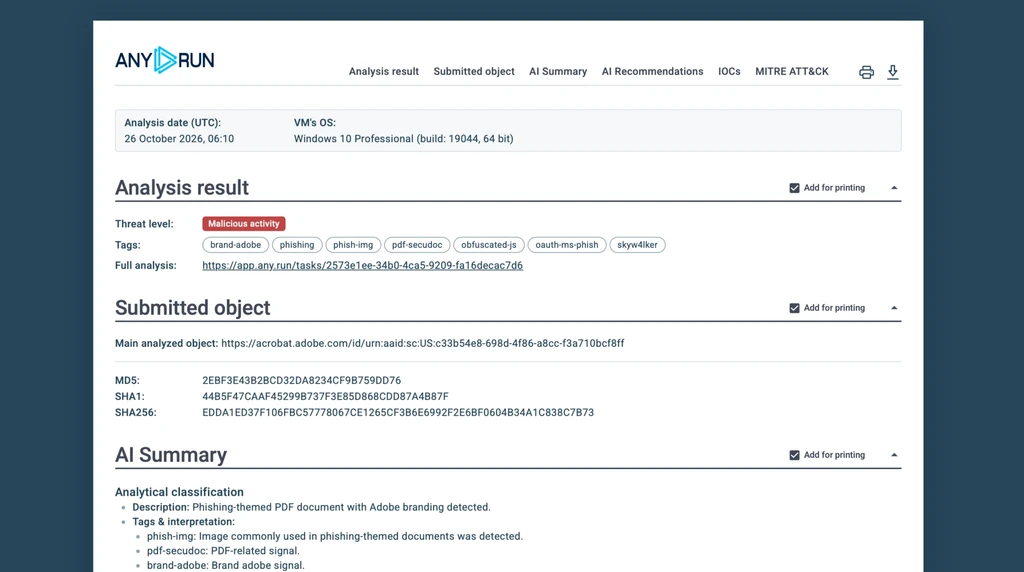
The business impact: ANY.RUN customers report up to 20% lower Tier 1 workload and 30% fewer Tier 1-to-Tier 2 escalations. For 2027 budgeting, that means more capacity for complex investigations and less pressure to increase staffing as workloads grow.
Cut IOC Research Costs with Intelligence From 16,000+ Organizations
A suspicious IOC rarely tells the full story. Analysts often need to investigate its history, identify related infrastructure, and determine whether it belongs to a broader attack campaign. Manually correlating this information across multiple sources consumes valuable investigation time.
Used by 700,000+ security professionals and 16,000+ organizations, SOC teams can benefit from ANY.RUN’s threat intelligence collected through shared investigations to identify related attacks faster and reduce manual research.
With Related Threat Context available directly inside Interactive Sandbox, analysts can identify connections between discovered IOCs and previously observed threats, including relevant team and industry activity.
With one click, they can pivot into Threat Intelligence Lookup to explore detailed intelligence on suspicious IPs, domains, malware samples, related infrastructure, and attack activity.
This allows analysts to understand the broader threat context and identify related malicious activity without manually searching and correlating information across multiple sources.
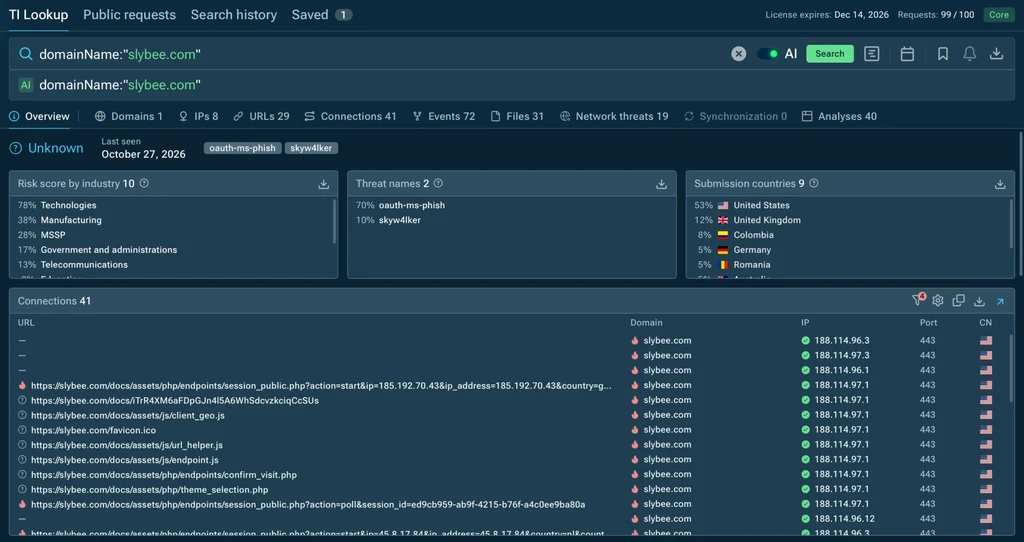
The budget impact: Less time spent on manual IOC enrichment and repeated research, faster investigation decisions, and more analyst capacity available for complex threats without additional staffing costs.
Reduce Manual Detection Work with TI Feeds and Integrations
SOC costs extend beyond investigating alerts. Detection engineers must continuously collect new threat indicators, update detection rules, and maintain coverage as attackers change their infrastructure.
ANY.RUN’s Threat Intelligence Feeds continuously supply malicious IPs, domains, and URLs collected from real-world malware and phishing investigations.
According to ANY.RUN’s internal research, up to 30% of unique malicious IOCs discovered in studied Sandbox analyses were already available in TI Feeds, giving security teams an opportunity to detect related activity earlier.
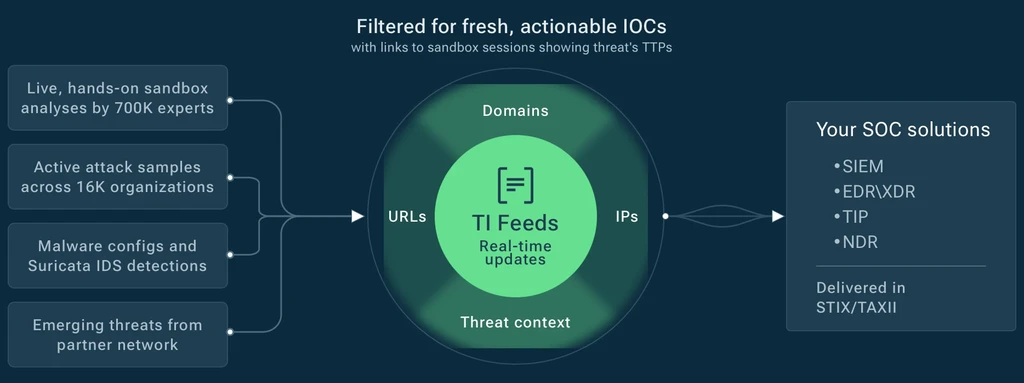
Through STIX/TAXII, APIs, and supported SIEM/SOAR integrations, security teams can deliver this intelligence to their existing infrastructure to:
- Enrich alerts with current malicious indicators.
- Hunt for related activity in existing telemetry.
- Support the creation and updating of detection rules.
The budget impact: Less manual intelligence collection and detection maintenance work, improved detection coverage, and greater value from existing security investments.
For 2027 budgeting, these improvements offer an opportunity to recover SOC capacity while directing more resources toward higher-priority security work.
The next step is to calculate how that recovered capacity could affect your 2027 budget.
4. Calculate How Much Your SOC Could Save in 2027
Improving investigation workflows can create measurable financial value, but not every efficiency gain translates directly into lower spending. For 2027 budget planning, evaluate recovered analyst capacity, potential incident cost reductions, and investment expenses separately.
Calculate the Financial Value of 450 Hours Saved per 1,000 Alerts
ANY.RUN helps SOC teams save an estimated 450 hours per 1,000 security alerts investigated through faster threat analysis and IOC research.
Use your annual investigation volume to estimate the potential value:
- Annual hours recovered = (Annual investigated alerts ÷ 1,000) × 450
- Labor capacity value = Hours recovered × Fully loaded analyst hourly cost
For example, consider a SOC investigating 4,000 security alerts annually
| Metric | Estimated value |
|---|---|
| Annual investigated alerts | 4,000 |
| Potential hours recovered | 1,800 |
| Fully loaded analyst hourly cost | $60 |
| Annual labor capacity value | $108,000 |
Illustrative calculation based on ANY.RUN’s campaign estimate and an assumed labor rate. Actual results depend on investigation volume and workflow characteristics.
The $108,000 represents recovered analyst capacity, not guaranteed cash savings. For budget planning, determine how much of that capacity can translate into reduced overtime, avoided hiring, or lower outsourcing expenses.
Remaining capacity can support additional investigations and detection engineering without proportional staffing increases.
Estimate Potential Incident Cost Savings
Faster phishing and malware investigations can also reduce the likelihood of attacks escalating into costly breaches, including ransomware, data theft, and broader infrastructure compromise.
According to IBM’s 2026 Cost of a Data Breach Report, the average financial-sector data breach costs approximately $6.3 million. Verizon’s 2026 Data Breach Investigations Report provides additional context on relevant attack methods and exposure.
ANY.RUN estimates potential avoided losses starting at $60,000 per qualifying phishing or malware incident in the financial industry, based on an internal risk model considering industry breach costs and the potential impact of earlier detection and containment.
To assess the financial value of reduced risk, use:
Potential avoided loss = Reduction in probability of serious compromise × Estimated financial impact
This represents modeled risk reduction, not guaranteed savings. Actual financial outcomes depend on the organization’s exposure, attack severity, and effectiveness of its response.
Compare Investment Costs Against Expected Returns
Calculate the total first-year investment, including licensing, implementation, integration, and ongoing support.
First-year net financial benefit = Verified costs avoided − Total first-year investment costs
Keep three financial outcomes separate:
- Direct savings: Reduced overtime, avoided hiring, or lower external service expenses.
- Recovered capacity: Additional security work completed with existing resources.
- Potential risk reduction: Estimated financial losses avoided through earlier detection and containment.
This distinction helps decision-makers identify which improvements could reduce their 2027 spending and which deliver additional security value without directly lowering the budget.
5. Where ANY.RUN Can Help Avoid Additional SOC Spending in 2027
Before approving additional SOC spending for 2027, test ANY.RUN against representative phishing and malware investigations in your existing environment. Compare analyst handling time, escalation rates, IOC enrichment effort, and detection-rule deployment time against your current workflow.
Use the measured results to determine which planned expenses can realistically be reduced, deferred, or redirected toward higher-priority security requirements.
Turn Measured Improvements into Budget Decisions
| 2027 budget pressure | Reported ANY.RUN outcome | Potential impact on spending |
|---|---|---|
| Additional Tier 1 staffing | Up to 20% less Tier 1 investigation time | Absorb more investigations with existing analysts and potentially defer hiring |
| Expanding Tier 2 resources | 30% fewer Tier 1-to-Tier 2 escalations | Reduce demand for additional senior analyst capacity and external investigation support |
| Incident response costs and SLA risks | Up to 21 minutes less MTTR per case | Improve response capacity and potentially reduce exposure to costly incidents |
| Additional detection investments | Up to 58% more threats detected | Evaluate whether stronger threat visibility can be achieved with existing detection infrastructure before purchasing additional services |
Plan Your 2027 Cybersecurity Budget for Greater Efficiency and Resilience
Effective SOC budget planning means knowing where additional investment is necessary and where existing resources can deliver better results.
By connecting operational performance with financial outcomes, security leaders can make more informed spending decisions, control unnecessary costs, and strengthen protection against business-critical threats.
- Reduce operational expenses by cutting manual analysis, IOC research, and unnecessary escalations.
- Increase SOC capacity to handle more alerts without proportional increases in headcount.
- Strengthen detection and response to help prevent costly incidents and business disruption.
- Get more value from existing investments by integrating analysis and intelligence into current security systems.
The biggest opportunity for your 2027 budget may be in making your existing SOC more effective before committing to additional resources.
About ANY.RUN
ANY.RUN provides interactive malware analysis and threat intelligence solutions trusted by 700,000+ security professionals across 16,000+ organizations worldwide. The company helps SOC teams, MSSPs, and enterprise security teams investigate threats faster and make more informed response decisions.
Its Interactive Sandbox combines automated malware and phishing analysis with real-time behavioral visibility and AI-powered reporting. Threat Intelligence Lookup helps analysts investigate related threats and malicious infrastructure, while Threat Intelligence Feeds deliver fresh IOCs into existing security systems.
Together, these capabilities help organizations reduce manual investigation work, improve threat detection, and handle growing SOC workloads without proportional increases in operational costs.




0 comments