



Your SOC pays for multiple threat intelligence feeds, yet fresh malicious domains and IPs can still appear in telemetry as unknown. When feeds rely on overlapping sources, more subscriptions may deliver the same indicators while leaving emerging threats uncovered.
Analysts must fill these gaps manually, checking indicator reputations, comparing sources, and gathering evidence. Every extra lookup consumes valuable time, increases the triage queue, and puts response service-level agreements (SLAs) at risk. While the team works to establish whether an alert is malicious, attackers gain more time to operate.
The answer isn’t necessarily another feed. It’s intelligence that brings fresh indicators and investigative context into your existing security workflows, helping SOC and MSSP teams detect threats earlier and investigate with less manual effort.
More Threat Intelligence Feeds Do Not Guarantee Better Coverage
Multiple threat intelligence feeds can give a SOC more indicators without improving visibility into emerging threats. When providers rely on overlapping public reports and third-party sources, additional subscriptions may repeat information the team already has while leaving fresh malicious infrastructure uncovered.
The problem is not only what intelligence contains, but when it becomes available. An indicator can be accurate and useful for retrospective analysis yet arrive too late to help detect an attack as it unfolds.
Public reports and shared IOC lists remain valuable, but they often document attacks after the activity has been observed and investigated. By the time findings are published, processed, and redistributed through feeds, attackers may have already abandoned the infrastructure described and moved to new domains, URLs, or command-and-control servers.
For SOC and MSSP teams, this creates a gap between malicious activity visible in telemetry and the intelligence available to recognize it. Analysts must manually investigate unfamiliar indicators, establish their reputation, and gather context, adding work to the triage queue while delaying detection and response.
More feeds don’t necessarily mean fresher intelligence or better coverage. Closing these gaps requires data collected closer to actual threat activity, with fresh indicators and investigative context that complement existing sources.
How Outdated Intelligence Puts Pressure on Your SOC
When intelligence arrives late, the SOC has to compensate with its own time and resources. Security tools have fewer relevant indicators to match against, analysts face more uncertainty, and response decisions take longer. Time spent researching one unfamiliar domain is time unavailable for the next alert.
The impact extends across three connected areas of security operations: threat detection, analyst workload, and incident response.
1. Fresh Threats Can Go Unrecognized
An attacker’s newly deployed domain or command-and-control server may already appear in network telemetry while remaining absent from the SOC’s feeds. The connection is visible, but the intelligence needed to recognize its malicious significance has not arrived. Other detection mechanisms may still flag suspicious behavior, yet the team misses an opportunity to identify the infrastructure through an IOC match.
Feeds that repeat older indicators do little to close this gap. The SOC can have extensive coverage of previously reported infrastructure while lacking visibility into activity happening now. Until fresh observations reach its security controls, malicious connections may receive less attention than they warrant, giving attackers more time to operate before the team recognizes the threat.
2. Analysts Spend Time Compensating for Missing Data
When an alert involves an unfamiliar indicator, analysts must establish what available intelligence cannot explain. This can mean checking multiple reputation sources, examining network activity, analyzing suspicious files, and gathering evidence for escalation. If several feeds return the same limited information, the original question remains unresolved.
This research takes capacity away from other cases. As unfamiliar indicators accumulate, analysts repeat checks across tools while incoming alerts continue to compete for attention. For MSSPs, this pressure can build across multiple client queues. The cost of late intelligence extends beyond one investigation: it reduces the team’s capacity to handle everything else.
3. Delayed Decisions Put SLAs and Containment at Risk
Triage and response deadlines keep approaching while analysts search for evidence. Without enough information to assess an alert, they may need to continue investigating or escalate an incomplete case for deeper review. Both paths consume time, and escalation without sufficient evidence can force another analyst to repeat parts of the initial investigation.
As delays accumulate, meeting SLAs becomes harder and containment decisions can arrive later than they should. Depending on the attack, that extra time may allow further credential theft, lateral movement, or data exfiltration. Fresh intelligence helps reduce the uncertainty before action, allowing the SOC to move from investigating a suspicious connection to making an informed response decision sooner.
First-Hand Threat Intelligence: Get Fresh Indicators Before Manual Investigation
Fresh intelligence gives the SOC an opportunity to recognize malicious activity while the team can still act on it. ANY.RUN provides a direct source of that intelligence: indicators drawn from malware and phishing investigations in Interactive Sandbox and delivered through Threat Intelligence Feeds. Teams can access those findings without waiting for them to appear in public reports or circulate through third-party sources.
Security professionals examine suspicious files and URLs in Sandbox, exposing malicious network connections, malware configurations, and execution behavior. These observations provide the basis for intelligence that existing security controls can use.
The path from investigation to detection is more direct, helping reduce the gap that analysts would otherwise have to fill manually.
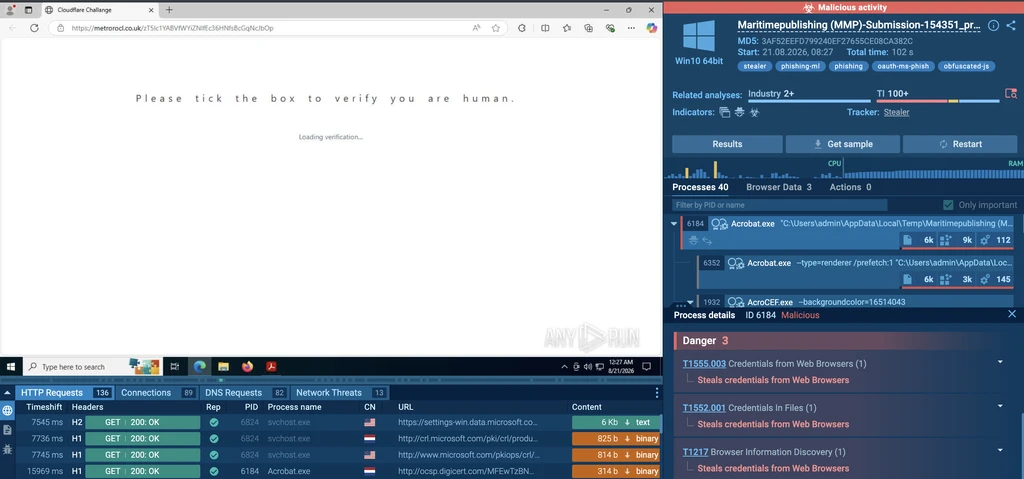
The dataset draws on investigations from more than 16,000 organizations and a community of over 700,000 security professionals. This contributes observations from different environments and industries, including malicious indicators that may not yet be widely available through other intelligence sources.
Intelligence Can Be Available Before Your Team Starts Investigating
ANY.RUN analysis found that up to 30% of unique malicious IOCs identified in Interactive Sandbox sessions had already been observed by ANY.RUN and were available in TI Feeds. When those indicators appeared in a new analysis, the intelligence needed to recognize them already existed.
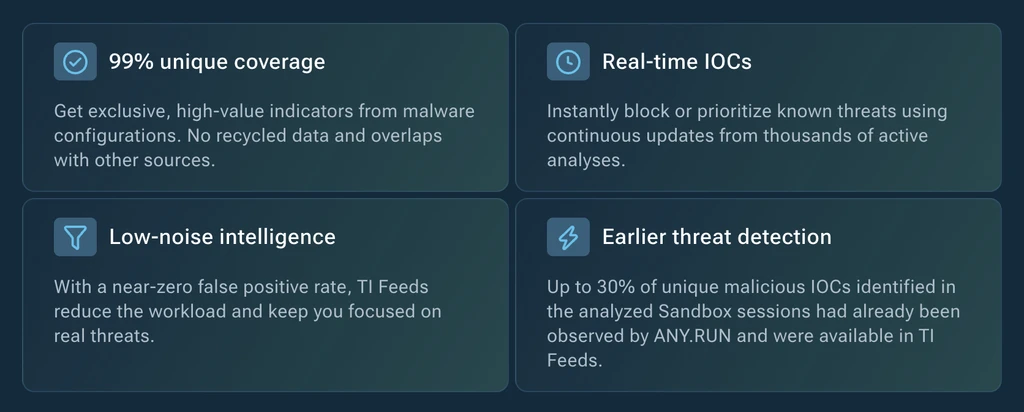
For a SOC using that intelligence, this creates an opportunity to detect matching activity earlier. If the indicators appear in endpoint or network telemetry and matching is configured, existing security controls can flag the activity before an analyst manually submits the associated file or URL for analysis.
That earlier signal changes where the investigation begins. Instead of spending time establishing whether an unfamiliar destination is malicious, analysts can focus on validating the activity in their environment, identifying affected systems, and assessing the response required. Linked Sandbox analyses provide evidence to support those decisions.
Earlier access to relevant intelligence helps reduce the research required before the team can act. For SOCs or MSSPs facing growing queues and response deadlines, that means less time compensating for missing data and a stronger starting point for investigation and containment.
How ANY.RUN TI Feeds Add Detection Opportunities
ANY.RUN TI Feeds deliver verified malicious network indicators — including IP addresses, domains, and URLs — collected from real-world malware and phishing investigations.
Designed to complement existing security infrastructure, the feeds integrate through STIX/TAXII and API/SDK into SIEM, EDR, XDR, TIP, and other security systems without requiring changes to established detection workflows.
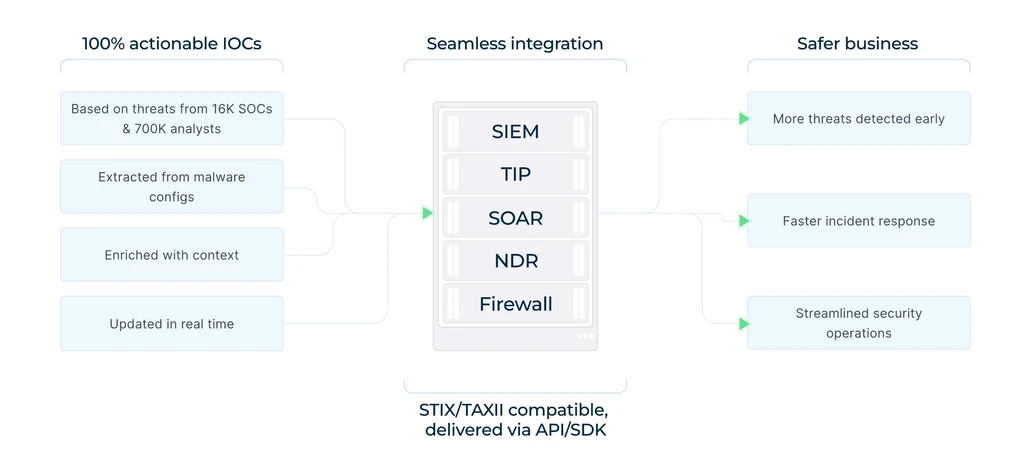
By adding intelligence from real-world investigations to existing detection logic, teams can identify suspicious connections, enrich alerts, and prioritize activity that might otherwise appear unfamiliar.
Each IOC is also linked to its underlying Sandbox analysis, allowing analysts to investigate the evidence behind an indicator, including malware behavior, network activity, and MITRE ATT&CK techniques.
This connection between intelligence and behavioral evidence helps security teams move beyond identifying suspicious activity to understanding the threats behind it.
From an Indicator to an Investigation: The Role of Interactive Sandbox
Threat Intelligence Feeds help security systems recognize known malicious indicators, but not every alert contains a recognizable IOC, and an indicator alone rarely explains the full incident.
Behavioral analysis helps fill this gap.
ANY.RUN’s Interactive Sandbox allows analysts to safely execute suspicious files and URLs in a controlled environment, observe their behavior, and collect evidence that reputation checks or static inspection alone may miss.
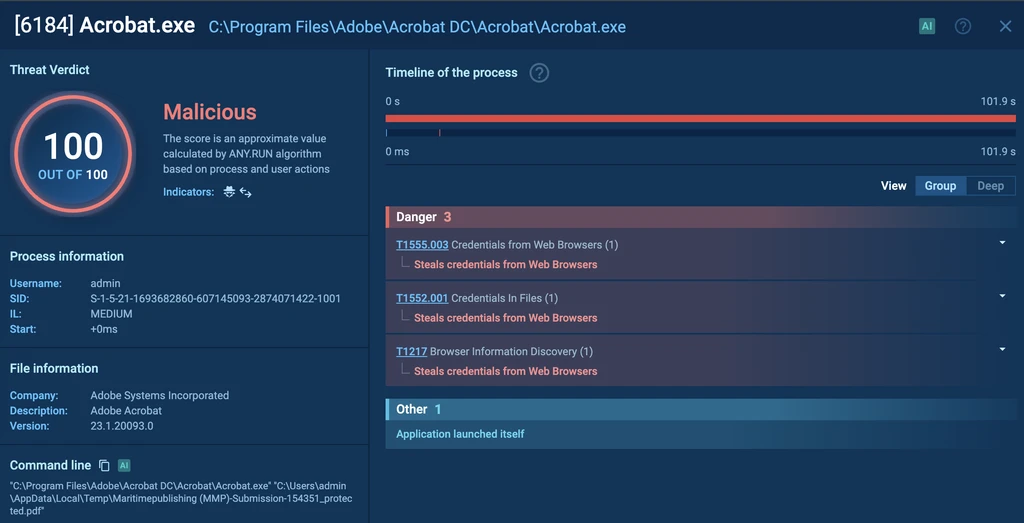
During an investigation, analysts can examine system changes, file and registry modifications, network connections, and techniques used by a sample. This provides behavioral evidence for understanding a threat beyond its indicator reputation.
These observations also help connect unfamiliar samples and activity to previously investigated threats, providing additional context for ongoing investigations.
Related Threat Context: Make Previous Investigations Work for You
An indicator found during a new investigation may have appeared in other cases before. It could be linked to activity targeting the same industry, investigated by another analyst on the team, or associated with a broader malicious campaign.
ANY.RUN’s Related Threat Context (Related analyses) – a powerful new capability in Interactive Sandbox available to enterprise users – helps analysts discover these connections without manually searching through previous investigations.
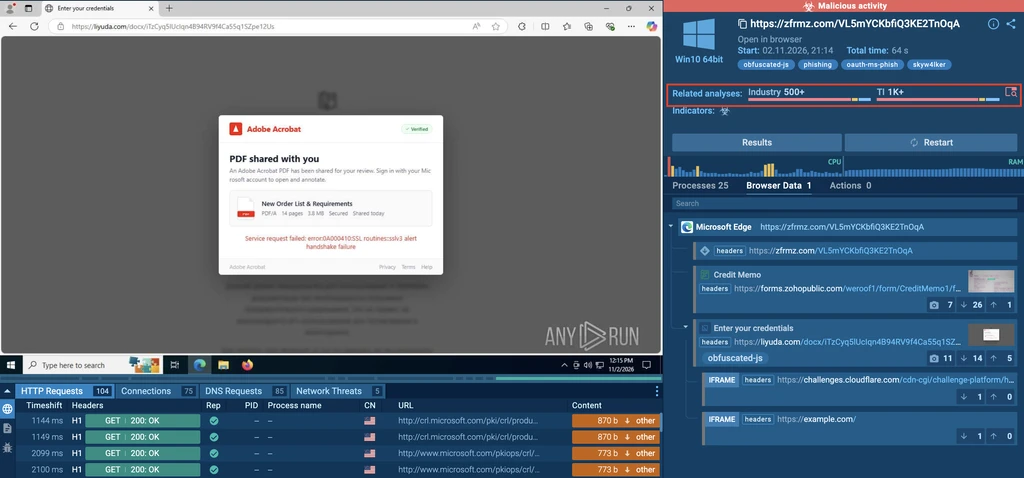
This capability also connects sandbox investigations with Threat Intelligence Lookup, allowing analysts to examine indicators against the broader ANY.RUN intelligence dataset and discover previously observed malicious activity. As a result, it helps move from analyzing a suspicious file or URL to understanding where its associated indicators have appeared before.
Related results can reveal where the same indicators have appeared:
- Within your team: revisit previous investigations and evidence collected by colleagues.
- Across your industry: explore related observations from organizations in the same sector and identify activity worth comparing.
- Across ANY.RUN Threat Intelligence: discover connections to investigations across the broader dataset, including additional indicators and related threat activity.
These connections give analysts a starting point for further investigation. Instead of gathering context from scratch, they can review previous findings, compare behaviors, and identify additional indicators.
Use Related analyses to uncover IOC connections and make more informed decisions
Discover how Related analyses improve SOC and MSSP investigations.
For example, if an IOC found in a suspicious attachment also appears in investigations involving other organizations in the same industry, those cases may provide useful leads for assessing the current threat.
Related Threat Context doesn’t establish that every related case belongs to the same campaign or replace further investigation. It provides evidence and connections that analysts can validate to build a more informed assessment.
This also helps SOC and MSSP managers reduce duplicated research across analysts and shifts, making previous investigative work easier to reuse and new findings easier to build upon.
What Better Threat Intelligence Means for SOC & MSSP Performance
Closing intelligence gaps improves more than detection. As a result, SOCs and MSSPs process alerts more efficiently, allocate analyst time, and manage incidents.
ANY.RUN customer research shows that organizations using its solutions identify up to 58% more threats overall. This result reflects the combined contribution of behavioral analysis and threat intelligence, rather than TI Feeds alone.
The operational benefits extend across security team workflows:
- Faster investigations: Indicators with an established malicious reputation and relevant previous findings give analysts a stronger starting point, reducing time spent gathering basic context.
- More confident triage: Behavioral evidence and related investigations help Tier 1 analysts assess alerts, prioritize threats, and determine which cases require escalation.
- Less duplicated work: Reusing previous analyses allows teams to avoid repeatedly investigating the same indicators and behaviors. This is particularly valuable for MSSPs managing threats across multiple clients.
- Better use of senior expertise: With less time spent on routine enrichment and research, experienced analysts can focus on threat hunting, incident response, and complex investigations.
These efficiencies help SOC and MSSP leaders manage growing alert volumes, improve resource allocation, and scale security operations without relying solely on additional headcount.
How to Identify and Close Intelligence Gaps in Your Stack
You don’t need to replace existing threat intelligence providers to improve detection. Start by evaluating how well your current sources support detection and investigation.
Consider the following questions:
- Do your feeds include indicators collected directly from real-world malware and phishing investigations?
- Can your security tools automatically match fresh intelligence against existing telemetry?
- Can analysts access behavioral evidence behind malicious indicators?
- Can they easily find previous investigations involving the same indicators?
- Can industry-specific observations and broader threat intelligence help provide context for unfamiliar threats?
These questions can reveal gaps where additional intelligence would bring value. A source that contributes new indicators, behavioral evidence, or investigative context can strengthen an existing TI stack without replacing the providers already in use.
Conclusion
Threat intelligence becomes most valuable when it helps security teams recognize malicious activity before it requires manual investigation.
TI Feeds make this possible by bringing known malicious indicators into existing security workflows, enabling earlier detection, faster triage, and more informed response decisions. By enriching security telemetry with intelligence gathered from real-world threats, organizations can reduce investigative overhead and make better use of their existing detection infrastructure.
Ultimately, the value of threat intelligence lies not in the number of indicators collected, but in how effectively that intelligence helps security teams detect threats and act on them.
About ANY.RUN
ANY.RUN develops cybersecurity solutions that help security teams investigate threats, analyze malware, and access actionable threat intelligence. Its solutions are used by more than 700,000 security professionals across 16,000+ organizations worldwide.
ANY.RUN offers Interactive Sandbox for interactive malware and URL analysis, Threat Intelligence Lookup and Threat Intelligence Reports for investigating suspicious indicators and uncovering related activity, and Threat Intelligence Feeds for integrating fresh, validated threat data into security workflows.
The company also holds SOC 2 Type II attestation, demonstrating its commitment to maintaining controls for security, availability, and data protection.
Frequently Asked Questions
Threat intelligence providers use different collection methods and focus on different types of threats. Their datasets may overlap, while newly observed domains, command-and-control infrastructure, and malware-derived indicators may not yet appear in established feeds. Complementing existing sources with intelligence collected directly from real-world investigations can help improve coverage.
First-hand threat intelligence comes from examining actual malware and phishing activity in controlled environments. It provides indicators, malware configurations, network activity, and behavioral evidence that can complement existing intelligence sources and help security teams recognize malicious activity earlier.
ANY.RUN TI Feeds provide verified malicious network indicators, including IP addresses, domains, and URLs collected from real-world malware and phishing investigations. Each indicator is linked to its underlying Sandbox analysis, providing access to supporting behavioral evidence and threat context.
ANY.RUN generates threat intelligence through malware and phishing investigations conducted in Interactive Sandbox. These analyses reveal malicious network indicators, malware configurations, execution patterns, and other evidence used to identify and enrich threat intelligence.
ANY.RUN TI Feeds support STIX/TAXII and API/SDK integration with SIEM, EDR, XDR, TIP, and other security systems. This allows organizations to incorporate validated malicious indicators into existing detection and enrichment workflows without replacing their current security infrastructure.
Threat intelligence feeds help security systems recognize known malicious indicators, while Interactive Sandbox enables analysts to execute suspicious files and URLs in a controlled environment and observe their behavior. Behavioral analysis reveals evidence that reputation checks or static inspection alone may miss, supporting deeper investigations and detection of unfamiliar threats.
Related Threat Context connects ANY.RUN Sandbox investigations with Threat Intelligence Lookup, helping analysts discover previously observed malicious activity, related indicators, and previous analyses. Enterprise users can investigate connections across their team, industry, and the broader ANY.RUN threat intelligence dataset.
Related analyses (Related Threat Context) help analysts reuse previous findings, identify connections between indicators, and gather investigative leads without manually searching through earlier cases. This reduces duplicated research, improves triage, and allows experienced analysts to focus on more complex investigations and response activities.



0 comments