Black friday Up to 3 extra licenses FOR FREE + Special offer for TI LOOKUP Get it now
Webinar
February 26
Better SOC with Interactive Sandbox Practical Use Cases
Register now
154
Global rank
163 infographic chevron month
Month rank
136 infographic chevron week
Week rank
0
IOCs

Hancitor was created in 2014 to drop other malware on infected machines. It is also known as Tordal and Chanitor. This malware is available as a service which makes it accessible tools to criminals and contributes to the popularity of this virus.

Loader
Type
Unknown
Origin
1 January, 2014
First seen
8 July, 2026
Last seen
Also known as
Tordal
Chanitor

How to analyze Hancitor with ANY.RUN

Type
Unknown
Origin
1 January, 2014
First seen
8 July, 2026
Last seen

IOCs

IP addresses
95.100.102.9
95.100.102.101
20.190.160.3
48.209.138.168
74.179.77.204
57.153.246.3
2.16.164.99
172.67.74.152
2.16.241.221
48.209.6.48
23.216.77.28
23.11.40.157
48.209.133.15
88.221.169.152
172.211.123.248
128.24.231.65
204.79.197.203
74.178.76.54
23.52.181.141
172.211.123.250
Hashes
0f511695320e2f7d57747159a84fe9ae7ae558df8e46117e8196db78c653c75b
1712a8bbcbe727f8dbdc1a8e42d693b8e25148a7ccc189c1b853d652a31feeb0
b624a20c1bb2844c3d5dbb2e02b6487300f666e5e1b76ecaa01deb4685b19bf4
6a40995e3e6d2f5a24dd49d1affa5941b4e138a247d5572dbfda6080d13cc47c
3b18ca23940bc1a5991dceece900b4910a1ca549ed9adbe826a5c6ffe243bc32
ea8c3778b52d695f7f97c9a1c236ea2d4212e559e90fd641292f715d19febea3
d67049ca009069149d59cc8d7c2a32e086d566ea9c154cdfcfe935f8f82266e7
c66fe0094b97bee5553b43d4598c821406abd63bde2b269752ede0bae85bcc48
d583ba6a213df4d57eb82892e8fe21f3e87028ea622378c7e04eed4bd8f8f4aa
245dd0bff1c08559e5e68ea25aadbf5bc6ebef5831ec19c34d8d2021747157fe
afbce4a84e93a21a368cb2f689603aa2b06ad64605466e674b279cfdec6fecf8
c66ca3c83ce3bdbeccf9671a1e525caa5d2858dcf322f6e39e987d6e7be71bce
f226224360326c2c44c5bcea0662578d030ea9528d96e3a2339e93d592aa8ae1
5ce5667e69162dea3a9473e0e02a79e17620d0b58dc4ca234fc5bbc11ec1674a
06e9205d2ac9f159d9af47daeaf73f5f59a477bf02c0adcbf9af020b6ccc77ce
9ad85d0e87dc89e3a764739803eb1551b83285e7e8f9dabdbf7918362a83276e
97fbe3c32e14bcef66c31d49828d38cd259deaff710bd9ab5a2892f1c0a62efb
05c4b7438f56fb4da8d033e721799b398cdb83ad3e8f5f409377c65c25a06a68
5ae50818fa995d7618e5c0d4a17a2314ec981d37408b00ef52f6d2a9f0493911
d178d5b2096bae737b9aee9f063c42825feea733ee4fd7043ce754039bf1a6ef
Domains
www.microsoft.com
crl.microsoft.com
ocsp.digicert.com
api.ipify.org
activation-v2.sls.microsoft.com
slscr.update.microsoft.com
settings-win.data.microsoft.com
go.microsoft.com
fe3cr.delivery.mp.microsoft.com
login.live.com
google.com
oneocsp.microsoft.com
www.bing.com
client.wns.windows.com
self.events.data.microsoft.com
nexusrules.officeapps.live.com
fonts.gstatic.com
clients2.googleusercontent.com
xpaywalletcdn.azureedge.net
msedge.b.tlu.dl.delivery.mp.microsoft.com
URLs
http://ocsp.digicert.com/mfewtzbnmeswstajbgurdgmcgguabbtrjrydryt%2bapf3gspypfhbxr5xtqqus9tippmhxdiunkhmewnpyim8s8yceajtxtab8my1oj8mfwpz%2f7y%3d
http://oneocsp.microsoft.com/ocsp/mfqwujbqme4wtdajbgurdgmcgguabbq3l3%2f%2fa6adk8nray2gxzvayrhg4aqub6t%2b2v%2bxq3lso2d33ojhnyhhqoucezmaaaagb6jmmcovb6saaaaaaay%3d
http://crl.microsoft.com/pki/crl/products/microoceraut2011_2011_03_22.crl
http://www.microsoft.com/pkiops/crl/micsecserca2011_2011-10-18.crl
https://settings-win.data.microsoft.com/settings/v3.0/wsd/waasassessment?os=windows&osver=10.0.19041.1.amd64fre.vb_release.191206-&ring=retail&sku=48&deviceclass=windows.desktop&locale=en-us&deviceid=bad99146-31d3-4ec6-a1a4-be76f32ba5d4&flightring=retail&telemetrylevel=1&hidovergattreg=c%3a%5cwindows%5csystem32%5cdriverstore%5cfilerepository%5chidbthle.inf_amd64_9610b4821fdf82a5%5cmicrosoft.bluetooth.profiles.hidovergatt.dll&appver=10.0&processoridentifier=amd64%20family%2023%20model%201%20stepping%202&oemmodel=dell&updateoffereddays=4294967295&processormanufacturer=authenticamd&installdate=1661339444&oemmodelbaseboard=&branchreadinesslevel=cb&oemsubmodel=j5cr&isclouddomainjoined=0&deferfeatureupdateperiodindays=30&isdeviceretaildemo=0&flightingbranchname=&osuilocale=en-us&devicefamily=windows.desktop&wuclientver=10.0.19041.3996&uninstallactive=1&isflightingenabled=0&osskuid=48&processorclockspeed=3094&totalphysicalram=6144&securebootcapable=0&app=waasassessment&processorcores=6&currentbranch=vb_release&installlanguage=en-us&deferqualityupdateperiodindays=0&servicingbranch=cb&oemname_uncleaned=dell&tpmversion=0&primarydisktotalcapacity=262144&installationtype=client&attrdataver=186&processormodel=amd%20ryzen%205%203500%206-core%20processor&isedgewithchromiuminstalled=1&osversion=10.0.19045.4046&ismdmenrolled=0&activationchannel=retail&honorwufbdeferrals=0&firmwareversion=a.40&trendinstalledkey=1&osarchitecture=amd64&defaultuserregion=244&updatemanagementgroup=2
http://api.ipify.org/
https://settings-win.data.microsoft.com/settings/v3.0/wsd/muse?processorclockspeed=3094&flightids=&updateoffereddays=4294967295&branchreadinesslevel=cb&oemmanufacturername=dell&isclouddomainjoined=0&processoridentifier=amd64%20family%2023%20model%201%20stepping%202&sku=48&activationchannel=retail&attrdataver=186&ismdmenrolled=0&processorcores=6&processormodel=amd%20ryzen%205%203500%206-core%20processor&totalphysicalram=6144&primarydisktype=4294967295&flightingbranchname=&chassistypeid=1&oemmodelnumber=dell&systemvolumetotalcapacity=260281&sampleid=95271487&deviceclass=windows.desktop&app=muse&disabledualscan=0&appver=10.0&oemsubmodel=j5cr&locale=en-us&isalwaysonalwaysconnectedcapable=0&ms=0&defaultuserregion=244&updateserviceurl=http%3a%2f%2fneverupdatewindows10.com&osver=10.0.19045.4046.amd64fre.vb_release.191206-1406&os=windows&deviceid=s%3abad99146-31d3-4ec6-a1a4-be76f32ba5d4&deferqualityupdateperiodindays=0&ring=retail&deferfeatureupdateperiodindays=30
https://go.microsoft.com/fwlink/?linkid=2257403&clcid=0x409
https://slscr.update.microsoft.com/sls/%7b522d76a4-93e1-47f8-b8ce-07c937ad1a1e%7d/x64/10.0.19045.4046/0?ch=686&l=en-us&p=&pt=0x30&wua=10.0.19041.3996&mk=dell&md=dell
http://www.microsoft.com/pkiops/crl/microsoft%20ecc%20product%20root%20certificate%20authority%202018.crl
http://www.microsoft.com/pkiops/crl/microsoft%20ecc%20update%20secure%20server%20ca%202.1.crl
https://fe3cr.delivery.mp.microsoft.com/clientwebservice/ping
https://slscr.update.microsoft.com/sls/ping
https://slscr.update.microsoft.com/sls/%7be7a50285-d08d-499d-9ff8-180fdc2332bc%7d/x64/10.0.19045.4046/0?ch=686&l=en-us&p=&pt=0x30&wua=10.0.19041.3996&mk=dell&md=dell
http://ocsp.digicert.com/mfewtzbnmeswstajbgurdgmcgguabbq50otx%2fh0ztl%2bz8sipi7wewvxdlqqutijuibiv5unu5g%2f6%2brks7qyxjzkceaz1vqyrvgl0erhqlcpm8gy%3d
https://login.live.com/rst2.srf
https://login.live.com/ppsecure/deviceaddcredential.srf
https://settings-win.data.microsoft.com/settings/v3.0/wsd/updatehealthtools?os=windows&osver=10.0.19041.1.amd64fre.vb_release.191206-&sku=48&deviceclass=windows.desktop&locale=en-us&deviceid=s:bad99146-31d3-4ec6-a1a4-be76f32ba5d4&sampleid=s:95271487&appver=10.0.19041.3626&flightring=retail&telemetrylevel=1&hidovergattreg=c%3a%5cwindows%5csystem32%5cdriverstore%5cfilerepository%5chidbthle.inf_amd64_9610b4821fdf82a5%5cmicrosoft.bluetooth.profiles.hidovergatt.dll&appver=&processoridentifier=amd64%20family%2023%20model%201%20stepping%202&oemmodel=dell&updateoffereddays=4294967295&processormanufacturer=authenticamd&installdate=1661339444&oemmodelbaseboard=&branchreadinesslevel=cb&oemsubmodel=j5cr&isclouddomainjoined=0&deferfeatureupdateperiodindays=30&isdeviceretaildemo=0&flightingbranchname=&osuilocale=en-us&devicefamily=windows.desktop&wuclientver=10.0.19041.3996&uninstallactive=1&isflightingenabled=0&osskuid=48&processorclockspeed=3094&totalphysicalram=6144&securebootcapable=0&app=sedimentpack&processorcores=6&currentbranch=vb_release&installlanguage=en-us&deferqualityupdateperiodindays=0&oemname_uncleaned=dell&tpmversion=0&primarydisktotalcapacity=262144&installationtype=client&attrdataver=186&processormodel=amd%20ryzen%205%203500%206-core%20processor&isedgewithchromiuminstalled=1&osversion=10.0.19045.4046&ismdmenrolled=0&activationchannel=retail&firmwareversion=a.40&trendinstalledkey=1&osarchitecture=amd64&defaultuserregion=244&updatemanagementgroup=2
http://www.microsoft.com/pkiops/crl/microsoft%20time-stamp%20pca%202010(1).crl
http://www.microsoft.com/pkiops/crl/microsoft%20ecc%20update%20signing%20ca%202.3.crl
Last Seen at

Recent blog posts

post image
US Finance Under Phishing Pressure: What the...
watchers 4905
comments 0
post image
A Single Canadian Tax Lure Spread into a 46-C...
watchers 11329
comments 0
post image
North Korean IT Workers Scheme: Detection IOC...
watchers 13623
comments 0

What is Hancitor malware?

Hancitor, sometimes called Tordal and Chanitor is a loader designed to install other malware on the victim’s PC – most often it’s either Pony, Vawtrak, or DELoader. The malware has been around since 2014 and it is distributed to other users as a service by the original creators via malspam.

This malware can’t be considered dangerous since even Microsoft's built-in antivirus Windows Defender can detect it. On top of that, being distributed in malspam campaigns, in a lot of cases emails don’t even reach their targets, being intercepted by spam filters. In essence, the only people truly in danger of getting infected by Hancitor, are those who still utilize older Windows versions like Windows seven or earlier and who either don’t have or disabled their antivirus software. Curiously, despite such a limited “target audience”, Hancitor creators continue to update this malware and it is still very active to this day.

General description of the Hancitor Trojan

Creators of Hancitor provide their loader as a service to other criminals, helping to install various malware on the target PCs. The people behind Hancitor are extremely active and organized. Some researchers suspect that they work full business weeks since the surge of Hancitor attacks usually takes place on business days and falls off on the weekends, which suggests that the hackers responsible have a work structure and a schedule.

Despite that, Hancitor loader has not changed very much since 2016 and to this day relies on very simple execution and evasion techniques which makes its detection and prevention relatively easy, especially for corporate targets with adequate levels of cybersecurity.

According to the Hancitor analysis, the 2016 version of the malware had 66 functions and had the size of 20 480 bytes while the 2018 version is made up of 51 functions that amount to the size of 20 992 bytes. One of the main differences between the versions is the lack of connectivity check functionality in the 2018 iteration. As such, the older iteration of Hancitor would try to connect to Google.com during execution to check for connections whereas the never iteration fully omits this step. The newer version also makes use of the RC4 encryption and contains some updated commands.

Not unlike other malware, Hancitor Trojan uses several attack vectors to maximize the success rate. Hancitor creators have exploited uncommon API abuse and PowerShell methods among others to ensure the successful infection.

Over the last two years, over 80 variations of Hancitor were detected in the wild. Usually, a new variation would be created simply to define a new variable for a different campaign, while at other times the basic functions of the loader were completely changed and rewritten. However, such instances were rather rare, and highly rewritten samples didn’t stick around for long. Some researchers believe that in such instances the malware authors were testing different approaches and keeping track of the infection rate to determine what changes should remain and which innovations should go.

Hancitor analysis

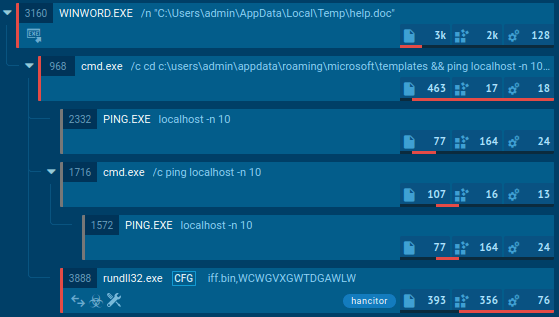
A video recorded on the ANY.RUN malware hunting service displays the execution process for Hancitor analysis.
process graph hancitor execution

Figure 1: A visual graph of Hancitor execution processes generated by ANY.RUN
text report of the hancitor malware analysis

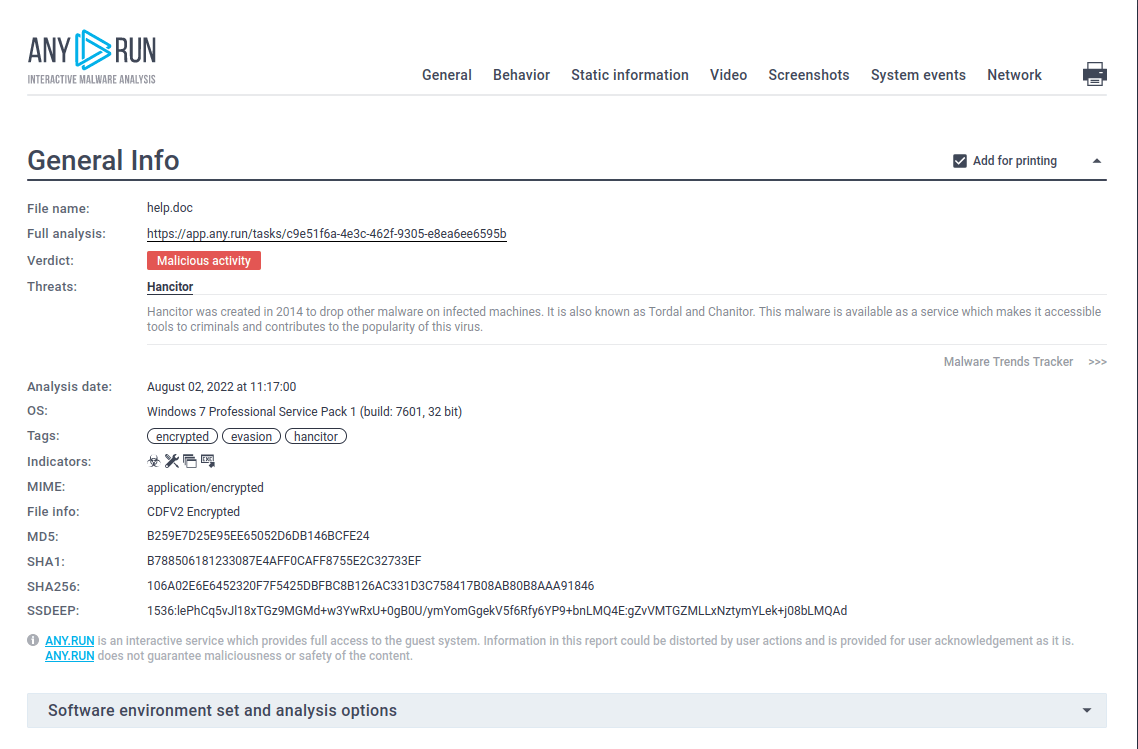
Figure 2: A customizable text report shown here was generated in the ANY.RUN malware hunting service

Hancitor malware execution process

Because of its main purpose, the execution of Hancitor doesn't look that impressive. Since the most common vector of attack to infect users' devices is malicious spam campaigns, Hancitor mostly gets into devices with Microsoft Office files. Once the user downloads and opens the malicious file, the malware either use the lure to trick the victim into enabling macros or uses an exploit. After that Hancitor will be either downloaded from the C2 server or dropped from an Office file. The next step is its execution during which the malware downloads the main payload, usually a trojan such as Pony, Vawtrak, or DELoader.

Distribution of Hancitor

Based on the Hancitor analysis, the trojan is usually distributed in malspam campaigns as a maldoc, malicious Microsoft Office file attachment. However, since most organizations started improving their cybersecurity measures some campaigns distributing Hancitor contain a link pointing at the website from where this loader is downloaded.

In the case of distribution using .DOC attachments, the user must first download the file and then activate macros, ignoring multiple security warnings. Malware authors use lures to trick users into doing that. Some phishing emails contain an invoice or a fake payment-related document, trying to make the user download it. In addition, attackers provide instructions to enable macros. If the user complies, malicious macros will download Hancitor or it will be dropped from the maldoc.

In some malspam campaigns, Hancitor was delivered to victims with .RTF maldocs which used an exploit to run the PowerShell command which downloaded the loader to the computer.

How to detect Hancitor using ANY.RUN?

Analysts can take a look at what modules malware uses. Choose the process by clicking on it in the process tree of the task then click on the "More info" button. In the "Advanced details of process" window switch to the "Modules" tab and take a closer look.
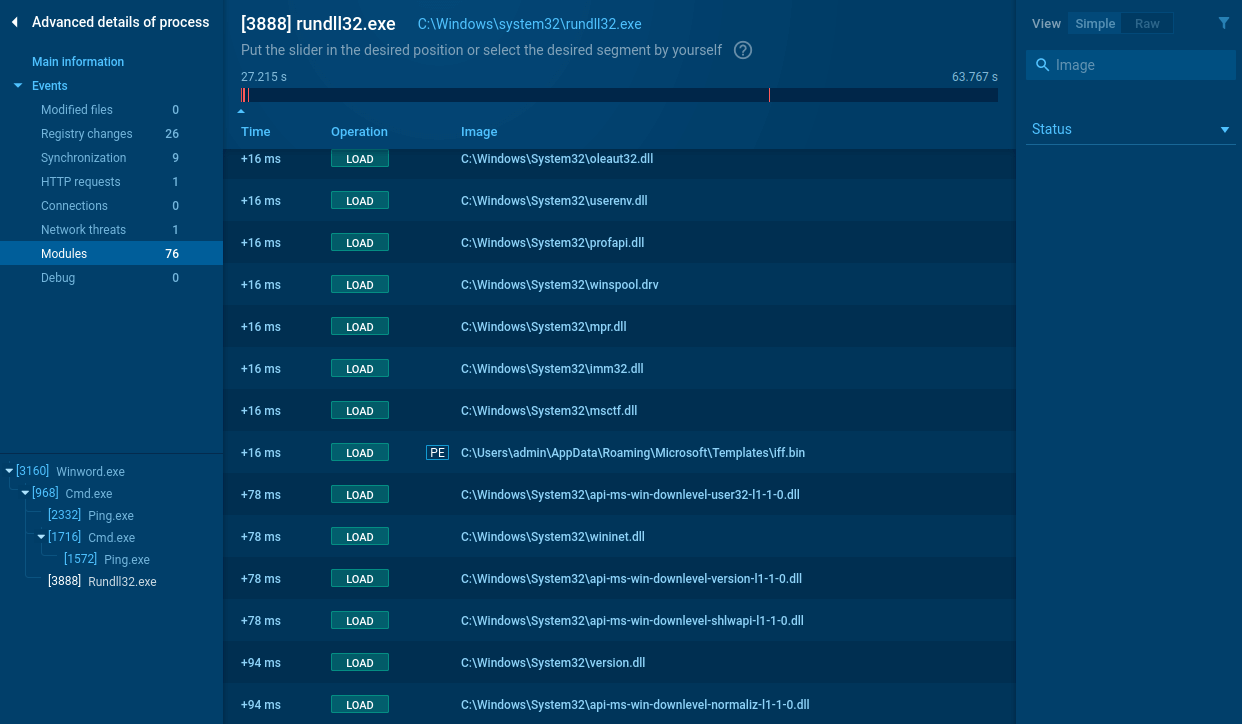
modules loaded by hancitor Figure 3: Modules loaded by Hancitor

Conclusion

Despite its simplicity and vulnerability to even simple countermeasures, Hancitor Trojan somehow remains to be an active malware that continues to target it is limited demographic, evidently with a good success rate the same as Zloader. The authors of Hancitor are extremely active and regularly come up with new iterations of this loader.

Researchers can take advantage of malware hunting services such as ANY.RUN to take malware samples apart and perform the in-depthHancitor analysis.
HAVE A LOOK AT

DarkVision screenshot
DarkVision
darkvision
DarkVision RAT is a low-cost, modular Remote Access Trojan that gives attackers remote control of infected Windows hosts. Initially observed around 2020 and sold in underground marketplaces, DarkVision has become notable for its full feature set (keylogging, screen capture, file theft, remote command execution and plugin support) and for being distributed via multi-stage loaders in recent campaigns.
Read More
Meduza Stealer screenshot
Meduza Stealer is an information-stealing malware primarily targeting Windows systems, designed to harvest sensitive data such as login credentials, browsing histories, cookies, cryptocurrency wallets, and password manager data. It has advanced anti-detection mechanisms, allowing it to evade many antivirus programs. The malware is distributed through various means, including phishing emails and malicious links. It’s marketed on underground forums and Telegram channels.
Read More
Agent Tesla screenshot
Agent Tesla
agenttesla trojan rat stealer
Agent Tesla is spyware that collects information about the actions of its victims by recording keystrokes and user interactions. It is falsely marketed as a legitimate software on the dedicated website where this malware is sold.
Read More
Socelars screenshot
Socelars
socelars
Socelars is an information-stealing Trojan (often categorized as spyware/stealer) that focuses on collecting sensitive data from Windows systems, with standout reporting around Facebook Ads Manager and session cookie theft. Unlike “noisy” malware that immediately breaks something, Socelars quietly converts a single infected machine into access: logged-in sessions, business account data, and pathways to monetization.
Read More
Phorpiex screenshot
Phorpiex
phorpiex
Phorpiex is a malicious software that has been a significant threat in the cybersecurity landscape since 2016. It is a modular malware known for its ability to maintain an extensive botnet. Unlike other botnets, Phorpiex does not concentrate on DDoS attacks. Instead, it has been involved in numerous large-scale spam email campaigns and the distribution of other malicious payloads, such as LockBit.
Read More
zgRAT screenshot
zgRAT
zgrat
zgRAT is a malware known for its ability to infect systems and exfiltrate sensitive data to command-and-control (C2) servers. It is primarily distributed through loader malware, as well as phishing emails. zgRAT employs various advanced techniques, including process injection and code obfuscation, to evade detection and maintain persistence on infected systems. The malware can also spread via USB drives and uses popular messaging platforms like Telegram and Discord for data exfiltration.
Read More