




Investing heavily in cybersecurity is a positive trend observed across the EU. Companies implement SIEM, EDR, threat intelligence and dedicated SOC teams. Everything seems to be in place, the budgets have been spent.
But what does it take for security leaders to conclude that these investments are well-spent and keep their organization protected?
With the EU’s NIS2 Directive putting greater emphasis on effective cybersecurity risk management, this question carries more weight than ever.
Key Takeaways
- As the EU’s NIS2 Directive raises expectations for cybersecurity risk management, security leaders need to look beyond the solutions they have deployed and evaluate how effectively they work together.
- Having a SIEM, EDR, threat intelligence providers, and a dedicated SOC does not automatically mean your organization has complete visibility into cyber threats.
- Independent threat intelligence and behavioral analysis can help identify potential blind spots, strengthen existing security controls, and support more defensible security decisions.
Your Security Stack Is in Place. But How Confident Are You in Its Coverage?
Investing in cybersecurity is just the first step to compliance and risk mitigation. Most large companies have established security operations, deployed detection technologies, and integrated threat intelligence into their workflows.
The EU’s NIS2 Directive reinforces the need to assess how efficient these measures are.
Article 21 requires covered entities to implement appropriate and proportionate technical, operational, and organizational measures to manage cybersecurity risks.
What do these requirements entail?
- Risk analysis and security policies: Understanding exposure and establishing appropriate controls.
- Incident handling: Detecting, investigating, and responding to security incidents.
- Supply chain security: Managing cybersecurity risks associated with suppliers and service providers.
- Effectiveness assessment: Evaluating how well cybersecurity risk-management measures work.
The keywords here are appropriate and proportionate. Not just any measures will do.
A SIEM may collect events, yes, but still miss emerging malicious indicators. An EDR may flag suspicious activity but lack the context needed to determine its significance. Multiple threat intelligence providers may deliver overlapping information while leaving gaps in coverage.
That’s why NIS2 readiness calls for more than having security tools in place. CISOs and SOC leaders need to assess whether their defenses can detect relevant threats, provide enough context for informed decisions, and support timely incident response.
Unfortunately, not every company is ready for that.
Get a Second Opinion on Threats Your Existing Intelligence May Miss
Threat intelligence is a critical component of modern detection strategies. However, even subscribing to multiple intelligence providers doesn’t guarantee comprehensive threat coverage.
These providers may rely on similar collection methods, shared datasets, or established reporting sources. As a result, organizations can receive large volumes of intelligence without gaining significantly broader visibility into emerging threats.
So, as counterintuitive as it may sound, multiple intelligence providers can still leave you with the same blind spots.
Why Independent Threat Intelligence Matters
An independent source of intelligence is most valuable when it contributes information that existing providers may not have. Different collection methods and data sources can help security teams:
- Broaden detection coverage: Identify malicious infrastructure that existing intelligence sources may miss.
- Gain earlier threat visibility: Detect emerging threats through fresh indicators from ongoing investigations.
- Get more from existing investments: Strengthen deployed security controls with additional intelligence instead of replacing them.
That’s exactly what ANY.RUN TI Feeds are designed to deliver.
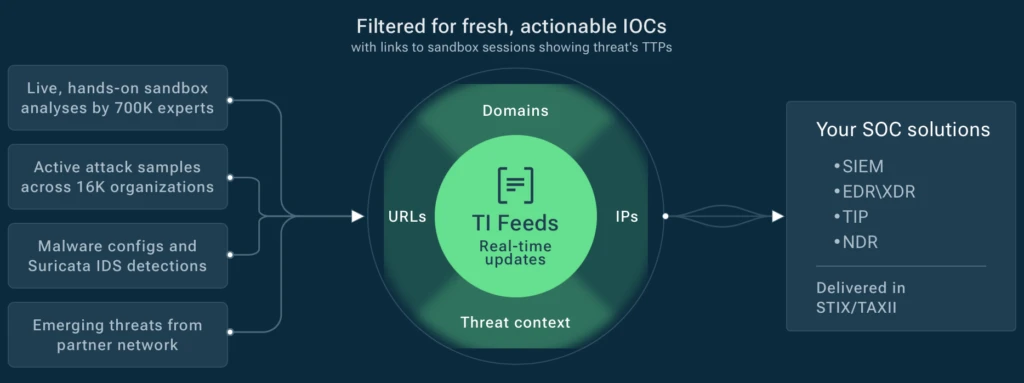
TI Feeds provide fresh malicious IP addresses, domains, and URLs collected from real-world malware and phishing investigations across more than 16,000 organizations using ANY.RUN.
According to ANY.RUN, approximately 99% of the indicators in TI Feeds are unique compared with other threat intelligence sources.
Through supported integrations and STIX/TAXII, TI Feeds deliver this additional intelligence directly into existing SIEM, SOAR, EDR, and threat intelligence platforms.
This makes TI Feeds a valuable complement to existing intelligence providers. Rather than relying on a limited view of the threat landscape, organizations can broaden their visibility and make their existing detection capabilities more effective.
Through that, having an independent threat intelligence source can support your company’s NIS2-readiness.
Make Security Decisions You Can Explain and Defend
Detecting a suspicious indicator is only the beginning of an investigation. SOC teams also need to understand its significance, assess the potential impact, and determine the appropriate response.
Without sufficient context, analysts may struggle to prioritize incidents consistently. This can lead to unnecessary escalations, delayed investigations, or insufficient attention to meaningful threats.
ANY.RUN Threat Intelligence Lookup helps analysts investigate indicators by providing additional information about associated infrastructure, related analyses, threat activity, and observed tactics, techniques, and procedures (TTPs).
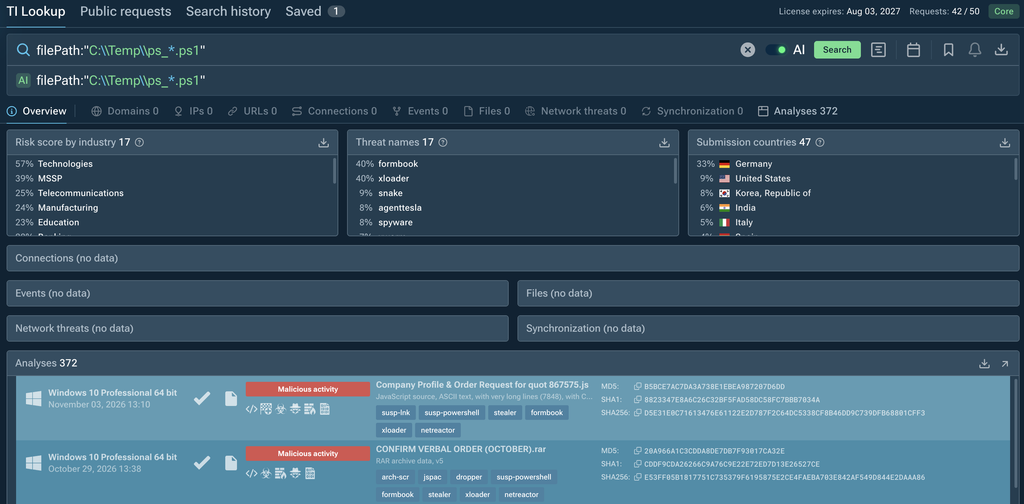
Instead of researching an indicator across multiple disconnected sources, analysts can use this context to determine whether further investigation or escalation is justified.
ANY.RUN TI Reports complement this process with expert research into malware families, campaigns, and emerging threats. They help teams understand broader attack patterns and identify relevant investigation or threat-hunting priorities.
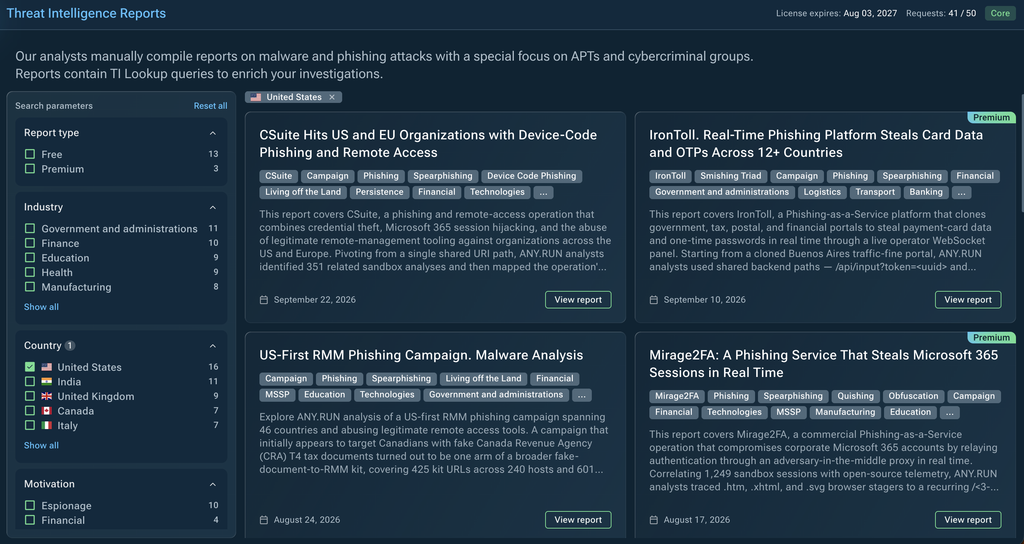
When a suspicious domain triggers an alert, an analyst can examine its connections to known malicious activity, review related threat intelligence, and use the findings to support a documented escalation decision.
That’s how you support more consistent decision-making across the SOC.
Supporting Accountability under NIS2
NIS2 emphasizes effective incident handling and risk-management processes. For significant incidents, Article 23 also establishes reporting obligations, including an initial early warning within 24 hours and an incident notification within 72 hours of becoming aware of a significant incident, subject to the Directive’s applicable conditions.
That’s not much time to investigate a potential threat, assess its impact, and decide what happens next. And when the stakes are high, security leaders need more than assumptions to back their decisions.
Context-rich threat intelligence is what helps organizations explain why an incident was prioritized, what evidence informed the assessment, and which response actions were considered appropriate.
Replace Assumptions with Verified Threat Behavior
For organizations preparing for NIS2, behavioral analysis can strengthen incident handling and provide evidence for evaluating security controls. It doesn’t replace EDR or other preventive measures, but adds an investigation layer when existing tools leave questions unanswered.
Threat intelligence helps identify suspicious infrastructure and known threats. But an alert alone doesn’t tell you the full story. What does a suspicious file or URL actually do?
A phishing URL may redirect through several pages before revealing malicious content. An attachment may only show its true behavior when executed. That’s where direct behavioral evidence makes the difference.
ANY.RUN Interactive Sandbox lets analysts safely execute suspicious files and interact with URLs in an isolated environment. They can examine processes, network connections, redirects, and other activity to uncover malicious behavior and extract indicators.
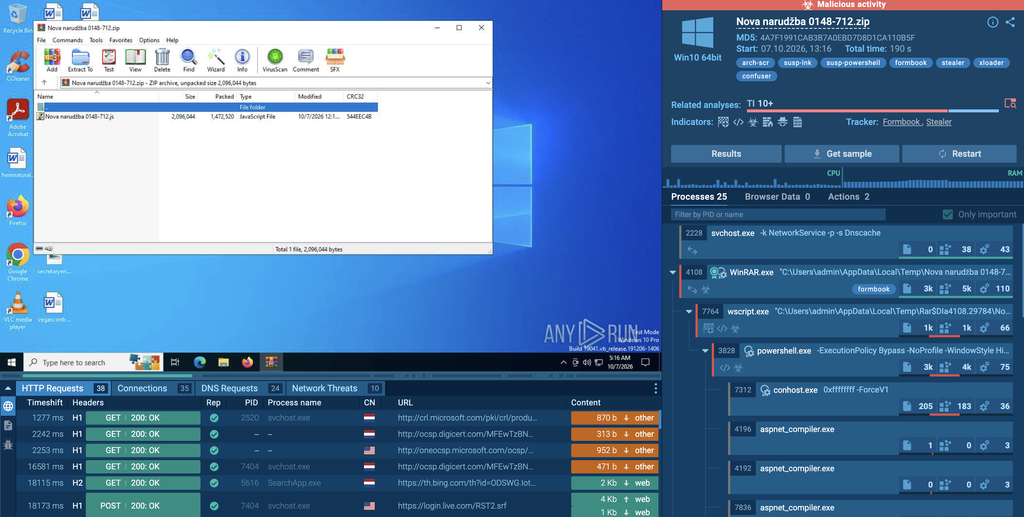
This helps security teams:
- Improve triage: Detect malicious activity in as little as 14 seconds and make faster decisions.
- Strengthen investigations: Identify up to 58% more threats with ANY.RUN’s security solutions and gather behavioral evidence.
- Accelerate response: Reduce mean time to respond (MTTR) by 21 minutes per incident with clearer investigation findings.
Turn Separate Security Tools into a Connected Response Process
Even a well-equipped SOC can struggle when intelligence, alerts, and investigation results remain disconnected. Streamlining these workflows helps turn separate solutions into a coordinated detection and response process.
| Stage | ANY.RUN Impact | Operational Value |
|---|---|---|
| Detection | TI Feeds supply fresh malicious indicators to existing security systems. | ~30% of unique malicious IOCs from studied Sandbox sessions were already present in TI Feeds before investigation. |
| Triage | Interactive Sandbox analyzes suspicious files and URLs. | 15-second median time to detect malicious activity, supporting faster threat verification. |
| Investigation | TI Lookup and TI Reports provide related infrastructure, threat activity, and campaign context. | 24× more IOCs with context to support investigation and prioritization. |
| Response | Confirmed findings from ANY.RUN analyses inform containment and detection improvements. | 21 minutes less MTTR per incident, helping teams respond faster. |
Through ANY.RUN integrations, organizations can connect these capabilities with supported security platforms, reducing manual work and helping investigation findings reach the right systems.
Conclusion: Strengthen What You Already Have for NIS2 Readiness
NIS2 readiness is about having efficient security measures in place – the ones that allow you to protect your organization against real-world threats.
With independent threat intelligence and behavioral analysis, ANY.RUN helps organizations enhance their existing security stack to:
- Support NIS2 compliance: Improve risk management, incident handling, and the assessment of existing security measures.
- Strengthen security: Close visibility gaps, detect more threats, and make better-informed response decisions.
- Increase security ROI: Get more value from existing tools and investments without replacing them.
About ANY.RUN
ANY.RUN provides interactive malware analysis and threat intelligence solutions that help security teams detect, investigate, and respond to cyber threats.
TI Feeds bring malicious indicators into existing monitoring workflows to support earlier threat identification. TI Lookup provides context for IOC investigation and prioritization, while Interactive Sandbox delivers behavioral evidence for deeper threat analysis. Together, these solutions help SOC teams reduce repetitive work, accelerate triage, and make better-informed investigation decisions.



0 comments