Black friday Up to 3 extra licenses FOR FREE + Special offer for TI LOOKUP Get it now
Webinar
February 26
Better SOC with Interactive Sandbox Practical Use Cases
Register now

SystemBC

80
Global rank
61 infographic chevron month
Month rank
56 infographic chevron week
Week rank
0
IOCs

SystemBC is a Remote Access Trojan (RAT) that can hide communication with the Command and Control server, and deposit other malware strains.

RAT
Type
Origin
1 August, 2019
First seen
11 February, 2026
Last seen
Also known as
Coroxy
Socks5 backconnect system

How to analyze SystemBC with ANY.RUN

RAT
Type
Origin
1 August, 2019
First seen
11 February, 2026
Last seen

IOCs

IP addresses
45.138.48.20
78.141.245.87
162.252.175.190
5.135.247.111
199.192.29.149
192.64.119.142
5.61.33.200
149.28.201.253
217.12.206.218
194.58.112.174
185.182.219.14
185.93.89.190
185.93.89.191
185.236.232.20
62.60.131.204
185.161.248.16
185.93.89.155
199.59.243.225
5.42.65.67
193.106.191.185
Hashes
d5b03c003b4035b6b82dfc6ef111f8913eafa15fd2b273734b809a415dc8e46f
d0d5cc74f7dd1c769f745204d31f9758d67824b3fb6a841d8a781d8bcc4a7814
728dff9a55f5e221e0edb888bdb64cb18a1bc34c496a71f9d9615c668e7cdd14
21ece0ad8b38f4dc72dde054c9f5677bfc8e117d770a937d379fb0556078bb26
28ccce33940a3f137f088457a06c9c768e4094e43bef801ff05917c666d7406a
c926338972be5bdfdd89574f3dc2fe4d4f70fd4e24c1c6ac5d2439c7fcc50db5
6fcaf4edd7edbe5b807c8a1feb3706f1287d7773c01af82e6e67dcd3b6caaf7e
d20def2014332b3391f52f726374f221dbbb06b748e02371d37cbe7ec53f1664
5fd97df397a5e93c86bb48ffdbbf2a3601c590ac5e8bf7baf154276b81270801
a06224fbb8759bcc251734d51cdb7b500ebcc9c0e7fbecc6aa5c1b1974bce9d7
f9ff6bac08394cce4b892bc5875e3970bcdfaa83f3d7613b7f55968b410e85d7
3552afca2214180166dc53afd3588fc9de44e7bf5cf034d2622634ec53ffbd35
e551275aa089805c48ec1734d3d4ecd03997663e58892323bf174f0b7eb52504
0e7afdde1b155c01748b9482fe5754582ab43bc2b62dc500c2704c03eeb3d4ab
d98e812ed83dbbe1b772fd7cec1de06916ad32b8252da527ea52f6b521243200
873a028cd3d8f457b4f7b8036afbc736466eade13f229b92ae4d9c67815da376
5411181f4261c8a1b21450ea7376df3d60003b19ad6ad6c6e1fbee2e4b6b8e32
a940860824f36cf031250e13df9844792138eb3d9fb09b7c215fa85a5b2b9368
e3df896880b51267bbbafeecf87a4c3b1c97a6a5dba9136f8731eac864424f13
4eceaf21c15e9755c7ea6dae9613bebe2462f4e85322a8e7d521e277e8bb1f13
Domains
bthoster.com
ordercouldhost.com
logstat17.club
fresher.at
dsntu.top
calacs-laurentides.com
fanstat18.club
dexblog90.club
advertx15.xyz
gougounu.site
proredirector.com
db1.pushsecs.info
prorequestops.com
elienne.net
ncordercreatetest.com
advertserv7.world
localhost.exchange
bernieforweeed.com
hcwakentent.com
rupertok.su
Last Seen at
Last Seen at

Recent blog posts

post image
Emerging Ransomware BQTLock & GREENBLOOD...
watchers 67
comments 0
post image
How to Build Threat Hunting that Defends Your...
watchers 318
comments 0
post image
How Threat Intelligence Helps Protect Financi...
watchers 674
comments 0

What is SystemBC malware

SystemBC is a Remote Access Trojan (RAT), discovered by ProofPoint in 2019. As soon as it got on the radar of security specialists, they began to notice its use in a number of parallel ransomware campaigns, which is typical for malware sold on underground forums. And the hypothesis was quickly validated: researchers found an ad promoting a malware called “socks5 backconnect system,” which matched the functionality of SystemBC almost to a tee.

Purchasers would receive an archive containing the bot executable, the C2 server executable, and a basic admin panel written in PHP.

This malware’s main function at the time was concealing the communication with the Command and Control server. Once the RAT made its way into the victim's system, it began the execution process by creating a hidden and encrypted communication channel with the attacker's C2 server. This communication channel then allowed the attacker to remotely control the infected machine and perform a variety of actions: uploading and downloading files, executing commands, and disabling security software.

Originally, the malware would establish a connection using SOCKS5 proxies, but in later iterations that was changed to the Tor network. Afterwards, attackers replaced the TOR network with hard-coded addresses over IPV4 TCP, using non-standard ports.

Its ability to hide malicious traffic has made this RAT extremely popular among ransomware gangs. Among other things, SystemBC was used in the DarkSide attack on the American Colonial Pipeline. It also featured in countless Ransomware-as-a-Service (RaaS) attacks, including those with Ryuk and Egregor.

Over the lifetime of this malware, its creators have released a multitude of versions into the wild, gradually improving the RAT’s capabilities and expanding its use cases. And the evolution of this threat shows no signs of slowing down, with new and modified versions appearing constantly.

To make life easier, researchers broadly divide versions into two categories:

Type one combines malware which is able to update itself, but nothing more. These are the earlier variants of the program, which mostly date back to 2019 and 2020. They can perform the following actions:

  • Self-update
  • Proxy traffic, typically using SOCKS5 proxies

Type two includes later iterations of SystemBC. And there really are a lot of them — some are functionally quite different from the others. On top of the capability of the first type, they can also:

  • Proxy traffic through the TOR network and IPV4 TCP ports
  • Load and execute Batch and VBS scripts
  • Execute Windows commands
  • Install malware in the form of a DLL to run in memory

And in 2022, researchers also discovered a PowerShell SystemBC variant.

How to get more information from SystemBC malware

Track SystemBC’s execution process in the process graph in ANY.RUN interactive online sandbox.
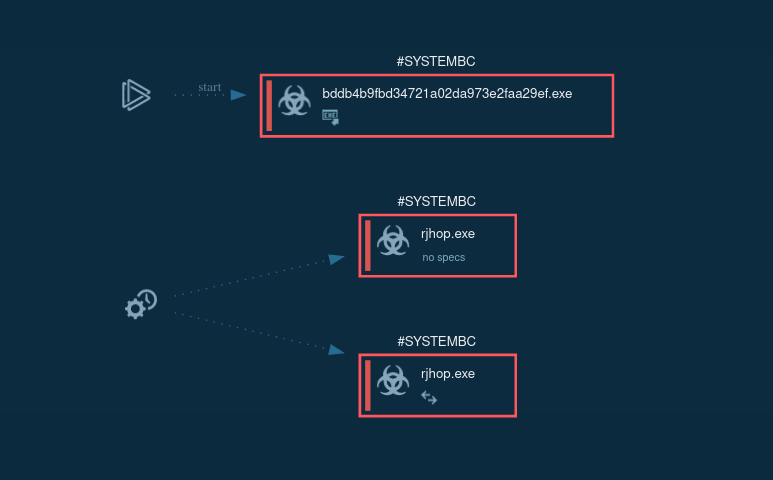
The process graph of SystemBC malware Figure 1: The process graph of SystemBC malware

In ANY.RUN, users can access detailed malware configuration data in about 10 seconds after launching the sandbox, without having to wait for the emulation to end running. Check this SystemBC sample for analysis.

SystemBC execution process

Execution process of SystemBC depends on the version of it, but always pretty straightforward. In general, after infection, it connects to C2 for further commands. Latest versions may download files or make proxies from infected PC. In our case main executable file use Scheduled Task/Job: Scheduled Task (T1053.005) technique to run itself with generated name. Config of this malware is short and only have one or a couple of IP addresses or domain to which it will try to connect. Malware also encrypts its traffic.
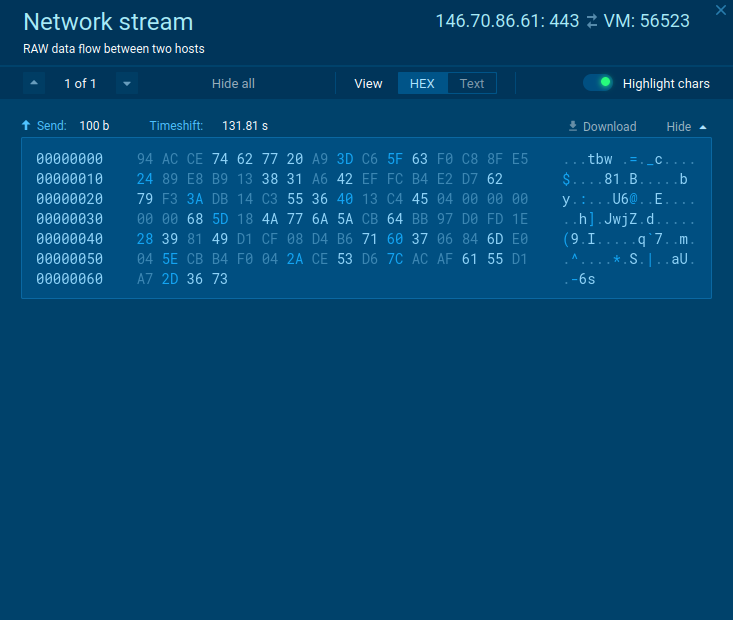
The network stream of SystemBC malware Figure 2: The network stream of SystemBC malware

Distribution of SystemBC

SystemBC was originally distributed using RIG and Fallout exploit kits. But now it’s typically dropped by other malware strains, which in turn make their way into machines as malicious attachments in spam email campaigns, or when users download pirated software.

Here are a few malware families that were spotted spreading this RAT:

Interestingly, while these malicious programs can drop SystemBC on machines they infect, sometimes that behavior is inverted. For example, SystemBC sometimes infects compromised machines with CobaltStrike.

Conclusion

SystemBC is a peculiar malware and its use cases are almost as varied as its variants. It is frequently found in powerful ransomware attacks, is used to gain a foothold in networks in conjunction with CobaltStrike, and can drop a range of post-exploitation tools.

This is one to keep an eye on. If the sheer number of SystemBC versions means anything, it is that the developers will keep advancing its capabilities, making it more and more dangerous. And the possible connection with hard-hitting ransomware gangs means that we will likely see it again used in sophisticated, targeted attacks.
HAVE A LOOK AT

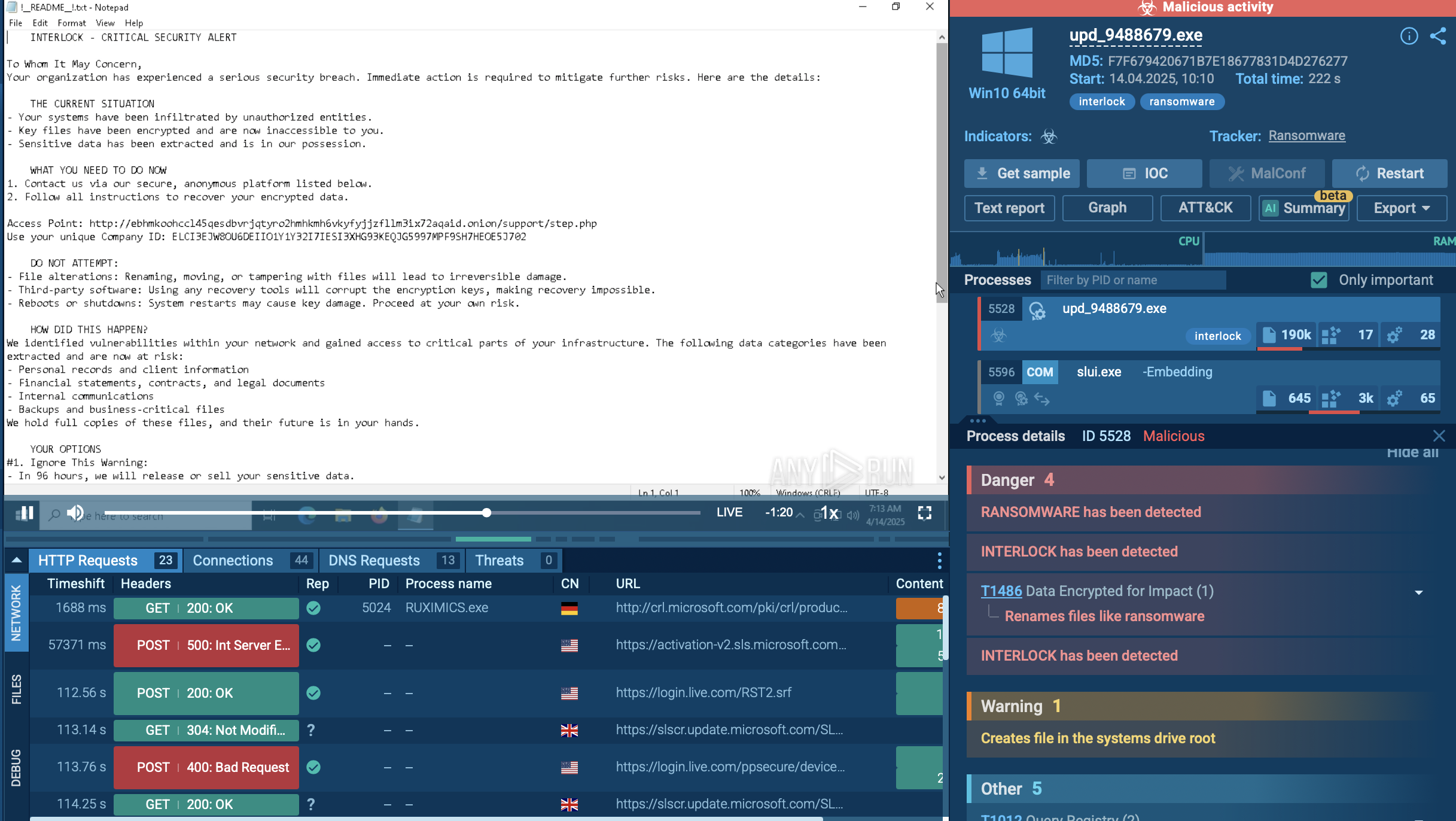
PureCrypter screenshot
PureCrypter
purecrypter
First identified in March 2021, PureCrypter is a .NET-based loader that employs obfuscation techniques, such as SmartAssembly, to evade detection. It has been used to distribute malware families including AgentTesla, RedLine Stealer, and SnakeKeylogger. The malware is typically delivered through phishing campaigns and malicious downloads, often masquerading as legitimate files with extensions like .mp4 or .pdf. PureCrypter utilizes encryption and compression to conceal its payloads and can inject malicious code into legitimate processes to maintain persistence on the infected system.
Read More
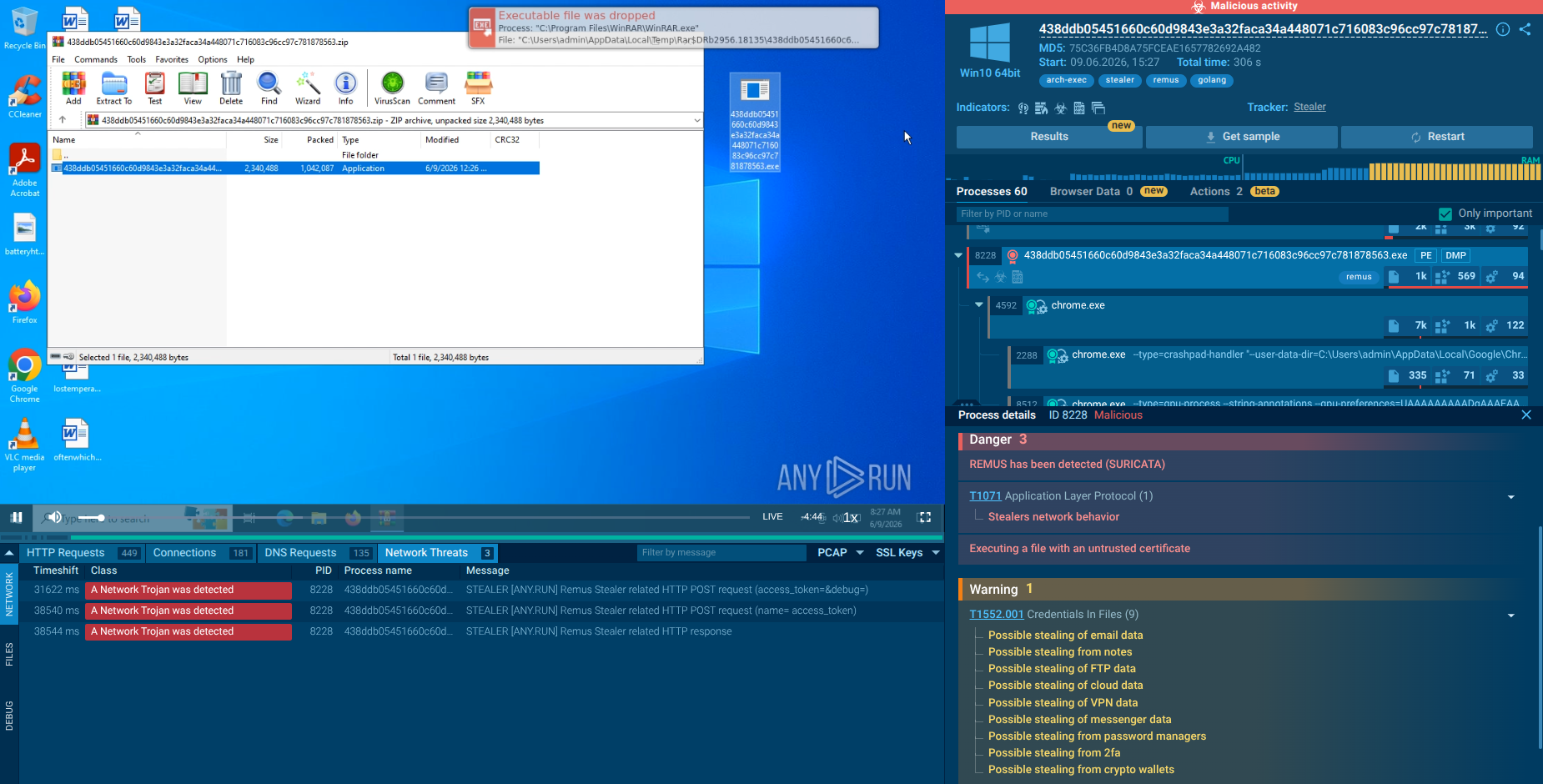
DarkComet screenshot
DarkComet
darkcomet rat darkcomet rat
DarkComet RAT is a malicious program designed to remotely control or administer a victim's computer, steal private data and spy on the victim.
Read More
Tycoon 2FA screenshot
Tycoon 2FA
tycoon
Tycoon 2FA is a phishing-as-a-service (PhaaS) platform designed to bypass multi-factor authentication (MFA) protections, particularly targeting Microsoft 365 and Gmail accounts. Its advanced evasion techniques and modular architecture make it a significant threat to organizations relying on MFA for security.
Read More
StrelaStealer screenshot
StrelaStealer
strela
StrelaStealer is a malware that targets email clients to steal login credentials, sending them back to the attacker’s command-and-control server. Since its emergence in 2022, it has been involved in numerous large-scale email campaigns, primarily affecting organizations in the EU and U.S. The malware’s tactics continue to evolve, with attackers frequently changing attachment file formats and updating the DLL payload to evade detection.
Read More
Lumma screenshot
Lumma
lumma
Lumma is an information stealer, developed using the C programming language. It is offered for sale as a malware-as-a-service, with several plans available. It usually targets cryptocurrency wallets, login credentials, and other sensitive information on a compromised system. The malicious software regularly gets updates that improve and expand its functionality, making it a serious stealer threat.
Read More
Octo screenshot
Octo
octo coper
Octo malware, also known as ExobotCompact or Coper, is a sophisticated Android banking trojan that has evolved from earlier malware family Exobot. It poses a significant threat to financial institutions, mobile users, and enterprise networks.
Read More