DeerStealer
- 116
- Global rank
- 142
- Month rank
- 122
- Week rank
DeerStealer is an information-stealing malware discovered in 2024 by ANY.RUN, primarily targeting sensitive data such as login credentials, browser history, and cryptocurrency wallet details. It is often distributed through phishing campaigns and fake Google ads that mimic legitimate platforms like Google Authenticator. Once installed, it exfiltrates the stolen data to a remote command and control (C2) server. DeerStealer’s ability to disguise itself as legitimate downloads makes it particularly dangerous for unsuspecting users.
- Stealer
- Type
- Unknown
- Origin
- 1 June, 2024
- First seen
- 20 October, 2026
- Last seen
How to analyze DeerStealer with ANY.RUN
IOCs
IP addresses
- 48.209.138.189
- 2.23.246.101
- 23.11.40.157
- 20.165.94.63
- 150.171.109.101
- 172.211.123.250
- 20.190.159.131
- 48.192.1.64
- 23.59.18.102
- 204.79.197.203
- 135.232.92.97
- 92.123.104.18
- 101.155.118.179
- 210.149.227.197
- 210.39.186.30
- 196.60.212.241
- 29.51.81.241
- 64.89.163.22
- 71.207.84.230
- 210.188.84.190
Hashes
- cc3f06e03909b972c27a69c98ff5d768fd6dbd98ebdcd55720e24b5305e9f404
- a4e5b9e377a10dcf8f4a8be4ab389a947396f0232a4bf36b69473871b5488dce
- e54da05cdbba0f009cf2b242d3e624cb2f12b25baccab54d1bcd9cca0e7ea84c
- 0a78272b1c1091008f33a65a7facef5dc0ee19d69a7b1810079c8c1ad1e0d702
- 96ad1146eb96877eab5942ae0736b82d8b5e2039a80d3d6932665c1a4c87dcf7
- 4dbfc417d053ba6867308671f1c61f4dcafc61f058d4044db532da6d3bde3615
- faeabf9f7915d3faf3db7e0ef054b1a1da15a74e824e6dfeb5d5453af84fbca2
- 90948fc48f350776274bc8fc1da3f52ce1674ec89a4d15bb9c0eb7c6f5a39ab9
- fe86e8ccec61d4c55b1a345454a480232b74703ceaa01d2cf32976628a14178d
- f7e4aae30ab2bda60bead5fd5a29a36685d768df007d3399d3047768babae200
- a32e0a83001d2c5d41649063217923dac167809cab50ec5784078e41c9ec0f0f
- 9884e9d1b4f8a873ccbd81f8ad0ae257776d2348d027d811a56475e028360d87
- ceebae7b8927a3227e5303cf5e0f1f7b34bb542ad7250ac03fbcde36ec2f1508
- 3ad2dc318056d0a2024af1804ea741146cfc18cc404649a44610cbf8b2056cf2
- d05d45f8aa3cf82924f11c6f31ced4ca01ecb3d9d9895213af0672436c57dc46
- 47c2123c41419004e1172d183d270a1274f1b59c0d33b8dbc516a9b8dc280305
- 602c4c7482de6479dd2e9793cda275e5e63d773dacd1eca689232ab7008fb4fb
- 138c240382304f350383b02ed56c69103a9431c0544eb1ec5dcd7dec7a555dd9
- 0f404764d07a6ae2ef9e1e0e8eaac278b7d488d61cf1c084146f2f33b485f2ed
- 4d0bd3228ab4cc3e5159f4337be969ec7b7334e265c99b7633e3daf3c3fcfb62
Domains
- crl.microsoft.com
- activation-v2.sls.microsoft.com
- nexusrules.officeapps.live.com
- slscr.update.microsoft.com
- www.microsoft.com
- settings-win.data.microsoft.com
- fe3cr.delivery.mp.microsoft.com
- login.live.com
- self.events.data.microsoft.com
- ecs.office.com
- google.com
- ocsp.digicert.com
- www.bing.com
- client.wns.windows.com
- oneocsp.microsoft.com
- threejrev.com
- processhol.sbs
- feprgkcxfdtp.info
- tg88seru.me
- gapo.rako9jabus1.com
URLs
- http://crl.microsoft.com/pki/crl/products/microoceraut2011_2011_03_22.crl
- http://www.microsoft.com/pkiops/crl/microsoft%20secure%20server%20ca%202026.crl
- http://ocsp.digicert.com/mfewtzbnmeswstajbgurdgmcgguabbtrjrydryt%2bapf3gspypfhbxr5xtqqus9tippmhxdiunkhmewnpyim8s8yceajtxtab8my1oj8mfwpz%2f7y%3d
- http://oneocsp.microsoft.com/ocsp/mfqwujbqme4wtdajbgurdgmcgguabbq3l3%2f%2fa6adk8nray2gxzvayrhg4aqub6t%2b2v%2bxq3lso2d33ojhnyhhqoucezmaaaafuwohyjguzpcaaaaaaau%3d
- http://ocsp.digicert.com/mfewtzbnmeswstajbgurdgmcgguabbq50otx%2fh0ztl%2bz8sipi7wewvxdlqqutijuibiv5unu5g%2f6%2brks7qyxjzkceaz1vqyrvgl0erhqlcpm8gy%3d
- https://login.live.com/rst2.srf
- https://login.live.com/ppsecure/deviceaddcredential.srf
- http://www.microsoft.com/pkiops/crl/microsoft%20ecc%20update%20secure%20server%20ca%202.1.crl
- https://slscr.update.microsoft.com/sls/%7b522d76a4-93e1-47f8-b8ce-07c937ad1a1e%7d/x64/10.0.19045.4046/0?ch=686&l=en-us&p=&pt=0x30&wua=10.0.19041.3996&mk=dell&md=dell
- https://fe3cr.delivery.mp.microsoft.com/clientwebservice/ping
- https://slscr.update.microsoft.com/sls/ping
- https://slscr.update.microsoft.com/sls/%7be7a50285-d08d-499d-9ff8-180fdc2332bc%7d/x64/10.0.19045.4046/0?ch=686&l=en-us&p=&pt=0x30&wua=10.0.19041.3996&mk=dell&md=dell
- https://activation-v2.sls.microsoft.com/slactivateproduct/slactivateproduct.asmx?configextension=retail
- https://go.microsoft.com/fwlink/?linkid=2257403&clcid=0x409
- https://settings-win.data.microsoft.com/settings/v3.0/wsd/waasassessment?os=windows&osver=10.0.19041.1.amd64fre.vb_release.191206-&ring=retail&sku=48&deviceclass=windows.desktop&locale=en-us&deviceid=bad99146-31d3-4ec6-a1a4-be76f32ba5d4&flightring=retail&telemetrylevel=1&hidovergattreg=c%3a%5cwindows%5csystem32%5cdriverstore%5cfilerepository%5chidbthle.inf_amd64_9610b4821fdf82a5%5cmicrosoft.bluetooth.profiles.hidovergatt.dll&appver=10.0&processoridentifier=amd64%20family%2023%20model%201%20stepping%202&oemmodel=dell&updateoffereddays=4294967295&processormanufacturer=authenticamd&installdate=1661339444&oemmodelbaseboard=&branchreadinesslevel=cb&oemsubmodel=j5cr&isclouddomainjoined=0&deferfeatureupdateperiodindays=30&isdeviceretaildemo=0&flightingbranchname=&osuilocale=en-us&devicefamily=windows.desktop&wuclientver=10.0.19041.3996&uninstallactive=1&isflightingenabled=0&osskuid=48&processorclockspeed=3094&totalphysicalram=6144&securebootcapable=0&app=waasassessment&processorcores=6¤tbranch=vb_release&installlanguage=en-us&deferqualityupdateperiodindays=0&servicingbranch=cb&oemname_uncleaned=dell&tpmversion=0&primarydisktotalcapacity=262144&installationtype=client&attrdataver=186&processormodel=amd%20ryzen%205%203500%206-core%20processor&isedgewithchromiuminstalled=1&osversion=10.0.19045.4046&ismdmenrolled=0&activationchannel=retail&honorwufbdeferrals=0&firmwareversion=a.40&trendinstalledkey=1&osarchitecture=amd64&defaultuserregion=244&updatemanagementgroup=2
- https://settings-win.data.microsoft.com/settings/v3.0/wsd/muse?processorclockspeed=3094&flightids=&updateoffereddays=4294967295&branchreadinesslevel=cb&oemmanufacturername=dell&isclouddomainjoined=0&processoridentifier=amd64%20family%2023%20model%201%20stepping%202&sku=48&activationchannel=retail&attrdataver=186&ismdmenrolled=0&processorcores=6&processormodel=amd%20ryzen%205%203500%206-core%20processor&totalphysicalram=6144&primarydisktype=4294967295&flightingbranchname=&chassistypeid=1&oemmodelnumber=dell&systemvolumetotalcapacity=260281&sampleid=95271487&deviceclass=windows.desktop&app=muse&disabledualscan=0&appver=10.0&oemsubmodel=j5cr&locale=en-us&isalwaysonalwaysconnectedcapable=0&ms=0&defaultuserregion=244&updateserviceurl=http%3a%2f%2fneverupdatewindows10.com&osver=10.0.19045.4046.amd64fre.vb_release.191206-1406&os=windows&deviceid=s%3abad99146-31d3-4ec6-a1a4-be76f32ba5d4&deferqualityupdateperiodindays=0&ring=retail&deferfeatureupdateperiodindays=30
- http://23.146.242.101/bin/screenconnect.clientsetup.exe
- http://185.213.240.64/bot.exe
- http://193.178.158.57/bin/bc116af5e724cfa4_zx.exe
- http://212.86.121.238/bin/support.client.exe
Last seen at
What is DeerStealer malware?
DeerStealer is a relatively new info-stealing malware that emerged in 2024, targeting sensitive data like login credentials, browser history, and cryptocurrency wallet details.
Unlike more established stealers, DeerStealer has quickly gained attention due to its innovative distribution methods, including fake websites mimicking legitimate services like Google Authenticator. These sites trick users into downloading malware under the guise of security software.
The malware has been linked to malicious campaigns that target individual users as well as organizations, and it’s speculated to share similarities with other stealer malware like XFiles.
In addition to exfiltrating data, DeerStealer persists on infected systems by modifying registry keys, enabling it to survive reboots and remain active.
This persistence, combined with its focus on browser exploitation and cryptocurrency theft, makes DeerStealer a significant risk, particularly to users managing sensitive online accounts and assets.
DeerStealer malware technical details
The primary functionality and features of DeerStealer malware include:
- Extraction of credentials from web browsers, email clients, and cryptocurrency wallets.
- Modification of registry keys to reinfect the system after reboot, ensuring long-term access.
- Obfuscation techniques to avoid detection by security tools, making it harder to analyze.
- Delivery via phishing emails, malicious Google ads, and fake websites mimicking legitimate services, including Google Authenticator sites.
- Communication with a command-and-control server via POST requests to send stolen data, often using encrypted communication through simple XOR encryption.
In some DeerStealer campaigns, attackers use a Telegram bot to send information about infected systems, such as IP addresses and country.
When victims land on a fake website (like a Google Authenticator download page), their IP address and country are sent to a Telegram bot. This bot, named "Tuc-tuc," helps attackers track the locations of infected users and coordinate further actions.
Telegram serves as a secure and anonymous medium for logging victim data, making it easier for the attackers to monitor their phishing campaigns without detection.
DeerStealer execution process
To see how DeerStealer operates, let’s upload its sample to the ANY.RUN sandbox.
DeerStealer is commonly distributed via fake websites that mimic legitimate services, such as Google Authenticator. When users attempt to download the application from these sites, their information, such as IP address and country, is sent to a Telegram bot.
The malware itself is hosted on platforms like GitHub and is designed to run directly in memory without leaving traces on disk.
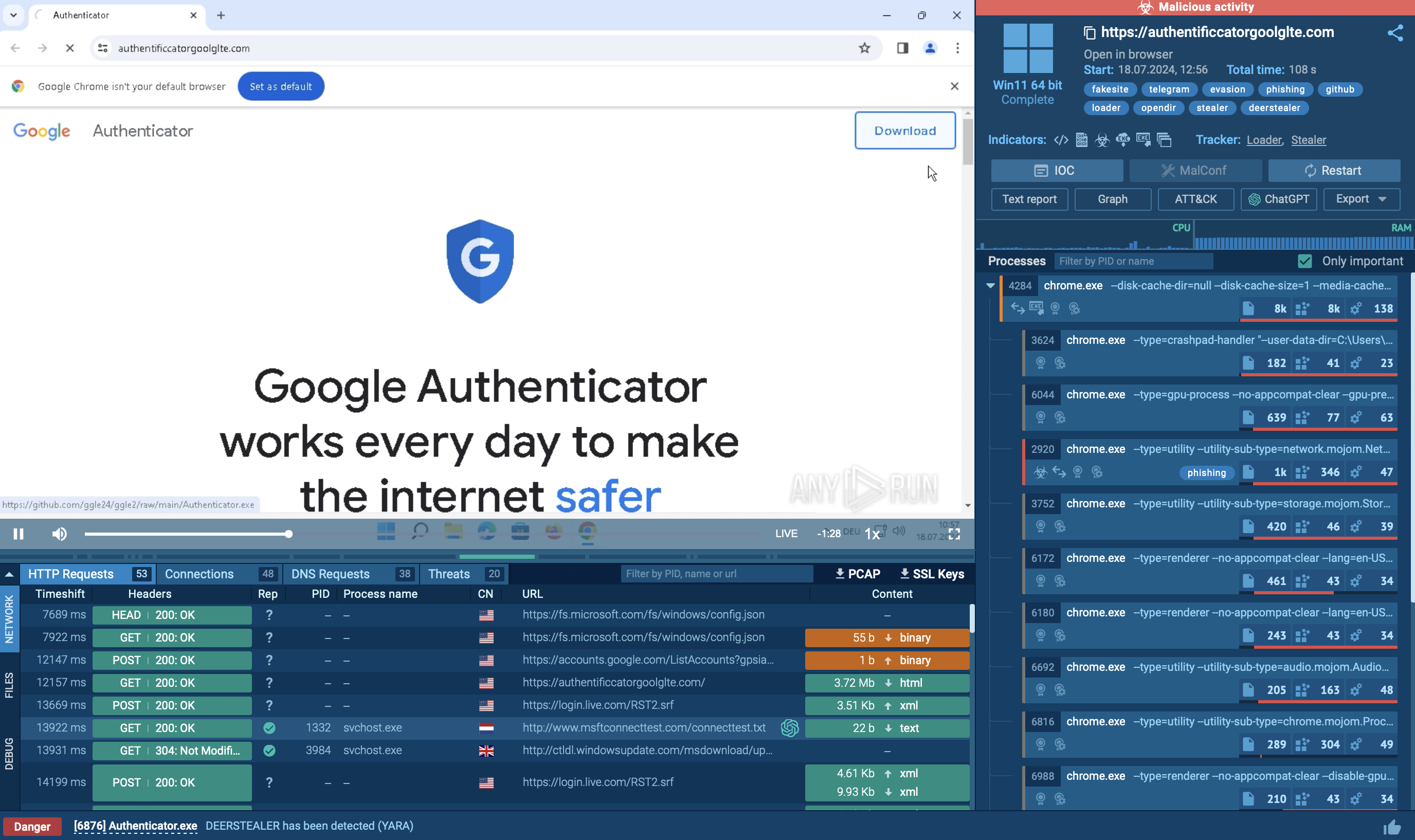
Upon execution, it launches a Delphi-based application that serves as a launcher for the final payload.
To evade detection, the payload employs obfuscation techniques and runs entirely in memory, making it difficult for traditional antivirus solutions to identify.
Before initiating its malicious activities, DeerStealer performs checks to confirm it's not operating in a sandbox or virtual environment. It collects hardware identifiers (HWID) and transmits them to its command and control (C2) server. If the checks are passed, the malware retrieves a list of target applications and keywords from the server.
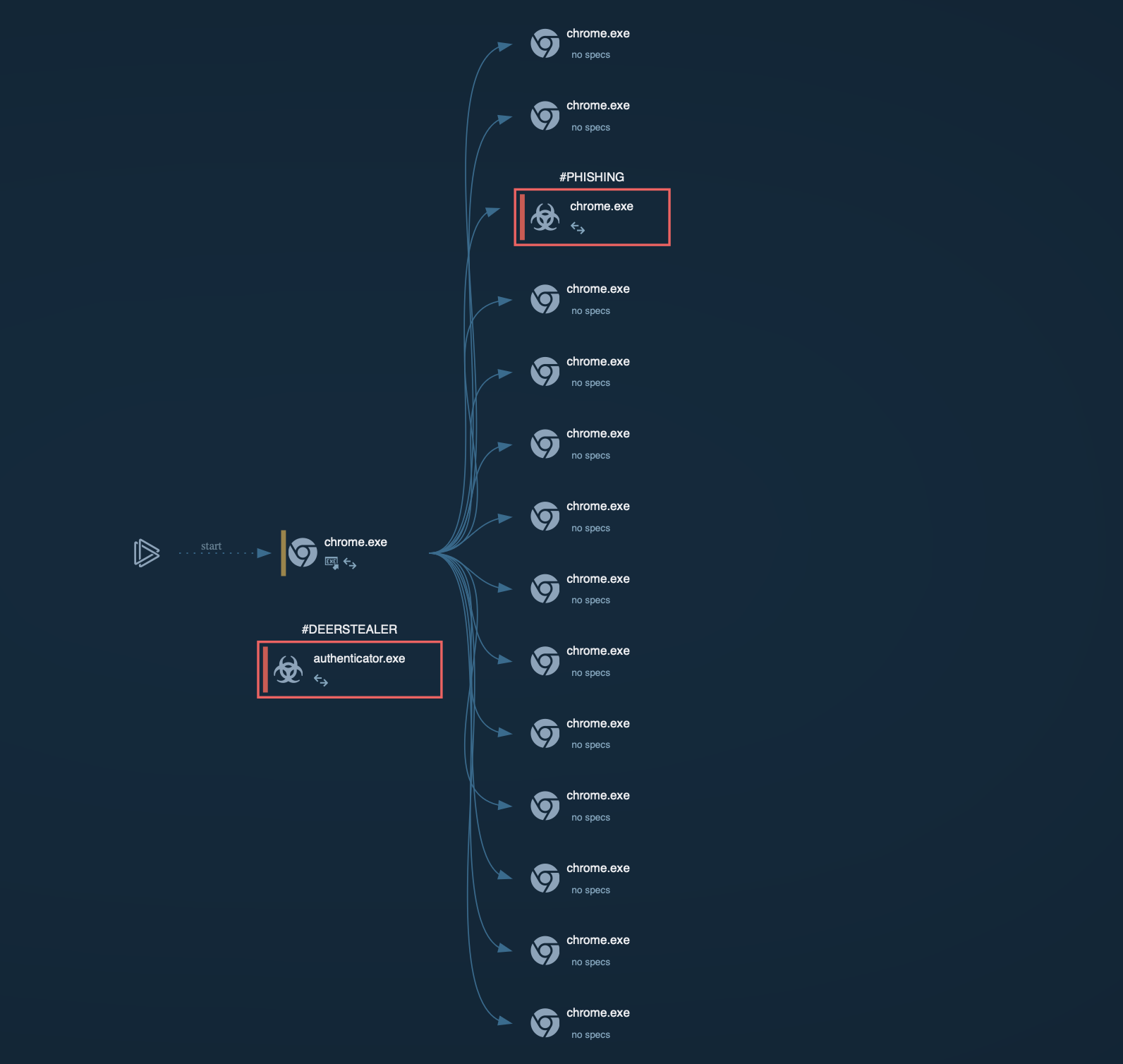
DeerStealer scans the infected system for sensitive information, such as cryptocurrency wallet credentials, browser-stored passwords, and other personal data. The stolen data is organized into a structured format, often JSON, before being exfiltrated.
The exfiltration occurs through POST requests, typically sent over encrypted channels to bypass network monitoring tools. To maintain persistence, DeerStealer may establish scheduled tasks or modify startup configurations, enabling it to execute automatically upon system reboot.
DeerStealer malware distribution methods
DeerStealer is primarily distributed through various deceptive techniques that aim to trick users into downloading malware. Some of the key distribution methods include:
- Phishing emails: Attackers send emails that appear legitimate, often containing malicious attachments or links. These attachments can be disguised as Word documents or compressed files (e.g., .zip or .rar), which, once opened, deploy the malware.
- Malvertising: Cybercriminals use malicious advertisements that romote legitimate services like Google Authenticator. When users click on these ads, they are redirected to fraudulent websites that prompt them to download DeerStealer.
- Fake websites: Attackers create websites that mimic legitimate services, particularly focusing on fake Google Authenticator sites. These websites trick users into downloading infected files disguised as legitimate software.
- Software cracks: It has also been observed in pirated software downloads, where users download what appears to be legitimate software, only to infect their systems with DeerStealer.
Gathering threat intelligence on DeerStealer malware
To collect up-to-date intelligence on DeerStealer, you can utilize Threat Intelligence Lookup from ANY.RUN.
This tool gives access to a comprehensive database filled with insights from millions of malware analysis sessions. Using over 40 customizable search parameters, such as IPs, domains, file names, and process artifacts, it allows you to uncover important details about threats like DeerStealer.
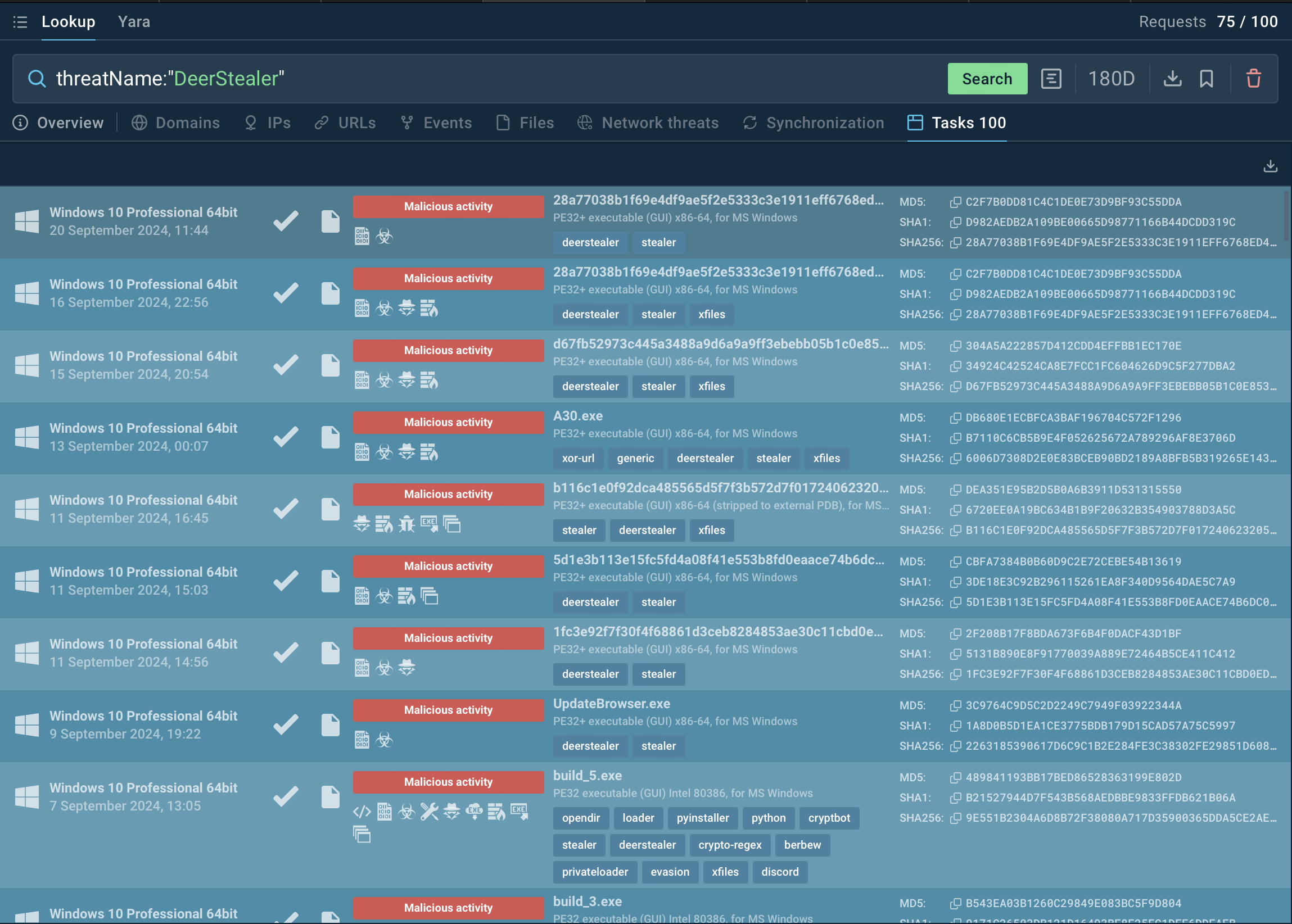
For instance, by searching for DeerStealer’s name or using a related indicator, such as a domain or process artifact (threatName:"DeerStealer", Threat Intelligence Lookup will display all relevant samples and sandbox results associated with the malware.
Get your 14-day free trial of Threat Intelligence Lookup along with the ANY.RUN sandbox.
Conclusion
DeerStealer is a serious threat, capable of stealing login credentials, browser data, and cryptocurrency information. Its distribution through fake websites makes it difficult to detect. It’s important to analyze suspicious files and URLs to protect against DeerStealer and similar malware.
ANY.RUN provides a real-time sandbox for analyzing malware behavior and allows its users to quickly identify threats, gathering key indicators of compromise (IOCs)
Sign up for a free ANY.RUN account today and start analyzing all the emerging threats with no limits!
Other malware & phishing threats
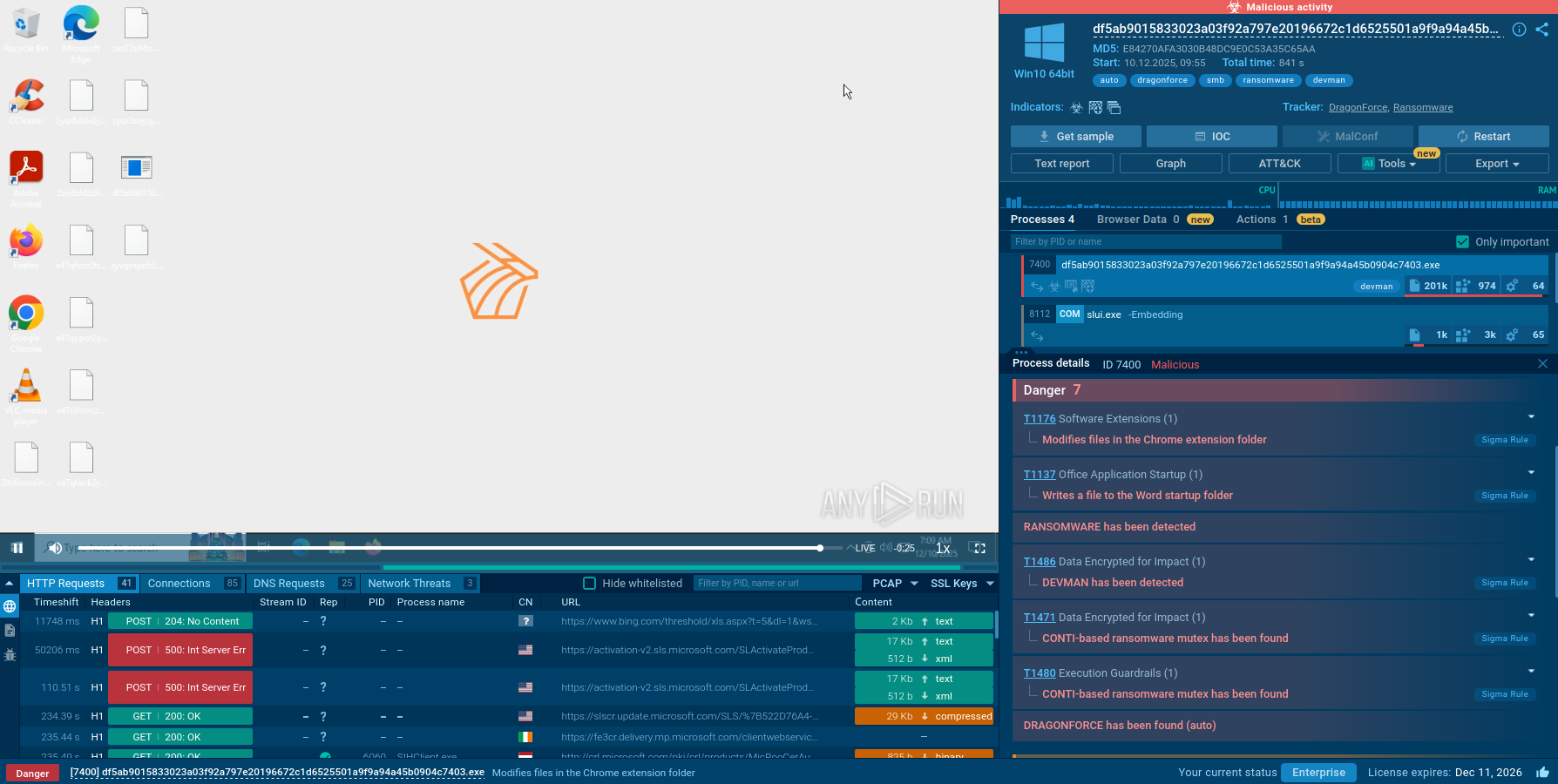 DEVMANDEVMAN is a fast-evolving malware family targeting Windows environments with a mix of credential theft, remote control capabilities, and persistence techniques typical of modern crimeware. Initially observed in early 2025, DEVMAN quickly became a favorite tool among cybercriminal groups thanks to its stealth, modular structure, and ability to bypass traditional AV solutions.
 NetSupport RATNetSupport RAT is a malicious adaptation of the legitimate NetSupport Manager, a remote access tool used for IT support, which cybercriminals exploit to gain unauthorized control over systems. It has gained significant traction due to its sophisticated evasion techniques, widespread distribution campaigns, and the challenge it poses to security professionals who must distinguish between legitimate and malicious uses of the underlying software.
 OnyxC2OnyxC2 is a sophisticated Malware-as-a-Service platform sold on cybercrime forums that provides a turnkey solution for high-volume credential theft. The malware targets over 200 applications, scraping sensitive data from browsers, cryptocurrency wallets, and business-critical tools like FTP and email clients. It employs advanced evasion techniques, such as DLL sideloading and browser fingerprinting, to deliver encrypted payloads through legitimate signed binaries.
 Pulsar RATPulsar RAT is a derivative of Quasar RAT with extensive functionality including keylogging, cryptocurrency wallet clipping, credential theft, file management, remote shell execution, and data exfiltration capabilities. As a modular, open-source remote administration tool designed for Windows systems, Pulsar introduces significant enhancements over its predecessor.
 RevengeRevenge was one of the most popular remote access trojans to be used in 2019 when it was featured in a huge malicious campaign named “Aggah”. This malware can take remote control of infected machines and spy after the victims.
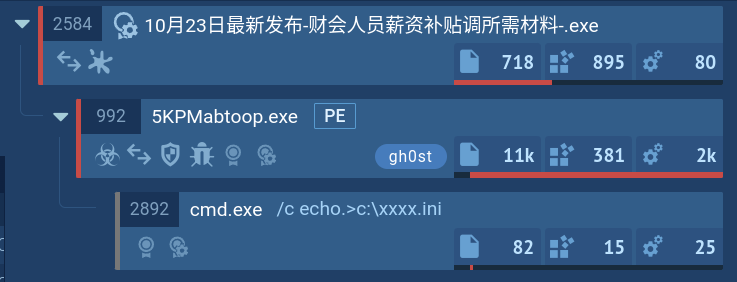 Gh0st RATGh0st RAT is a malware with advanced trojan functionality that enables attackers to establish full control over the victim’s system. The spying capabilities of Gh0st RAT made it a go-to tool for numerous criminal groups in high-profile attacks against government and corporate organizations. The most common vector of attack involving this malware begins with spam and phishing emails.