CryptBot
- 101
- Global rank
- 102
- Month rank
- 93
- Week rank
CryptBot is an advanced Windows-targeting infostealer delivered via pirate sites with "cracked" software. It has been first observed in the wild in 2019.
- Infostealer
- Type
- Unknown
- Origin
- 20 December, 2019
- First seen
- 19 October, 2026
- Last seen
How to analyze CryptBot with ANY.RUN
IOCs
IP addresses
- 62.60.226.232
- 150.171.109.106
- 57.153.246.3
- 48.192.1.65
- 2.16.204.134
- 2.16.204.132
- 172.211.123.250
- 135.233.95.144
- 23.59.18.102
- 135.232.92.97
- 204.79.197.203
- 20.190.159.23
- 23.11.40.157
- 2.21.239.135
- 2.23.246.101
- 20.190.159.75
- 40.126.32.133
- 48.209.6.48
- 23.207.210.146
- 74.178.76.128
Hashes
- f49b515eedeed1abe391bc32f15ce43d3582cb6c41ff944fa9c79f476d5824ba
- 21a9528d58779854be3c73f4478ce8a8e448f7e2723518cc428b2d68bd371b78
- ee6e72111311196f163b9dc9fb141e5fb48d7fadc5afb71b9748c80e57000388
- fd4c9fda9cd3f9ae7c962b0ddf37232294d55580e1aa165aa06129b8549389eb
- 11561eb0d750873754e9a7a079e5faaaa964eb525fe729733e70941774f51289
- 94641e9c5dc7319c8dbbe4d30324e0664ca8776b3c5a22c01898c5eeaeaa3409
- 8ae3b2d8b7f0da9d6120e93faca92df9b614f55a4d8f54b03d899ba3ed1448ee
- 5dbc3a5daf431973e245d83ab51b128e9c4cc2f3ecd61c45c88db161acc25b7b
- a3d5cae30a3378f3cd2377b09c861eb95dc4663eeed9121a38762fac0d2c87d6
- 4412319ef944ebcca9581cbacb1d4e1dc614c348d1dfc5d2faaaad863d300209
- 984858b142a6a66531e14f70c55769cb7383f6e575207bbfa86199171e5bedb7
- 807882f310ebf263f7b85b683add53970251d3cafb3b22ac3fce9923fb15ab35
- dd9ce6b3ae599ee1a027bbd1e53c071cda2f136ee144a7a8597f20e53405a29e
- 5ee004095de29a46de16b78f9020dedfdb3cbe41d2b60ce9e01c6699823f6953
- 1513329660c876e166fde7919d705ecfa5339732849159685c59847be92b7478
- 00611cdf4cccf529b22776d2a7f5656529be24167f1bb1382d11963d7904472f
- f8f553b5f737919b9183b0a14b33a115feed6848c69988f0fcd2f8cb62d140ea
- c86febb55e75236a7da228e41a36f512858014ff7bfaf377e42f93c76ece05cb
- 1c7bd5b28b33636c4d6bea0589f334aa824e7a2a181d80f72f380d943ec812b9
- 91b235daddf8b49a57e6b364469cae417db28ad9d05b6ae9017ff95a2ab4bf29
Domains
- oneocsp.microsoft.com
- slscr.update.microsoft.com
- nexusrules.officeapps.live.com
- www.microsoft.com
- client.wns.windows.com
- login.live.com
- th.bing.com
- ecs.office.com
- fe3cr.delivery.mp.microsoft.com
- google.com
- settings-win.data.microsoft.com
- crl.microsoft.com
- ocsp.digicert.com
- activation-v2.sls.microsoft.com
- self.events.data.microsoft.com
- copilot.microsoft.com
- www.bing.com
- ib.msn.com
- clients2.google.com
- play.google.com
URLs
- http://crl.microsoft.com/pki/crl/products/microoceraut2011_2011_03_22.crl
- http://www.microsoft.com/pkiops/crl/microsoft%20secure%20server%20ca%202026.crl
- http://ocsp.digicert.com/mfewtzbnmeswstajbgurdgmcgguabbtrjrydryt%2bapf3gspypfhbxr5xtqqus9tippmhxdiunkhmewnpyim8s8yceajtxtab8my1oj8mfwpz%2f7y%3d
- http://oneocsp.microsoft.com/ocsp/mfqwujbqme4wtdajbgurdgmcgguabbq3l3%2f%2fa6adk8nray2gxzvayrhg4aqub6t%2b2v%2bxq3lso2d33ojhnyhhqoucezmaaaafuwohyjguzpcaaaaaaau%3d
- http://ocsp.digicert.com/mfewtzbnmeswstajbgurdgmcgguabbq50otx%2fh0ztl%2bz8sipi7wewvxdlqqutijuibiv5unu5g%2f6%2brks7qyxjzkceaz1vqyrvgl0erhqlcpm8gy%3d
- https://www.bing.com/dsb/search?dsbmr=1&format=dsbjson&client=windowsminiserp&dsbschemaversion=1.1&dsbminiserp=1&q=q&cc=us&setlang=en-us&clientdatetime=10%2f19%2f2026%2c%207%3a08%3a17%20am
- https://www.bing.com/threshold/xls.aspx?t=5&dl=1&f=9&wsbc=1
- https://www.bing.com/th?id=odswg.07bae8d4-9f7f-4621-a752-18358a102dfc&pid=dsb
- https://login.live.com/rst2.srf
- https://login.live.com/ppsecure/deviceaddcredential.srf
- https://th.bing.com/th?id=odswg.iotdlocalicon&w=16&h=16&c=1&rs=1&p=0
- http://www.microsoft.com/pkiops/crl/microsoft%20ecc%20update%20secure%20server%20ca%202.1.crl
- https://slscr.update.microsoft.com/sls/%7b522d76a4-93e1-47f8-b8ce-07c937ad1a1e%7d/x64/10.0.19045.4046/0?ch=686&l=en-us&p=&pt=0x30&wua=10.0.19041.3996&mk=dell&md=dell
- https://fe3cr.delivery.mp.microsoft.com/clientwebservice/ping
- https://slscr.update.microsoft.com/sls/ping
- https://slscr.update.microsoft.com/sls/%7be7a50285-d08d-499d-9ff8-180fdc2332bc%7d/x64/10.0.19045.4046/0?ch=686&l=en-us&p=&pt=0x30&wua=10.0.19041.3996&mk=dell&md=dell
- https://activation-v2.sls.microsoft.com/slactivateproduct/slactivateproduct.asmx?configextension=retail
- https://settings-win.data.microsoft.com/settings/v3.0/wsd/waasassessment?os=windows&osver=10.0.19041.1.amd64fre.vb_release.191206-&ring=retail&sku=48&deviceclass=windows.desktop&locale=en-us&deviceid=bad99146-31d3-4ec6-a1a4-be76f32ba5d4&flightring=retail&telemetrylevel=1&hidovergattreg=c%3a%5cwindows%5csystem32%5cdriverstore%5cfilerepository%5chidbthle.inf_amd64_9610b4821fdf82a5%5cmicrosoft.bluetooth.profiles.hidovergatt.dll&appver=10.0&processoridentifier=amd64%20family%2023%20model%201%20stepping%202&oemmodel=dell&updateoffereddays=4294967295&processormanufacturer=authenticamd&installdate=1661339444&oemmodelbaseboard=&branchreadinesslevel=cb&oemsubmodel=j5cr&isclouddomainjoined=0&deferfeatureupdateperiodindays=30&isdeviceretaildemo=0&flightingbranchname=&osuilocale=en-us&devicefamily=windows.desktop&wuclientver=10.0.19041.3996&uninstallactive=1&isflightingenabled=0&osskuid=48&processorclockspeed=3094&totalphysicalram=6144&securebootcapable=0&app=waasassessment&processorcores=6¤tbranch=vb_release&installlanguage=en-us&deferqualityupdateperiodindays=0&servicingbranch=cb&oemname_uncleaned=dell&tpmversion=0&primarydisktotalcapacity=262144&installationtype=client&attrdataver=186&processormodel=amd%20ryzen%205%203500%206-core%20processor&isedgewithchromiuminstalled=1&osversion=10.0.19045.4046&ismdmenrolled=0&activationchannel=retail&honorwufbdeferrals=0&firmwareversion=a.40&trendinstalledkey=1&osarchitecture=amd64&defaultuserregion=244&updatemanagementgroup=2
- https://settings-win.data.microsoft.com/settings/v3.0/flightsettings/fsservice?processorclockspeed=3094&isretailos=1&oemmanufacturername=dell&flightingpolicyvalue=3&enablepreviewbuilds=4294967295&osversionfull=10.0.19045.4046.amd64fre.vb_release.191206-1406&managepreviewbuilds=3&branchreadinesslevelsource=0&attrdataver=186&processorcores=6&branchreadinesslevelraw=16&totalphysicalram=6144&tpmversion=0&oemmodelnumber=dell&systemvolumetotalcapacity=260281&deviceid=s%3abad99146-31d3-4ec6-a1a4-be76f32ba5d4&app=fss&appver=10.0&smartactivehoursstate=1&activehoursstart=20&securebootcapable=0&activehoursend=13&devicefamily=windows.desktop
- http://edge.microsoft.com/browsernetworktime/time/1/current?cup2key=2:8nkfdbuzpu5wo-crbj1z9aoxh2lmizgwjk6esok9oay&cup2hreq=e3b0c44298fc1c149afbf4c8996fb92427ae41e4649b934ca495991b7852b855
Last seen at
What is CryptBot malware
CryptBot, initially detected in 2019, is an information stealer designed to compromise Windows operating systems.
Its primary purpose is to exfiltrate confidential data from infected machines, such us:
- browser credentials
- cryptocurrency wallet details
- browser cookies
- credit card data
- and system screenshots
The primary distribution channels for CryptBot involve spearphishing emails and illicit software cracks.
CryptoBot is a relatively modern malware. However, it’s authors are constantly evolving the threat, making it harder to detect. Around February 2022 researchers began noticing that threat actors simplified CryptBot’s functionality, making it lighter, leaner, and less likely to be detected.
This saw them remove features such as the anti-sandbox evasion, redundant second C2 connection, second exfiltration folder, screenshot function, and the option to collect data on TXT files on the desktop.
At the same time, post 2022 samples have gained targeted additions and improvements that make them more potent. Previously, the malware could only exfiltrate data from Chrome versions between 81 and 95. Now, CryptBot searches all file paths and exfiltrates user data, regardless of the Chrome version in use. This improvement allows CryptBot to be effective against a wider range of targets.
CryptBot infection method
Initiation of the CryptBot attack sequence typically occurs when an unsuspecting user visits a compromised webpage and is lured into downloading what appears to be a legitimate file, such as an SFX file posing as software like Adobe Photoshop. Once the user downloads the file, a malicious SFX file is placed on their computer. When executed, a folder is created in the user's %Temp% directory, containing several files that enable the subsequent stage of the attack.
The folder might contain an authentic Windows DLL, a BAT script, a concealed AutoIT script, and an AutoIT v3 compiler for executables. Some files might be disguised as image, audio, or video files to hide their actual purpose. The specific file extensions used can vary across different CryptBot versions.
The AutoIT interpreter tool, which is frequently exploited by numerous malware families, plays a role in the attack process. The BAT script examines the victim's system for certain antivirus products and uses a "sleep" function to avoid detection if any are found. It is also in charge of decrypting the highly obfuscated AutoIT script and transferring it to the virtual memory area for execution.
In the end, the AutoIT compiler for executables runs the harmful script, initiating an AutoIT process and loading the CryptBot binary into the system's memory.
How to get more information from CryptBot malware
At ANY.RUN, you can securely execute CryptBot and conduct dynamic analysis within a completely interactive cloud-based sandbox environment. Our platform automatically gathers and presents rich execution data in easy-to-read formats.
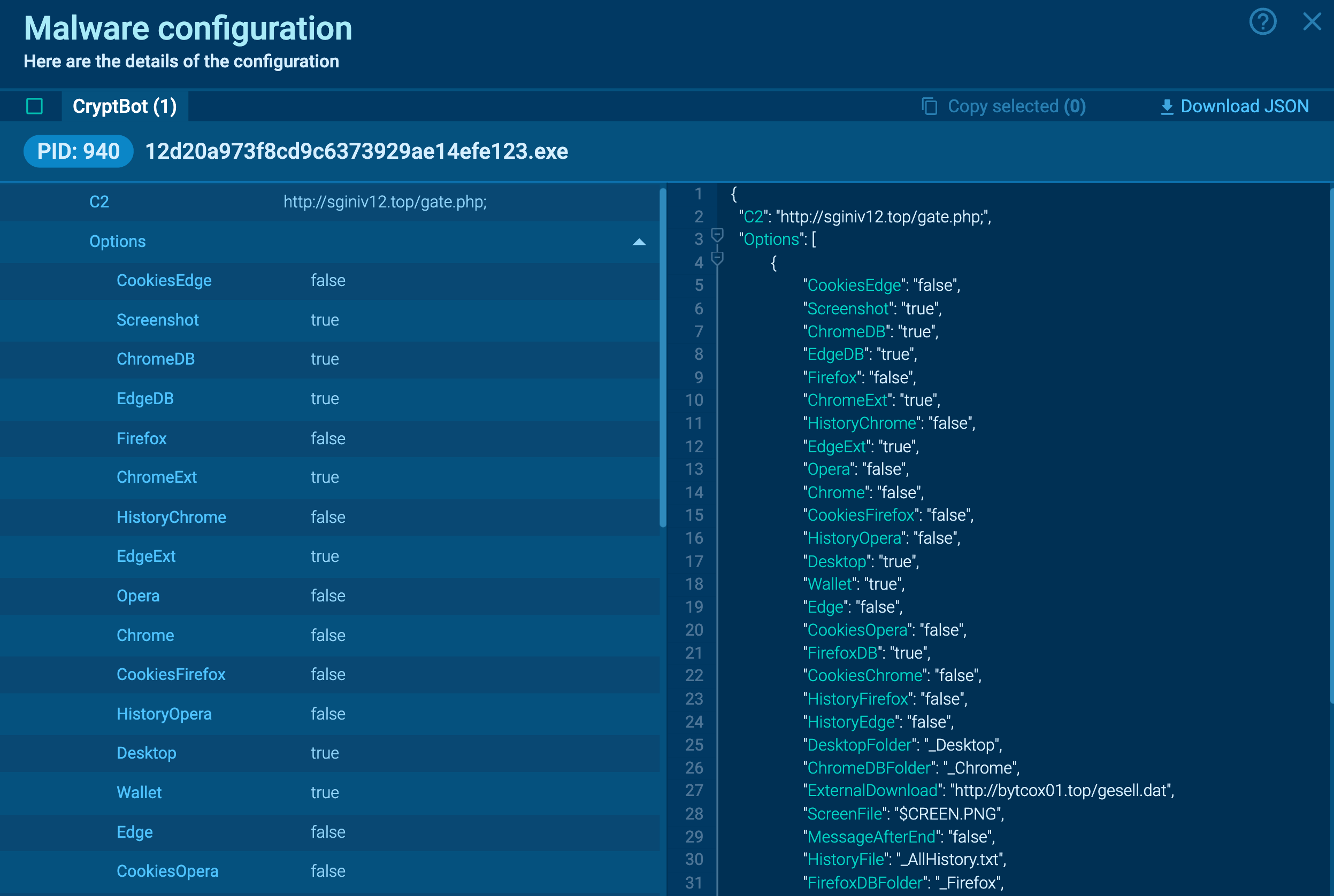
You can collect more info about the analyzed sample by looking at extracted malware configuration. A PCAP file for later analysis is also available for download.
CryptBot infostealer execution process
Upon initiating the initial payload, the execution flow of CryptBot can be variable. Cryptbot might sometimes employ the "compile after delivery" technique for defense evasion or release and execute a second file.
Then, the malware gathers data about the infected system, the software installed, and pilfers credentials. For data exfiltration, the stealer often establishes a connection with the C2 domain, with the ** .top** extension. It's noteworthy that it consistently sends requests to a page named gate.php. After completing these actions, the malware may implement a file deletion technique, deleting itself.
Read a detailed analysis of CryptBot in our blog.
Distribution of CryptBot
In addition to utilizing phishing and spearphishing techniques with infected documents, starting around February 2022, CryptBot has expanded its distribution methods by leveraging cracked software lures to target potential victims.
The strategy involves creating websites that masquerade as providers of software cracks, key generators, pirated games, or other utilities. Then, search engine optimization (SEO) techniques are used to rank the malware distribution sites at the top of Google search results.
The malicious websites undergo frequent updates, employing various lures to attract users. Visitors are taken through a series of redirections before reaching the delivery page, which may be hosted on a compromised legitimate site for SEO poisoning attacks.
Wrapping up
CryptBot's primary targets are individuals searching for software cracks, warez, and other methods of bypassing copyright protection. To avoid infection by CryptBot and other similar malware, users should refrain from downloading such tools.
By staying informed about CryptBot's distribution methods and recent changes, malware analysts and security researchers can better understand this threat and develop effective countermeasures.
Speed up your workflow by analyzing CryptBot in ANY.RUN. Create an account using your business email and try our interactive cloud sandbox for free.
Other malware & phishing threats
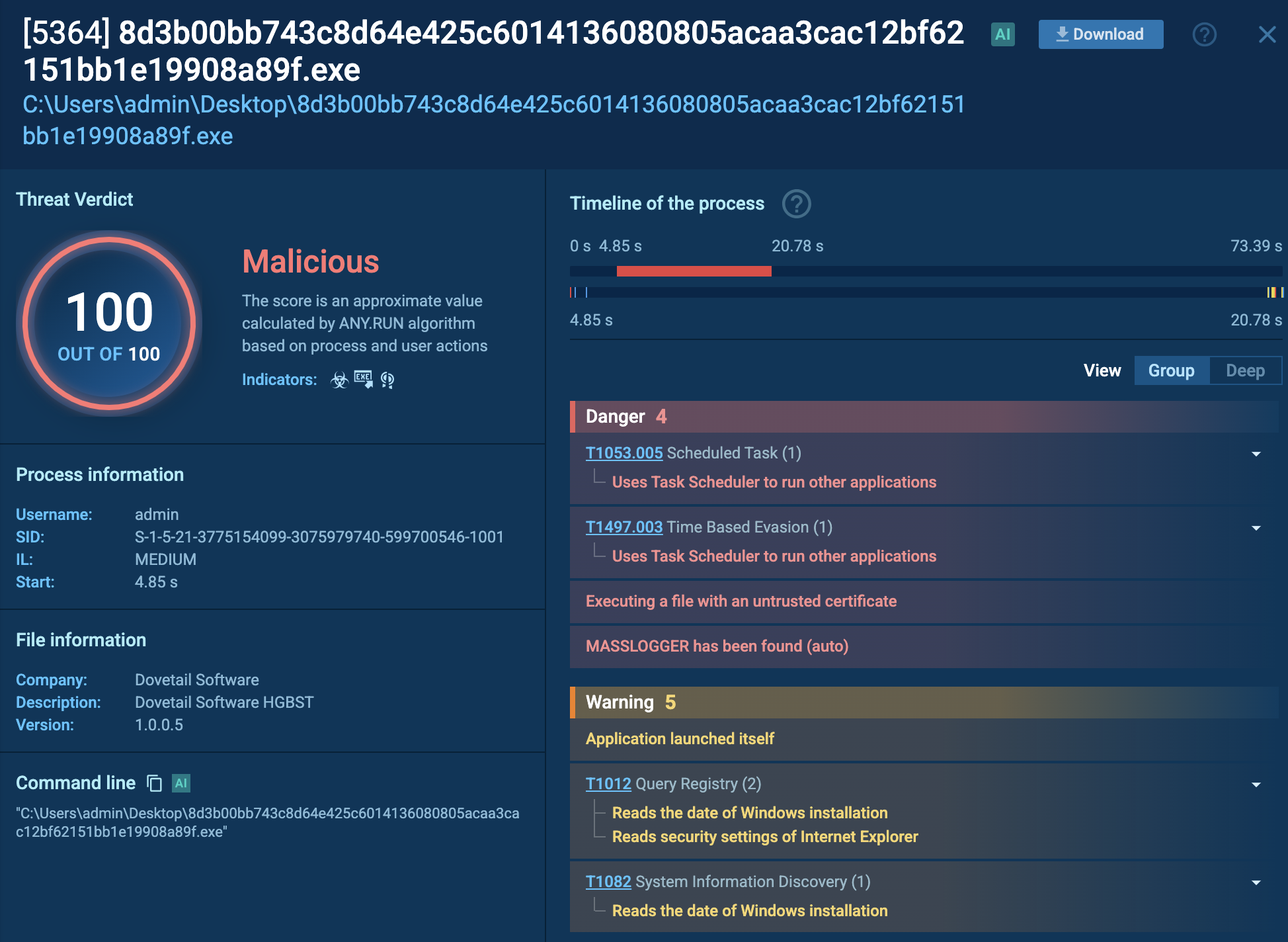 MassLoggerMassLogger is a credential stealer and keylogger first identified in April 2020. It has been actively used in cyber campaigns to exfiltrate sensitive information from compromised systems.
It is designed for easy use by less tech-savvy actors and is prominent for the capability of spreading via USB drives. It targets both individuals and organizations in various industries, mostly in Europe and the USA.
MassLoggerMassLogger is a credential stealer and keylogger first identified in April 2020. It has been actively used in cyber campaigns to exfiltrate sensitive information from compromised systems.
It is designed for easy use by less tech-savvy actors and is prominent for the capability of spreading via USB drives. It targets both individuals and organizations in various industries, mostly in Europe and the USA.RyukRyuk is a Ransomware — a type of malware that encrypts files of the victim and restores access in exchange for a ransom payment. Operating since 2018, Ryuk has been continually carrying out successful targeted attacks on organizations, netting operators millions of dollars throughout its lifetime.
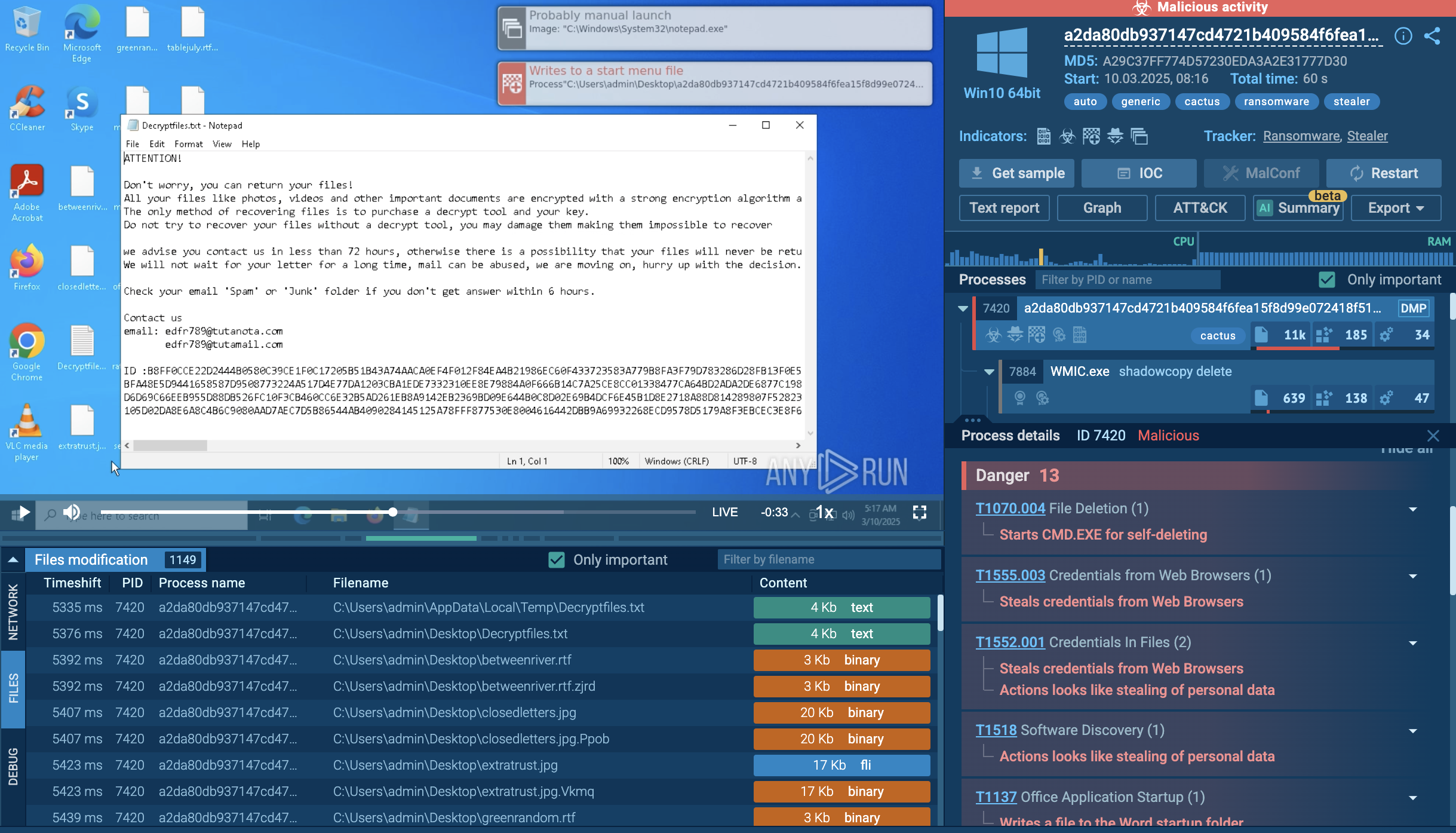 Cactus RansomwareCactus ransomware-as-a-service (RaaS) was first caught in March 2023 targeting corporate networks. It became known for its self-encrypting payload and double extortion tactics.
Cactus primarily targets large enterprises across industries in finance, manufacturing, IT, and healthcare. It is known for using custom encryption techniques, remote access tools, and penetration testing frameworks to maximize damage.
Cactus RansomwareCactus ransomware-as-a-service (RaaS) was first caught in March 2023 targeting corporate networks. It became known for its self-encrypting payload and double extortion tactics.
Cactus primarily targets large enterprises across industries in finance, manufacturing, IT, and healthcare. It is known for using custom encryption techniques, remote access tools, and penetration testing frameworks to maximize damage.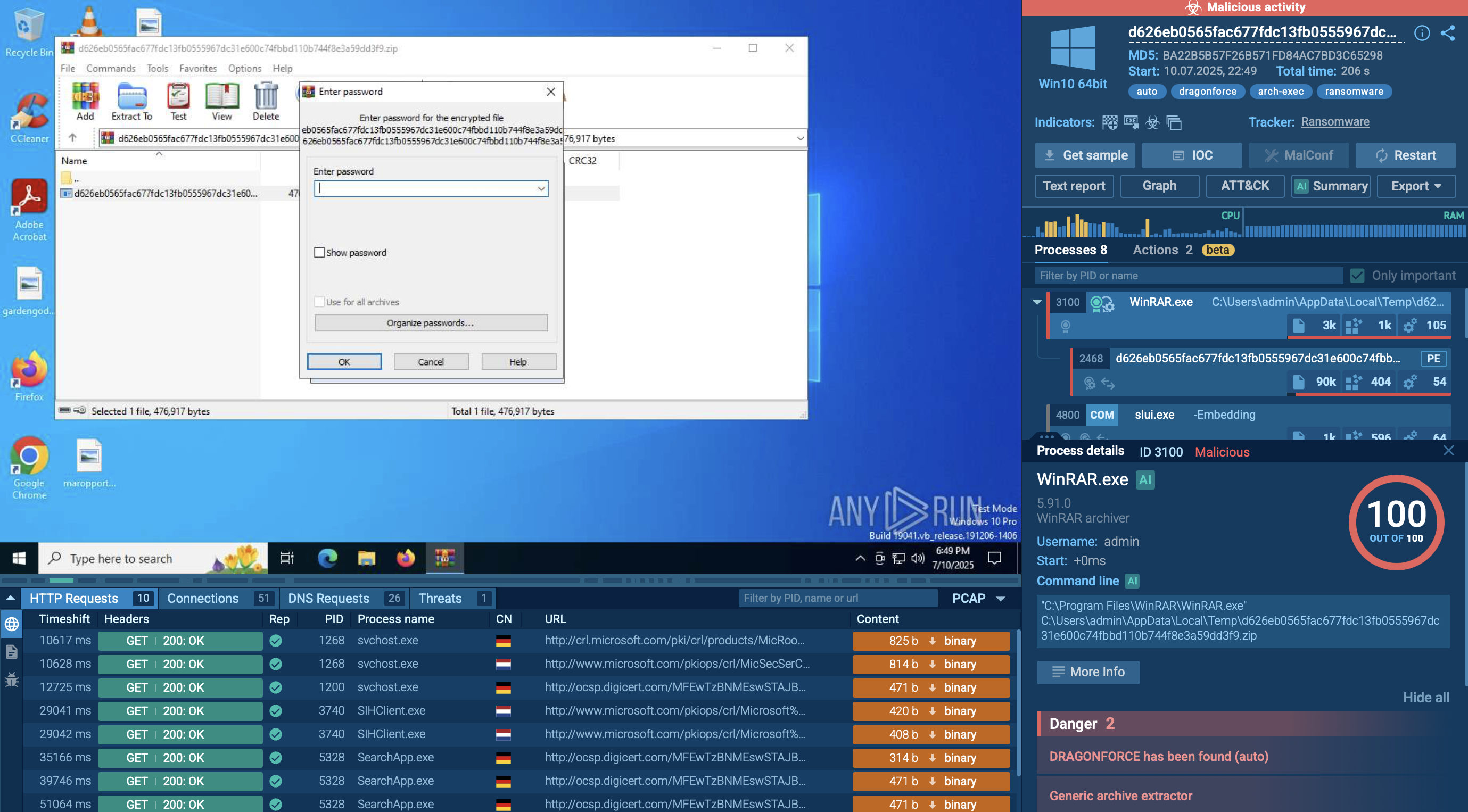 DragonForceDragonForce is a ransomware strain operating under the Ransomware-as-a-Service (RaaS) model. First reported in December 2023, it encrypts files with ChaCha8, renames them with random strings, and appends “.dragonforce_encrypted.” By disabling backups, wiping recovery, and spreading across SMB shares, DragonForce maximizes damage and pressures victims into multimillion-dollar ransom negotiations. It has targeted manufacturing, construction, IT, healthcare, and retail sectors worldwide, making it a severe threat to modern enterprises.
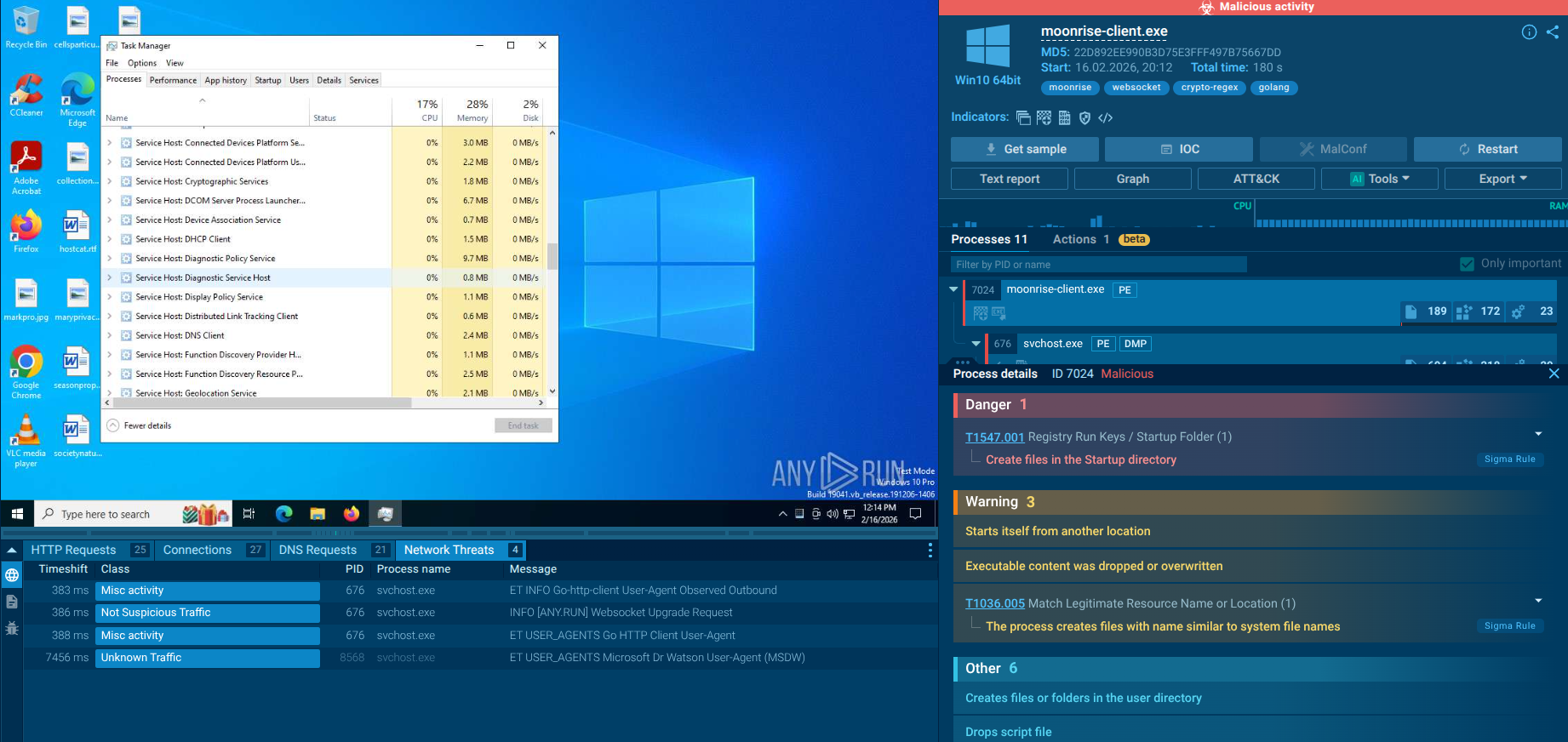 MoonriseMoonrise RAT is a newly discovered Go-based remote access trojan with zero detections at launch, featuring credential theft, keylogging, webcam access, clipboard hijacking, and UAC bypass.
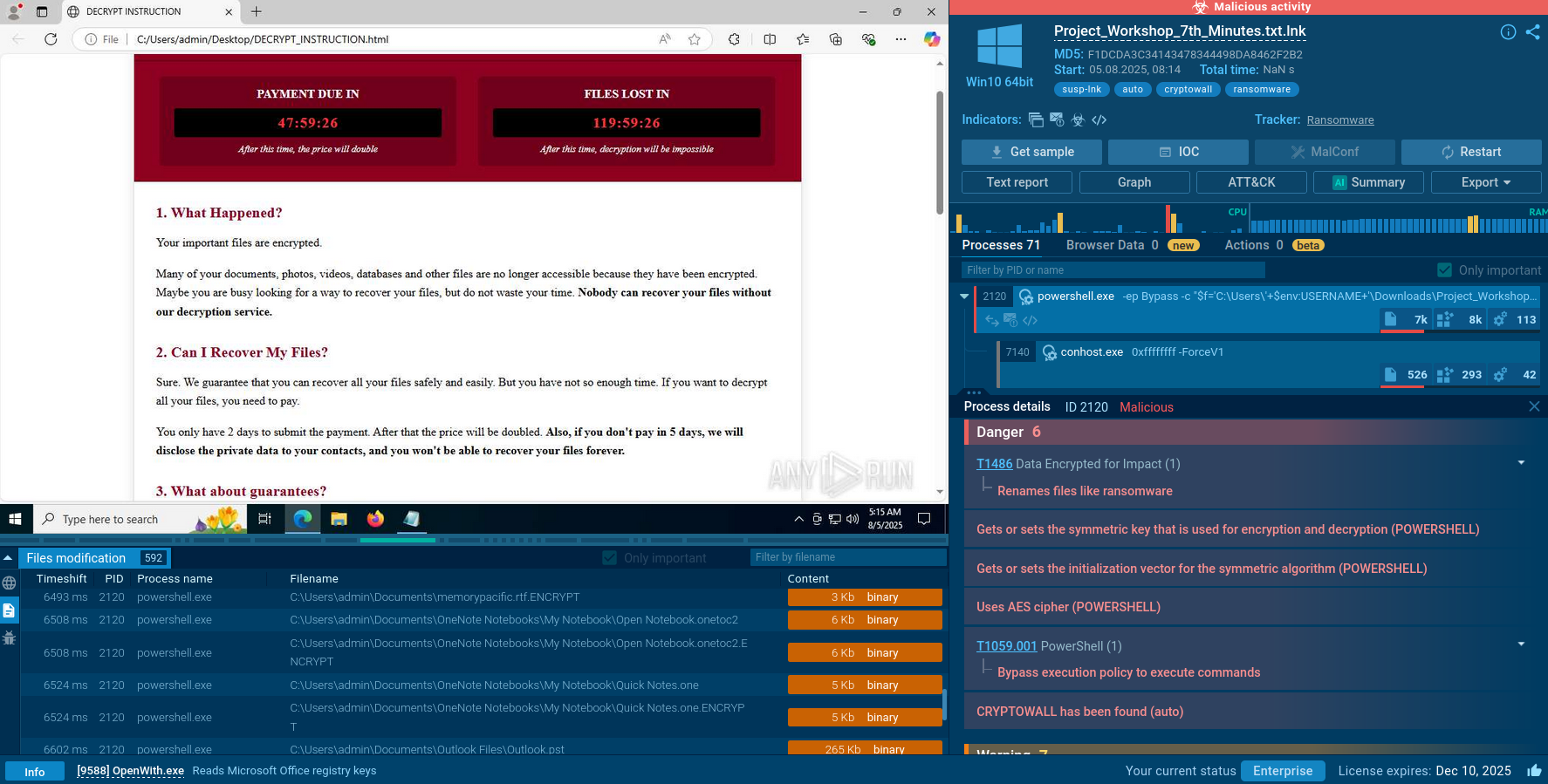 CryptoWallCryptoWall is a notorious ransomware family that emerged in early 2014 and rapidly became one of the most destructive cyber threats of its time. This malware encrypts victims' files using strong AES encryption, demands ransom payments in Bitcoin, and has generated hundreds of millions of dollars for cybercriminals.