Black friday Up to 3 extra licenses FOR FREE + Special offer for TI LOOKUP Get it now
Webinar
February 26
Better SOC with Interactive Sandbox Practical Use Cases
Register now

ACR Stealer

10
Global rank
6 infographic chevron month
Month rank
7 infographic chevron week
Week rank
0
IOCs

ACR Stealer is a modern information-stealing malware designed to harvest sensitive data from infected devices. Like other infostealers, it targets credentials, financial details, browser data, and files, enabling cybercriminals to monetize stolen information through direct fraud or underground market sales.

Stealer
Type
Unknown
Origin
1 March, 2024
First seen
11 August, 2026
Last seen

How to analyze ACR Stealer with ANY.RUN

Type
Unknown
Origin
1 March, 2024
First seen
11 August, 2026
Last seen

IOCs

IP addresses
57.153.246.3
23.11.40.157
88.221.169.152
48.209.133.15
204.79.197.203
135.232.92.137
2.23.246.9
184.86.251.21
48.209.138.168
52.123.243.78
4.150.223.102
172.211.123.249
52.111.243.12
52.110.17.10
48.192.1.65
40.126.31.1
135.233.95.135
2.21.20.133
23.48.23.13
48.209.6.48
Hashes
40bbffd39cc38d0b85ff71704a30cbe3177c82a0bd162ed7eeb51d2382ff0192
9224e346a74c4111705cab0b2cbfce190acd6a983c75e65dbefbbfaa6e7ff3d3
ca4900a04ee034685b7a0c2af6044a2490acdc0c0408dfdaf56884c5aba4bb1a
1d5ec939de574fbe0c50182d265b30fdab1e2d120353ba8d4fb68e00bd9fec98
570156809c5a04c6d69c84af12467fc58b96a8cd29a2ac8af909426418ae21ac
cfe5e390be0f7d9672669e62d06baf6a8479f57c0906791039423ca4119a394c
9ee050d0980678c50782087893ce6bc251ffae58f82a39cb9fffee15f8d8ff72
90bf6baa6f968a285f88620fbf91e1f5aa3e66e2bad50fd16f37913280ad8228
05eeba4d6ca7148dcd0a6317a45241a49a4c8d88d628b27d8b19889ef6e70771
86faffcc7ed6cfff105be3d4cc684ad86de32c5f3a8f30060b8afc2c2594fc70
3da31a69b47d9d2a34e7735b1c5fcbaaf4fb3cb76549a62a7a4b9fff3552950c
e8b60035c38b004f3f377202ad87ecc60dcf1c422a9214d7f8bcb0071e8da014
937be63e6d6f1a9ea9d0c22e40fcb29f856b4f5c00606597298eff59f93ab7b3
9604665c739f697b141fad6065ba7f8da097f7d12e88ce9a674d0c4355b5bf9f
56f9bc73c45520d931bfc68c1c402fea391acf41edc912259122d598abe287ad
ef8bd8fe48d01bbf98785b8cbdba6a53f52bb61deb81d238a1eacf214a789b50
93d6b6908674adc48412a77bcf40cfa7124803b84fad752596dde0feb743ce26
a8caa227bb4d3f5f831ba8756cb24a675dc0a97043eeefbdc0fca0b47ff3dd69
fb600ea9dd2973eab6352b4411043e6262f7919ad3602eb7f81eb24c08d37822
bba1fc6d32e5c3c5330d796bb7ba4d8cc80b266d3343a448e98aab33b70caaa2
Domains
ocsp.digicert.com
settings-win.data.microsoft.com
ecs.office.com
messaging.lifecycle.office.com
google.com
fe3cr.delivery.mp.microsoft.com
activation-v2.sls.microsoft.com
www.microsoft.com
self.events.data.microsoft.com
slscr.update.microsoft.com
go.microsoft.com
client.wns.windows.com
officeclient.microsoft.com
login.live.com
crl.microsoft.com
oneocsp.microsoft.com
mrodevicemgr.officeapps.live.com
umwatson.events.data.microsoft.com
ctldl.windowsupdate.com
fs.microsoft.com
URLs
https://officeclient.microsoft.com/config16/?lcid=1033&syslcid=1033&uilcid=1033&build=16.0.16026&crev=3
https://ecs.office.com/config/v2/office/excel/16.0.16026.20146/production/cc?&clientid=%7bd61ab268-c26a-439d-bb15-2a0dedfca6a3%7d&application=excel&platform=win32&version=16.0.16026.20146&msoversion=16.0.16026.20002&sdx=fa000000002.2.0.1907.31003&sdx=fa000000005.1.0.1909.30011&sdx=fa000000006.1.0.1909.13002&sdx=fa000000008.1.0.1908.16006&sdx=fa000000009.1.0.1908.6002&sdx=fa000000016.1.0.1810.13001&sdx=fa000000029.1.0.1906.25001&sdx=fa000000033.1.0.1908.24001&sdx=wa104381125.1.0.1810.9001&processname=excel.exe&audience=production&build=ship&architecture=x64&language=en-us&subscriptionlicense=false&perpetuallicense=2019&licensecategory=6&licensesku=professional2019retail&osversion=10.0&osbuild=19045&channel=cc&installtype=c2r&sessionid=%7bcbe6b2a7-7834-48f5-ac8b-1a0bc8cf72c9%7d&labmachine=false
https://settings-win.data.microsoft.com/settings/v3.0/wsd/waasassessment?os=windows&osver=10.0.19041.1.amd64fre.vb_release.191206-&ring=retail&sku=48&deviceclass=windows.desktop&locale=en-us&deviceid=bad99146-31d3-4ec6-a1a4-be76f32ba5d4&flightring=retail&telemetrylevel=1&hidovergattreg=c%3a%5cwindows%5csystem32%5cdriverstore%5cfilerepository%5chidbthle.inf_amd64_9610b4821fdf82a5%5cmicrosoft.bluetooth.profiles.hidovergatt.dll&appver=10.0&processoridentifier=amd64%20family%2023%20model%201%20stepping%202&oemmodel=dell&updateoffereddays=4294967295&processormanufacturer=authenticamd&installdate=1661339444&oemmodelbaseboard=&branchreadinesslevel=cb&oemsubmodel=j5cr&isclouddomainjoined=0&deferfeatureupdateperiodindays=30&isdeviceretaildemo=0&flightingbranchname=&osuilocale=en-us&devicefamily=windows.desktop&wuclientver=10.0.19041.3996&uninstallactive=1&isflightingenabled=0&osskuid=48&processorclockspeed=3094&totalphysicalram=6144&securebootcapable=0&app=waasassessment&processorcores=6&currentbranch=vb_release&installlanguage=en-us&deferqualityupdateperiodindays=0&servicingbranch=cb&oemname_uncleaned=dell&tpmversion=0&primarydisktotalcapacity=262144&installationtype=client&attrdataver=186&processormodel=amd%20ryzen%205%203500%206-core%20processor&isedgewithchromiuminstalled=1&osversion=10.0.19045.4046&ismdmenrolled=0&activationchannel=retail&honorwufbdeferrals=0&firmwareversion=a.40&trendinstalledkey=1&osarchitecture=amd64&defaultuserregion=244&updatemanagementgroup=2
http://crl.microsoft.com/pki/crl/products/microoceraut2011_2011_03_22.crl
http://www.microsoft.com/pkiops/crl/micsecserca2011_2011-10-18.crl
https://messaging.lifecycle.office.com/getcustommessage16?app=1&ui=en-us&src=bizbar&messagetype=bizbar&hwid=04111-083-043729&ver=16.0.16026&lc=en-us&platform=10%3a0%3a19045%3a2%3a0%3a0%3a256%3a1%3a&productid=%7b1717c1e0-47d3-4899-a6d3-1022db7415e0%7d%3a00411-10830-43729-aa720%3aoffice%2019%2c%20office19professional2019r_retail%20edition&clientsessionid=%7bcbe6b2a7-7834-48f5-ac8b-1a0bc8cf72c9%7d&datapropertybag=%7b%22audience%22%3a%22production%22%2c%22audiencegroup%22%3a%22production%22%2c%22audiencechannel%22%3a%22cc%22%2c%22flight%22%3a%22ofsh6c2b1tla1a31%2cofcrui4yvdulbf31%2cofhpex3jznepoo31%2cofaa1msspvo2xw31%22%7d
https://go.microsoft.com/fwlink/?linkid=2257403&clcid=0x409
http://ocsp.digicert.com/mfewtzbnmeswstajbgurdgmcgguabbq50otx%2fh0ztl%2bz8sipi7wewvxdlqqutijuibiv5unu5g%2f6%2brks7qyxjzkceasmayxgarewr3pgr9svwmg%3d
http://oneocsp.microsoft.com/ocsp/mfqwujbqme4wtdajbgurdgmcgguabbr0tbevyklx7a9ylold9hqmcwdxfgqu3pggslehmvkx8utfb6ncihnaqhycezmaaaapmybln%2b5crk8aaaaaaa8%3d
https://self.events.data.microsoft.com/onecollector/1.0/
https://settings-win.data.microsoft.com/settings/v3.0/onesettings/client?osversionfull=10.0.19045.4046.amd64fre.vb_release.191206-1406&localdeviceid=s%3abad99146-31d3-4ec6-a1a4-be76f32ba5d4&flightring=retail&attrdataver=186&osuilocale=en-us&osskuid=48&app=wosc&appver=&isflightingenabled=0&telemetrylevel=1&devicefamily=windows.desktop
http://ocsp.digicert.com/mfewtzbnmeswstajbgurdgmcgguabbq50otx%2fh0ztl%2bz8sipi7wewvxdlqqutijuibiv5unu5g%2f6%2brks7qyxjzkceaz1vqyrvgl0erhqlcpm8gy%3d
https://login.live.com/rst2.srf
https://login.live.com/ppsecure/deviceaddcredential.srf
https://settings-win.data.microsoft.com/settings/v3.0/flightsettings/fsservice?processorclockspeed=3094&isretailos=1&oemmanufacturername=dell&flightingpolicyvalue=3&enablepreviewbuilds=4294967295&osversionfull=10.0.19045.4046.amd64fre.vb_release.191206-1406&managepreviewbuilds=3&branchreadinesslevelsource=0&attrdataver=186&processorcores=6&branchreadinesslevelraw=16&totalphysicalram=6144&tpmversion=0&oemmodelnumber=dell&systemvolumetotalcapacity=260281&deviceid=s%3abad99146-31d3-4ec6-a1a4-be76f32ba5d4&app=fss&appver=10.0&smartactivehoursstate=1&activehoursstart=20&securebootcapable=0&activehoursend=13&devicefamily=windows.desktop
https://settings-win.data.microsoft.com/settings/v3.0/wsd/muse?processorclockspeed=3094&flightids=&updateoffereddays=4294967295&branchreadinesslevel=cb&oemmanufacturername=dell&isclouddomainjoined=0&processoridentifier=amd64%20family%2023%20model%201%20stepping%202&sku=48&activationchannel=retail&attrdataver=186&ismdmenrolled=0&processorcores=6&processormodel=amd%20ryzen%205%203500%206-core%20processor&totalphysicalram=6144&primarydisktype=4294967295&flightingbranchname=&chassistypeid=1&oemmodelnumber=dell&systemvolumetotalcapacity=260281&sampleid=95271487&deviceclass=windows.desktop&app=muse&disabledualscan=0&appver=10.0&oemsubmodel=j5cr&locale=en-us&isalwaysonalwaysconnectedcapable=0&ms=0&defaultuserregion=244&updateserviceurl=http%3a%2f%2fneverupdatewindows10.com&osver=10.0.19045.4046.amd64fre.vb_release.191206-1406&os=windows&deviceid=s%3abad99146-31d3-4ec6-a1a4-be76f32ba5d4&deferqualityupdateperiodindays=0&ring=retail&deferfeatureupdateperiodindays=30
https://settings-win.data.microsoft.com/settings/v3.0/waas/featuremanagement?isclouddomainjoined=0&processoridentifier=amd64%20family%2023%20model%201%20stepping%202&currentbranch=vb_release&accountfirstchar=&activationchannel=retail&oemmodel=dell&flightring=retail&attrdataver=186&installlanguage=en-us&osuilocale=en-us&webexperience=1&flightingbranchname=&chassistypeid=1&osskuid=48&app=cdm&installdate=1661339444&appver=&osarchitecture=amd64&defaultuserregion=244&telemetrylevel=1&osversion=10.0.19045.4046&devicefamily=windows.desktop
https://slscr.update.microsoft.com/sls/%7b522d76a4-93e1-47f8-b8ce-07c937ad1a1e%7d/x64/10.0.19045.4046/0?ch=686&l=en-us&p=&pt=0x30&wua=10.0.19041.3996&mk=dell&md=dell
http://www.microsoft.com/pkiops/crl/microsoft%20ecc%20update%20secure%20server%20ca%202.1.crl
https://fe3cr.delivery.mp.microsoft.com/clientwebservice/ping
Last Seen at
Last Seen at

Recent blog posts

post image
Supply Chain Security: How ANY.RUN Helps US a...
watchers 326
comments 0
post image
Smile, You're on Camera. Part 2: Hiring Lazar...
watchers 14459
comments 0
post image
Safeguarding 200M Users: How ChongLuaDao Scal...
watchers 7510
comments 0

What is ACR Stealer?

ACR Stealer is a sophisticated information-stealing software sold as a Malware-as-a-Service (MaaS) on underground forums, primarily targeting credentials, browser data, and cryptocurrency wallets to facilitate identity theft and financial fraud.

It is lightweight, fast, and capable of exfiltrating a broad spectrum of data types, including login credentials, cryptocurrency wallet information, and system fingerprints. Its developers continuously update the malware to bypass traditional defenses, making it a persistent threat in the cybercrime ecosystem. According to Stamus Networks, ACR Stealer is an evolved version of GrMsk Stealer, which had been privately sold by the threat actor SheldIO since around July 2023. In 2025, Proofpoint researchers confirmed that ACR Stealer was significantly updated and rebranded as Amatera Stealer. Key enhancements included improved anti-analysis features and a shift away from previously used C2 mechanisms like Steam/Telegram dead drops.

ACR Stealer operates by injecting itself into system processes to avoid detection, then systematically scans the endpoint for valuable data. It uses encryption to obfuscate stolen information before exfiltrating it to C2 servers, sometimes leveraging unconventional platforms like Google Docs for command retrieval. The malware employs dead drop resolvers for dynamic C2 resolution, enhancing its resilience against takedowns. Variants like Amatera introduce advanced string obfuscation and virtual machine checks to evade sandboxes and antivirus software.

ACR Stealer commonly spreads through:

  • Phishing emails with malicious attachments or links.
  • Malvertising that redirects users to fake software downloads.
  • Cracked software and trojanized applications shared on forums or torrents.
  • Drive-by downloads from compromised websites.

While primarily single-device malware, once credentials are stolen, attackers often use them to move laterally within corporate networks.

Use ANY.RUN free for 14 days

Try the full power of interactive analysis

Start your free trial

ACR Stealer Malware Victimology

ACR Stealer targets a broad spectrum of victims, with no specific industry or demographic limitation. The malware's distribution methods suggest that it primarily affects:

  • Individual users seeking cracked software or illegitimate downloads
  • Organizations whose employees fall victim to social engineering tactics
  • Users of popular platforms like Steam, where the malware leverages community features for C2 communication
  • Cryptocurrency enthusiasts and traders, given its specific focus on wallet theft
  • Users of mainstream web browsers who store sensitive credentials and financial information

The distribution trend of ACR Stealer from June 2024 to February 2025 indicates a dramatic rise in 2025, suggesting an expanding victim base and increased threat actor adoption of this malware family.

ACR Stealer Technical Analysis and Attack Example

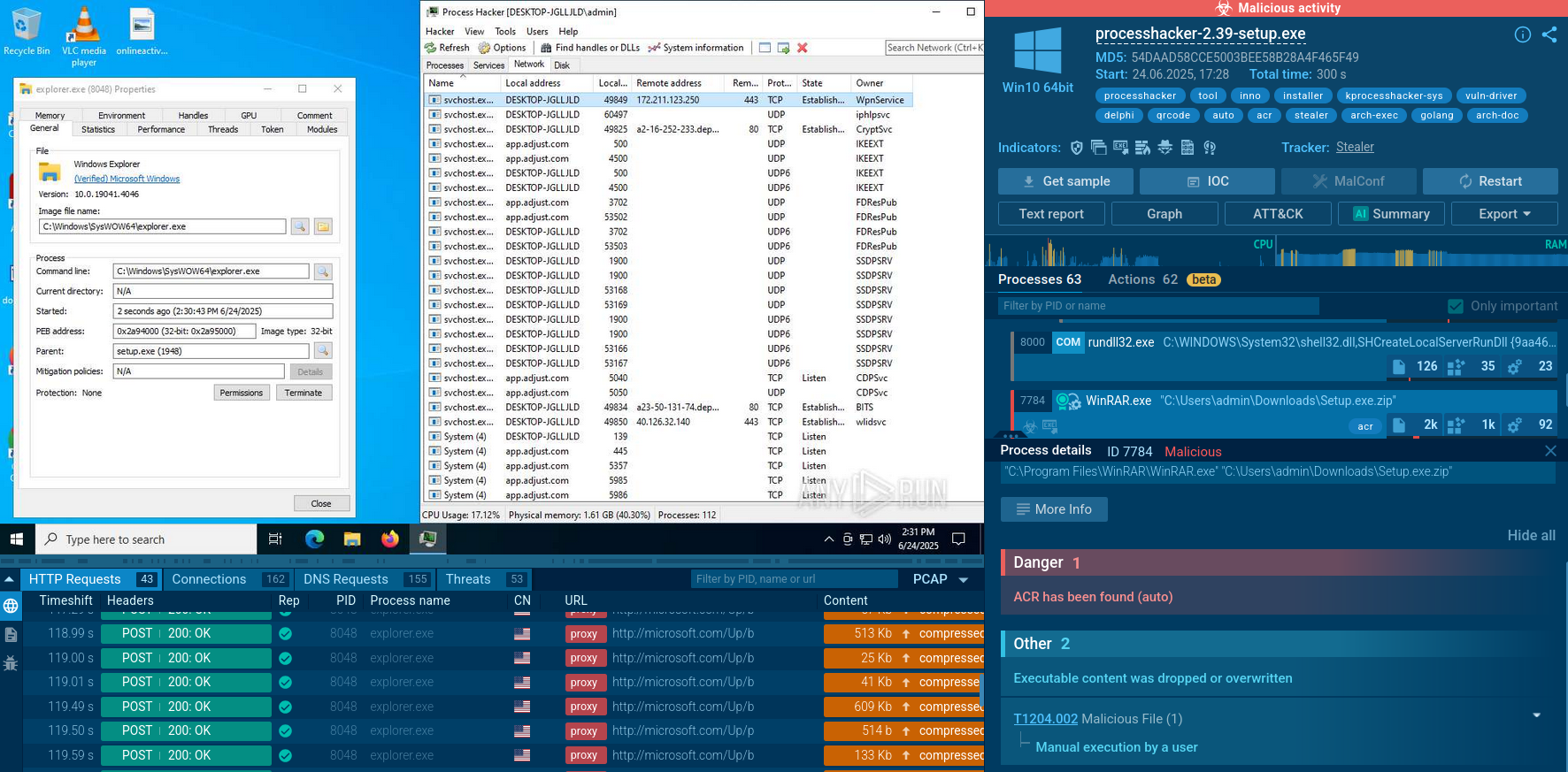
Let’s observe an ACR Stealer typical attack chain on a sample analyzed in ANY.RUN’s Interactive Sandbox.
View analysis

ACR Stealer analysis in Interactive Sandbox ACR Stealer sample analysis in the Interactive Sandbox

HTTP Requests and Encryption

An interesting feature of ACR Stealer is that HTTP packet headers may use legitimate domains such as microsoft.com, although the packets are sent to IP addresses not associated with these domains.
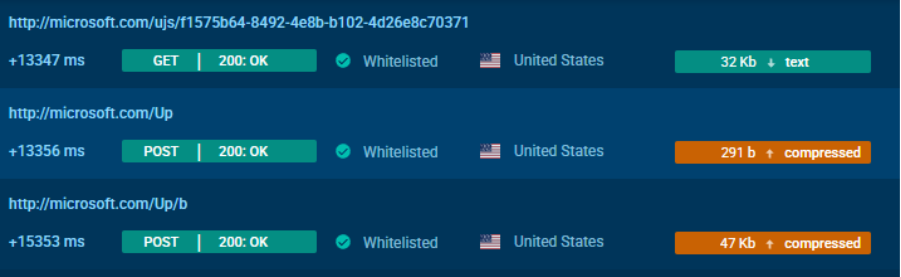
ACR HTTP requests seen in Interactive Sandbox ACR HTTP requests seen in Interactive Sandbox

In the first response to an HTTP request, there is a large Base64-encoded string of 32 KB. When attempting to decode it, it turns out to be additionally encrypted using an XOR operation. After decryption, it produces a large configuration file, which is a key component of ACR Stealer’s operation.

Configuration File

The ACR Stealer configuration file is a structured JSON-like object that manages data theft in the Windows environment. It defines the targets and parameters for collecting sensitive information, ensuring flexibility and stealth of the malware.

The stealer targets data from numerous browsers, including Google Chrome, Microsoft Edge, Opera, Firefox, Brave, Vivaldi, and lesser-known ones such as CocCoc, 360Browser, and K-Meleon. It extracts cookies, passwords, browsing history, autofill data, credit card details, and extensions, many of which are cryptocurrency wallets (MetaMask, Coinbase Wallet), password managers, and censorship bypass tools.

Messengers such as Telegram, WhatsApp, Signal, Tox, and Psi+ are targeted for theft of session keys, chats, and contacts via files such as *.sqlite or accounts.xml located in %AppData% directories. Cryptocurrency wallets, including Bitcoin, Electrum, Exodus, Ledger Live, Binance, and others, are subject to theft of wallet.dat, *.json, *.config files containing private keys and seed phrases.

Additionally, the stealer attacks password managers (Bitwarden, NordPass, 1Password), FTP clients (FileZilla, WinSCP), email clients (The Bat!, eM Client, Outlook), VPNs (NordVPN, AzireVPN), and applications such as AnyDesk and Sticky Notes, extracting logins, passwords, and 2FA tokens. Global disk searches target files with keywords like bitcoin, wallet, seed, metamask in the Documents and Recent folders to locate seed phrases and keys.

The configuration supports downloading additional files from external URLs and uses a dictionary of strings for parsing browser data (Login Data, Cookies, key4.db), obfuscation, and adaptation to Windows versions, minimizing detection by antivirus software.
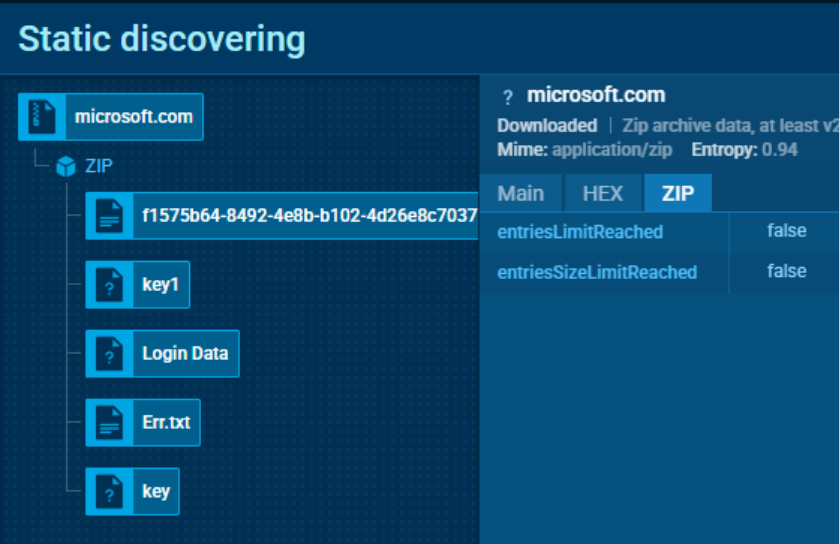
Data Exfiltration

ACR ZIP archive with stolen data in Interactive Sandbox ACR Stealer ZIP archive with stolen data

Data collected by ACR Stealer is sent to the attacker’s server as a ZIP archive. The configuration file usually contains a parameter responsible for downloading an additional executable file from an external resource. However, in the analyzed sample such a download was not performed.

Evolution

It is reported that in new versions of ACR Stealer, the Dead Drop Resolver (DDR) method is used. The malware connects to a legitimate web platform, where a configuration string with the actual C2 server domain is placed on a specific page. The malware retrieves this string, parses it, and obtains the C2 address to proceed with its operations. This approach complicates detection and tracking of the malware.

Previously, ACRStealer used characteristic HTTP request signatures such as:

  • GET domain.com/ujs/uuid
  • POST domain.com/up

However, according to some sources, still newer versions of the malware have abandoned this format, making identification more difficult.

Get started today for free

Analyze malware and phishing in a fully-interactive sandbox

Create free account

Notable ACR Stealer Attacks

Best known campaigns include a 2025 operation using cracked software to distribute ACR alongside Lumma Stealer, resulting in widespread credential theft since January.

Another involved a fake Google Safety Centre phishing site spreading Latrodectus loader and ACR Stealer, compromising user security globally. In 2024, exploitation of CVE-2024-21412 facilitated delivery of ACR, Lumma, and Meduza stealers, evading Microsoft Defender and affecting numerous endpoints.

Additionally, web inject campaigns via ClearFake deployed Amatera variant, targeting cryptocurrency users with high success in data exfiltration.

Gathering Threat Intelligence on ACR Stealer Malware

Threat intelligence empowers defenders with real-time knowledge of ACR Stealer’s infrastructure, tactics, and IOCs. By enriching alerts with contextual data, security teams can distinguish real threats from noise, respond faster, and block communication with known C2 servers before data exfiltration succeeds.

Start using Threat Intelligence Lookup for free: collect IOCs, browse sandbox detonations.

Start with a malware name search request to ANY.RUN’s Threat Intelligence Lookup and dive deeper into contextual data on ACR Stealer. View public analyses of the malware’s fresh samples, extract the behavioral patterns, gather IOCs from each session.

threatName:"acr" and threatLevel:"malicious"
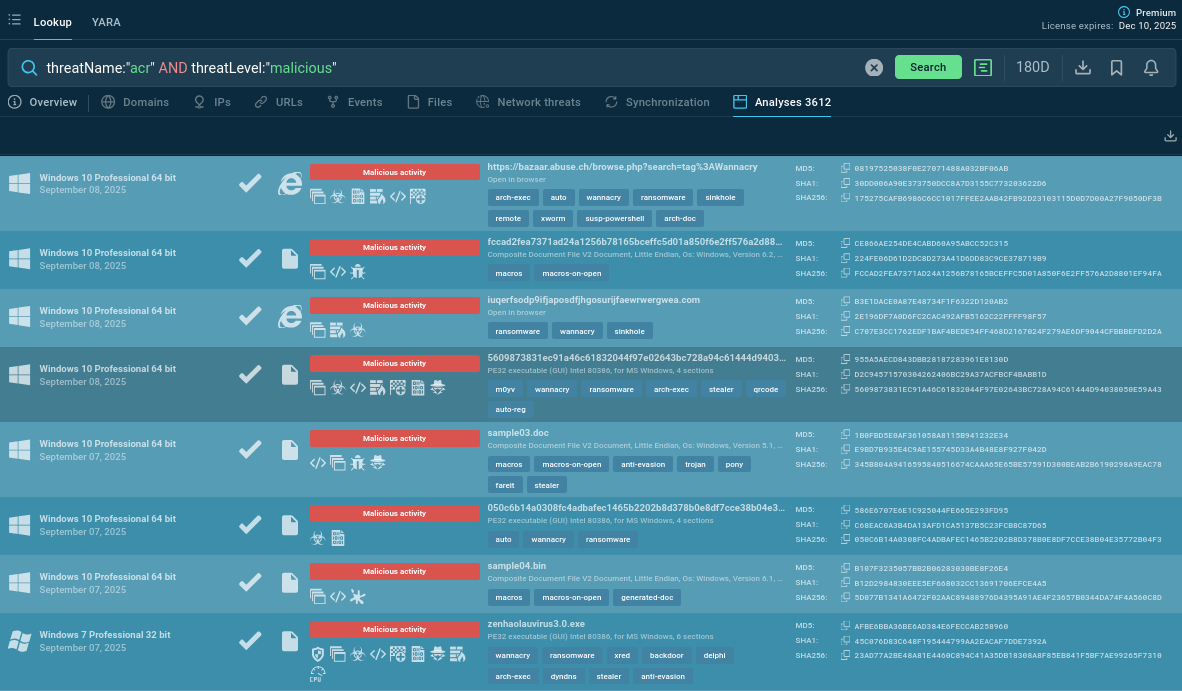
ACR Stealer samples found via Threat Intelligence Lookup ACR Stealer malware analyses found via Threat Intelligence Lookup

Gather indicators of compromise by clicking the IOCs button in Interactive Sandbox and look them up to find correlating IPs, domains, URLs, and more.
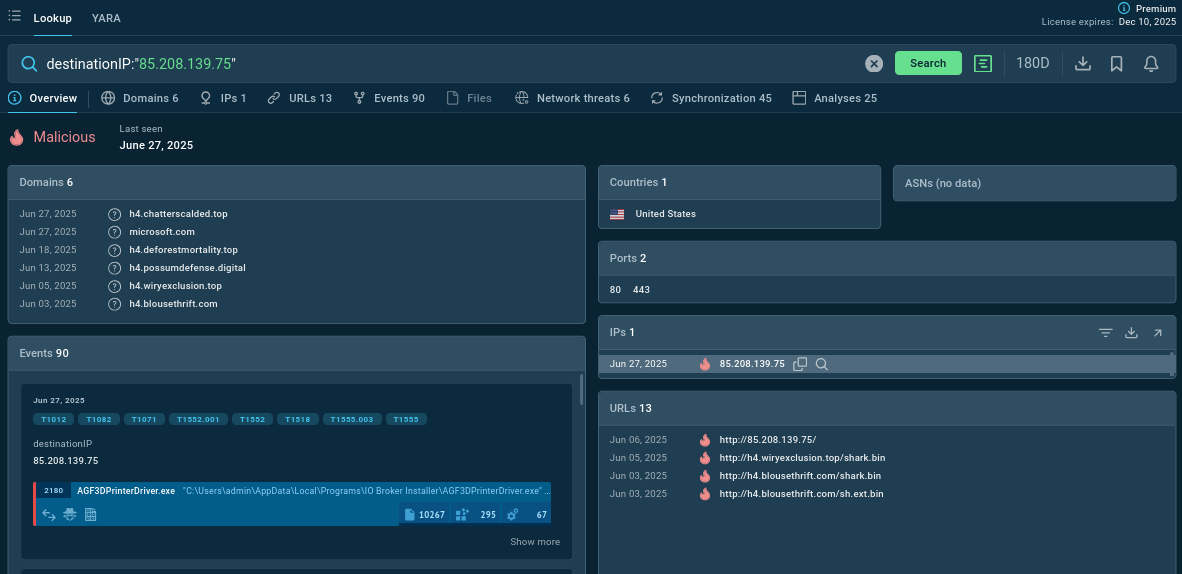
destinationIP:"85.208.139.75"

IP found in ACR Stealer samples delivers more IOCs via Threat Intelligence Lookup Lookup search for an IP found in ACR Stealer samples delivers more IOCs

Integrate ANY.RUN’s threat intelligence solutions in your company

Contact us

Conclusion

ACR Stealer represents a significant evolution in information-stealing malware, combining sophisticated evasion techniques with comprehensive data harvesting capabilities. Its ability to leverage legitimate platforms for command and control communication, employ advanced anti-analysis techniques, and continuously evolve demonstrates the dynamic nature of modern cyber threats. Organizations must adopt a proactive, multi-layered security approach that combines technical controls, user education, and threat intelligence to effectively defend against ACR Stealer and similar threats.

The rise in ACR Stealer incidents, particularly the dramatic increase observed in 2025, underscores the urgent need for enhanced security awareness and robust defensive measures across all sectors of the digital economy.

Sign up to use ANY.RUN’s TI Lookup for free: gather fresh actionable threat intelligence for quick detection and response.

HAVE A LOOK AT

Ramnit screenshot
Ramnit
ramnit
Ramnit is a highly modular banking trojan and worm that evolved from a file-infecting virus into a powerful cybercrime tool. It specializes in financial fraud, credential theft, remote access, and malware delivery, being a serious threat to businesses and individuals. First spotted in 2010, Ramnit became popular after the 2014 takedown of the GameOver Zeus botnet, as cybercriminals sought alternatives for banking fraud.
Read More
LockBit screenshot
LockBit
lockbit
LockBit, a ransomware variant, encrypts data on infected machines, demanding a ransom payment for decryption. Used in targeted attacks, It's a significant risk to organizations.
Read More
MetaStealer screenshot
MetaStealer
metastealer
MetaStealer is an info-stealing malware primarily targeting sensitive data like login credentials, payment details, and browser history. It typically infects systems via phishing emails or malicious downloads and can exfiltrate data to a command and control (C2) server. MetaStealer is known for its stealthy techniques, including evasion and persistence mechanisms, which make it difficult to detect. This malware has been actively used in various cyberattacks, particularly for financial theft and credential harvesting from individuals and organizations.
Read More
Jigsaw screenshot
Jigsaw
jigsaw
The Jigsaw ransomware, initially detected in 2016, encrypts files on compromised systems and requires a ransom payment in Bitcoin. If the ransom is not paid, the malware starts deleting files, increasing the pressure on victims to comply. Its source code is publicly accessible, allowing various threat actors to customize and repurpose the malware for different objectives.
Read More
Kamasers screenshot
Kamasers
kamasers
Kamasers is a multi-functional DDoS botnet malware that transforms infected machines into remotely controlled attack nodes. It combines network-layer flooding capabilities, resilient command-and-control (C2), and payload delivery, making it not just a disruption tool but a gateway to broader compromise.
Read More
Sality screenshot
Sality
sality
Sality is a highly sophisticated malware known for infecting executable files and rapidly spreading across networks. It primarily creates a peer-to-peer botnet that is used for malicious activities such as spamming, data theft, and downloading additional malware. Sality has strong persistence mechanisms, including disabling security software, making it difficult to remove. Its ability to spread quickly and silently, along with its polymorphic nature, allows it to evade detection by traditional antivirus solutions.
Read More