


ANY.RUN has released its H1 Cyber Risk Report, built on unique data from real-world submissions analyzed in the ANY.RUN Interactive Sandbox from January to June 2026 by over 700,000 analysts and 16,000 SOC teams.
The report highlights 15 key trends and explains what these changes mean for analysts, SOC teams, MSSPs, and business decision-makers. With supporting data and examples, ANY.RUN discuses prevalent attack paths, their practical impact on threat detection, alert triage, investigation, and incident response, as well as proposes mitigation guidance.
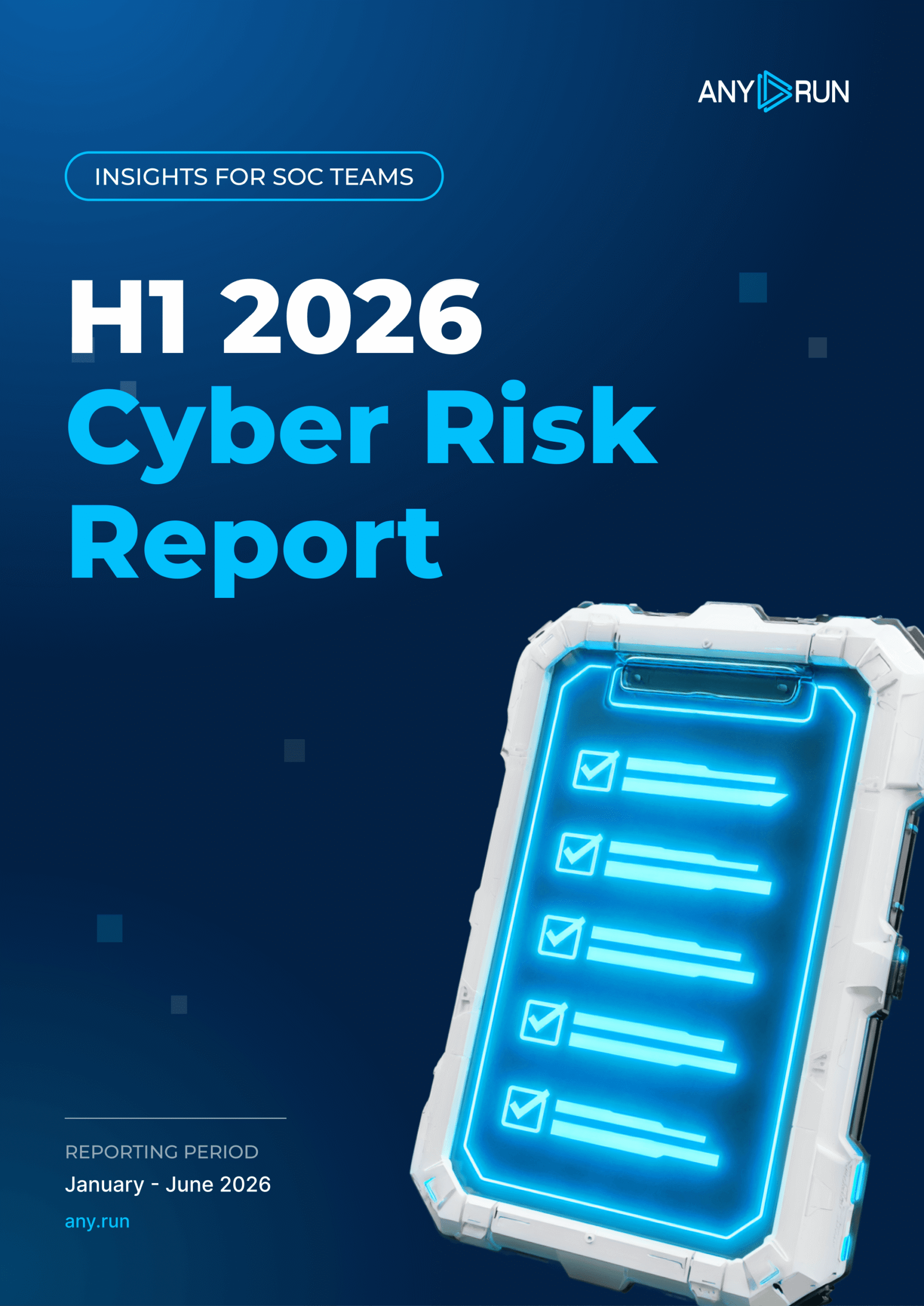
H1 2026 Cyber Risk Report
Discover top trends shaping the modern threat landscape:
- OAuth device-code phishing surged by 483.7%.
- Cloud infrastructure abuse is up by 90.7%.
- RMM attacks jumped by 26.5%.
Built on Real-World Threat Investigations
Like all ANY.RUN solutions, the H1 2026 Cyber Risk Report is based on threat activity observed across ANY.RUN’s global user base, including SOC teams, MSSPs, enterprise security teams, researchers, and analysts investigating real malware and phishing cases.
ANY.RUN is used by 16K+ organizations and 700K+ security professionals worldwide, including 74% of Fortune 100 companies. Such coverage gives the report visibility into threats submitted across industries, from finance, healthcare, government, IT, and manufacturing to energy and transportation.
H1 2026 CYBER RISK REPORT BY ANY.RUN
Executive Summary
- Attackers are abusing trusted infrastructure – Threat actors increasingly hide inside legitimate tools, websites, authentication flows, cloud services, and public platforms.
- Phishing is becoming harder to validate – Custom fake CAPTCHAs, browser fingerprinting, calendar invites, and device-code flows make phishing attacks harder to detect.
- Identity compromise is moving beyond password theft – Infostealers and device-code phishing allow attackers to abuse tokens, sessions, cookies, recovery paths, and OAuth flows to maintain access.
- Business processes are becoming attack paths – Tax notifications, payment portals, government services, fines, refunds, and administrative requests are being used to target companies.
- Cross-platform and cloud-first environments increase exposure – Attacks now span Windows, Linux, macOS, developer workstations, cloud workloads, containers, and CI/CD environments.
- Static IOC-based detection is losing effectiveness – Many threats avoid static indicators by using runtime infrastructure, legitimate services, dead-drop resolvers, and dynamic delivery chains.
- Decision-makers should invest in earlier detection and broader visibility – Security teams need to close visibility gaps earlier by exposing phishing flows, malware behavior, browser activity, and threat context.
Trend 1: Custom fake CAPTCHAs are making phishing more evasive
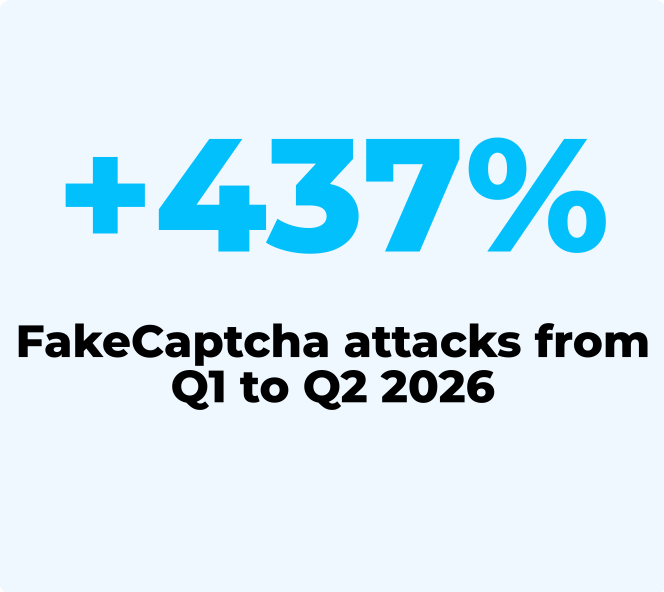
In phishing attacks, threat actors are increasingly using custom fake CAPTCHA pages instead of common providers.
These pages act as an anti-bot and anti-sandbox gateway before the phishing site. Attackers also often add fingerprinting to track specific victims.
SOC & Business Impact
Evasion Breaks Standard Heuristics
Custom fake CAPTCHAs change the expected phishing flow, weakening simple detection logic and making attacks less likely to detonate in analysis.
One-Shot Pages Reduce Investigation Visibility
Phishing pages may work for the original victim but fail later during SOC investigation, making it harder to reproduce the attack.
Kill Chain Reconstruction Becomes Harder
When the page cannot be analyzed fully, teams lose visibility into the attack path, related threat activity, and indicators for detection and response.
Risk Mitigation Playbook
Strategic Focus
Apply a shift-left approach to phishing detection by identifying incidents as early as the fake CAPTCHA is observed, rather than only after credential entry or full phishing-page loading.
Operational Steps
- Use DPI inspection of web content in detection technologies, such as YARA rules or similar methods.
- To bypass attacker evasion, utilize interactive sandboxing combined with residential proxies to mask the analysis environment’s nature.
- For any confirmed gateway interaction, the response protocol must include immediate session revocation and credential resets.
Read more: ClickFix Explosion: Cross-Platform Social Engineering Turns Users Into Malware Installers
Trend 2: Browser fingerprinting helps attackers avoid detection
Nearly all major PhaaS frameworks now use browser fingerprinting to check the client environment (e.g., device type, OS, and region).
The goal is to control who reaches the phishing page and redirect bots or sandboxes to legitimate websites to reduce suspicion.
SOC & Business Impact
Dynamic Analysis Becomes Less Reliable
Browser fingerprinting increases the risk that samples will not detonate, especially when teams rely on scratch-built analysis environments such as headless browsers with specific configurations.
Detection and Response Take Longer
When attacks are harder to identify and reproduce, detection rates can decrease, triage and forensics become more difficult, and MTTD/MTTR may increase.
Investigation Efforts Face Bottlenecks
Security teams struggle with triage when malicious content is geofenced or filtered by OS, making it nearly impossible to map the full kill chain without specialized tools that can mimic real-user conditions.
Risk Mitigation Playbook
Strategic Focus
Use analysis environments that can better reproduce real-user browser conditions and expose browser-first phishing behavior.
For phishing attacks that rely on fingerprinting, standard file-based sandboxing is often not enough. Teams need strong URL analysis capabilities that support full dynamic investigation.
Operational Steps
- Use residential proxies and register non-standard Browser API calls, adding Canvas objects to the DOM, and collection of browser properties.
- Analyze suspicious pages using a browser that bucketizes API property values that mask the system-specific details.
- Integrate ANY.RUN’s Interactive Sandbox for interactive analysis of browser-based phishing, including visibility into DOM changes.
Read more: Closing Phishing Blind Spots with In-Browser Data Inspection
Trend 3: Infostealers become an identity theft system
Infostealers are shifting from being a credential stealing malware to a more structured, affiliate-driven system for identify abuse.
Instead of collecting passwords, attackers increasingly target session tokens, cookies, recovery paths, crypto-wallet data, and other artifacts that can help them take over accounts or resell access.
SOC & Business Impact
Password Reset No Longer Closes the Incident
If attackers retain valid sessions, cookies, or recovery paths, access can continue even after credentials are reset.
Identity Compromise Outlives Endpoint Cleanup
The endpoint may appear clean while the user identity remains compromised through an active session.
Account Takeover Risk Increases
Delayed detection can enable fast account takeover, continued unauthorized access, and resale of compromised accounts or sessions.
Risk Mitigation Playbook
Strategic Focus
Treat infostealer incidents as large-scale identity compromise rather than merely a credential theft. The response procedures should involve monitoring and correlation of different artifacts.
Operational Steps
- Implement alerting for anomalous session creation, session token replays, and unusual account recovery flows.
- Monitor for specific execution markers characteristic of modern MaaS operations like the use of PowerShell scripting, DLL injections etc.
- Analysts must validate the full redirect chain and investigate the origin of any suspicious files, marking “trust abuse” as an incident category.
Stay updated on the latest stealer attacks
Use queries like:
threatName:”stealer” AND submissionCountry:”US”
in Threat Intelligence Lookup to uncover threats in your industry and region.
Trend 4: Malicious LNK files remain a common phishing entry point
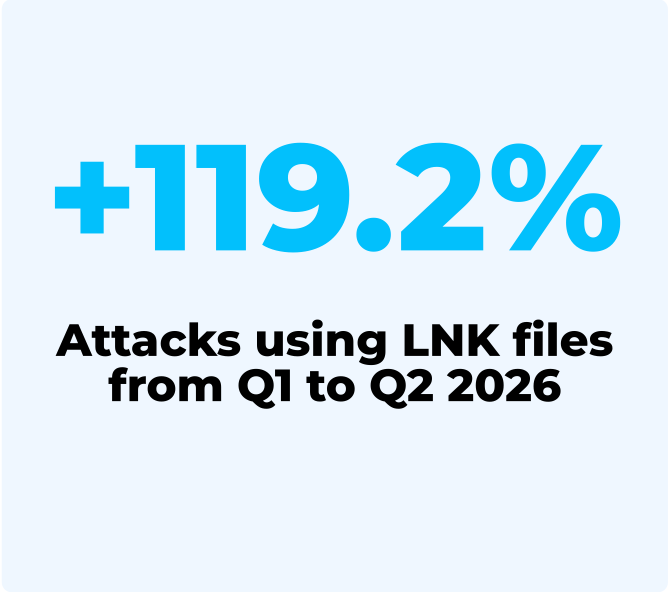
Attackers increasingly disguise malicious LNK files as legitimate documents. This include contracts, financial reports, and instructions, typically inside archives. When opened, the file launches destructive commands, which were embedded into its metadata.
This allows threat actors to execute malicious code in memory in a concealed way, using a decoy.
SOC & Business Impact
Trusted Execution Bypasses Standard Controls
Malicious LNK files can bypass standard SEG and EPP controls because execution starts through trusted utilities and is hidden behind what looks like a legitimate document.
Investigation and Retrospective Analysis Become Harder
Because the activity is concealed inside a document-like workflow, it becomes harder to detect, investigate, and analyze retrospectively.
Risk Mitigation Playbook
Strategic Focus
Treat LNK files in emails and archives as high-risk objects, never relying on their seemingly legitimate nature.
Operational Steps
- Prohibit the launch of system utilities such as mshta.exe, powershell.exe, and wscript.exe from untrusted directories using AppLocker or WDAC.
- Configure detection rules inside EDR/SIEM to monitor anomalous execution chains, especially with explorer.exe as a parent process.
- Check email attachments and downloads using LNK parsers, for example, using YARA rules to check for anomalous long arguments, keywords like bypass, hidden, Invoke-Expression/IEX, and URLs.
Read more: Client-Side Exploitation: Abusing WebDAV+URL+LNK to Deliver Malicious Payloads
Trend 5: Trusted, legitimate platforms as the entryway
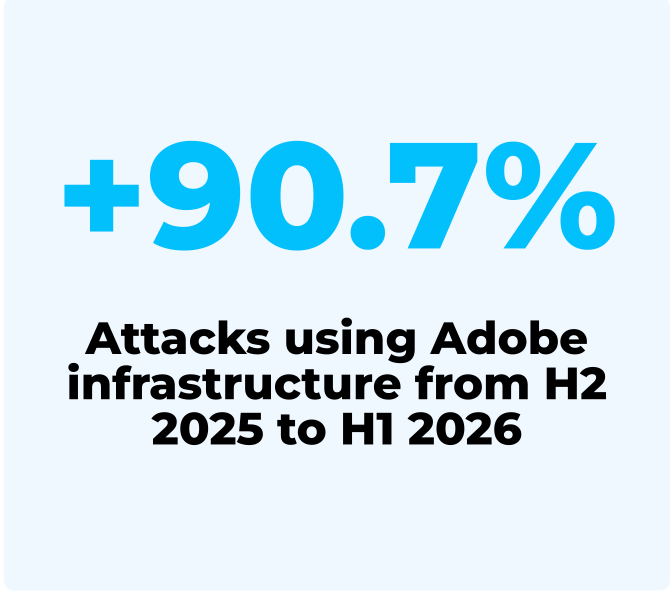
ANY.RUN’s data shows a growth in the popularity of hiding malware delivery infrastructures inside trusted channels.
This includes SEO poisoning, malvertising, codesigning, and npm package compromise across common services like Visual Studio Code extensions, WhatsApp, and PDFtools.
SOC & Business Impact
Trusted Chains Reduce Suspicion
These attack chains appear normal before execution, making them easy to trust and harder to stop with simple mitigation methods.
Investigation Starts Too Late
In many cases, analysis begins only after the payload has been delivered and credential theft has already occurred.
Risk Mitigation Playbook
Strategic Focus
Expand detection beyond file reputation and malware hashes. Treat trust abuse as a separate risk category during detection and triage.
Operational Steps
- Configure alerts for newly registered domains that utilize legitimate software keywords (e.g., VPN, PDF-tools, or specific corporate utility names) to identify potential SEO poisoning or malvertising sites.
- Monitor for unexpected code-signing chains and the installation of IDE or browser extensions from non-standard or newly appeared sources.
- In developer and CI/CD environments, implement telemetry to detect drastic changes in package maintainer ownership.
Read more: Enterprise Phishing via Microsoft & Google Cloud Platforms
Trend 6: Cross-platform attacks target Windows, Linux, and macOS
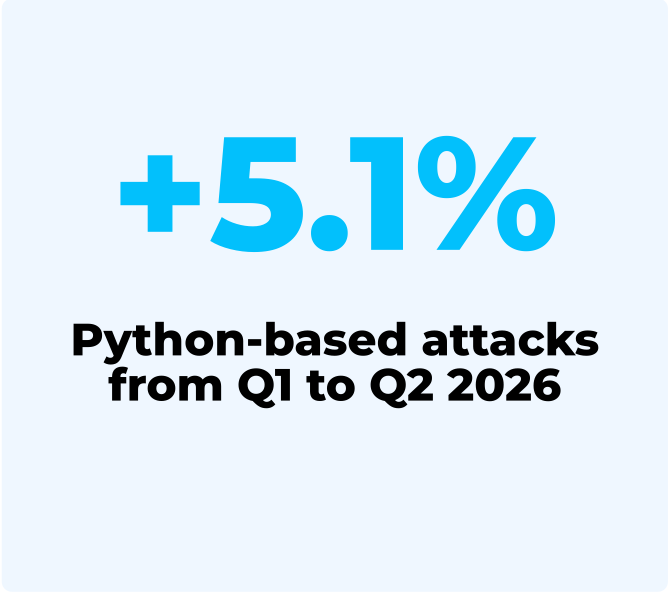
Malicious activity is becoming less tied to a single operating system. Threat actors increasingly use portable payloads and adaptable languages such as Python to target different environments faster, while some malware families are built to support multiple platforms from the start.
SOC & Business Impact
Platform-Specific Rules Create False Coverage
Detection rules built for only one platform can make teams overestimate their visibility across the environment.
Sandbox Assumptions Break Down
Cross-platform payloads challenge analysis setups that are designed around one operating system or execution path.
The Same Campaign Spreads Across Environments
Attackers can move across developer workstations, Linux servers, and other environments without being detected as part of one campaign.
Risk Mitigation Playbook
Strategic Focus
Build a unified correlation model across macOS, Windows, and Linux to ensure cross-platform visibility.
Operational Steps
- Establish monitoring for shared domains and similar lures (e.g., the same phishing themes or ClickFix prompts) across the entire fleet. Detection logic should hunt for repetitive RMM and remote access tools, archive or installer abuse, and cross-OS exfiltration patterns.
- Strengthen control over developer endpoints, Linux servers, and mixed-fleet environments, where the same campaign may leave various artifacts depending on the OS.
- If a suspicious DMG is found on macOS, the investigation must immediately check Windows and Linux endpoints for related infrastructure connections or similar file names.
Read more: Expanding Your SOC’s Cross-Platform Analysis with ANY.RUN’s Interactive Sandbox
Trend 7: Calendar event files are becoming more common in phishing
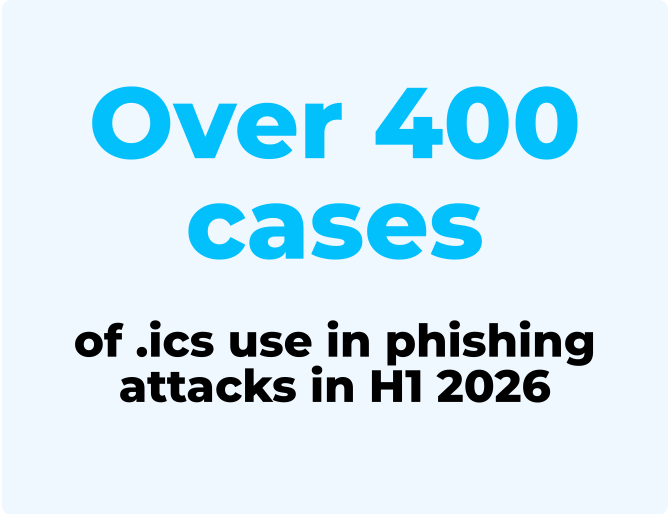
According to ANY.RUN’s H1 2026 statistics, .ics and calendar invite attachments are on the rise. Phishing lures, malicious URLs, or QR codes can appear not only in emails, but also inside calendar event files.
Although this method is not new, it is becoming more popular as an additional way to interact with the victim.
SOC & Business Impact
Calendar Events Add Another Attack Surface
Event files create an additional contact point with the victim and blur the line between email security and calendar-related infrastructure.
Related Artifacts May Be Investigated Separately
The email, attachment, and calendar event may be handled as separate objects, even when they belong to the same attack.
Visibility Breaks Across the Investigation
When these artifacts are not connected, SOC teams lose continuity during analysis, which can slow down investigation and response.
Risk Mitigation Playbook
Strategic Focus
Treat calendar invites as part of the phishing attack surface, especially when they come from external senders or contain links, QR codes, or unexpected attachments.
Operational Steps
- Establish detection rules to track .ics files and text/calendar MIME types across all incoming emails, file archives, and web downloads.
- Proactively correlate calendar-event artifacts with other common phishing components. This includes identifying links to QR codes, HTML/PDF attachments, and impersonation lures targeting Microsoft, DocuSign, or SharePoin.
- Within Microsoft 365 and Google Workspace environments, implement strict governance over external invitations and auto-add functionalities.
Stay updated on the latest attacks using .ics files
Use the query commandLine:”.ics” AND threatLevel:”malicious” in Threat Intelligence Lookup to uncover similar threats and related indicators for threat hunting and detection rules.
Trend 8: Supply chain attacks via open-source software are rising
Instead of directly hitting the final victim, threat actors increasingly target software delivery channels like npm packages, PyPI, Crates.io, and CI/CD publications.
The methods include malicious package publishing, self-propagating worms, and the compromise of official distributors.
SOC & Business Impact
Trust in Official Packages Breaks Down
Compromise at upstream layers undermines trust in official packages and updates, making malicious activity harder for SOC teams to investigate.
One Attack Can Reach Many Organizations
This method can affect multiple downstream organizations at the same time, expanding the impact beyond a single compromised environment.
Some Campaigns Self-Propagate
Campaigns such as Mini Shai-Hulud do not only infect packages, but can also spread further by abusing victim tokens and pipelines.
Risk Mitigation Playbook
Strategic Focus
Regular download alerts are delivered too late and don’t represent the real impact scope. This is why there’s a need to track more specific incident categories and suspicious indicators.
Operational Steps
- Actively monitor the publication of new package versions and alert on drastic or rapid changes in maintainer ownership.
- Implement automated checks for suspicious preinstall and postinstall hooks within package manifests.
- Track anomalies in GitHub Actions and OIDC (OpenID Connect) authentication flows to detect pipeline hijackings. Monitoring should identify mass changes across namespaces.
Expert-curated reports on emerging attacks for your SOC/MSSP team
View ANY.RUN’s TI Reports that deliver insights into active malware & phishing campaigns, providing actionable indicators, TTPs, and other detection artifacts for your proactive defense.
Trend 9: Linux privilege escalation is becoming more reliable after compromise
A growing number of reliable Linux local privilege escalation (LPE) exploits are appearing in the wild.
They point to a broader shift toward more stable post-compromise root escalation across Linux environments, including major distributions and cloud Linux workloads.
SOC & Business Impact
One Exploit Can Expand Cloud Impact
In cloud- and container-first environments, a successful Linux LPE can give attackers root access on the host, enable container escape, expose secrets, and support lateral movement across clusters or CI/CD environments.
Detection Leaves Fewer Artifacts
Linux LPE is harder to fight than regular malware detection because exploitation is local and may leave only minimal artifacts.
Public PoCs Accelerate Risk
Public PoCs and writeups can quickly make new kernel flaws widespread, especially when they apply to many modern enterprise distributions.
Risk Mitigation Playbook
Strategic Focus
Expand Linux security coverage beyond CVE tracking and patch status. Focus on how privilege escalation can increase the impact of an initial compromise across cloud, container, and CI/CD environments.
Operational Steps
- Pay attention to not only CVEs but also post-exploitation escalation, e.g., the launch of su/sudo right after a suspicious activity, unusual calls to kernel networking/page-cache paths, and drastic changed in privilege boundary at Linux hosts.
- During triage, mark kernel LPE, container escape, public PoC, active exploitation, and so on as separate incident categories.
- For hardening, defender new quick kernel updates, live patching, minimal local attack surface, and separate rights in container and CI/CD environments.
Read more: How to Hunt and Investigate Linux Malware
Trend 10: OAuth device code compromise is growing in phishing attacks
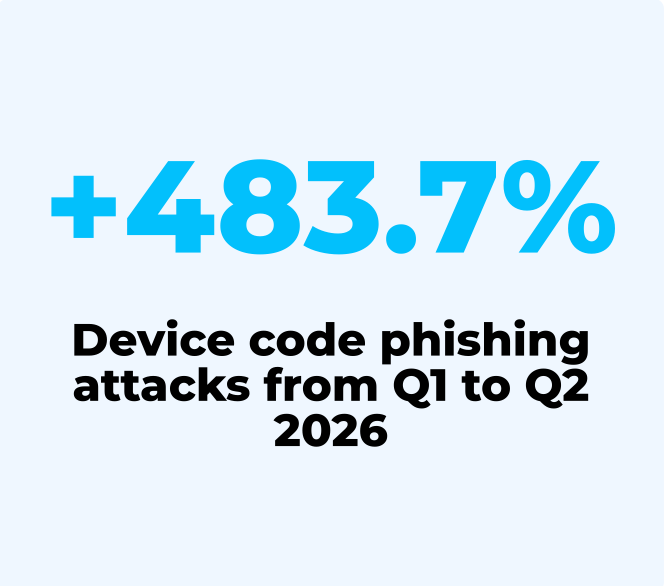
Threat actors are increasingly abusing the legitimate Microsoft OAuth Device Code flow to compromise Microsoft 365 accounts.
Instead of regular credential harvesting, they redirect the user from the phishing page to the legitimate Microsoft page, and once their credentials are confirmed, the OAuth tokens are delivered to the attacker.
SOC & Business Impact
Legitimate Login Pages Hide the Attack
Users enter credentials on a real Microsoft page, so the usual visual indicators of phishing may be missing or less obvious.
Risk Shifts from Password Theft to Token Abuse
Even if the password is not exposed, attackers can still gain access to Microsoft 365 through OAuth tokens.
Standard Web Monitoring Sees Less
The activity runs through legitimate authentication flows and HTTPS, making triage harder and requiring more precise signal correlation.
Risk Mitigation Playbook
Strategic Focus
Treat suspicious authentication flows as a compromise signal pay attention to abnormal device-code authentication patterns, even when the user entered credentials on a legitimate Microsoft page.
Operational Steps
- Monitor anomalous OAuth and device-code authentication events in Microsoft Entra ID and Microsoft 365, including successful device-code authentications for users who do not normally need this flow.
- Track follow-up calls to M365 resources after device login, suspicious phishing pages that display verification codes, and HTTP requests to suspicious hosts with paths such as /api/device/start, /api/device/status/, and /api/status/init.
- In ANY.RUN’s Interactive Sandbox, check suspicious URLs and monitor activity tagged as oauth-ms-phish, eviltokens, or kali365.
Read more: EvilTokens Phishing as a Service: Attackers Breach M365 Accounts with OAuth Device Codes
Trend 11: Attackers are using legitimate RMM tools to breach companies
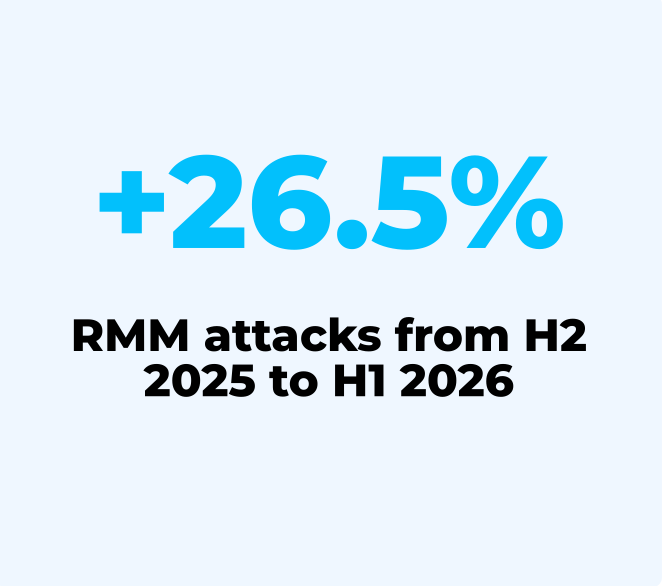
Attackers increasingly use phishing pages not to deliver an obviously malicious payload, but to push the installation of legitimate RMM or remote access tools.
The initial access model shifts from malware-first to phishing-first, where the final tool may look trusted in an enterprise environment.
SOC & Business Impact
Legitimate Tools Reduce Detection Confidence
RMM phishing is high-risk because attackers abuse tools that may already be allowed or trusted inside the organization.
Triage Must Separate Admin Activity from Intrusion
SOC teams need to distinguish legitimate remote administration from unauthorized remote access, which complicates detection, triage, and response.
Trusted Context Extends Dwell Time
When malicious intent is harder to prove, attacks may stay unnoticed longer and give attackers extended access to the infrastructure.
Risk Mitigation Playbook
Strategic Focus
Treat unexpected RMM activity as a context-driven access risk, not as automatically benign software.
Legitimate or signed RMM tools should still be validated against the delivery path, approved admin workflows, and expected usage.
Operational Steps
- Maintain a strict, centralized allowlist of approved RMM tools, including specific authorized tenants, accounts, admin hosts, and sanctioned workflow.
- Security systems must be configured to track the full attack chain: from the initial visit to a phishing page to the subsequent installer or script download, culminating in RMM execution and outbound connections to remote infrastructure.
- During incident triage, analysts must verify the download source and parent process; RMM tools launched from user directories (e.g., %TEMP%, Downloads, AppData).
Read more: Phishing-to-RMM Attacks: The Remote Access Blind Spot CISOs Can’t Ignore
Trend 12: Legitimate website abuse is growing in ClickFix campaigns
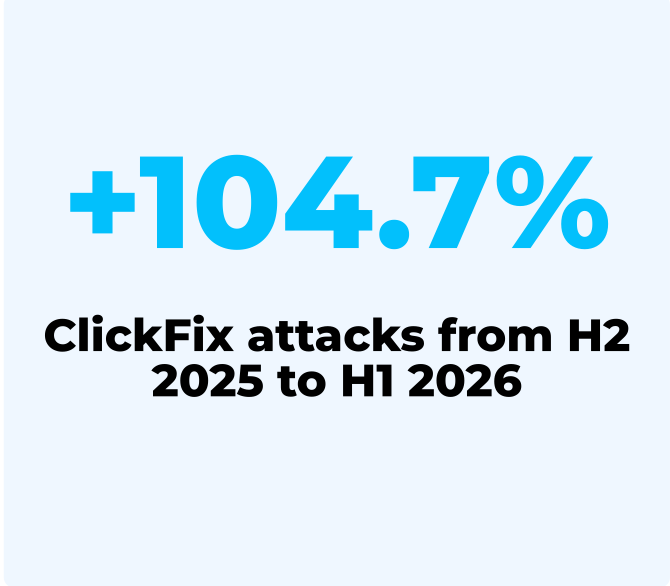
Instead of creating dedicated phishing domains, threat actors increasingly spread ClickFix campaigns through compromised legitimate websites.
They inject code into real websites to display fake messages that urge users to run malicious commands in PowerShell or CMD.
SOC & Business Impact
Clean Domains Pass Reputation Checks
Attackers abuse legitimate websites with clean history, so the domains may not be identified as suspicious during early detection.
Standard Detection Coverage Misses the Setup
Many security tools focus on newly registered domains or known phishing pages, while ClickFix can start from a trusted website.
Manual Execution Hides the Malicious Step
The malicious logic may be hidden in injected JavaScript, while the user is pushed to run the command manually. This makes detection and triage harder and requires deeper browser and webpage analysis.
Risk Mitigation Playbook
Strategic Focus
Don’t consider domain reputation as sufficient proof of safety. Legitimate and long-standing websites can still become the first stage of an attack, so SOC teams should assess the full user interaction flow, not only the domain or URL.
Operational Steps
- During triage, analysts must perform a deep-dive into webpage content and JavaScript, rather than focusing solely on the domain or URL.
- Monitoring must be tuned to alert on pages that urge users to execute PowerShell or CMD commands to resolve browser or document errors.
- Establish specialized monitoring for suspicious URI patterns associated with ClickFix infrastructure, including calls to /jsrepo?rnd=.
Stay updated on the latest ClickFix attacks
Use queries like:
threatName:”clickfix” AND submissionCountry:”de”
in Threat Intelligence Lookup to uncover threats in your industry and region.
Trend 13: Discord, Telegram, and GoFile are used as exfiltration channels
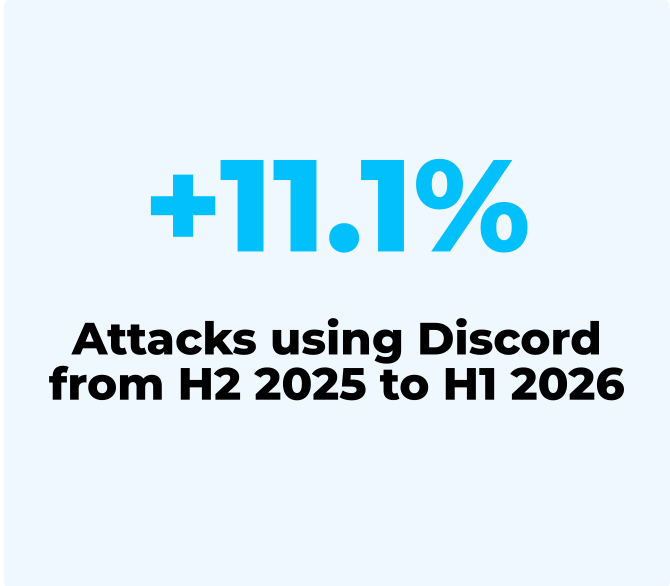
In stealer attacks, exfiltration increasingly relies on legitimate public services such as Discord, Telegram, and GoFile instead of attacker-owned infrastructure.
These services are often available from corporate networks and allow attackers to transfer stolen data without maintaining their own C2 infrastructure.
SOC & Business Impact
Legitimate Services Hide Exfiltration
Traffic to Discord, Telegram, or GoFile may look legitimate, but in stealer activity it can represent the final stage of the attack: sending stolen data to the operator.
Blocking Entire Services Is Not Practical
Because these services can have legitimate use, blocking them altogether may not be a reasonable option for many organizations.
Context Determines Malicious Intent
SOC teams need process, activity, and data-collection context to understand whether a connection to these services was normal traffic or actual exfiltration.
Risk Mitigation Playbook
Strategic Focus
Monitor activity related to legitimate services like Discord, Telegram, and GoFile. It’s key to assess the context: which process connected to the service, what happened before the connection, and whether data collection or archive creation occurred.
Operational Steps
- Monitor Discord webhook activity, especially requests to
discord.com/api/webhooks/,discordapp.com/api/webhooks/, and related endpoints. Focus onPOSTrequests,multipart/form-data, archive uploads, and unusual process origins. Prioritize detections where webhook URLs, IDs, or tokens appear in malware configs, memory, files, or command-line artifacts. - For Telegram, track Bot API usage via
api.telegram.org/bot, including/sendMessage,/sendDocument, and/sendPhoto. Watch for bot tokens,chat_id, and file transfers usingPOSTwithmultipart/form-data. Flag cases where tokens or chat IDs are embedded in malware artifacts or suspicious processes send data to Telegram. - For GoFile, monitor
gofile.ioand related upload endpoints likeapi.gofile.ioand/uploadFile. Focus onPOSTuploads, archive creation (.zip,.rar,.7z), and generated download links. Prioritize cases where uploaded archives are later shared via Telegram or Discord.
Read more: How to Intercept Data Exfiltrated by Malware via Telegram and Discord
Trend 14: Phishing imitates payment and government services to target employees
This trend is built around phishing, payment data theft, and business process abuse. Phishing campaigns increasingly imitate not only fine-payment and government-fee services, but also banks, tax authorities, municipal portals, and other official payment services.
Attackers target employees involved in finance, accounting, legal, procurement, fleet management, and decision-making processes by using themes such as taxes, fines, debts, refunds, and mandatory payments.
SOC & Business Impact
Attacks Blend into Business Workflows
These attacks look like normal financial or administrative tasks, such as checking a fine, paying a fee, confirming a debt, or processing a tax notice.
Employees May Complete the Scenario Manually
Because the request appears relevant to their work, employees may follow the steps themselves and enter sensitive data into a fake form.
No Malware Means Lower Detection Confidence
There may be no malware, exploit, or obvious payload. Without context around the user, department, domain, and page content, the incident may look like a low-priority suspicious URL rather than business process abuse.
Risk Mitigation Playbook
Strategic Focus
Treat payment- and government-themed phishing as business process abuse, not just generic phishing. SOC teams should prioritize the incident based on the user’s role, department, and potential financial exposure.
Operational Steps
- Monitoring must prioritize combinations of high-risk indicators: newly registered or low-reputation domains combined with service impersonation, clear payment intent, and access by a corporate user.
- Track themes related to debts, payment checks, and official notices where the sender’s display name imitates a municipal body or bank but the underlying link points to a non-official domain.
- Detection rules should flag POST requests occurring after page visits to uncategorized domains, as this indicates data submission into a form.
Read more: Cyber Attacks on Government Agencies: Detect and Investigate with ANY.RUN for Fast Response
Trend 15: Dead Drop Resolvers are being used to hide C2 and delivery chains
Malware actors increasingly use Dead Drop Resolvers (DDR) as an infrastructure layer. Instead of storing the final C2 URL, configuration, or delivery-chain elements directly in the sample, malware retrieves them from external sources during execution.
These sources can include smart contracts and blockchain infrastructure, as seen in EtherHiding, Steam profiles, or other legitimate and out-of-band resources where attackers can hide C2 configuration.
SOC & Business Impact
Static IOCs Lose Value
DDR makes malware infrastructure more resilient because the final C2 may be absent from the sample and only appear during execution.
Legitimate Sources Hide C2 Resolution
The DDR source may look legitimate, such as a blockchain RPC endpoint or a Steam profile, making detection and triage harder.
Attack Context Can Be Missed
If teams only see the final C2 connection or only the DDR request, they may miss how the malware resolved infrastructure and continued the attack chain.
Risk Mitigation Playbook
Strategic Focus
Shift detection from isolated IOCs to the full behavioral chain of C2 resolution. SOC and MSSP teams should treat DDR activity as a separate detection category, even in cases when C2 infrastructure appears only during execution.
Operational Steps
Actively track indicators of blockchain-based DDR (EtherHiding), including eth_call, eth_getStorageAt, and generic JSON-RPC requests.
Flag requests to steamcommunity.com/profiles/ that originate from non-browser or non-Steam processes, particularly when these requests are followed by connections to unknown or rare external hosts.
Proactively correlate all DDR requests with subsequent C2 connections, payload execution, or exfiltration activity.
Read more: Kamasers: A Multi-Vector DDoS Botnet Targeting Organizations Worldwide
How to Mitigate with ANY.RUN
The report’s findings point to the need for SOC teams to detect attacks earlier and see more of the attack chain before damage is done.
Across the 15 trends, attackers repeatedly abuse trusted services, legitimate workflows, browser-based flows, identity mechanisms, and dynamic infrastructure to avoid simple detection.
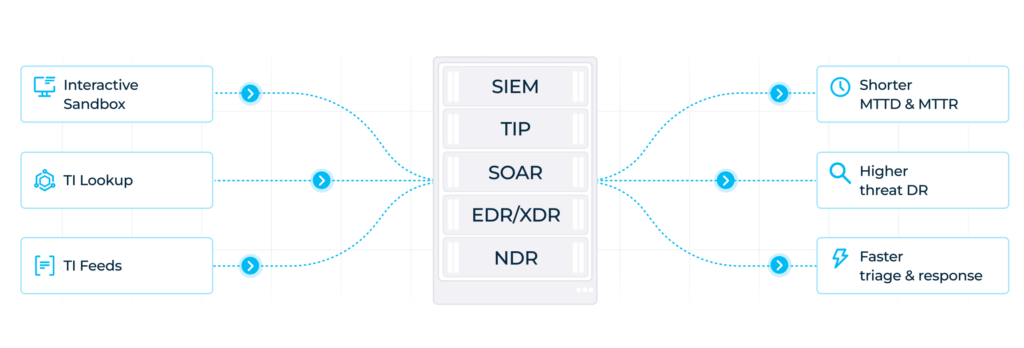
ANY.RUN helps SOC and MSSP teams close these gaps by combining interactive analysis with fresh, sandbox-validated threat intelligence. With ANY.RUN, security teams can:
- Reduce MTTR by 21 minutes per case by quickly reconstructing attack chains across phishing, payload delivery, RMM installation, C2 resolution, and exfiltration.
- Increase detection rate by 36% with deeper visibility into evasive phishing, malware behavior, browser activity, redirects, scripts, and infrastructure links.
- Achieve an MTTD of 14 seconds by safely detonating suspicious files, URLs, phishing pages, and malware across Windows, Linux, Android, and macOS.
- Prioritize incidents with more confidence using Threat Intelligence Lookup, Threat Intelligence Feeds, and expert-led TI Reports to connect indicators with behavioral context and current threat activity.
Conclusion
ANY.RUN’s H1 2026 Cyber Risk Report highlights how phishing, malware, identity abuse, and trusted infrastructure misuse are changing the way SOC teams detect, investigate, and respond to threats. The findings show why earlier detection, broader visibility, and context-rich threat intelligence are becoming essential for modern security operations.
About ANY.RUN
ANY.RUN is a leading provider of interactive malware analysis and threat intelligence solutions trusted by more than 16,000 organizations worldwide, including 74% of the Fortune 100.
Its Interactive Sandbox and Threat Intelligence solutions help SOC teams analyze suspicious files and URLs, uncover malicious behavior, enrich investigations with actionable context, and connect related activity across infrastructure and campaigns.
With deeper visibility and fresh threat context, security teams can reduce investigation time, lower MTTD and MTTR, and contain threats before business impact grows.
FAQ
The H1 2026 Cyber Risk Report is ANY.RUN’s analysis of 15 key cyber risk trends observed in the first half of 2026. It explains how current phishing, malware, identity, and infrastructure abuse techniques affect SOC detection, triage, investigation, and response.
You can access the full report by filling out the form in this article.
The report is based on real-world threat submissions analyzed in ANY.RUN, including activity from SOC teams, MSSPs, researchers, and security analysts worldwide.
The report is designed for CISOs, SOC leaders, MSSP managers, threat intelligence teams, incident response teams, and security professionals who need to understand how current attack techniques are changing.



0 comments