Black friday Up to 3 extra licenses FOR FREE + Special offer for TI LOOKUP Get it now
Webinar
February 26
Better SOC with Interactive Sandbox Practical Use Cases
Register now

zgRAT

100
Global rank
94 infographic chevron month
Month rank
99 infographic chevron week
Week rank
0
IOCs

zgRAT is a malware known for its ability to infect systems and exfiltrate sensitive data to command-and-control (C2) servers. It is primarily distributed through loader malware, as well as phishing emails. zgRAT employs various advanced techniques, including process injection and code obfuscation, to evade detection and maintain persistence on infected systems. The malware can also spread via USB drives and uses popular messaging platforms like Telegram and Discord for data exfiltration.

RAT
Type
Unknown
Origin
1 April, 2021
First seen
29 April, 2026
Last seen

How to analyze zgRAT with ANY.RUN

RAT
Type
Unknown
Origin
1 April, 2021
First seen
29 April, 2026
Last seen

IOCs

IP addresses
94.156.105.136
157.20.182.16
Hashes
1ece79aae59eec05291c63a7190784cc65e44b40cfb925373dfe9d52855d994a
142f1f4c04474aefa002cd35d874a559fd2fea97cf491643a35cfe1fb79a952a
710d0f33df10d6ea7c7fb3528cb2aebe060fab944e49f4b66048715fa729a16b
03541b2cf3bf022eda584b9ead6b6edeb7a47e8ccaa99b2415ee56694c9868cb
ad83447b6d362f0bae733ae90166306dcc9acb8e379f3285014b78edbe9fe916
9247c87a5d8388ff12f40bb731e6c2ac8d3e71ff0e1b7ee025ec3e8db1d3b2fc
253cdc5cba3fd7cf6350112945ee8b65d6a21564a5bd09490199cab832f16533
e5a5e82935acb5bf1706cd0e04a9bee5b0d995c4bf19ee3c363ceb9e6855ecab
7837a88b55d464bfa56a31888d82f611fccd4e87f01d6f16bc7485d61cfb724b
59ed6405e3f3ef450c65aeefd031426c39b014505555b4e7341be27916351436
285febf3df0193ab2f228a5d50152d40ae1f958a49b6a00a58b1390b62240c20
cfc9e35e650fccb171caa30fd7db3f6b99a8a16e824fb3f6276526ff10e063cf
d9e7d9699b28022d1fd6b5ced9f32e3dd3210475d6a2b2ec770d331d6a910a53
cda5ced44ec0c2e58d0f38f9fa63a87364cf9cebcd2d0e1a11626a8bb694703a
f33f2b0823a6b41f1632f5d19ebe4d144375781702b3f7b544c6321937f28161
8c333b7328e876046988ec1e7e487f4cdebd62cbf0a4a595b31d87b0c1892037
2b6233c0a91a1f89f344eeb74130a3a058c54fc28fb2b61f57bfc070da104633
de9beb65aacbea2d3131a969760a16c060a056d4765197982fdd395fe5295857
2c102e2b8ddd063944ce18b7fc9063043e6aac2a32441a220859d7fb6e5f5eab
edc3a7a85b4c116fe3b5806dd71c08fa907ea41cd57c43abf0494135eac0595f
Domains
cornpop.cloudns.be
Last Seen at

Recent blog posts

post image
Margin vs. Madness: Fixing MSSP Top 5 Operati...
watchers 161
comments 0
post image
Phishing-to-RMM Attacks: The Remote Access Bl...
watchers 1115
comments 0
post image
Inside agenteV2: How Brazilian Attackers Use...
watchers 4649
comments 0

What is zgRAT malware?

zgRAT, a remote access trojan (RAT), has been active in the cybersecurity landscape since its launch in 2021. This malware is designed to infect systems, collect sensitive data, and exfiltrate the stolen information to command-and-control (C2) servers.

zgRAT is primarily distributed through loader malware such as PrivateLoader and SmokeLoader, which act as delivery mechanisms for the RAT. Interestingly, researchers have noted that some samples of zgRAT can be mistaken for PureCrypter due to shared code elements.

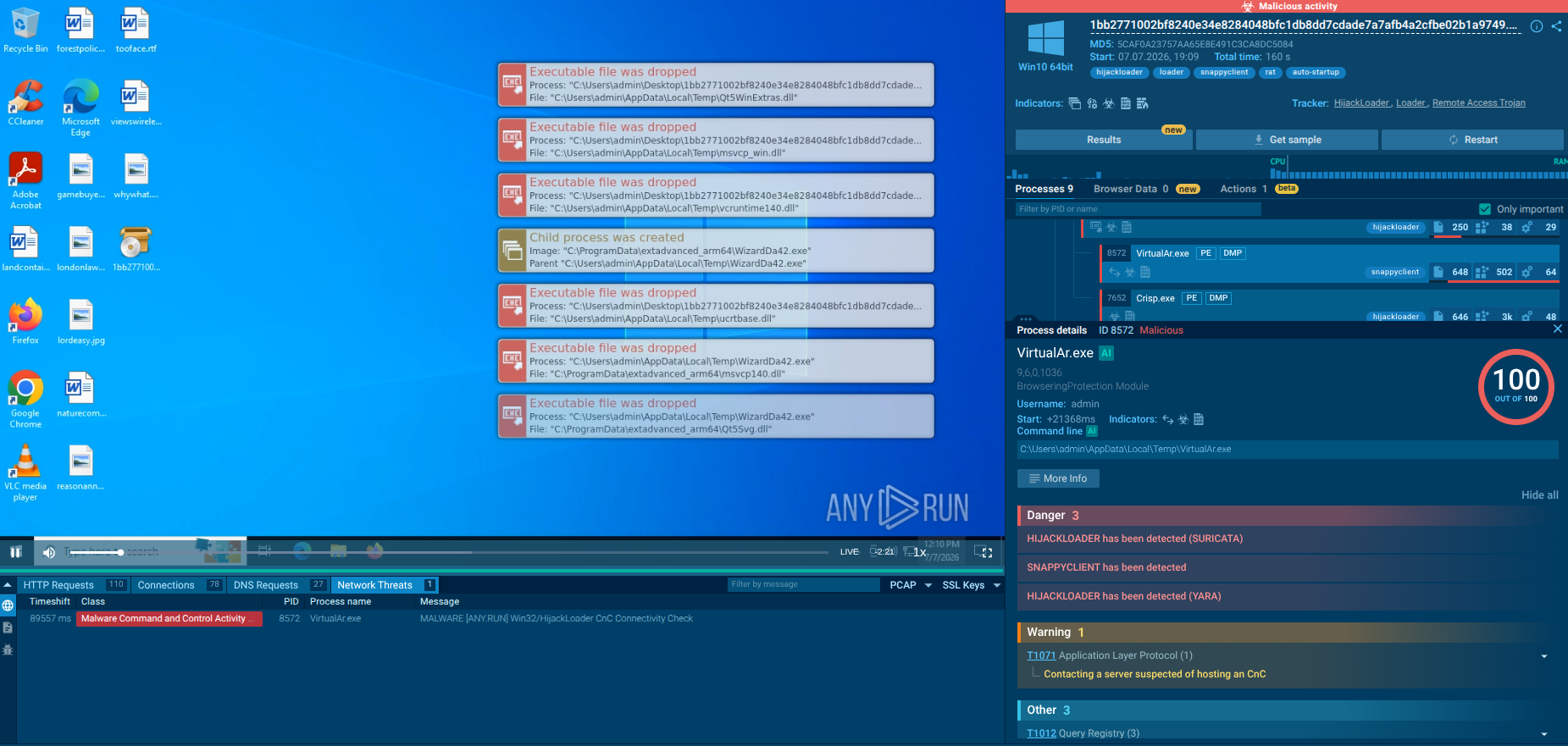
With ANY.RUN’s Interactive Sandbox, we can safely execute a zgRAT malware and analyze its behavior on an actual live system.
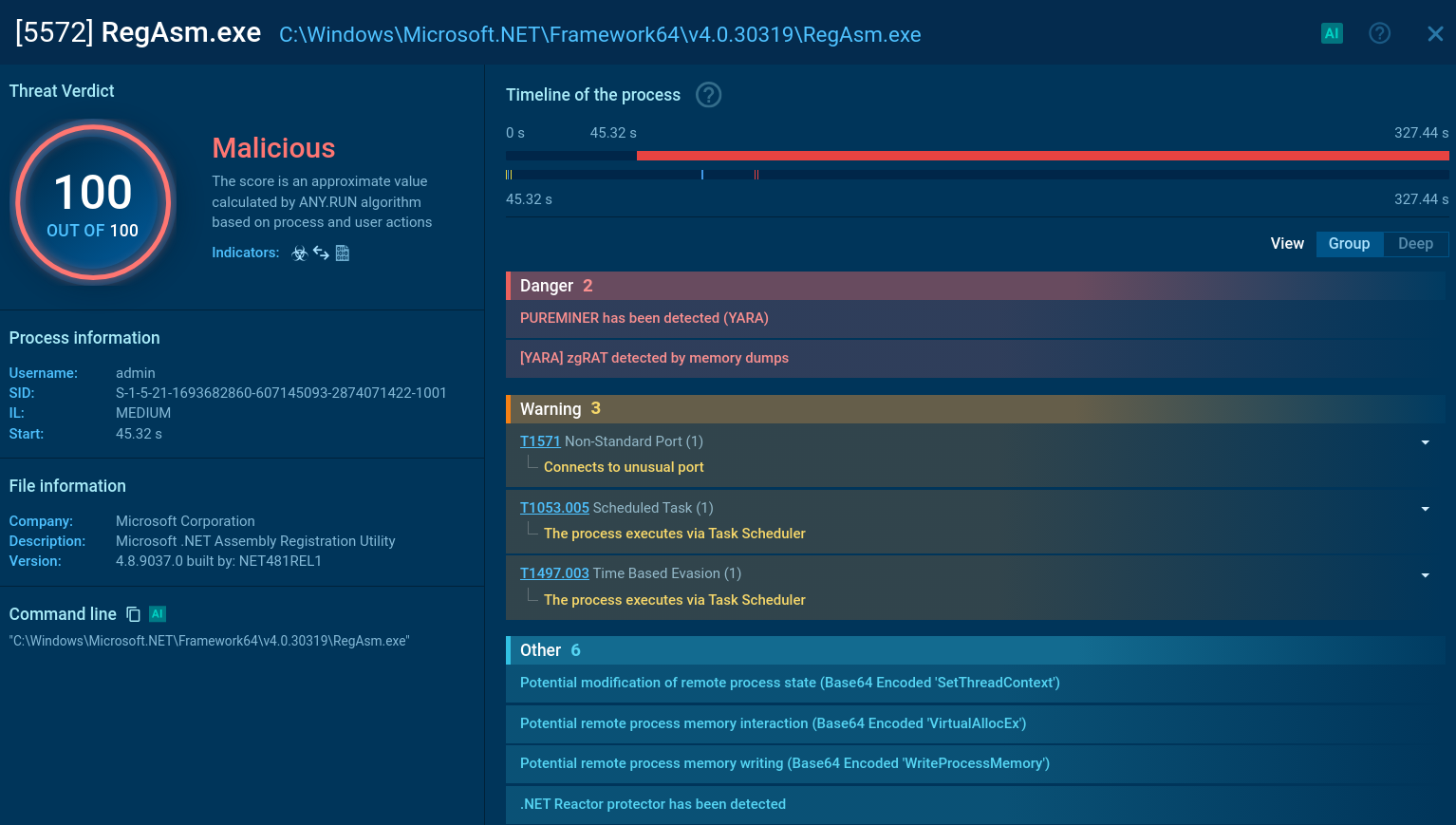
zgRAT analysis inside ANY.RUN Sandbox Analysis of a malicious zgRAT process inside the ANY.RUN sandbox

As observed in this sandbox session, the threat dropped is immediately detected after attempting to gain foothold on the machine.

Get started today for free

Analyze malware and phishing in a fully-interactive sandbox

Create free account

zgRAT malware technical details

zgRAT is equipped with advanced capabilities to perform malicious activities on the infected machines, including:

  • Keylogging: zgRAT can record every keystroke, capturing information like usernames, passwords, and financial data, which is then sent to attackers.
  • Stealing of sensitive data: The malware scans infected systems for valuable information, including browser credentials, which it exfiltrates to C2 servers.
  • Dropping additional malware: zgRAT can download and install other malicious software, further compromising the security of the infected device.
  • Worm-like behavior: zgRAT can spread through USB drives, automatically executing and infecting new devices when connected.
  • Exfiltration via Telegram and Discord: The malware uses popular messaging platforms like Telegram and Discord for data exfiltration, bypassing traditional security measures and making detection more difficult.
  • Process Injection: zgRAT employs process injection to evade detection, injecting its malicious code into legitimate processes to operate stealthily and persist on infected systems.
  • Use of scripts: The malware utilizes scripts embedded in various file types to download its payload, making it easier to bypass security measures and gain a foothold on target devices.
  • Code obfuscation: zgRAT uses code obfuscation techniques to modify its code, making it harder for security software to analyze and identify, allowing it to remain undetected for longer periods.

Analysis of zgRAT Execution Process

Use ANY.RUN’s Interactive Sandbox to analyze malicious files and URLs. Check out this analysis of a zgRAT sample.
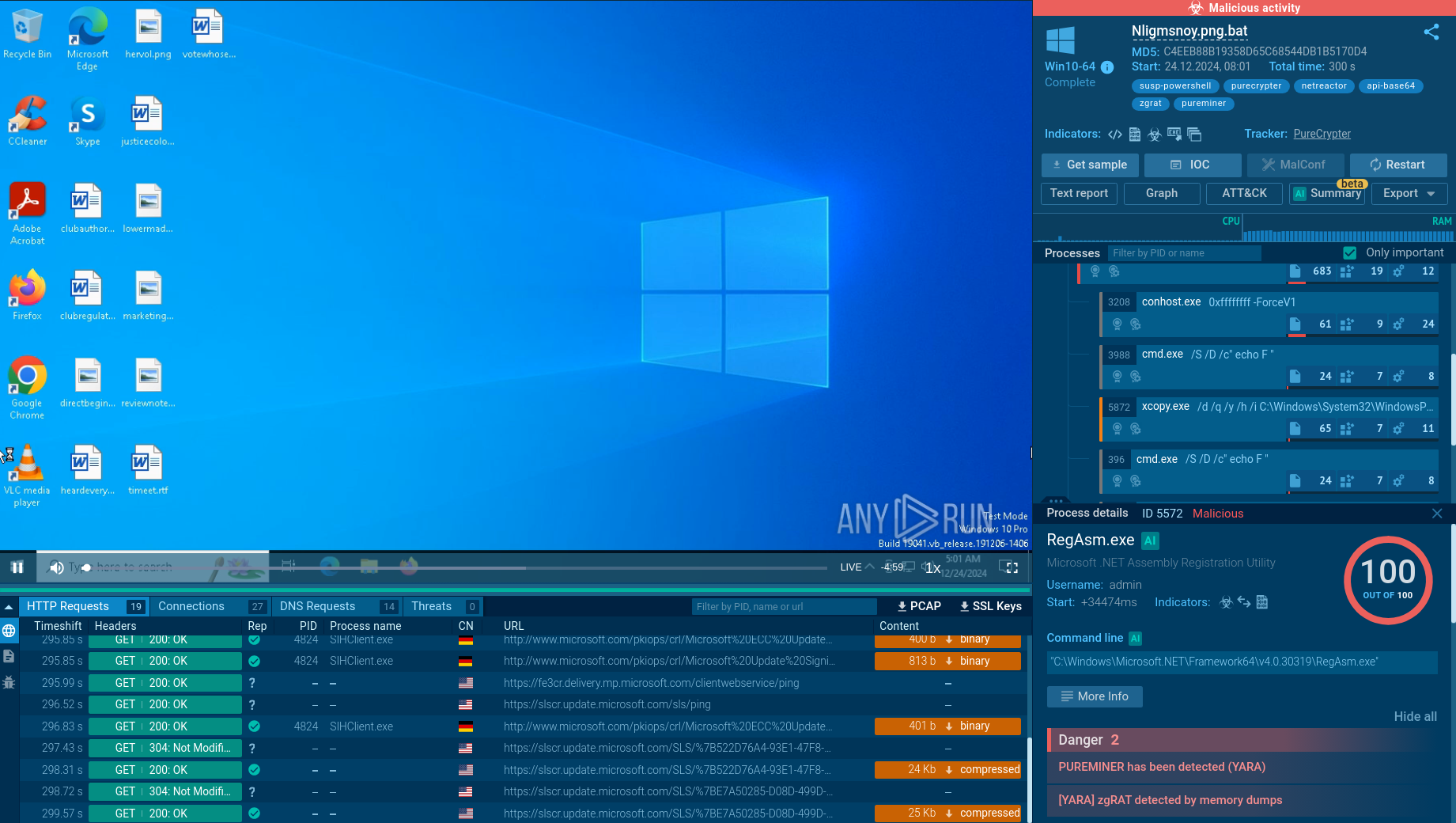
zgRAT analysis inside ANY.RUN Sandbox Analysis of a zgRAT sample inside the ANY.RUN sandbox

zgRAT is often spread through phishing emails containing malicious attachments like Windows Shortcut (LNK) files or Batch scripts (BAT). Opening these attachments triggers a script that drops additional payloads onto the system. The initial script may download and execute a malicious executable, continuing the infection process.
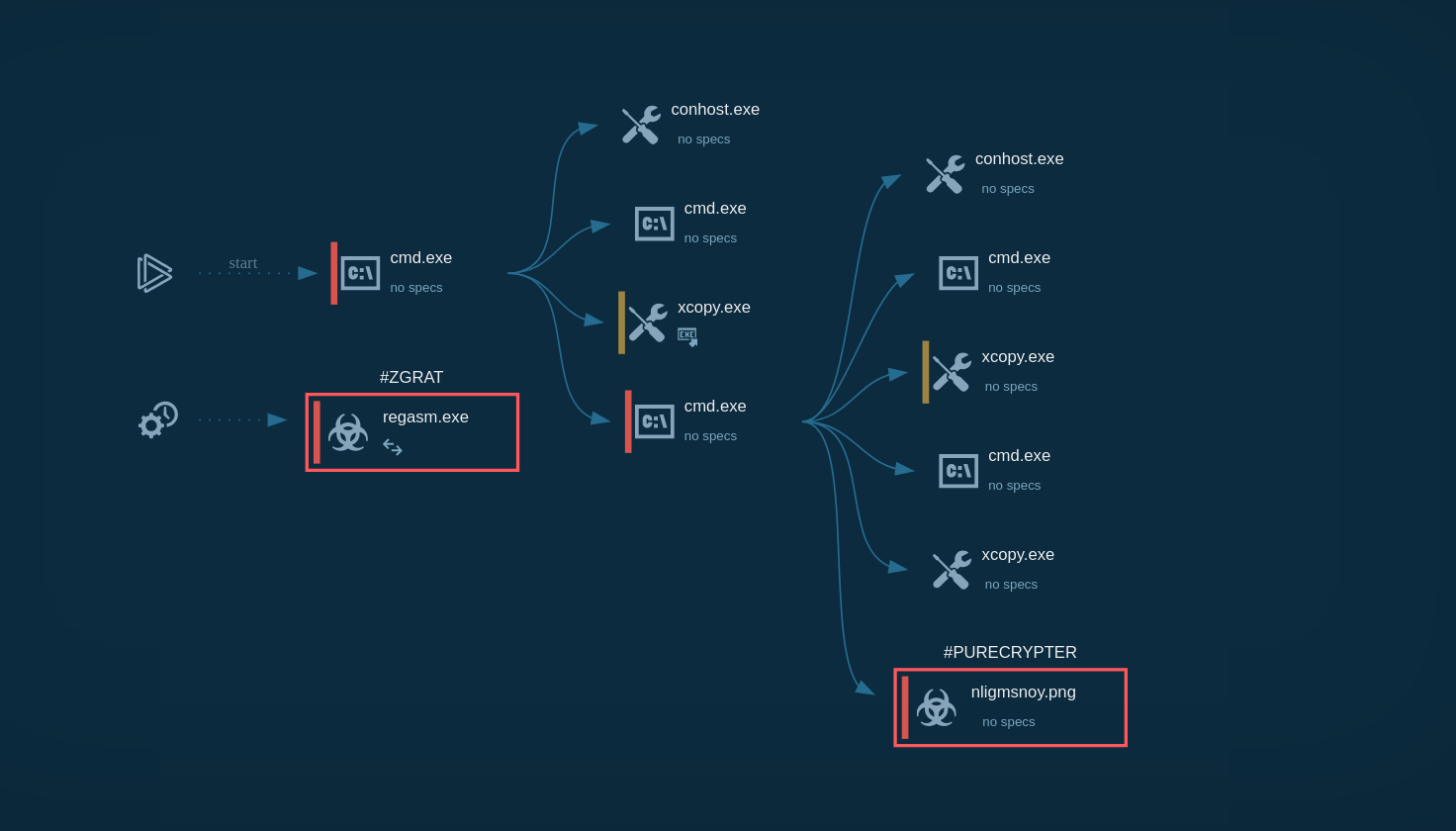
zgRAT analysis inside ANY.RUN Sandbox Process graph of a zgRAT execution chain demonstrated by the ANY.RUN sandbox

To evade detection, zgRAT uses obfuscation techniques such as packing, dynamic code generation, and XOR encryption. It also employs anti-tampering protections similar to ConfuserEx and loads extra DLLs to execute obfuscated methods. The malware complicates static analysis by making dynamic function calls via randomly named wrapper methods.

For persistence, zgRAT modifies registry entries or creates scheduled tasks to run automatically on startup. It creates mutexes to prevent multiple instances and communicates with a command and control (C2) server, allowing attackers to send commands and exfiltrate data. zgRAT can steal sensitive information through keylogging and screen capturing, and as a Remote Access Trojan (RAT), it enables remote control of infected machines, command execution, and file manipulation without user consent.

Use ANY.RUN free for 14 days

Try the full power of interactive analysis

Start your free trial

zgRAT distribution methods

One of the most common techniques for distributing zgRAT is through phishing emails, which trick users into downloading and executing malicious attachments or clicking on links that lead to the download of malware.

zgRAT is frequently dropped by loader malware that act as intermediaries, ensuring that zgRAT is delivered efficiently to infected systems. Some loaders have also been observed using malvertising techniques, particularly through Google Ads. Malvertising involves malicious advertisements that, when clicked, redirect users to websites that download and install malicious software.

Collecting zgRAT Threat Intelligence

Threat Intelligence Lookup helps security professionals keep up with the latest samples and indicators of zgRAT.

The service provides access to a extensive database containing insights from millions of malware analysis sessions conducted in the ANY.RUN sandbox. With over 40 search parameters, users can find specific data related to threats, including IP addresses, domains, file names, process artifacts, mutexes, etc.
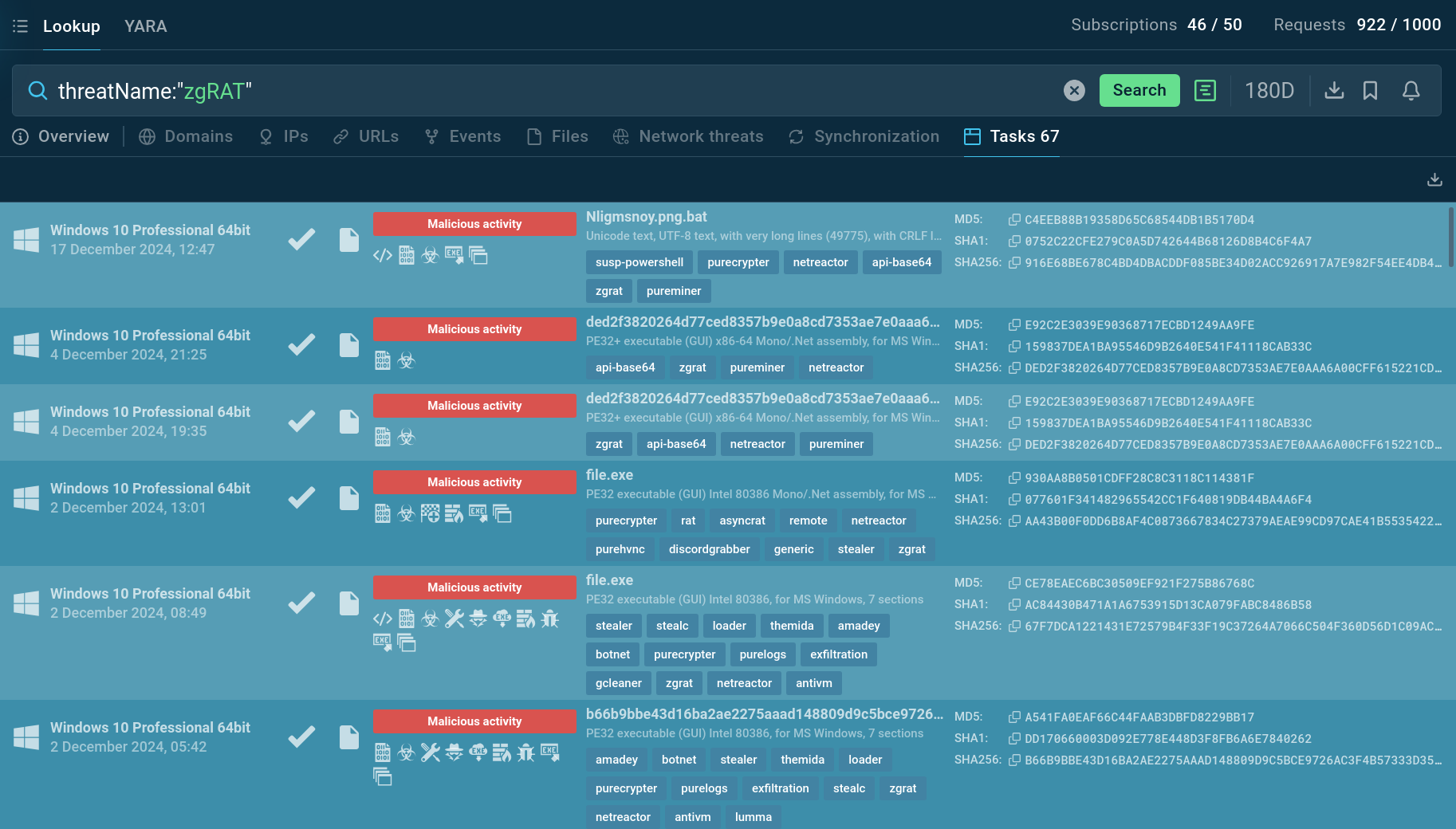
zgRAT results in ANY.RUN's TI Lookup TI Lookup provides a list of sandbox sessions featuring zgRAT malware

For instance, important context on zgRAT can be searched by with the query like threatName:"zgRAT". This will return all related samples and sandbox results relevant to this remote access trojan.

Integrate ANY.RUN’s threat intelligence solutions in your company

Contact us

Conclusion

zgRAT malware represents a significant threat to businesses, with its advanced capabilities and sophisticated distribution methods. Its ability to steal sensitive data, spread via USB drives, and exfiltrate information through popular messaging platforms makes it a serious security concern.

To ensure proactive identification of malicious content, use ANY.RUN’s Interactive Sandbox that lets you quickly run analysis of any file and URL to determine if it poses a risk.

Sign up for a free ANY.RUN account to access unlimited cyber threat analysis →
HAVE A LOOK AT

Adware screenshot
Adware
adware
Adware is a form of malware that targets users with unwanted advertisements, often disrupting their browsing experience. It typically infiltrates systems through software bundling, malicious websites, or deceptive downloads. Once installed, it may track user activity, collect sensitive data, and display intrusive ads, including pop-ups or banners. Some advanced adware variants can bypass security measures and establish persistence on devices, making removal challenging. Additionally, adware can create vulnerabilities that other malware can exploit, posing a significant risk to user privacy and system security.
Read More
DarkCloud screenshot
DarkCloud
darkcloud
DarkCloud is an infostealer that focuses on collecting and exfiltrating browser data from the infected device. The malware is also capable of keylogging and crypto address swapping. DarkCloud is typically delivered to victims’ computers via phishing emails.
Read More
Spynote screenshot
Spynote
spynote
SpyNote, also known as SpyMax and CypherRat, is a powerful Android malware family designed primarily for surveillance and data theft, often categorized as a Remote Access Trojan (RAT). Originally emerged in 2016, SpyNote has evolved significantly, with new variants continuing to appear as recently as 2023–2025.
Read More
Bluesky Ransomware screenshot
BlueSky ransomware, first identified in June 2022, shares code similarities with other well-known ransomware families like Conti and Babuk. It primarily spreads via phishing emails and malicious links and can propagate through networks using SMB protocols. BlueSky uses advanced evasion techniques, such as hiding its processes from debuggers via the NtSetInformationThread API, making it difficult for analysts to detect and mitigate its attacks.
Read More
Cephalus screenshot
Cephalus
cephalus
Cephalus is a targeted ransomware threat discovered in 2025. It’s known for infiltrating organizations that deal with sensitive data through compromised RDP access. It leverages DLL sideloading with a legitimate SentinelOne executable. Cephalus is able to exfiltrate data and destroy backup options. Its payload is also tailored to each victim, which makes identification and mitigation more complex.
Read More
Oyster screenshot
Oyster
oyster
Oyster (also seen in reporting as Broomstick or CleanUpLoader) is a Windows backdoor/loader actively used in multi-stage intrusion campaigns. Recent campaigns weaponize SEO-poisoning and malvertising to trick IT and dev users into downloading trojanized installers (PuTTY, WinSCP, Microsoft Teams, etc.), which then drop Oyster to establish a persistent foothold and load additional payloads (often leading to data theft or ransomware).
Read More