Havoc
- 71
- Global rank
- 76
- Month rank
- 123
- Week rank
Havoc is an advanced post-exploitation framework used by hackers to take control of a system once they've breached it. With Havoc, attackers can run commands remotely, inject malicious processes, and access sensitive data. It's often used in targeted attacks, allowing cybercriminals to stay hidden in a network while stealing information or launching further attacks. Its flexibility and ability to bypass detection make it a serious threat, especially in environments that rely on traditional security tools.
- C2 Framework
- Type
- Unknown
- Origin
- 1 October, 2022
- First seen
- 26 October, 2026
- Last seen
How to analyze Havoc with ANY.RUN
IOCs
IP addresses
- 48.192.1.64
- 2.20.142.179
- 172.211.123.249
- 48.209.138.189
- 23.11.40.157
- 48.209.138.168
- 74.179.77.164
- 40.126.31.69
- 188.114.97.3
- 150.171.109.106
- 74.178.76.128
- 204.79.197.203
- 72.246.29.11
- 23.52.181.212
- 185.199.109.133
- 47.79.48.198
- 168.138.162.78
- 163.44.198.71
- 192.162.199.149
- 20.250.119.67
Hashes
- 596c0ad17b38f4bf6c899f6b02c82f9ee326cfb7ac2d9775f49a88163364882b
- 01fc7832f5a6e50a08921f753bccde179e438c63b6ab7d7139e169f521a65f21
- 515620a96e31ac9d23ce7f69370fd33c9bb03e80225b850bdf005dbb81e2f329
- e10a79d12f18c53858e8d4448addbb795925b0bb66b18e4f2be84bf752e47d0f
- 60c1da5e2e7ef58cef79504e7209086509d74d27ef347ea59a7f432c4cf56041
- f503f62c81c5ca541d6b3cca94537f372a2e83924829d0b8b889149baf2dca69
- 5a73093ed95f568b685bf02857d7decf4b2637e140488e270f228b6edf4ed48b
- 84e7c7ae6fbae4bc8d6d7a3d1e55ce1c0fa04ae3185d18f188a1204758080703
- d00b519bdd1925e363ab47fdb0078219184e9e45d1e8d4cb8a805ca470e419da
- b1018f9e857c15dab278611efd3086c3c1d39ed286e2036fc400ae9410730236
- 92804faaab2175dc501d73e814663058c78c0a042675a8937266357bcfb96c50
- 42b55d126d1e640b1ed7a6bdcb9a46c81df461fa7e131f4f8c7108c2c61c14de
- e728f79439e07df1afbcf03e8788fa0b8b08cf459db31fc8568bc511bf799537
- 7f0121322785c107bfdfe343e49f06c604c719baff849d07b6e099675d173961
- aac73b3148f6d1d7111dbca32099f68d26c644c6813ae1e4f05f6579aa2663fe
- f096bc366a931fba656bdcd77b24af15a5f29fc53281a727c79f82c608ecfab8
- c43668eec4a8d88a5b3a06a84f8846853fe33e54293c2db56899a5a5dfb4d944
- 26b4699a7b9eeb16e76305d843d4ab05e94d43f3201436927e13b3ebafa90739
- 15ffbb8d382cd2ff7b0bd4c87a7c0bffd1541c2fe86865af445123bc0b770d13
- 96425ae53a5517b9f47e30f6b41fdc883831039e1faba02fe28b2d5f3efcdc29
Domains
- slscr.update.microsoft.com
- settings-win.data.microsoft.com
- activation-v2.sls.microsoft.com
- ocsp.digicert.com
- www.microsoft.com
- google.com
- fe3cr.delivery.mp.microsoft.com
- ecs.office.com
- oneocsp.microsoft.com
- login.live.com
- self.events.data.microsoft.com
- crl.microsoft.com
- telemetry.kernel-metrics.site
- rcf.co.mz
- clientservices.googleapis.com
- kimyen.net
- down.qqfarmer.com.cn
- www.namuvpn.com
- ibidasjohnnraplc.com
- runelight.net
URLs
- http://ocsp.digicert.com/mfewtzbnmeswstajbgurdgmcgguabbq50otx%2fh0ztl%2bz8sipi7wewvxdlqqutijuibiv5unu5g%2f6%2brks7qyxjzkceaz1vqyrvgl0erhqlcpm8gy%3d
- http://ocsp.digicert.com/mfewtzbnmeswstajbgurdgmcgguabbtrjrydryt%2bapf3gspypfhbxr5xtqqus9tippmhxdiunkhmewnpyim8s8yceajtxtab8my1oj8mfwpz%2f7y%3d
- http://crl.microsoft.com/pki/crl/products/microoceraut2011_2011_03_22.crl
- http://oneocsp.microsoft.com/ocsp/mfqwujbqme4wtdajbgurdgmcgguabbq3l3%2f%2fa6adk8nray2gxzvayrhg4aqub6t%2b2v%2bxq3lso2d33ojhnyhhqoucezmaaaafuwohyjguzpcaaaaaaau%3d
- http://www.microsoft.com/pkiops/crl/microsoft%20secure%20server%20ca%202026.crl
- https://settings-win.data.microsoft.com/settings/v3.0/wsd/waasassessment?os=windows&osver=10.0.19041.1.amd64fre.vb_release.191206-&ring=retail&sku=48&deviceclass=windows.desktop&locale=en-us&deviceid=bad99146-31d3-4ec6-a1a4-be76f32ba5d4&flightring=retail&telemetrylevel=1&hidovergattreg=c%3a%5cwindows%5csystem32%5cdriverstore%5cfilerepository%5chidbthle.inf_amd64_9610b4821fdf82a5%5cmicrosoft.bluetooth.profiles.hidovergatt.dll&appver=10.0&processoridentifier=amd64%20family%2023%20model%201%20stepping%202&oemmodel=dell&updateoffereddays=4294967295&processormanufacturer=authenticamd&installdate=1661339444&oemmodelbaseboard=&branchreadinesslevel=cb&oemsubmodel=j5cr&isclouddomainjoined=0&deferfeatureupdateperiodindays=30&isdeviceretaildemo=0&flightingbranchname=&osuilocale=en-us&devicefamily=windows.desktop&wuclientver=10.0.19041.3996&uninstallactive=1&isflightingenabled=0&osskuid=48&processorclockspeed=3094&totalphysicalram=6144&securebootcapable=0&app=waasassessment&processorcores=6¤tbranch=vb_release&installlanguage=en-us&deferqualityupdateperiodindays=0&servicingbranch=cb&oemname_uncleaned=dell&tpmversion=0&primarydisktotalcapacity=262144&installationtype=client&attrdataver=186&processormodel=amd%20ryzen%205%203500%206-core%20processor&isedgewithchromiuminstalled=1&osversion=10.0.19045.4046&ismdmenrolled=0&activationchannel=retail&honorwufbdeferrals=1&firmwareversion=a.40&trendinstalledkey=1&osarchitecture=amd64&defaultuserregion=244&updatemanagementgroup=2
- https://settings-win.data.microsoft.com/settings/v3.0/flightsettings/fsservice?processorclockspeed=3094&isretailos=1&oemmanufacturername=dell&flightingpolicyvalue=3&enablepreviewbuilds=4294967295&osversionfull=10.0.19045.4046.amd64fre.vb_release.191206-1406&managepreviewbuilds=3&branchreadinesslevelsource=0&attrdataver=186&processorcores=6&branchreadinesslevelraw=16&totalphysicalram=6144&tpmversion=0&oemmodelnumber=dell&systemvolumetotalcapacity=260281&deviceid=s%3abad99146-31d3-4ec6-a1a4-be76f32ba5d4&app=fss&appver=10.0&smartactivehoursstate=1&activehoursstart=20&securebootcapable=0&activehoursend=13&devicefamily=windows.desktop
- https://telemetry.kernel-metrics.site/v2.0/me/drive/special/approot
- https://settings-win.data.microsoft.com/settings/v3.0/wsd/updatehealthtools?os=windows&osver=10.0.19041.1.amd64fre.vb_release.191206-&sku=48&deviceclass=windows.desktop&locale=en-us&deviceid=s:bad99146-31d3-4ec6-a1a4-be76f32ba5d4&sampleid=s:95271487&appver=10.0.19041.3626&flightring=retail&telemetrylevel=1&hidovergattreg=c%3a%5cwindows%5csystem32%5cdriverstore%5cfilerepository%5chidbthle.inf_amd64_9610b4821fdf82a5%5cmicrosoft.bluetooth.profiles.hidovergatt.dll&appver=&processoridentifier=amd64%20family%2023%20model%201%20stepping%202&oemmodel=dell&updateoffereddays=4294967295&processormanufacturer=authenticamd&installdate=1661339444&oemmodelbaseboard=&branchreadinesslevel=cb&oemsubmodel=j5cr&isclouddomainjoined=0&deferfeatureupdateperiodindays=30&isdeviceretaildemo=0&flightingbranchname=&osuilocale=en-us&devicefamily=windows.desktop&wuclientver=10.0.19041.3996&uninstallactive=1&isflightingenabled=0&osskuid=48&processorclockspeed=3094&totalphysicalram=6144&securebootcapable=0&app=sedimentpack&processorcores=6¤tbranch=vb_release&installlanguage=en-us&deferqualityupdateperiodindays=0&oemname_uncleaned=dell&tpmversion=0&primarydisktotalcapacity=262144&installationtype=client&attrdataver=186&processormodel=amd%20ryzen%205%203500%206-core%20processor&isedgewithchromiuminstalled=1&osversion=10.0.19045.4046&ismdmenrolled=0&activationchannel=retail&firmwareversion=a.40&trendinstalledkey=1&osarchitecture=amd64&defaultuserregion=244&updatemanagementgroup=2
- http://www.microsoft.com/pkiops/crl/microsoft%20ecc%20update%20secure%20server%20ca%202.1.crl
- https://slscr.update.microsoft.com/sls/%7b522d76a4-93e1-47f8-b8ce-07c937ad1a1e%7d/x64/10.0.19045.4046/0?ch=686&l=en-us&p=&pt=0x30&wua=10.0.19041.3996&mk=dell&md=dell
- https://fe3cr.delivery.mp.microsoft.com/clientwebservice/ping
- https://slscr.update.microsoft.com/sls/ping
- https://slscr.update.microsoft.com/sls/%7be7a50285-d08d-499d-9ff8-180fdc2332bc%7d/x64/10.0.19045.4046/0?ch=686&l=en-us&p=&pt=0x30&wua=10.0.19041.3996&mk=dell&md=dell
- https://activation-v2.sls.microsoft.com/slactivateproduct/slactivateproduct.asmx?configextension=retail
- http://31.40.204.4/24/secured_stub.ps1
- http://31.40.204.4/24/goodthingswithme.hta
- http://31.40.204.4/22/wemadebest.hta
- http://45.115.26.23:8012/wsvc.exe
- http://45.115.26.23:8012/wsvc_old.exe
Last seen at
What is Havoc malware?
Havoc is a post-exploitation framework used by cybercriminals and penetration testers to perform a variety of attacks and gain deeper control over compromised systems. It is developed by C5pider, written in Golang, C++, and C.
First observed in 2022, it has become notable for its stealth, flexibility, and use of encrypted communications to avoid detection. The malware is used in advanced campaigns, often by threat actors conducting highly targeted attacks.
It has been linked to attacks targeting corporate networks, critical infrastructure, and government entities.
Key technical details include its ability to use reflective DLL injection and direct memory manipulation to execute payloads. It maintains persistence on compromised systems through registry modifications and scheduled tasks, while its communication with command-and-control (C2) servers is highly encrypted
Havoc malware technical details
Havoc malware has several powerful and dangerous capabilities, making it a significant post-exploitation tool. Some of its primary technical features include:
- Uses reflective DLL injection to inject its payloads directly into the memory of a process without writing to disk, minimizing the risk of detection.
- Can perform direct memory manipulation to execute malicious code.
- Supports multiple communication channels (HTTP/HTTPS, DNS, SMB), all encrypted using TLS, making it difficult to intercept and analyze its traffic.
- Includes a shellcode loader, capable of disabling Event Tracing for Windows (ETW) and performing system reconnaissance.
- Can establish persistence using methods such as registry modifications, scheduled tasks, and service creation.
- Allows operators to upload, download, and manipulate files remotely, which is a key post-exploitation feature for attackers.
Havoc operates primarily as an open-source framework and is typically distributed through phishing campaigns or malicious downloads. Its advanced features include payload generation, encryption (using algorithms like AES and RSA), process injection techniques, and multiple communication channels (HTTP, HTTPS, DNS, and SMB).
Havoc malware execution process
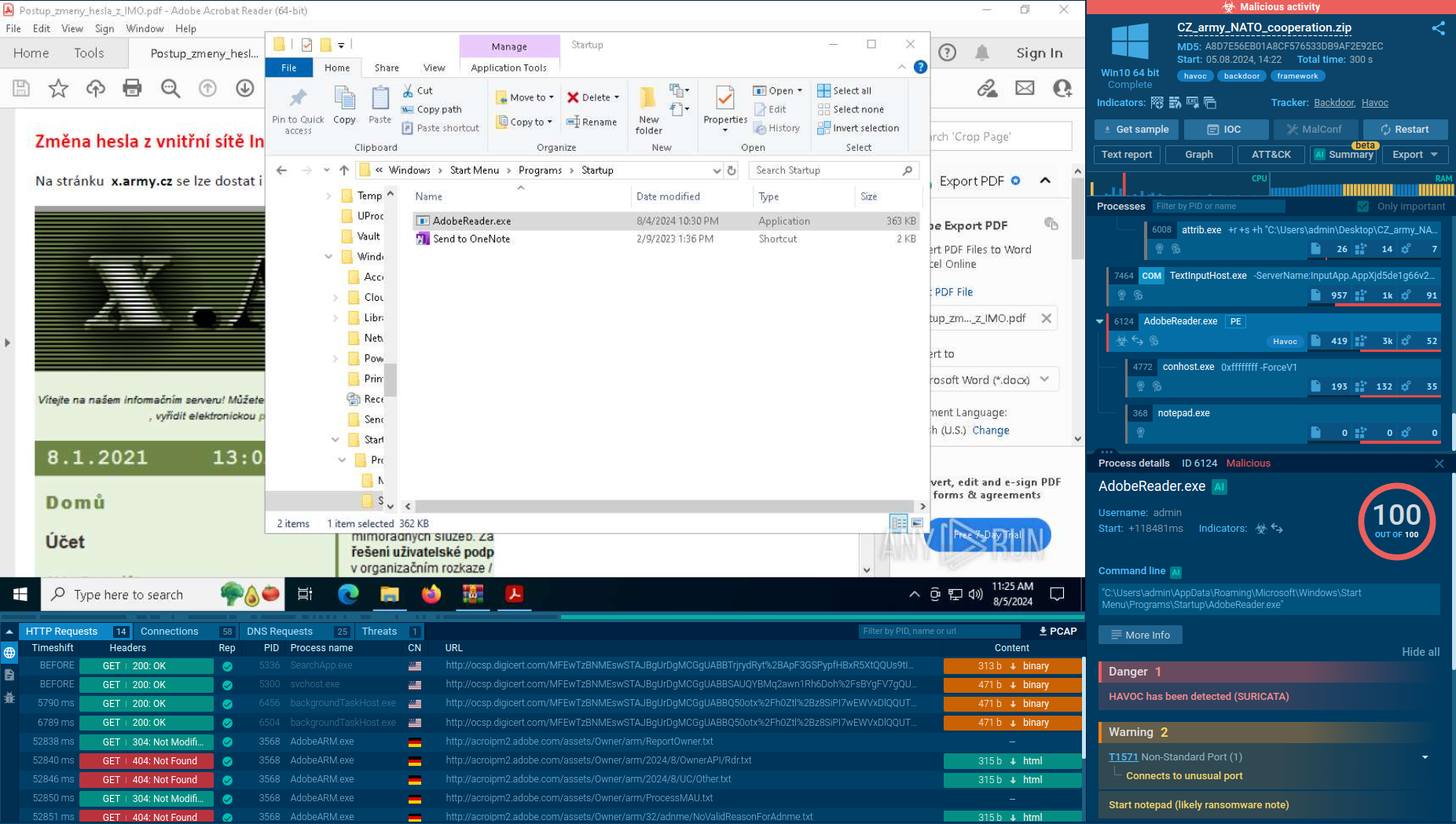
To see how Havoc operates, let’s upload a Havoc sample to the ANY.RUN sandbox.
After executing the sample in the sandbox, the first thing that stands out is the red label in the upper right corner of the screen. This label provides a quick way to determine whether the activity is malicious. In our case, it’s highlighted in red, confirming that the behavior is indeed malicious.
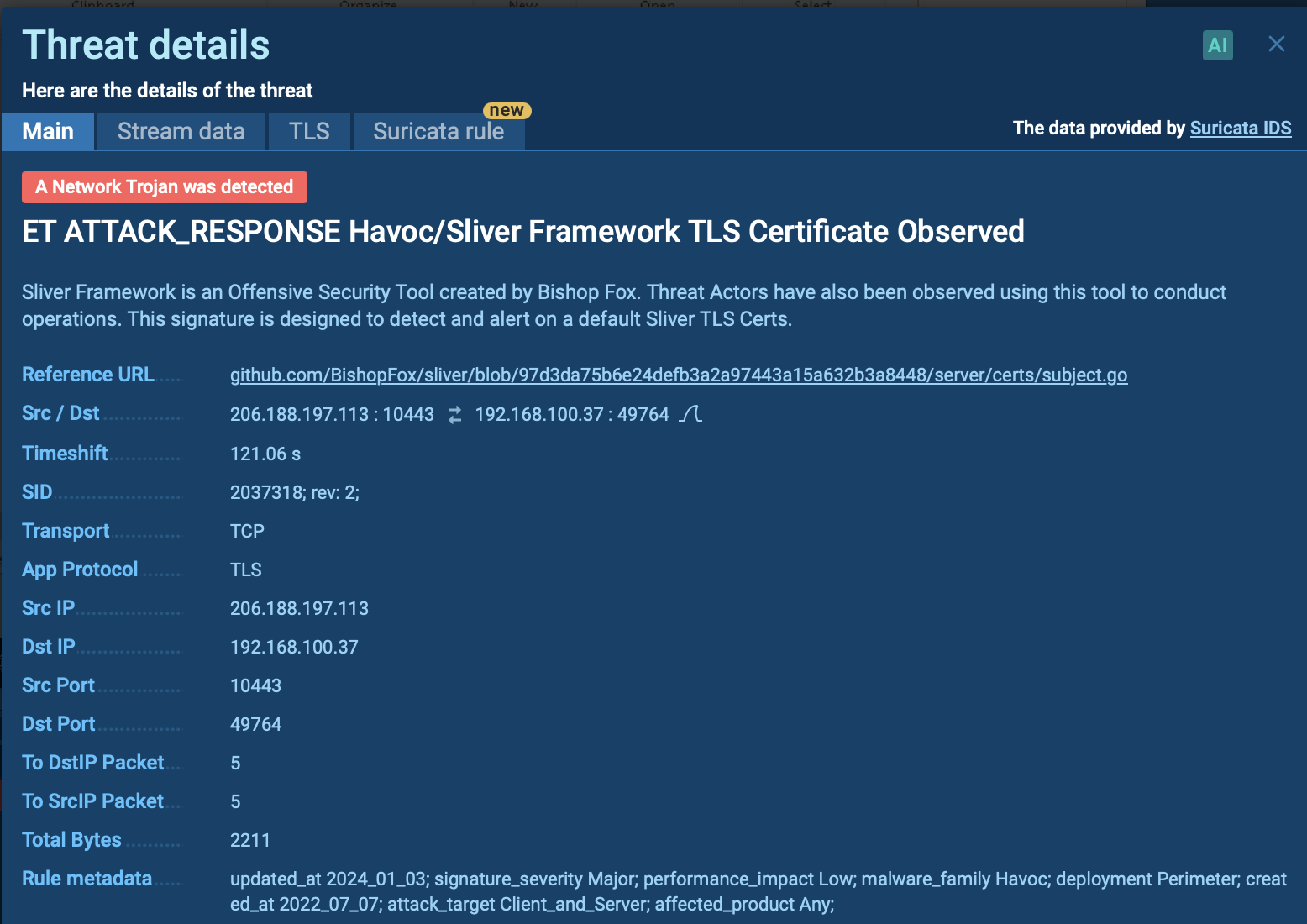
The ANY.RUN sandbox provides a Suricata rule flagging Havoc’s suspicious network activity, which is further evidence of its malicious behavior.
The Havoc framework establishes a Command and Control (C2) channel using encrypted protocols such as HTTPS and SMB to evade detection. Its modular architecture allows for functionalities like privilege escalation, lateral movement, and data exfiltration. The core agent, "Demon," written in C and Assembly, uses techniques like indirect syscalls for Nt* APIs, x64 return address spoofing, and sleep obfuscation to bypass defenses.
Havoc offers capabilities such as:
- Stagers: Lightweight payloads that establish a foothold.
- Shellcode injectors: Inject shellcode into remote processes, allowing execution without disk traces.
- Reflective DLL loaders: Bypass traditional antivirus by loading DLLs directly into memory.
- Custom plugins: Support for credential harvesting, keylogging, and system information gathering.
It supports execution with Beacon Object Files (BOFs), enabling direct memory interaction, and can execute commands using cmd.exe and powershell.exe and is capable of deploying additional payloads to infected systems. Havoc employs advanced evasion techniques, such as process injection and anti-VM/sandbox checks.
For persistence, Havoc can modify system settings, create scheduled tasks, or alter startup configurations, ensuring continued control over compromised systems.
Havoc malware distribution methods
Havoc malware is distributed through a variety of methods that are commonly seen in advanced cyber threats:
- Phishing emails: Havoc can be delivered via phishing campaigns, where malicious attachments or links are included in seemingly legitimate emails. These attachments often contain malicious macros or scripts that launch the malware once opened by the victim.
- Malicious downloads: Attackers may trick users into downloading Havoc through fake software updates, cracked software, or malicious files hosted on compromised websites. These files may appear harmless but execute the malware when run.
- Exploitation of vulnerabilities: Havoc can be deployed by exploiting known software vulnerabilities in operating systems or third-party applications, allowing attackers to gain access to systems remotely.
- Malvertising: Havoc could be spread via malicious advertisements that redirect users to compromised or malicious websites where the malware is downloaded.
Gathering Threat Intelligence on Havoc Malware
To collect the latest intelligence on Havoc malware, utilize Threat Intelligence Lookup.
This service allows you to access a vast database with insights from millions of malware analysis sessions in the ANY.RUN sandbox. You can customize your search using over 40 different parameters, such as IP addresses, file names, command line artifacts, and process indicators, to find relevant details on Havoc and its behavior.
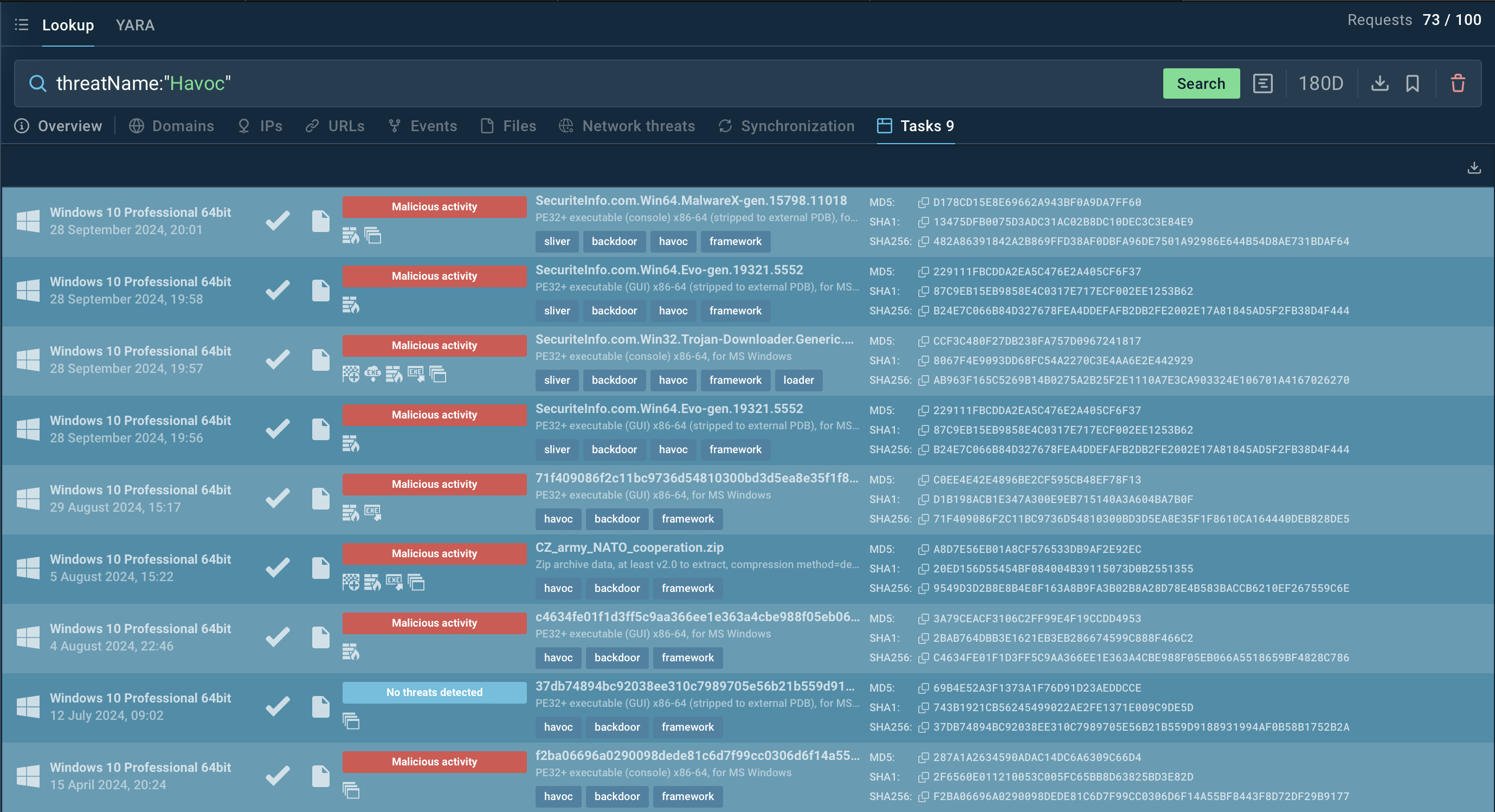
For example, by searching for Havoc's threat name (threatName:"Havoc"), you can uncover related samples and sandbox analysis results. This helps security professionals stay up to date on malware's evolution and techniques.
Start exploring these capabilities with a 14-day free trial of Threat Intelligence Lookup, alongside the ANY.RUN sandbox for deep, real-time analysis.
Conclusion
Havoc poses a significant threat due to its advanced evasion techniques, process manipulation, and ability to execute malicious payloads, making it highly dangerous for businesses. To protect against such threats, it’s important to carry out proactive malware analysis of suspicious files and URLs.
ANY.RUN provides real-time threat detection, allowing users to explore malware behavior, gather detailed reports on malware, such as Havoc.
Sign up for a free ANY.RUN account today and start analyzing threats in real-time!
Other malware & phishing threats
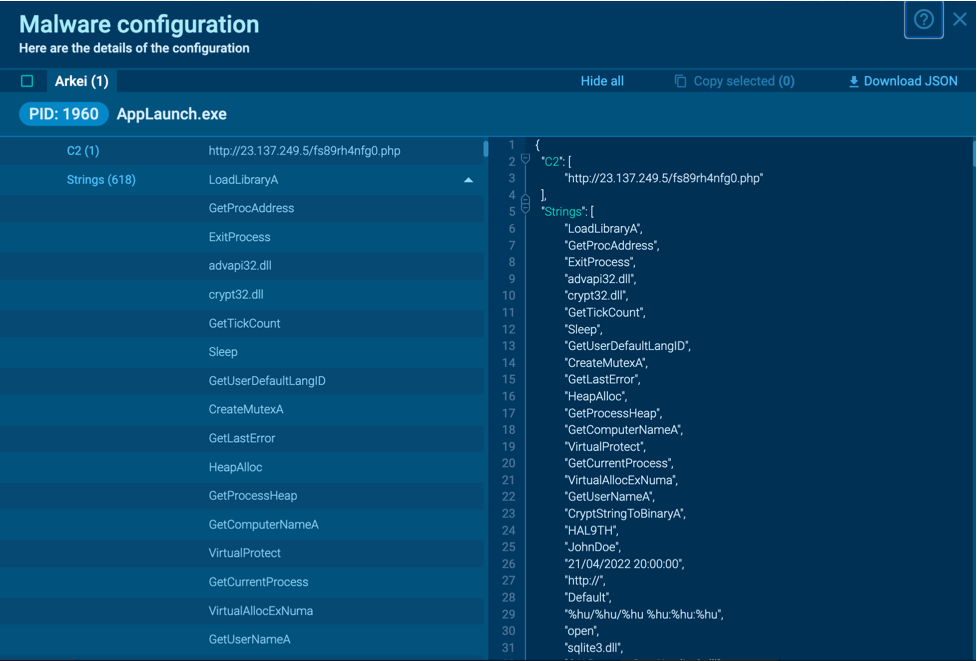 ArkeiArkei is a stealer type malware capable of collecting passwords, autosaved forms, cryptocurrency wallet credentials, and files.
 KeyloggerA keylogger is a type of spyware that infects a system and has the ability to record every keystroke made on the device. This lets attackers collect personal information of victims, which may include their online banking credentials, as well as personal conversations. The most widespread vector of attack leading to a keylogger infection begins with a phishing email or link. Keylogging is also often present in remote access trojans as part of an extended set of malicious tools.
 QbotQbot is a banking Trojan — a malware designed to collect banking information from victims. Qbot targets organizations mostly in the US. It is equipped with various sophisticated evasion and info-stealing functions and worm-like functionality, and a strong persistence mechanism.
 Fog RansomwareFog is a ransomware strain that locks and steals sensitive information both on Windows and Linux endpoints. The medial ransom demand is $220,000. The medial payment is $100,000.
First spotted in the spring of 2024, it was used to attack educational organizations in the USA, later expanding on other sectors and countries. Main distribution method — compromised VPN credentials.
Fog RansomwareFog is a ransomware strain that locks and steals sensitive information both on Windows and Linux endpoints. The medial ransom demand is $220,000. The medial payment is $100,000.
First spotted in the spring of 2024, it was used to attack educational organizations in the USA, later expanding on other sectors and countries. Main distribution method — compromised VPN credentials.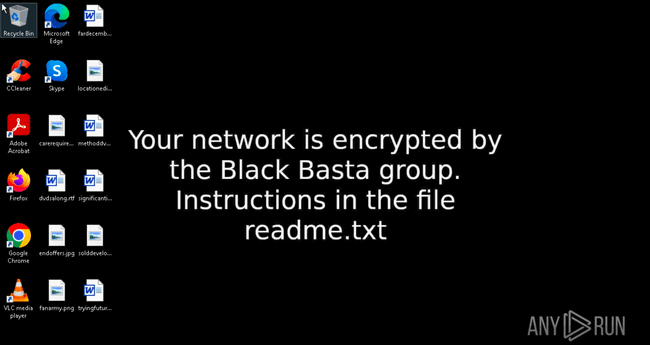 Black BastaBlack Basta is a ransomware-as-a-service operated by Storm-1811. It emerged in 2022 and uses double extortion tactics, encrypting data and stealing it for ransom. The malware often gains access through spear-phishing and uses tools like QakBot and Cobalt Strike. It's known for exploiting system vulnerabilities and using advanced obfuscation techniques.