SalatStealer
- 13
- Global rank
- 3
- Month rank
- 1
- Week rank
SalatStealer, also known as WEB_RAT or Salat Stealer, is a Go-based information-stealing malware targeting Windows systems. It operates as a Malware-as-a-Service (MaaS) focusing on harvesting browser credentials, cryptocurrency wallets, and session data from popular applications like Telegram and Steam.
- Stealer
- Type
- Unknown
- Origin
- 1 August, 2025
- First seen
- 27 October, 2026
- Last seen
How to analyze SalatStealer with ANY.RUN
IOCs
IP addresses
- 48.209.133.15
- 1.1.1.1
- 74.178.76.54
- 74.178.76.128
- 23.11.40.157
- 104.16.249.249
- 8.8.4.4
- 172.211.123.249
- 2.16.204.145
- 8.8.8.8
- 48.192.1.64
- 23.59.18.102
- 150.171.109.104
- 20.190.160.2
- 48.209.138.168
- 131.253.33.203
- 46.173.27.15
- 23.207.210.132
- 95.101.23.81
- 204.79.197.203
Hashes
- 96ad1146eb96877eab5942ae0736b82d8b5e2039a80d3d6932665c1a4c87dcf7
- f49b515eedeed1abe391bc32f15ce43d3582cb6c41ff944fa9c79f476d5824ba
- 01fc7832f5a6e50a08921f753bccde179e438c63b6ab7d7139e169f521a65f21
- 217887fbcf5b77c79eb48638a3cef8e5984628f2674e1a6cc2c6557b607a8d5c
- ce8047cc7ae6e2deac6f1f63c88ae0b1f1a4d4721a9173056e7969e4ecf4c01a
- 16ea7e41f0ec4529e515085c93084de74ab4ff085e79965a0f5bcdcdf47538a8
- a1181514bdd91f1460c4105cff8f7a8cbd1fcdc2ea7b35ab8b8d8736210eeefe
- 14d395a29d4adc1d9ab1d7b6cb574b85b28ba94083007d4fcbbe842cc78e9cf6
- 2798d3476bf310efc695aad9db3a280116916816a67f26c357485fc1bf0c6818
- 225d669e47eb14d8c969799c92aaef27b66cd984872ea09284e48db46521e651
- 6cf535daeec70899c28c0c6127f210900c2999a97189dedda415987d0f353a72
- f8772b6a078fa74b6a448089118e0fe6d29a2db92e17bcf04f021e69326c0b29
- cd789cee2333bf09520076d00bf69d2848019ef79cdd73d9946f09118f04382c
- e24159941ba567e2c9b641e9453bf65d30c79c4de9b7b78064d546d7ad56fcd3
- 52e00f2a6518589ed78afd46e5f36c342581c8db192bb5a545b531ebe5f15e3c
- 1440e81f80958229541b1da9d33a03e9aa5848545033c98eff59e332aa2b59e9
- 69da8695703652e366c1d93bda1544ff25d6033fa6ee4985ad8b6a3b721fe2fb
- c16ee3ca01ac3a8befb99201fbc0352c67410ff92b3d78c7c07bb28536154d0a
- c4a4f6385c91b535b7fc9c57f70e8b6ddf29f2c19d523eb605304c6c0d293ae0
- cb684a3b34677f9a7e9eecc992bdd2ae99005713565916bf5d17e06a139f0601
Domains
- cloudflare-dns.com
- oneocsp.microsoft.com
- ocsp.digicert.com
- dns.google
- fe3cr.delivery.mp.microsoft.com
- slscr.update.microsoft.com
- google.com
- th.bing.com
- client.wns.windows.com
- activation-v2.sls.microsoft.com
- crl.microsoft.com
- settings-win.data.microsoft.com
- www.bing.com
- www.microsoft.com
- ecs.office.com
- self.events.data.microsoft.com
- nexusrules.officeapps.live.com
- login.live.com
- gitlab.com
- raw.githubusercontent.com
URLs
- http://ocsp.digicert.com/mfewtzbnmeswstajbgurdgmcgguabbq50otx%2fh0ztl%2bz8sipi7wewvxdlqqutijuibiv5unu5g%2f6%2brks7qyxjzkceaz1vqyrvgl0erhqlcpm8gy%3d
- http://crl.microsoft.com/pki/crl/products/microoceraut2011_2011_03_22.crl
- http://www.microsoft.com/pkiops/crl/microsoft%20secure%20server%20ca%202026.crl
- http://ocsp.digicert.com/mfewtzbnmeswstajbgurdgmcgguabbtrjrydryt%2bapf3gspypfhbxr5xtqqus9tippmhxdiunkhmewnpyim8s8yceajtxtab8my1oj8mfwpz%2f7y%3d
- http://oneocsp.microsoft.com/ocsp/mfqwujbqme4wtdajbgurdgmcgguabbq3l3%2f%2fa6adk8nray2gxzvayrhg4aqub6t%2b2v%2bxq3lso2d33ojhnyhhqoucezmaaaafuwohyjguzpcaaaaaaau%3d
- https://settings-win.data.microsoft.com/settings/v3.0/wsd/waasassessment?os=windows&osver=10.0.19041.1.amd64fre.vb_release.191206-&ring=retail&sku=48&deviceclass=windows.desktop&locale=en-us&deviceid=bad99146-31d3-4ec6-a1a4-be76f32ba5d4&flightring=retail&telemetrylevel=1&hidovergattreg=c%3a%5cwindows%5csystem32%5cdriverstore%5cfilerepository%5chidbthle.inf_amd64_9610b4821fdf82a5%5cmicrosoft.bluetooth.profiles.hidovergatt.dll&appver=10.0&processoridentifier=amd64%20family%2023%20model%201%20stepping%202&oemmodel=dell&updateoffereddays=4294967295&processormanufacturer=authenticamd&installdate=1661339444&oemmodelbaseboard=&branchreadinesslevel=cb&oemsubmodel=j5cr&isclouddomainjoined=0&deferfeatureupdateperiodindays=30&isdeviceretaildemo=0&flightingbranchname=&osuilocale=en-us&devicefamily=windows.desktop&wuclientver=10.0.19041.3996&uninstallactive=1&isflightingenabled=0&osskuid=48&processorclockspeed=3094&totalphysicalram=6144&securebootcapable=0&app=waasassessment&processorcores=6¤tbranch=vb_release&installlanguage=en-us&deferqualityupdateperiodindays=0&servicingbranch=cb&oemname_uncleaned=dell&tpmversion=0&primarydisktotalcapacity=262144&installationtype=client&attrdataver=186&processormodel=amd%20ryzen%205%203500%206-core%20processor&isedgewithchromiuminstalled=1&osversion=10.0.19045.4046&ismdmenrolled=0&activationchannel=retail&honorwufbdeferrals=1&firmwareversion=a.40&trendinstalledkey=1&osarchitecture=amd64&defaultuserregion=244&updatemanagementgroup=2
- https://settings-win.data.microsoft.com/settings/v3.0/flightsettings/fsservice?processorclockspeed=3094&isretailos=1&oemmanufacturername=dell&flightingpolicyvalue=3&enablepreviewbuilds=4294967295&osversionfull=10.0.19045.4046.amd64fre.vb_release.191206-1406&managepreviewbuilds=3&branchreadinesslevelsource=0&attrdataver=186&processorcores=6&branchreadinesslevelraw=16&totalphysicalram=6144&tpmversion=0&oemmodelnumber=dell&systemvolumetotalcapacity=260281&deviceid=s%3abad99146-31d3-4ec6-a1a4-be76f32ba5d4&app=fss&appver=10.0&smartactivehoursstate=1&activehoursstart=20&securebootcapable=0&activehoursend=13&devicefamily=windows.desktop
- https://settings-win.data.microsoft.com/settings/v3.0/wsd/waasassessment?os=windows&osver=10.0.19041.1.amd64fre.vb_release.191206-&ring=retail&sku=48&deviceclass=windows.desktop&locale=en-us&deviceid=bad99146-31d3-4ec6-a1a4-be76f32ba5d4&flightring=retail&telemetrylevel=1&hidovergattreg=c%3a%5cwindows%5csystem32%5cdriverstore%5cfilerepository%5chidbthle.inf_amd64_9610b4821fdf82a5%5cmicrosoft.bluetooth.profiles.hidovergatt.dll&appver=10.0&processoridentifier=amd64%20family%2023%20model%201%20stepping%202&oemmodel=dell&updateoffereddays=4294967295&processormanufacturer=authenticamd&installdate=1661339444&oemmodelbaseboard=&branchreadinesslevel=cb&oemsubmodel=j5cr&isclouddomainjoined=0&deferfeatureupdateperiodindays=30&isdeviceretaildemo=0&flightingbranchname=&osuilocale=en-us&devicefamily=windows.desktop&wuclientver=10.0.19041.3996&uninstallactive=1&isflightingenabled=0&osskuid=48&processorclockspeed=3094&totalphysicalram=6144&securebootcapable=0&app=waasassessment&processorcores=6¤tbranch=vb_release&installlanguage=en-us&deferqualityupdateperiodindays=0&servicingbranch=cb&oemname_uncleaned=dell&tpmversion=0&primarydisktotalcapacity=262144&installationtype=client&attrdataver=186&processormodel=amd%20ryzen%205%203500%206-core%20processor&isedgewithchromiuminstalled=1&osversion=10.0.19045.4046&ismdmenrolled=0&activationchannel=retail&honorwufbdeferrals=0&firmwareversion=a.40&trendinstalledkey=1&osarchitecture=amd64&defaultuserregion=244&updatemanagementgroup=2
- https://settings-win.data.microsoft.com/settings/v3.0/wsd/updatehealthtools?os=windows&osver=10.0.19041.1.amd64fre.vb_release.191206-&sku=48&deviceclass=windows.desktop&locale=en-us&deviceid=s:bad99146-31d3-4ec6-a1a4-be76f32ba5d4&sampleid=s:95271487&appver=10.0.19041.3626&flightring=retail&telemetrylevel=1&hidovergattreg=c%3a%5cwindows%5csystem32%5cdriverstore%5cfilerepository%5chidbthle.inf_amd64_9610b4821fdf82a5%5cmicrosoft.bluetooth.profiles.hidovergatt.dll&appver=&processoridentifier=amd64%20family%2023%20model%201%20stepping%202&oemmodel=dell&updateoffereddays=4294967295&processormanufacturer=authenticamd&installdate=1661339444&oemmodelbaseboard=&branchreadinesslevel=cb&oemsubmodel=j5cr&isclouddomainjoined=0&deferfeatureupdateperiodindays=30&isdeviceretaildemo=0&flightingbranchname=&osuilocale=en-us&devicefamily=windows.desktop&wuclientver=10.0.19041.3996&uninstallactive=1&isflightingenabled=0&osskuid=48&processorclockspeed=3094&totalphysicalram=6144&securebootcapable=0&app=sedimentpack&processorcores=6¤tbranch=vb_release&installlanguage=en-us&deferqualityupdateperiodindays=0&oemname_uncleaned=dell&tpmversion=0&primarydisktotalcapacity=262144&installationtype=client&attrdataver=186&processormodel=amd%20ryzen%205%203500%206-core%20processor&isedgewithchromiuminstalled=1&osversion=10.0.19045.4046&ismdmenrolled=0&activationchannel=retail&firmwareversion=a.40&trendinstalledkey=1&osarchitecture=amd64&defaultuserregion=244&updatemanagementgroup=2
- http://www.microsoft.com/pkiops/crl/microsoft%20ecc%20update%20secure%20server%20ca%202.1.crl
- https://slscr.update.microsoft.com/sls/%7b522d76a4-93e1-47f8-b8ce-07c937ad1a1e%7d/x64/10.0.19045.4046/0?ch=686&l=en-us&p=&pt=0x30&wua=10.0.19041.3996&mk=dell&md=dell
- https://fe3cr.delivery.mp.microsoft.com/clientwebservice/ping
- https://slscr.update.microsoft.com/sls/ping
- https://slscr.update.microsoft.com/sls/%7be7a50285-d08d-499d-9ff8-180fdc2332bc%7d/x64/10.0.19045.4046/0?ch=686&l=en-us&p=&pt=0x30&wua=10.0.19041.3996&mk=dell&md=dell
- https://activation-v2.sls.microsoft.com/slactivateproduct/slactivateproduct.asmx?configextension=retail
- https://www.bing.com/dsb/search?dsbmr=1&format=dsbjson&client=windowsminiserp&dsbschemaversion=1.1&dsbminiserp=1&q=q&cc=us&setlang=en-us&clientdatetime=10%2f27%2f2026%2c%2010%3a40%3a42%20am
- https://www.bing.com/threshold/xls.aspx?t=5&dl=1&f=9&wsbc=1
- https://www.bing.com/th?id=odswg.0ded7b4d-05d1-44be-9dd7-5902bd27a36d&pid=dsb
- https://www.bing.com/th?id=odswg.29d922f0-005d-4143-993d-fb16686b9f92&pid=dsb
- https://login.live.com/rst2.srf
Beware SalatStealer – Stealthy Stealer Harvesting Browsers, Wallets, and Webcams
Key Takeaways
- SalatStealer is a Go-based Windows infostealer targeting browsers, crypto wallets, and app sessions.
- It uses advanced evasion like UPX packing, UAC bypass, and process masquerading.
- Distributed mainly via fake cracks and cheats on YouTube and forums.
- Persistence through registry keys and scheduled tasks ensures long-term access.
- Real-time surveillance features like webcam/microphone capture heighten privacy risks.
- Use TI Lookup to quickly check suspicious files, domains, or hashes for SalatStealer indicators.
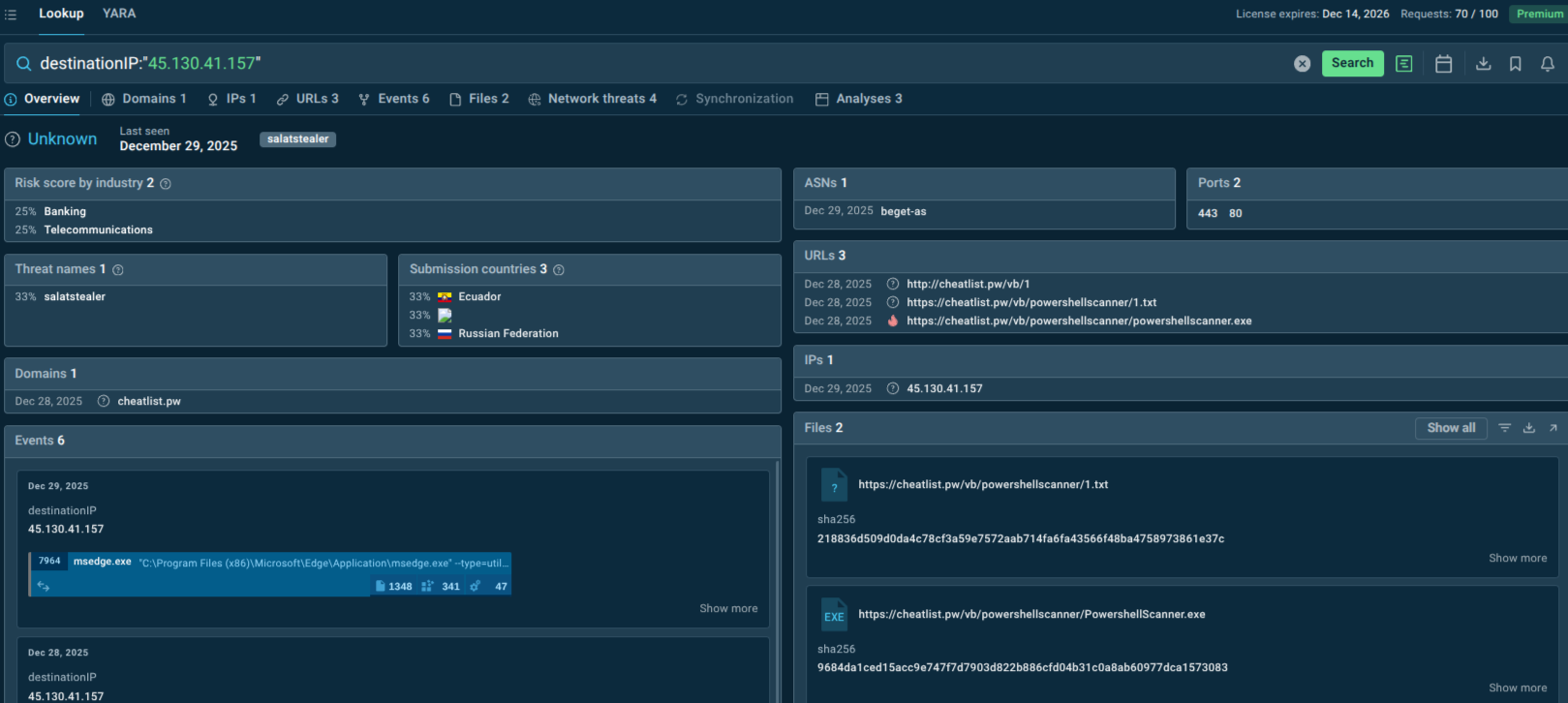
destinationIP:"45.130.41.157".
- Analyze threats interactively in ANY.RUN’s Sandbox to uncover SalatStealer’s full behavior and IOCs safely. View analysis
What is SalatStealer Malware?
SalatStealer, also tracked as WEB_RAT, is a sophisticated information-stealing malware that targets Windows systems. First detected in August 2025, it has quickly established itself as a significant cybersecurity threat, combining extensive data theft capabilities with aggressive persistence mechanisms and real-time surveillance features.
What sets SalatStealer apart is its approach to data exfiltration. The malware doesn't just steal credentials. It harvests browser data, cryptocurrency wallets, messaging application sessions, system information, and even streams live video and audio from infected devices. Operating under a Malware-as-a-Service model, SalatStealer has become accessible to a broad range of cybercriminals, amplifying its reach and potential impact.
Written in Golang version 1.22.0, SalatStealer leverages the cross-platform capabilities and performance characteristics of the Go language. The developers have taken additional steps to hinder analysis by stripping all debugging symbols from the compiled binary, making reverse engineering significantly more challenging.
The malware employs multiple anti-analysis techniques, including virtual machine detection, mutex creation to prevent reinfection of the same device, and checks for debugging environments. These defensive measures help SalatStealer evade both automated sandbox analysis and manual reverse engineering attempts.
Upon execution, SalatStealer first checks if the infected system is connected to the internet by sending GET requests to specific URLs, automatically exiting if connectivity is not detected. This preliminary check ensures the malware operates only in environments where it can successfully communicate with its command-and-control infrastructure.
Often packed with UPX to increase entropy and hinder static analysis, the persistence mechanisms include registry run keys and scheduled tasks disguised as legitimate processes (e.g., Lightshot.exe or RuntimeBroker). It communicates with command-and-control (C2) servers via encrypted HTTPS channels and lightweight UDP beacons, using domains like salat[.]cn with multiple fallbacks for resilience. Operated through a web-based panel branded "WebRat," it is sold on underground forums for low subscription fees, making it accessible to a wide range of cybercriminals.
Salat Stealer Victimology
SalatStealer primarily targets opportunistic victims, such as individuals downloading pirated software, game cheats, or cracks from untrusted sources like YouTube links and file sharing sites. Its focus on cryptocurrency wallets and browser credentials suggests a strong interest in crypto enthusiasts and everyday users storing sensitive logins. While no specific geographic or sectoral targeting has been reported, the malware's broad capabilities make it a threat to both individual users and employees in organizations who fall for social engineering lures on personal devices.
How SalatStealer Threatens Businesses and Organizations
SalatStealer poses significant risks to business environments:
Credential compromise leads to account takeovers and lateral movement.
Exfiltrated session tokens can bypass multifactor protections.
Corporate browser credential theft exposes enterprise SSO and internal portals.
Cryptocurrency asset theft impacts any organization handling digital assets.
Long-term persistence creates opportunities for further exploitation and deeper intrusion.
Malware can undermine endpoint defenses by creating exclusion rules and disabling protective tools.
How SalatStealer Malware Gets in and Functions
Primary infection vectors include:
- Phishing campaigns luring users to open malicious archives or executables.
- Social engineering through cracked software, fake utilities, or rogue downloads.
- Malicious advertisements or compromised websites serving infected files.
- Bundling with trojanized installers.
The malware sample is packed using UPX version 0.89 or higher, with all sections in the PE file compressed or encrypted to hide the real program instructions. Upon execution, the malware unpacks itself in memory, revealing its true functionality while avoiding disk-based detection.
Before proceeding with malicious activities, SalatStealer verifies internet connectivity to ensure it can communicate with its command-and-control servers.
Salat initiates multiple processes and attempts to evade detection by disguising itself as a legitimate application, creating several child processes named Lightshot.exe, which are dropped into directories that appear to belong to trusted software.
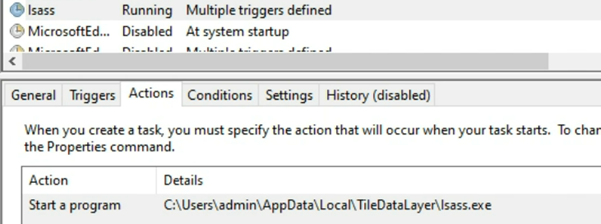
To maintain persistence on infected systems, the malware creates multiple Run key entries in the Windows Registry, registering itself under different names (Lightshot, Procmon, and RuntimeBroker) to further evade detection by mimicking legitimate system or third-party processes. It utilizes Windows Task Scheduler to create scheduled tasks under deceptive names, each configured with multiple triggers.
A "Defender Excluder" script module quietly adds critical directories to Windows Defender's exclusion list, ensuring that neither the main payload nor its auxiliary tools are scanned.
The malware systematically enumerates and harvests data from multiple sources. It accesses browser SQLite databases to extract credentials, scans specific directories for cryptocurrency wallet files and configurations, monitors active windows to identify sensitive applications, and captures screenshots and video streams when appropriate.
It compresses collected data and exfiltrates it to command-and-control servers over the Quick UDP Internet Connections (QUIC) protocol.
The platform includes real-time WebSocket communication, remote PowerShell execution capabilities, and predefined scripts for Windows Defender exclusion manipulation, UAC disabling, and recovery environment disabling.
Sandbox Analysis of a SalatStealer Sample
ANY.RUN’s Interactive Sandbox overcomes Salat’s ant-detection and sandbox-evasion mechanics, exposing the full attack chain. For SalatStealer, the Sandbox can reveal unpacking routines, persistence mechanisms, network communications, and data exfiltration attempts.
View a SalatStealer sample analysis
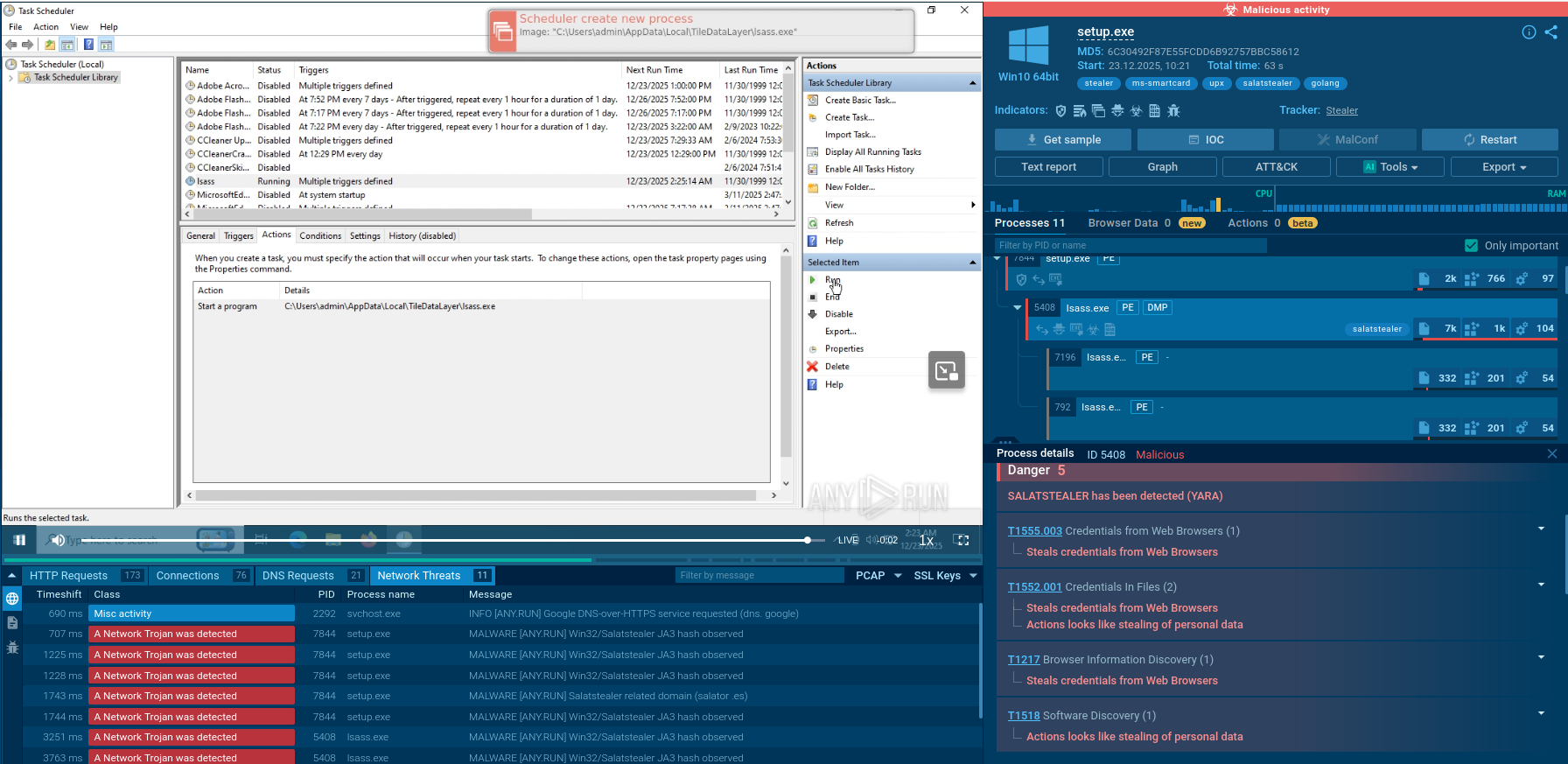
The main process spawns a child process lsass.exe. Domain resolution attempts for salat.cn were detected, but further network activity is absent due to the inactive C2 server.

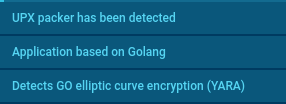
The sample is written in the Go language and packed with UPX which are detected by the Sandbox. It also reveals elliptic curves (YARA) that are used for encryption.
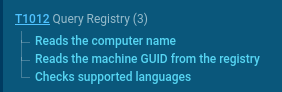
Registry queries extract basic data: computer name for victim identification, machine GUID for unique marking, and checking supported languages for locale adaptation. This forms a system profile, helping the malware select targets for data theft.
The sample drops itself into trusted directories and masquerades under system names, making the process resemble built-in Windows components.

Signing in the Task Scheduler ensures automatic launch. The malware creates tasks with multiple triggers: at user logon and a one-time launch at a specific time.
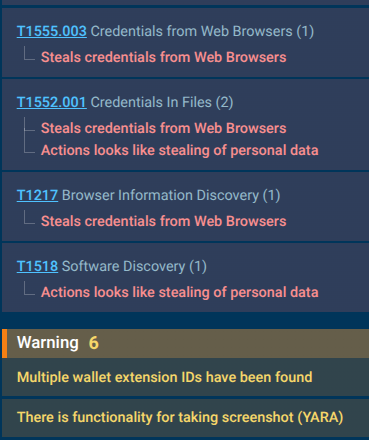
Browser data exfiltration focuses on passwords, cookies, and sessions stored in databases like SQLite. Wallet extension IDs were detected for potential theft of funds, and functionality for stealing messenger data is also observed.
Gathering Threat Intelligence on SalatStealer Malware
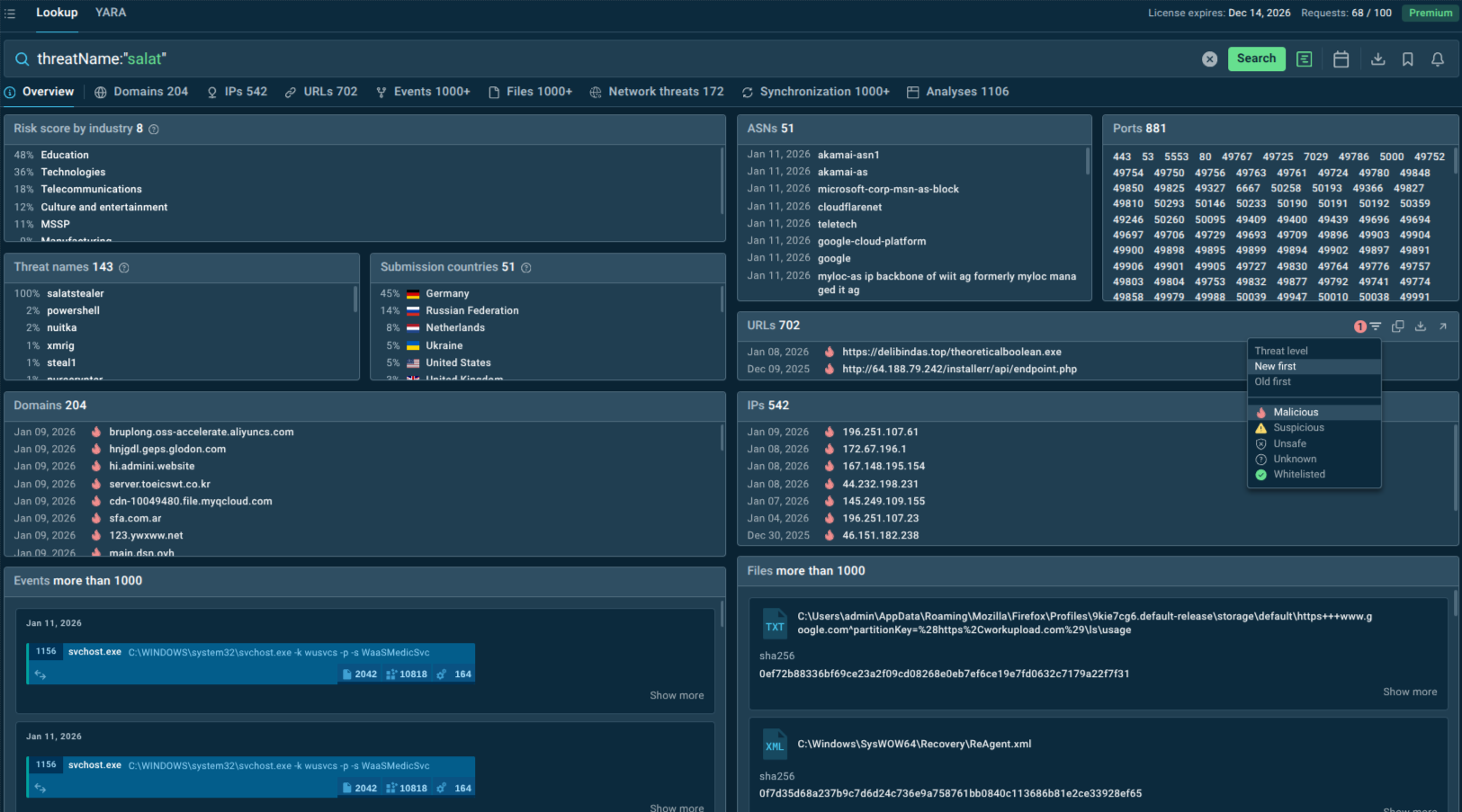
Threat intelligence services like ANY.RUN’s TI Lookup aggregate information about SalatStealer campaigns, including indicators of compromise, C2 infrastructure, file hashes, and tactics, techniques, and procedures. This intelligence enables proactive defense by allowing organizations to block known malicious infrastructure before infection attempts occur.
A threat name lookup can tell whether your business sector and geographical location are actively targeted by SalatStealer, deliver IOCs, and malware samples analyzed in the Sandbox:
Conclusion
SalatStealer represents a serious evolution in infostealer malware: resilient, stealthy, and offered under a MaaS model that lowers the barrier to entry for attackers. Its ability to extract credentials, wallets, and sessions combined with evasion and persistence tactics make it a formidable threat at both the individual and enterprise level. Detection depends on robust modern security tooling and threat intelligence, while prevention hinges on user training, hygiene, and proactive defenses.
Trial TI Lookup to start gathering actionable threat intelligence on the malware that threatens your business sector and region: just sign up to ANY.RUN.
Other malware & phishing threats
 ClickFixClickFix is a sophisticated social engineering technique that tricks users into manually executing malicious commands on their devices. It masquerades as a "quick fix" for fake technical issues, CAPTCHA verifications, or error messages, often hijacking the clipboard to paste harmful PowerShell or terminal commands. This user-assisted approach helps it bypass traditional security controls, leading to infostealers like Lumma Stealer, RATs, and other malware.
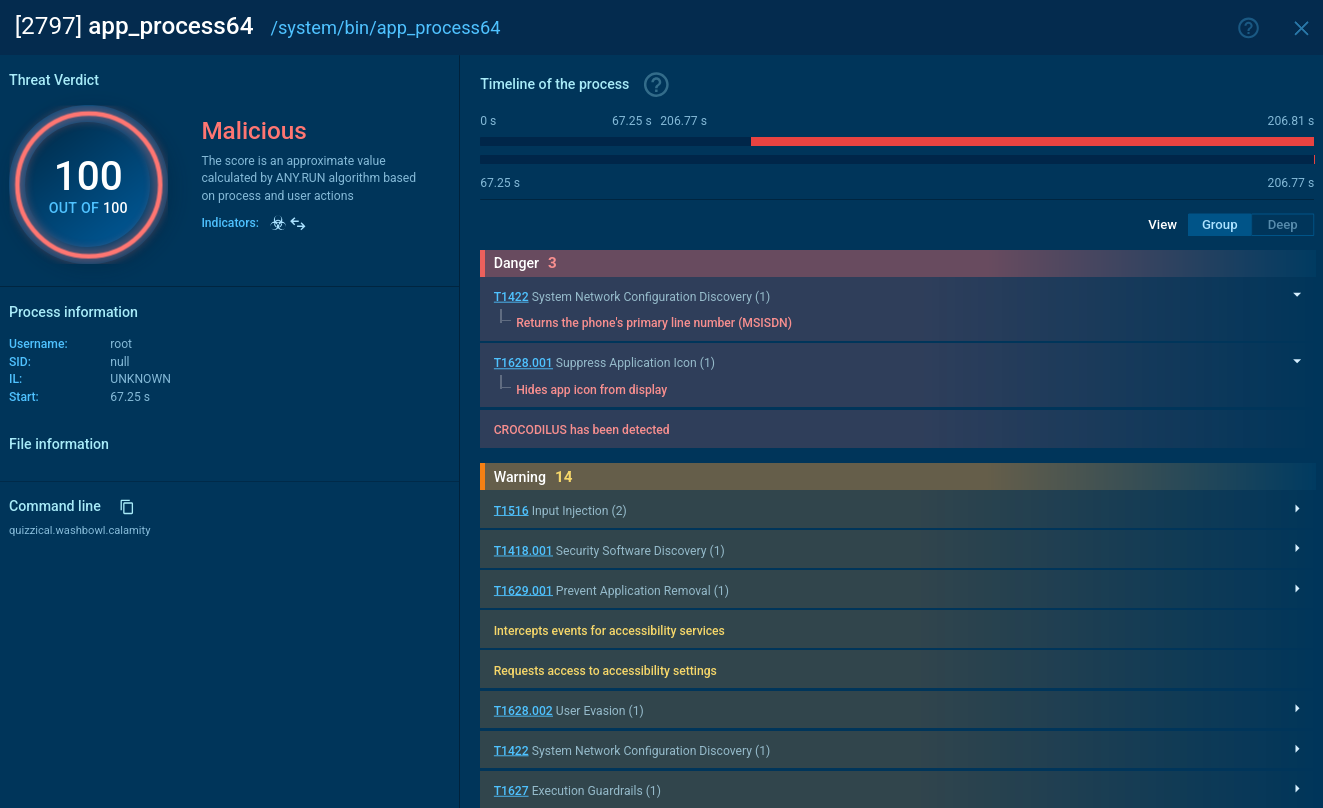 CrocodilusCrocodilus is a highly sophisticated Android banking Trojan that emerged in March 2025, designed for full device takeover. Disguised as legitimate apps, it steals banking credentials, cryptocurrency wallet data, and enables remote control, rapidly evolving into a global threat targeting financial users across Europe, South America, and Asia.
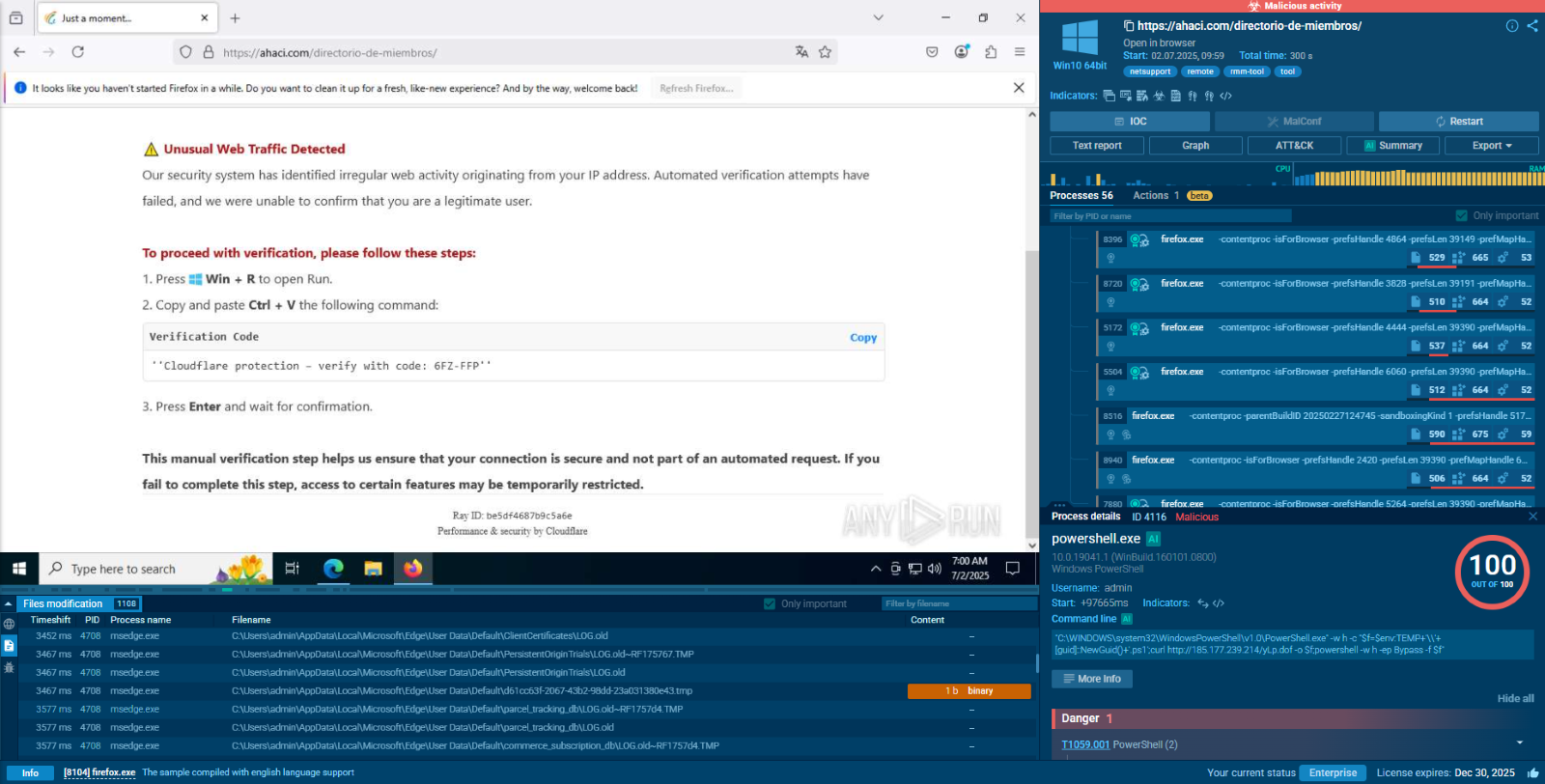 NetSupport RATNetSupport RAT is a malicious adaptation of the legitimate NetSupport Manager, a remote access tool used for IT support, which cybercriminals exploit to gain unauthorized control over systems. It has gained significant traction due to its sophisticated evasion techniques, widespread distribution campaigns, and the challenge it poses to security professionals who must distinguish between legitimate and malicious uses of the underlying software.
.png) GuLoaderGuLoader is an advanced downloader written in shellcode. It’s used by criminals to distribute other malware, notably trojans, on a large scale. It’s infamous for using anti-detection and anti-analysis capabilities.
GuLoaderGuLoader is an advanced downloader written in shellcode. It’s used by criminals to distribute other malware, notably trojans, on a large scale. It’s infamous for using anti-detection and anti-analysis capabilities.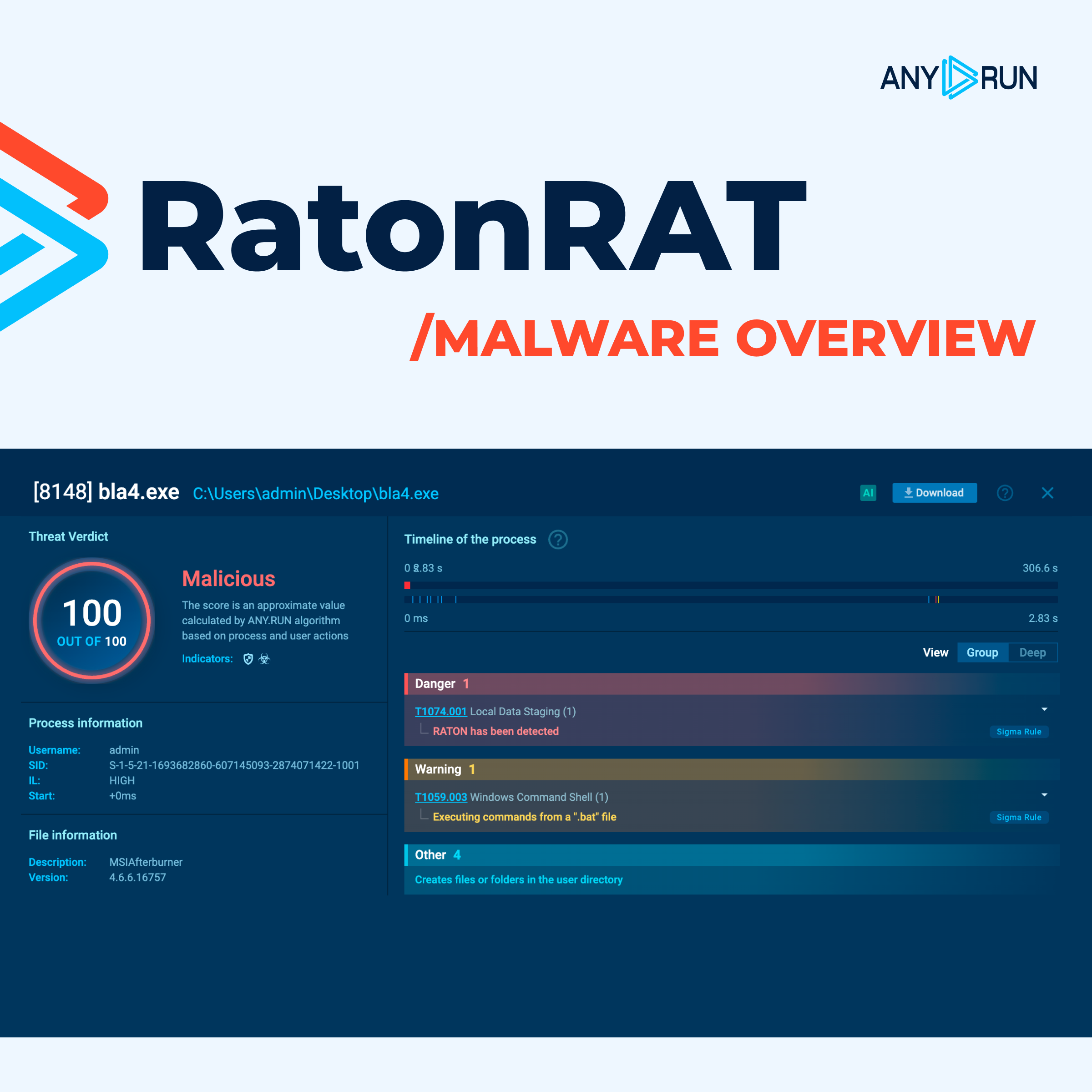 RatonRATRatonRAT is a .NET-based Remote Access Trojan targeting Windows systems. It supports credential theft, screen capture, system and hardware discovery, persistence, and C2 communication. Samples use techniques such as Registry Run keys and scheduled tasks for persistence, with some variants employing anti-analysis and evasion techniques.
RyukRyuk is a Ransomware — a type of malware that encrypts files of the victim and restores access in exchange for a ransom payment. Operating since 2018, Ryuk has been continually carrying out successful targeted attacks on organizations, netting operators millions of dollars throughout its lifetime.